

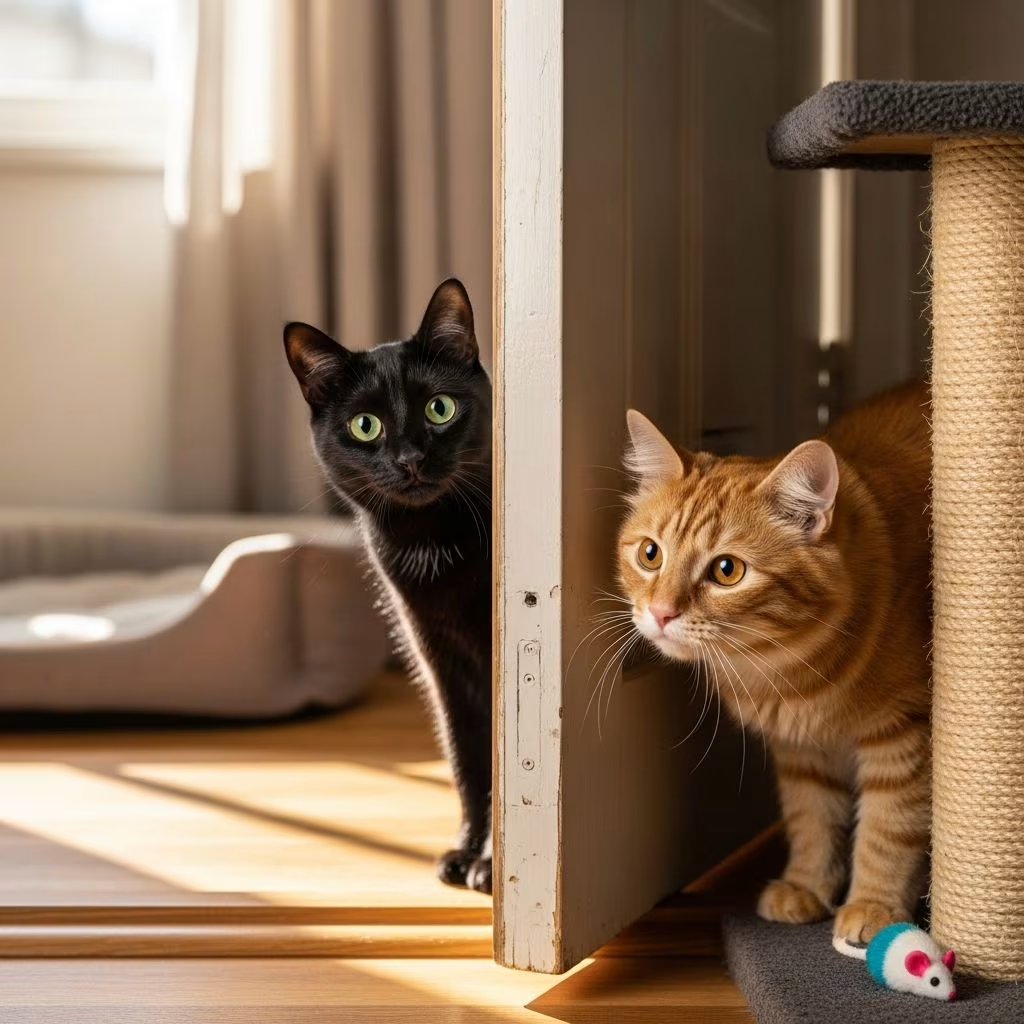
Introducing two male cats requires patience and a structured approach due to their territorial nature, which can lead to aggression if rushed. Following a gradual process helps them form positive associations and coexist peacefully.
Why Introducing Two Male Cats Can Be Challenging
Male cats, especially unneutered ones, often exhibit stronger territorial behaviors driven by instincts to protect resources and mating rights. This can result in hissing, swatting, or fights during introductions. Neutered males tend to be less aggressive, but proper introduction remains essential to prevent stress-related health issues like feline lower urinary tract disease (FLUTD). Research from veterinary sources emphasizes slow integrations to build familiarity without direct confrontation.
Factors influencing success include age, personality, and prior socialization. Younger or more laid-back males adapt faster, while dominant older cats may need extended separation periods. Signs of stress—hiding, reduced appetite, or litter box avoidance—signal the need to slow down.
Preparation Before Bringing the New Male Cat Home
Before adoption, assess compatibility: choose a cat with a temperament matching your resident male, ideally from a shelter with behavior evaluations. Prepare a ‘base camp’ room for the newcomer with food, water, litter box, scratching post, toys, and bedding—all new to avoid overwhelming scents.
- Stock the room with essentials to make it a safe haven.
- Ensure multiple resources in the main house to prevent competition later.
- Consult a vet to confirm both cats are healthy and up-to-date on vaccines.
This setup allows decompression, reducing initial anxiety.
Step-by-Step Guide to Introducing Two Male Cats
Step 1: Keep Them Separated Initially
Confine the new male cat to the base camp upon arrival, preventing any visual or physical contact. Allow 3-7 days for acclimation, monitoring eating, litter use, and relaxation. The resident cat will notice the change but adjust to the closed door.
Step 2: Scent Swapping
Exchange scents using bedding, toys, or cloths rubbed on cheeks (pheromone glands). Start with brief exposures under doors, progressing to full swaps where cats explore each other’s spaces unsupervised for 15 minutes, building positive scent associations.
- Feed treats near scent items to link smells with rewards.
- Watch for relaxed body language; hissing means revert steps.
Step 3: Visual Contact Through a Barrier
Use baby gates, mesh screens, or cracked doors for sightlines. Sessions last 5-15 minutes, with play or feeding to foster positivity. Avoid staring contests; distract with toys if tension arises. Gradually extend time as both males remain calm.
Step 4: Supervised Physical Meetings
Remove barriers for short, supervised interactions during meals or play. Keep sessions positive; separate at first aggression signs. Repeat frequently, increasing duration as tolerance grows.
Step 5: Unsupervised Access
Once meetings are peaceful, allow brief unsupervised time (starting at minutes), providing escape routes. Monitor progress; full access may take weeks.
Tips for Success When Introducing Male Cats
- Provide ample resources: Multiple litter boxes (n+1 rule, where n is cat number), food stations, water bowls, and perches to reduce competition.
- Use pheromone diffusers: Products like Feliway mimic calming scents, easing tension.
- Play separately first: Tire them out to lower aggression.
- Neutering is key: Reduces hormone-driven fights significantly.
- Equal attention: Avoid favoritism to prevent jealousy.
| Challenge | Solution |
|---|---|
| Territorial aggression | Slow scent/visual intro, resource abundance |
| Stress eating refusal | Separate feeding, pheromone aids |
| Fighting during meets | Immediate separation, revert steps |
Common Mistakes to Avoid
Rushing introductions often leads to lasting animosity. Never force face-to-face meetings without prior steps; no peeking visually too soon. Ignoring stress signals or insufficient resources exacerbates issues. Don’t punish aggression—it heightens fear.
What If They Don’t Get Along?
If hissing persists after weeks, consult a vet or behaviorist. Some males coexist neutrally without friendship. Persistent fights may require rehoming, but most succeed with patience. Health checks rule out pain-induced irritability.
Timeline for Introducing Two Male Cats
Expect 1-4 weeks minimum; dominant pairs may take months. Milestones: scent comfort (days 3-7), visual tolerance (week 1-2), physical harmony (week 2+).
| Week | Milestones |
|---|---|
| 1 | Separation, scent swap |
| 2 | Visual barrier sessions |
| 3+ | Supervised, then free access |
Frequently Asked Questions (FAQs)
Can two male cats get along?
Yes, neutered males often coexist well with proper introductions, though territorial instincts require caution.
How long does it take to introduce two male cats?
Typically 2-8 weeks, varying by personality; rush it and risk failure.
What if my male cats fight during introduction?
Separate immediately, revert to prior step, and use distractions or pheromones.
Should I get two male cats from the same litter?
Littermates bond easily, increasing success odds.
Do pheromones help introduce male cats?
Yes, synthetic pheromones reduce anxiety effectively.
Long-Term Multi-Cat Household Management
Post-introduction, maintain harmony with vertical spaces, routine play, and health monitoring. Watch for bullying; intervene early. Enrich environments prevent boredom-fueled conflicts.
References
- Introducing Cats — International Cat Care. 2023. https://icatcare.org/articles/introducing-cats
- How To Introduce Cats the Right Way — PetMD. 2024-05-15. https://www.petmd.com/cat/behavior/how-to-introduce-cats
- The Do’s and Don’ts of Introducing Cats — Jackson Galaxy. 2022. https://www.jacksongalaxy.com/blogs/news/the-dos-and-donts-of-introducing-cats
- Introducing Cats to Cats — American Humane Society. 2023. https://www.americanhumane.org/public-education/introducing-cats-to-cats/
- Introducing a New Cat to Your Other Cats — Anti-Cruelty Society. 2024. https://anticruelty.org/pet-library/introducing-new-cat-your-other-cats



