

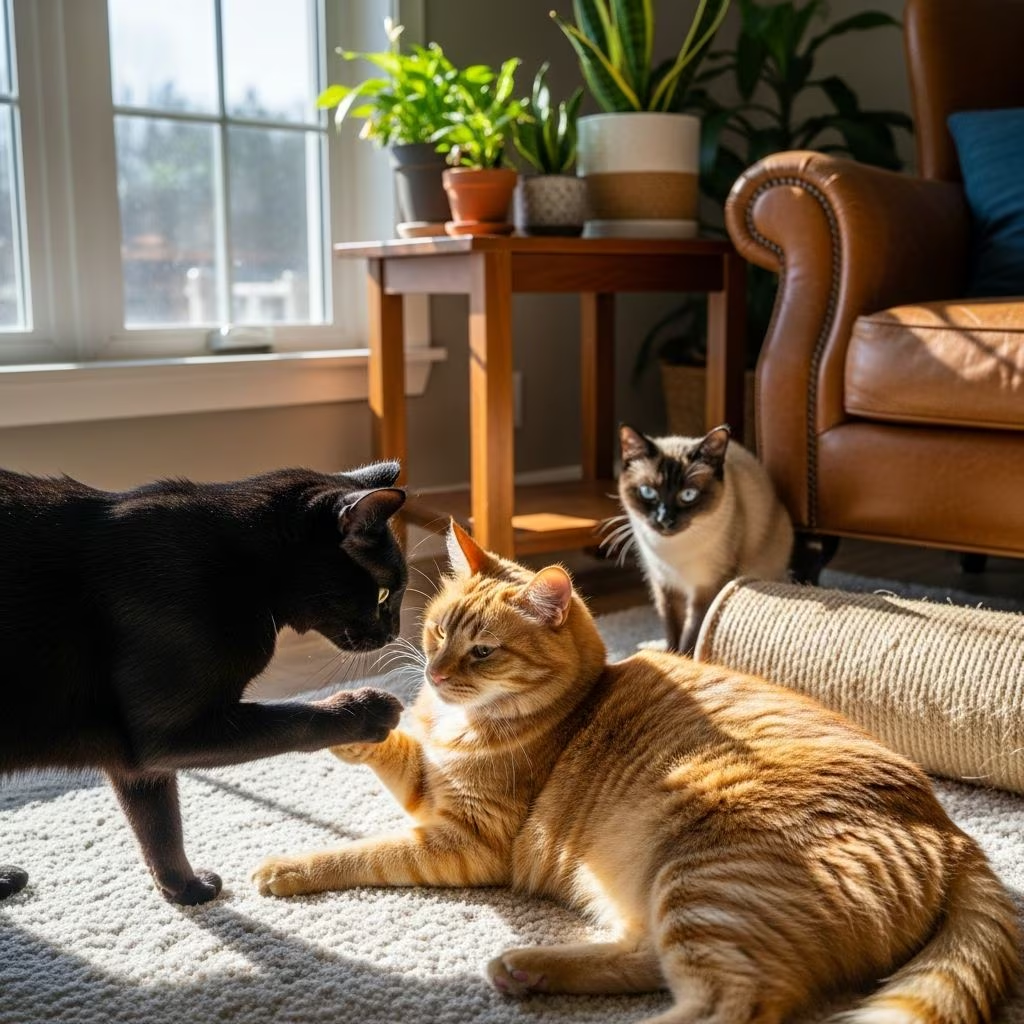
It is important to introduce your cats slowly and smoothly while keeping the environment controlled to reduce stress, anxiety, and the risk of confrontation.
While owning a cat is a big responsibility, there are some advantages to owning multiple cats. Although they can thrive on their own, cats can still get lonely, especially if their humans are not always home. Young cats and kittens in particular are full of energy and can easily get bored if their environment is not stimulating enough. Multiple cats, if introduced gradually and successfully, especially if they’re of a similar age, may keep each other company and engage in playing.
But if you already own two cats, how do you introduce a third cat into the family? Here are 11 helpful tips!
Introducing a Third Cat Into the Family
Before introducing a third cat into your home, understand that cats are territorial creatures with their own unique personalities. While many cats enjoy the company of other cats, their behavior toward outsiders can be unpredictable.
It is important to introduce your cats slowly and smoothly while keeping the environment controlled to reduce stress, anxiety, and the risk of confrontation. While some cats can welcome the newcomer quickly and easily, others may take more time to adjust. Patience is necessary when introducing a new cat into the family.
Adding a third cat can enhance your household’s dynamics by providing companionship, reducing boredom, and increasing play opportunities. However, rushing the process can lead to fights, spraying, or chronic stress. Veterinary behaviorists emphasize gradual exposure to scents, sights, and interactions to mimic natural feline socialization.
Consider the ages, sexes, and personalities of your existing cats. Neutered cats of similar ages often integrate better. Females may be more territorial than males, and older cats might resent energetic kittens. Health checks for all cats, including FIV/FeLV testing, are crucial before introductions to prevent disease transmission.
1. Choose the Right Time
Timing is critical for success. Avoid introductions during stressful periods like moves, family changes, or when any cat is ill. Ensure all cats are healthy, vaccinated, and neutered/spayed, as intact cats are more prone to aggression.
Observe your resident cats’ current relationship. If they play-fight harmoniously, they’re likely ready for a third. If tensions exist, resolve them first. Kittens under 6 months adapt faster due to their flexibility, but adults need more time—potentially weeks or months.
2. Prepare Separate Spaces
Designate a quiet room for the newcomer with food, water, litter box, bed, toys, and scratching post. This ‘safe room’ allows decompression from shelter or travel stress. Keep resident cats out initially to prevent door-pawing or hissing.
- Stock the room with essentials: one litter box per cat plus one extra.
- Provide vertical spaces like shelves or cat trees for security.
- Use calming pheromone diffusers like Feliway from day one.
This setup prevents resource guarding and lets the new cat adjust without overwhelm.
3. Keep the Third Cat in a Separate Room
As mentioned, cats are territorial creatures—meaning they take personal space very seriously. An outsider can trigger territorial instincts, which can easily start unwanted conflict. When first arriving in the house, keep the new cat in their own room with their own space for the first few days. This also gives them an opportunity to familiarize themselves with the new environment.
While the newcomer is settling in and feeling at home, the resident cats can also familiarize themselves with the new scent in the house to prepare for when they finally meet the new feline of the family.
You should also do a scent exchange, by placing one of the kitten’s belongings with the other two cats, and the other way around, so they can familiarize themselves with each other’s scent. This will make the new kitten smell less frightening or threatening for the two cats, as well as the cats’ scent to the kitten, before the actual introduction takes place, making things go more smoothly.
Swap bedding, toys, or rub a cloth on cheeks (scent glands) and exchange daily. Positive reactions like sniffing without hissing indicate progress. If aggression shows, extend isolation.
4. Let Them Switch and Explore Each Other’s Space
To get your cats more comfortable with the idea of a newcomer, let them roam each other’s rooms and spaces while the other cat is away. This allows them to familiarize themselves with the new scent around the house while also spreading their own scent.
Sharing of beddings and toys from one room to the other can also help with their adjustment to improve scent exchange.
Supervise swaps to prevent accidents. This ‘territory exchange’ reduces novelty shock during face-to-face meetings. After a week of calm responses, proceed.
5. Let the Other Cats See the Third Cat Without Direct Contact
After a few days, once the newcomer has settled in and the scent exchange went well, the three cats can finally meet each other in a controlled environment, but only two at a time, the new and each of the resident cats separately. This can be done by keeping the new cat in a secure and spacious crate allowing the new cat to see the resident cats while in a safe space. Use pheromone diffusers which can make the cats feel more reassured and relaxed.
Let your two resident cats see the new cat, one by one. It is important that the resident cats can see and recognize the new cat, as well as smell their scent, to help them adjust to the newcomer becoming a normal part of their home and their social group. The new cat should feel safe in the crate, having access to a bed that they can withdraw to if they feel frightened, if a crate is used.
Place the carrier on an elevated surface for security. Sessions last 5-15 minutes, several times daily. Distract with toys if tension rises.
6. Use Positive Reinforcement
During visual sessions, offer treats or play to link the new cat with good experiences. Praise calm behavior lavishly. Avoid punishment, which increases fear.
Gradually decrease carrier distance as tolerance builds. Hissing is normal initially but should lessen over days.
7. Associate Pleasure with Interaction to the Third Cat
Another tip to facilitate and promote their interaction with one another is associating pleasurable activities with their togetherness. This can involve feeding, playing, and petting when around each other.
When feeding, ensure that they are feeding from separate dishes in the same room. This may take a little more adjustment, as one can recognize the other cat as a threat to their resources. Feeding them during their interactions helps to give the resident cats the idea that being in the company of the newcomer means feeding time making it a pleasurable experience!
Mealtime proximity builds trust. Start with carrier feeding, progress to open-room supervised meals. Use high-value foods like tuna.
8. Supervised Interactions
Once visual and feeding sessions are calm, allow short, leashed or door-barrier meetings. One resident at a time. Interrupt play-fights but allow chase-play. Full unsupervised access comes after weeks of harmony.
9. Monitor Body Language
Learn signs of stress: ears back, tail swishing, dilated pupils, arched back. Aggression: growling, swatting. Separate immediately if seen, retry later. Play is loose, bouncy; fights are intense.
| Behavior | Play Signal | Aggression Signal |
|---|---|---|
| Tail | Curved up | Lashing side-to-side |
| Ears | Forward | Flat back |
| Pupils | Normal | Dilated |
| Body | Loose, belly up | Rigid, arched |
10. Provide Plenty of Resources
Ensure Sufficient Resources For All Cats. Another important thing that shouldn’t be forgotten is to ensure all cats have their own resources in order to avoid any undesirable behavior and competition. This means food and water bowls, litter boxes, plus an extra one, toys, scratch posts, and more. They may decide to share the bowls and scratch posts when they get accustomed to each other, but providing each cat with their own set will make them feel more confident.
Cats are territorial and thus, they need to feel that their place in the home is secured and not threatened by the presence of a new cat, while the newcomer must feel welcome and able to find a place for themselves.
- Litter boxes: n+1 rule (3 cats = 4 boxes), different locations.
- Food stations: Separate to prevent guarding.
- Vertical space: Multi-level trees for escape routes.
- Toys/scratching: Rotate to keep interest high.
11. Be Patient and Monitor Progress
Adjustments can take 2-8 weeks. Signs of success: mutual grooming, sleeping near each other, relaxed play. If issues persist beyond a month, consult a vet or behaviorist for meds like fluoxetine.
Common pitfalls: rushing stages, ignoring stress signals, inadequate resources. Success stories abound with patience—many report lifelong bonded trios.
Frequently Asked Questions (FAQs)
Q: How long does it take to introduce a third cat?
A: Typically 2-8 weeks, but varies by personalities. Rush it, and problems escalate.
Q: What if my cats fight during introductions?
A: Separate immediately, extend previous stages, use more pheromones. Seek vet if persistent.
Q: Can I introduce a kitten to adult cats?
A: Yes, kittens adapt faster, but supervise to prevent injury from rough play.
Q: Is it harder to add a third cat than a second?
A: Often yes, as dynamics shift; existing pairs may bond tighter, resisting newcomers.
Q: What resources do I need for three cats?
A: 4 litter boxes, multiple bowls, cat trees, toys. Follow n+1 rule.
References
- How to Introduce a Third Cat to Your Home (11 Vet-Reviewed Tips) — Catster. 2023. https://www.catster.com/cat-health-care/how-to-introduce-third-cat/
- How to Introduce a THIRD CAT at Home (3 Key Steps) — AnimalWised (YouTube). 2022-09-30. https://www.youtube.com/watch?v=xWeg5_7S4X8
- ASPCA: Introducing Your New Cat to Resident Cats — ASPCA. 2024. https://www.aspca.org/pet-care/cat-care/cat-introducing-your-pet-resident-cats
- AVMA: Feline Behavior Guidelines – Multi-Cat Households — American Veterinary Medical Association. 2023-05-15. https://www.avma.org/resources-tools/pet-owners/petcare/feline-behavior-multi-cat-households
- Journal of Feline Medicine and Surgery: Recommendations for Multi-Cat Homes — Sage Journals (Peer-reviewed). 2022-10-01. https://journals.sagepub.com/doi/full/10.1177/1098612X221120456



