

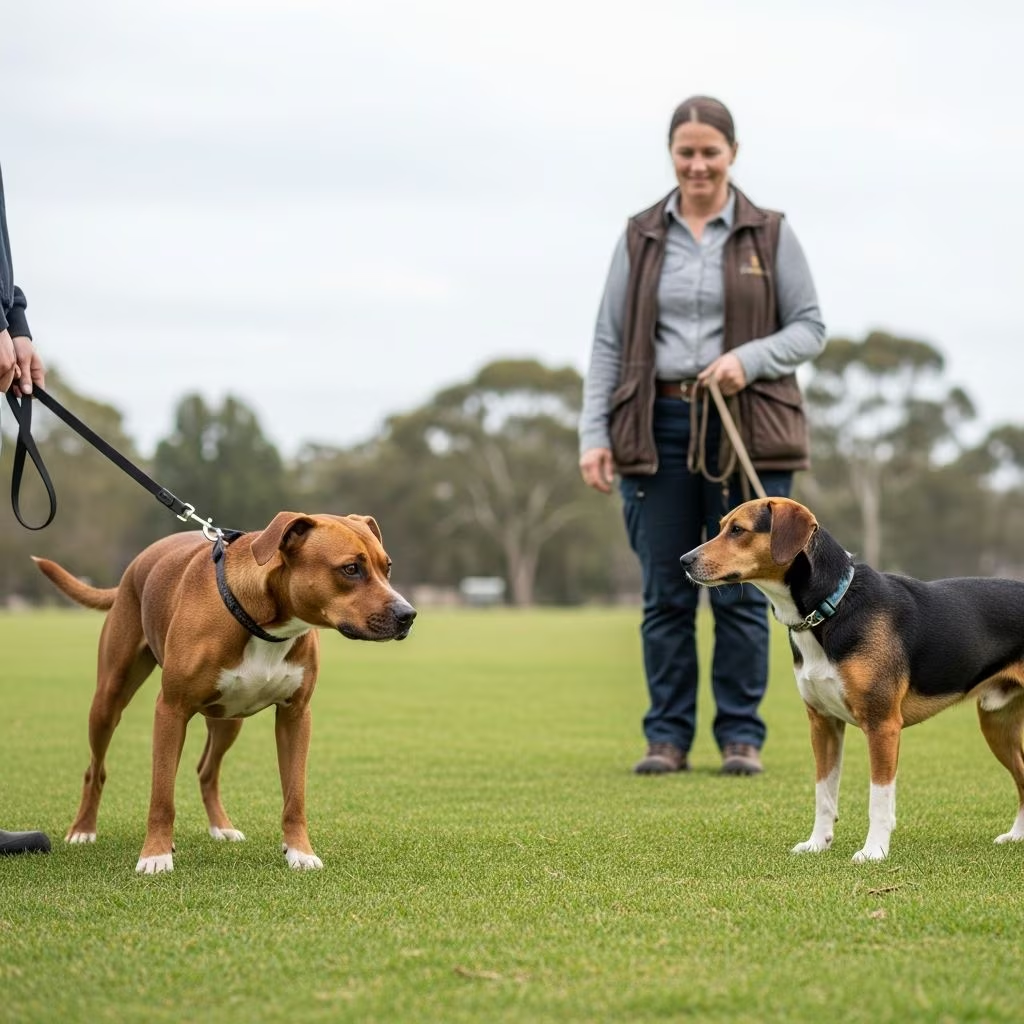
Introducing dogs when one exhibits aggressive or reactive tendencies demands meticulous planning, patience, and a solid grasp of canine communication to ensure everyone’s safety. By managing the environment, observing body language closely, and employing positive reinforcement, pet parents can facilitate successful introductions and foster harmonious multi-dog households.
This comprehensive guide outlines proven strategies drawn from veterinary behaviorist recommendations and canine training experts, emphasizing controlled interactions over rushed meetings.
How To Introduce Dogs When One Is Reactive
Reactivity—often manifesting as barking, lunging, or stiffening toward other dogs—differs from true aggression but requires similar caution during introductions. Start with both dogs on leashes in a neutral outdoor space, such as a park, to minimize territorial instincts.
Begin side-by-side and at a distance
Veterinary behaviorist Dr. Chris Bright advises parallel walking: both handlers walk dogs in the same direction, maintaining sufficient distance to prevent arousal. This side-by-side approach avoids direct confrontation, allowing dogs to observe each other peripherally without stress.
Incorporate reward-based training by offering high-value treats when dogs glance at each other calmly. Gradually decrease distance as relaxation persists, rewarding focus on handlers over fixation on the other dog.
Short, controlled off-leash interactions
Once calm during walks, transition to brief off-leash meetings in fenced areas. Allow sniffing and casual interaction for 2-3 minutes, then leash and separate. Monitor reactions closely: relaxed play signals progress; tension warrants retreat to parallel walking.
Gradually extend interaction time if positive—up to 5-10 minutes—while praising calm behavior. Patience is key; sessions lasting weeks may be necessary for highly reactive dogs.
What not to do when introducing dogs
Avoid common pitfalls that escalate tension:
- Do not introduce them head-on: Face-to-face leashed greetings provoke staring contests and arousal, per Dr. Bright.
- Do not act scared or stressed: Dogs mirror human emotions; anxiety signals threat.
- Do not meet in one of the dogs’ territories: Home yards trigger guarding instincts.
- Do not introduce them in confined spaces: Tight areas corner dogs, hindering escape and separation.
These errors often lead to fights; neutral, open spaces promote success.
Reading and Responding to Dog Body Language
Understanding canine signals prevents escalation. Positive cues include play bows (front lowered, rear raised), relaxed ears, soft gaze, and loose wagging tails. Stress indicators: lip licking, yawning, avoidance turning.
Aggressive body language signs
Immediate intervention required for:
- Raised hackles: Fur standing along back signals high arousal.
- Bared teeth: Accompanied by growling indicates threat.
- Ears up and forward: Alert, focused posture.
- Stiff posture: Frozen body tenses for action.
- Hard staring: Locked gaze precedes lunging.
Upon spotting these, calmly separate by increasing distance or using barriers. Resume at prior successful proximity next session.
Positive interaction cues
Encourage continuation with:
- Play bows and bouncy movements.
- Happy tail wags (wide, full swings).
- Open mouths in relaxed panting.
- Take-turns play without dominance pinning.
Trainer Shir Limazati notes multiple outdoor sessions before indoor trials confirm readiness.
How To Break Dog Aggression Towards Other Dogs
Aggression stems from fear, poor socialization, or resource guarding. Breaking cycles involves counter-conditioning: associating other dogs with rewards.
Reward-based training
Use treats/praise for desired responses near triggers. Teach “look at me” cue: reward eye contact amid distractions. Progress to sits/stays during distant dog sightings. Positive methods outperform punishment, building trust without fear.
Consistency across handlers accelerates learning; sessions of 5-10 minutes daily yield results.
Gradual increase in interaction time and proximity
Desensitization mirrors exposure therapy: start distant, reward calm, slowly close gap. Track progress in a journal noting distance, duration, reactions. Regression? Revert steps without frustration.
Professional intervention
For severe cases, consult certified behaviorists (e.g., IAABC.org members). They assess via history, videos, customizing plans. Medication may adjunct training for underlying anxiety.
American Veterinary Society of Animal Behavior (AVSAB) endorses least intrusive, minimal negative methods first.
Household Management for Multiple Dogs
Post-introduction, structured coexistence prevents regressions.
Establishing separate spaces and resources
Prevent resource fights with dedicated areas: one room/bed/crate per dog for meals, rest. Rotate toys; feed separately. This curbs territoriality.
Supervised interactions and alone time
Never unsupervised until proven peaceful (months minimum). Limit to controlled settings matching tolerance—walks only, if needed. Provide individual exercise/attention equitably.
Daily routines
| Activity | Dog 1 (Aggressive) | Dog 2 |
|---|---|---|
| Feeding | Kitchen crate, 7 AM | Bedroom, 7 AM |
| Walks | Parallel, 8 AM | Parallel, 8 AM |
| Playtime | Supervised yard, 5 PM (5 min) | Supervised yard, 5 PM (5 min) |
| Alone Time | Bedroom crate | Living room bed |
Equitable schedules reduce jealousy.
Frequently Asked Questions
How long does it take to introduce an aggressive dog to another?
Variable: days for mild reactivity, weeks/months for aggression. Progress gradually; force nothing.
What if my aggressive dog shows teeth during introduction?
Separate immediately, increase distance. Retry with rewards after calming. Seek pro if persistent.
Can I introduce dogs off-leash right away?
No—leashes first for control. Off-leash only in secure, post-successful leashed meets.
Is muzzle training helpful?
Yes, for safety during meets. Pair with positives to avoid stress association.
When to call a professional trainer?
If fights occur, no progress in 2 weeks, or bites inflicted. Prioritize certified experts.
Success demands commitment; many thrive together with diligence.
References
- Position Statement on Humane Dog Training — American Veterinary Society of Animal Behavior. 2021-06-14. https://avsab.org/wp-content/uploads/2018/03/Humane_Dog_Training_Position_Statement_download-10-3-14.pdf
- Guidelines for the Use of Animals in Behavior Modification — International Association of Animal Behavior Consultants. 2023-05-01. https://iaabc.org/page/iaabc-position-statement-on-humane-methods
- Canine Communication — ASPCA Professional. 2024-02-20. https://www.aspcapro.org/resource/canine-communication-interpreting-dog-language
- Multi-Dog Households: Behavior Tips — Cornell University College of Veterinary Medicine. 2022-11-10. https://www.vet.cornell.edu/departments-centers-and-institutes/riney-canine-health-center/canine-health-information/multi-dog-households
- Reactive Dog Training Protocol — Tufts University Cummings School of Veterinary Medicine. 2023-08-15. https://vet.tufts.edu/treatments-services/behavior-and-training/reactive-dogs



