

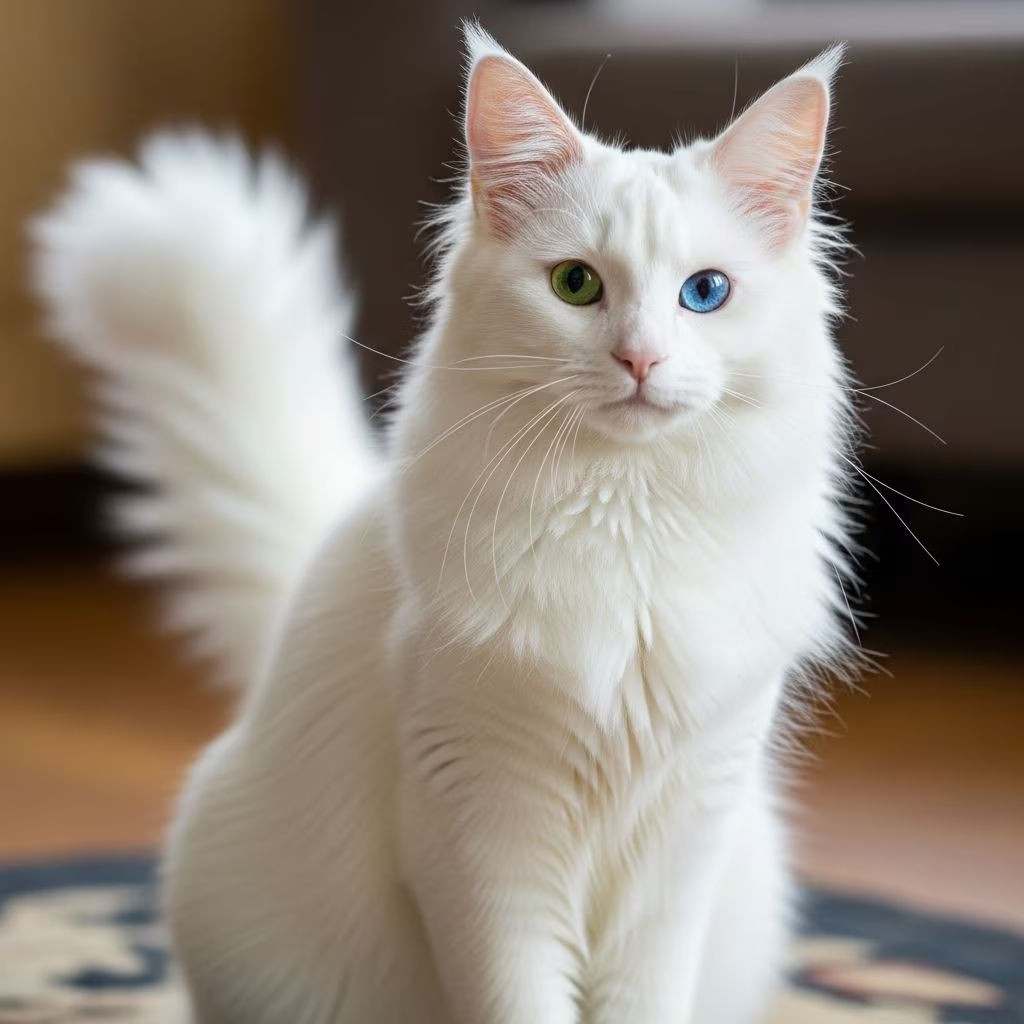
The **Turkish Angora** is one of the oldest and most elegant cat breeds, renowned for its silky coat, graceful build, and lively personality. Originating from Turkey, this natural breed features a slender body, long legs, and striking eyes that can even be odd-colored. Identifying a Turkish Angora involves examining its physical characteristics, temperament, and heritage, as defined by standards from organizations like The Cat Fanciers’ Association (CFA).
Quick Identification Tips at a Glance
- **Body**: Slender, long, and muscular with fine bones; height 9–14 inches, weight 5–10 pounds.
- **Coat**: Single-layered, silky, medium-length; traditionally white but available in many colors.
- **Eyes**: Large, almond-shaped; colors include blue, green, amber, or odd-eyed (one blue, one other).
- **Tail**: Long, plumed like a feather duster.
- **Ears**: Large, erect, set high on the head.
- **Personality**: Affectionate, playful, intelligent, vocal, and athletic.
Turkish Angora Cat History and Origins
The Turkish Angora traces its roots to Ankara (formerly Angora), Turkey, making it a national treasure there. Believed to be one of the first long-haired cats in Europe, it predates many modern breeds and is considered an ancestor of long-haired varieties. Records date back centuries, with exports to Europe in the 16th century captivating nobility for their beauty. The CFA recognizes it as a natural breed with a standard emphasizing balance, grace, and a shimmering silky coat over a firm, muscular body.
Conservation efforts in Turkey preserved the breed, particularly the white odd-eyed variety, now rare outside pure lines. Unlike the Persian, which overshadowed it temporarily, the Turkish Angora maintains its athleticism and elegance. Today, it’s less common in North America, requiring research from reputable breeders.
Turkish Angora Size and Build
**Turkish Angoras** are medium-sized cats with a delicate yet sturdy frame. Females typically weigh 5–8 pounds, males 7–10 pounds, standing 9–14 inches tall and up to 18 inches long (excluding tail). Their bodies are long, slender, and well-balanced, with long legs—hind legs slightly longer—and small oval paws with tufts.
They feature a wedge-shaped head, long neck, and broad chest with fuller fur on britches. This build gives them a ballerina-like grace, ideal for jumping and agility. Unlike stockier breeds like Persians, Turkish Angoras appear ethereal in motion.
| Trait | Details |
|---|---|
| Average Weight | 5–10 pounds (females smaller) |
| Height | 9–14 inches |
| Body Length | Up to 18 inches (excl. tail) |
| Legs | Long, muscular; hind longer than front |
| Paws | Small, oval with tufts |
Turkish Angora Coat and Colors
The hallmark of the **Turkish Angora** is its fine, silky, single-layered coat that lies flat and shimmers. Medium-length overall, it’s shorter on the head, shoulders, and legs, with a ruff, britches, and plumed tail. Low shedding makes grooming easier than other longhairs.
Traditionally white, the breed now includes black, blue, cream, red, and patterns like tabby, smoke, and ticked tabby. White cats often have blue or odd-eyes. CFA standards specify details like cream smoke (white undercoat tipped cream) and vest buttons on belled tabbies.
- Common Colors: White, black, blue, cream, red; patterns and shadings.
- Eye Match: Nose leather/paw pads often pink in whites; matches coat rings.
Facial Features and Head Structure
Turkish Angoras have small to medium wedge-shaped heads with oval faces, high cheekbones, and long, slender necks. Their large, almond-shaped eyes are expressive, in colors like blue, green, amber, hazel, or heterochromic (odd-eyed). Ears are extra-large, erect, pointed, and set high, enhancing alertness.
Muzzles are fine and continue smoothly from the head; chins firm. This creates angles and straight lines, per CFA ideals—no rounded features like Persians.
Tail and Overall Grace
The tail is a standout: long, tapering, and richly plumed, resembling a feather duster. It balances the body during agile leaps. Combined with long legs and muscular yet fine-boned structure, Turkish Angoras move with flowing, ethereal motion.
Temperament and Personality Traits
**Turkish Angoras** are affectionate, intelligent, playful extroverts who thrive on attention. Often called ‘ballerinas,’ they love climbing, jumping, and agility games. Vocal and chatty, they ‘talk’ frequently and bond deeply, often selecting one favorite human.
High-energy and curious, they chase moving objects due to strong hunting instincts. Smart enough for training, they’re empathetic, adapting to family moods, and get along with children, dogs, and cats if socialized. Gentle yet sassy, they enjoy play but prefer perching nearby over prolonged holding.
- Affectionate and people-oriented
- Playful, athletic, high energy
- Intelligent, trainable
- Social with pets/kids; vocal
- Gentle, non-aggressive
Turkish Angora Health and Lifespan
With proper care, **Turkish Angoras** live 12–18 years, sometimes 15–20. Common issues include deafness in white/blue-eyed cats (genetic), hypertrophic cardiomyopathy, and ataxia in kittens. Their slender build requires monitoring for under/overweight.
Regular vet check-ups, balanced diet, and activity prevent obesity. They’re robust but need dental care and parasite prevention.
Caring for a Turkish Angora Cat
Grooming is minimal: weekly brushing maintains the coat’s shine. Provide scratching posts, high perches, and toys for their active nature. They adapt well to homes but dislike solitude—interactive play is key.
- Diet: High-protein for energy; portion control.
- Exercise: Daily play, agility training.
- Grooming: Brush weekly; bathe rarely.
- Vet Care: Annual exams, vaccinations, genetic screening for breeders.
Is the Turkish Angora the Right Breed for You?
Ideal for active families wanting an elegant, loving companion. Not for those seeking low-maintenance lap cats—they demand engagement. Research ethical breeders or rescues, as they’re uncommon.
Frequently Asked Questions
Are Turkish Angoras hypoallergenic?
No, but low-shedding coats produce less dander than heavy shedders.
Do Turkish Angoras get along with dogs?
Yes, with proper socialization; their confidence suits dog-friendly homes.
How do you groom a Turkish Angora?
Weekly brushing; check ears and nails monthly.
Are odd-eyed Turkish Angoras deaf?
White odd-eyed cats have ~50-80% deafness risk in blue ear.
What’s the difference between Turkish Angora and Persian?
Angoras are slender/athletic; Persians stocky/sedentary with flatter faces.
Can Turkish Angoras live indoors only?
Yes, they thrive indoors with ample stimulation.
References
- Facts, Features, and Personality Traits of Turkish Angora Cats — World’s Best Cat Litter. 2023. https://www.worldsbestcatlitter.com/blog/turkish-angora-cat-facts/
- Turkish Angora Cat Breed Information — Purina US. 2024. https://www.purina.com/cats/cat-breeds/turkish-angora
- Angora Cat Traits, Appearance, General Character — VetAmerikan. 2023. https://www.vetamerikan.org/our-best-friends/cat-types/angora-cat
- Turkish Angora Breed Standard — The Cat Fanciers’ Association. 2024. https://cfa.org/breed/turkish-angora/
- Turkish Angora Cat Personality Traits — Litter-Robot. 2023. https://www.litter-robot.com/blog/turkish-angora-personality/
- What To Know About a Turkish Angora Cat — WebMD. 2024. https://www.webmd.com/pets/cats/what-to-know-turkish-angora-cat
- Turkish Angora — Wikipedia (referencing primary breed sources). 2024. https://en.wikipedia.org/wiki/Turkish_Angora



