How to House Rabbits Indoors: Complete Guide
Create the perfect indoor home for your rabbits with our comprehensive housing guide.
How to House Rabbits Indoors: Creating the Perfect Habitat for Your Bunnies
Housing your rabbits indoors provides protection from predators, extreme weather, and gives you the opportunity to spend quality time with your fluffy companions. However, indoor rabbit housing requires careful planning and consideration to ensure your rabbits have adequate space, proper enrichment, and a comfortable living environment. This comprehensive guide will walk you through everything you need to know about housing rabbits indoors, from space requirements to essential equipment and environmental considerations.
Understanding Your Rabbit’s Space Needs
One of the most critical factors in indoor rabbit housing is providing sufficient space. Many rabbit owners underestimate just how much room their bunnies need to thrive. Rabbits are naturally active animals that require space to hop, run, stretch, and exercise throughout the day.
For a pair of bonded rabbits, the minimum recommended living space is 3 meters by 2 meters with a height of 1 meter. This translates to approximately 60 square feet of floor space. If your rabbits are larger breeds or particularly active, you should aim for even more space. Some rabbit welfare organizations recommend a minimum of 10 feet by 6 feet for a pair of average-sized rabbits.
To determine if your space is adequate, your rabbits should be able to:
- Hop at least three times along the length of their enclosure
- Rear up on their hind legs without touching the ceiling
- Turn around and stretch out fully without obstruction
- Move freely throughout the entire space
Choosing the Right Housing Setup
Exercise Pens and Runs
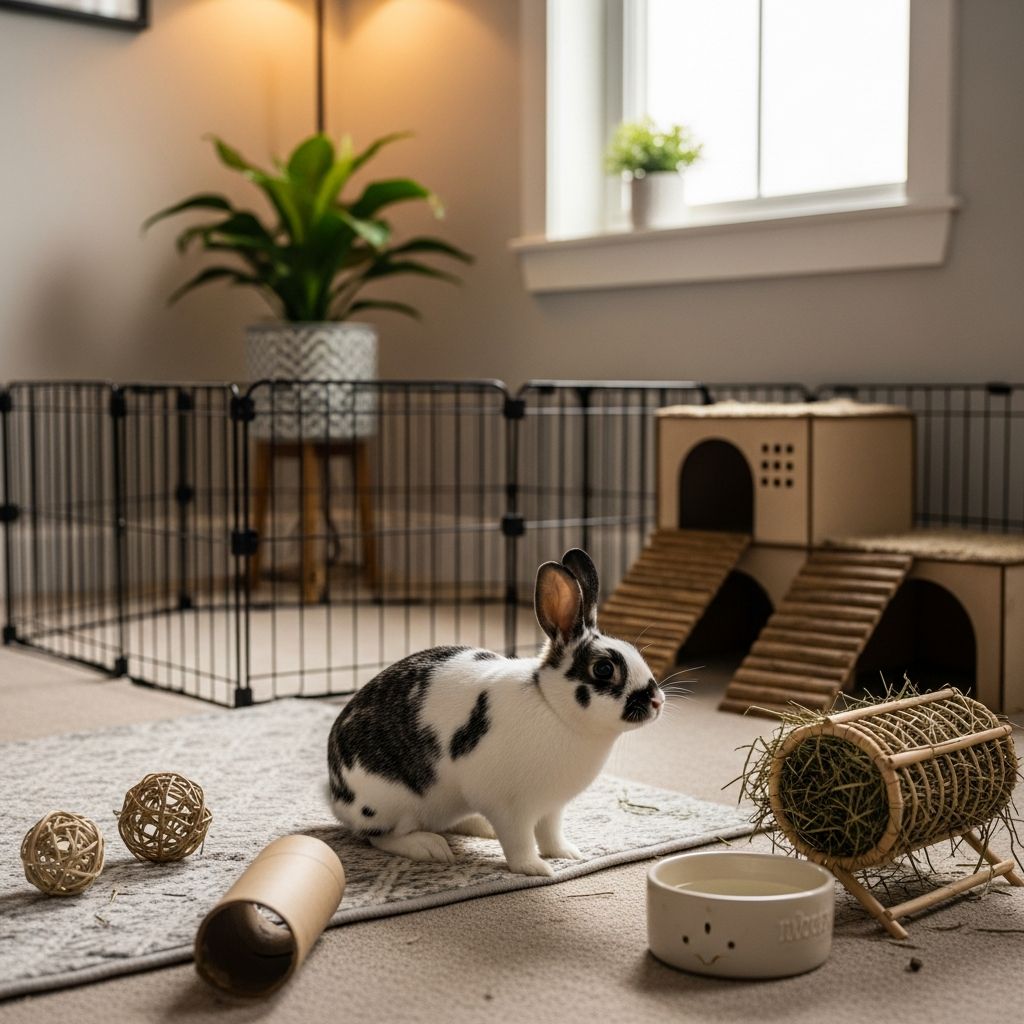
Large rabbit runs and exercise pens are popular choices for indoor housing. A minimum 4 feet by 4 feet exercise pen works for one to two smaller rabbits (approximately 5-6 pounds each). These pens should be equipped with a solid, non-slip floor to prevent injuries and provide stability. For giant rabbit breeds, consider a 10 feet by 6 feet exercise pen or larger, or allow free-roaming access to a dedicated room.
Dedicated Bunny Rooms
If you have adequate space, a dedicated bunny room offers rabbits maximum freedom. When setting up a bunny room, use a baby gate or see-through fencing rather than a solid door—this keeps your rabbits connected to family activities while giving them their own space. Ensure the room is on or near a main living area so your rabbits receive regular attention and socialization.
Dog Crates and Puppy Pens
Large dog crates or puppy pens can serve as part of your indoor setup, particularly when combined with other pens to create a larger exercise space. If using a small cage, maintain an open-door policy, keeping the cage within a larger bunny-safe area with the door always open so your rabbit can access it voluntarily.
Essential Indoor Rabbit Housing Equipment
Creating a complete indoor rabbit habitat requires more than just an enclosure. Your rabbits need multiple items to support their physical health, mental well-being, and natural behaviors.
Core Housing Essentials
Every indoor rabbit home should include the following items:
- Hay racks for easy access to high-fiber hay
- Water bowls or bottles for fresh water access
- Litter trays in appropriate locations
- Hiding places and snugs for security
- Tunnels and platforms for exploration and exercise
- Digging boxes to satisfy natural behaviors
- Rabbit toys and boredom breakers for enrichment
- Separate sleeping and toileting areas for comfort and hygiene
Flooring Considerations
Rabbits need solid, non-slip flooring in their enclosure. The floor surface should be comfortable and safe, with options including hay, paper-based products, straw, or grass mats. Adding soft surfaces like towels or blankets provides additional comfort and allows rabbits to create cozy resting areas or simulate burrowing behaviors.
Setting Up Toileting Areas
Rabbits naturally return to the same spots to eliminate waste, making litter training relatively straightforward. For your indoor setup, ensure the litter area is separate from sleeping quarters. Place litter trays out of the way to provide privacy, and add a non-slip mat to help rabbits easily enter and exit.
Fill litter trays with appropriate, safe materials including :
- Newspaper
- Hay or straw
- Shredded paper
- Paper-based, non-clumping cat litter (never cedar or clumping varieties)
To encourage litter box use, place a small amount of droppings and soiled material back in the tray after cleaning—rabbits recognize their own scent and will naturally return to eliminate in familiar spots.
Creating Safe Hiding Spots and Enrichment Areas
Rabbits need quiet areas where they feel secure and can retreat when stressed or overwhelmed. Hiding spots are essential for your rabbit’s psychological well-being and should be distributed throughout their living space.
Types of Hiding Spots
You can create hiding areas using various materials:
- Purchased hutches that are tall enough for rabbits to rest underneath without hitting their heads
- Tunnels made from cardboard boxes or tubes
- PVC pipe tunnels for variety
- Commercial rabbit snugs and runarounds
- Boxes filled with hay for dual-purpose hiding and foraging
If housing multiple rabbits, ensure each rabbit has at least one separate hiding area. This prevents territorial conflicts and gives each rabbit a safe retreat.
Enrichment and Entertainment
Indoor rabbits need toys and enrichment activities to prevent boredom and encourage natural behaviors. Rotate toys regularly to maintain interest, and provide items that encourage digging, chewing, and exploration. Hay racks positioned conveniently encourage rabbits to maintain their high-fiber diet while engaging in natural foraging behaviors.
Environmental Considerations for Indoor Rabbits
Temperature and Lighting
Rabbits are sensitive to temperature extremes. Maintain a comfortable environment between 60-70°F (15-21°C). Provide natural light exposure while avoiding direct sunlight, which can overheat your rabbits. If your indoor space is warm and sunny, ensure adequate shade is available.
Bedding and Warmth
Provide warm, safe bedding materials for your rabbits’ comfort. Dust-free straw or hay serves as excellent bedding because it’s warm and safe if ingested. Layer bedding with absorbent materials like newspaper and dust-free, non-cedar wood shavings to manage moisture and waste.
Location Within Your Home
Place your rabbit enclosure in a location that allows your rabbits to be part of family activities while still having quiet time. A corner of a living or family room provides ideal conditions—there’s enough foot traffic to keep rabbits socialized, but they have peaceful periods when no one is present. Avoid placing rabbits in isolated areas, as they may become stressed or lonely.
Housing Multiple Rabbits Indoors
When housing multiple rabbits together, you need significantly more space and resources. With multiple rabbits, provide:
- Larger habitat space so both rabbits can move freely without touching when stretched out
- Two sets of feeding bowls to prevent competition
- Multiple litter boxes (ideally one per rabbit)
- Separate hiding areas for each rabbit to prevent territorial conflicts
Never lock bonded rabbits in cages together, as this can create territorial issues. Cages may be left open at all times as an optional hiding spot, but enclosed housing conflicts with their social and behavioral needs.
Maintaining a Clean and Healthy Indoor Rabbit Environment
Regular cleaning and maintenance are essential for your rabbits’ health. A clean environment prevents respiratory issues, parasites, and odor problems.
Clean your rabbits’ housing by:
- Scooping soiled bedding and hay daily
- Replacing litter material regularly
- Washing water bowls and bottles daily
- Performing deep cleaning weekly with pet-safe disinfectants
- Replacing hay and straw frequently to maintain freshness
- Monitoring for any signs of mold or moisture issues
Common Mistakes to Avoid
Many well-intentioned rabbit owners make housing mistakes that compromise their pets’ well-being. Avoid these common errors:
- Using cages that are too small—remember that smaller-than-recommended housing causes stress, irritability, and illness
- Locking rabbits in enclosed spaces for extended periods—rabbits need constant access to their full habitat
- Using unsafe bedding materials like cedar, which is toxic to rabbits
- Placing rabbits in isolated areas away from family activity
- Failing to provide adequate hiding spots or enrichment
- Using solid doors that completely separate rabbits from family areas
- Overcrowding multiple rabbits without sufficient space or resources
Frequently Asked Questions About Indoor Rabbit Housing
Q: What is the absolute minimum space for indoor rabbits?
A: For a pair of bonded rabbits, the minimum recommended space is 3 meters by 2 meters with 1 meter height (approximately 60 square feet). However, more space is always better for rabbit happiness and health.
Q: Can I keep my rabbits in a cage?
A: Small cages should only be used if you maintain an open-door policy, keeping the cage within a larger bunny-safe area with the door always open. Never lock rabbits in cages for extended periods.
Q: Do indoor rabbits need a dedicated room?
A: Not necessarily. Rabbits can thrive in large exercise pens, but dedicated bunny rooms offer maximum freedom if space permits. Use see-through gates rather than solid doors to maintain family connection.
Q: How do I prevent my indoor rabbits from being bored?
A: Provide rotating toys, tunnels, digging boxes, and enrichment activities. Rabbits need mental stimulation through exploration, foraging, and varied environments. Change their layout periodically to maintain interest.
Q: What bedding should I use for indoor rabbits?
A: Use dust-free straw or hay combined with newspaper and dust-free, non-cedar wood shavings. Avoid clay-based litters and cedar or pine, which are toxic.
Q: How much height do I need for an indoor rabbit enclosure?
A: A height of 1 meter (approximately 39 inches) is recommended. Generally, 30 inches is sufficient to contain most rabbits, though very athletic jumpers may need taller enclosures.
Q: How often should I clean my rabbit’s indoor housing?
A: Scoop soiled bedding and litter daily. Perform a complete bedding change at least weekly, and do deep cleaning with pet-safe disinfectants regularly to maintain hygiene and prevent health issues.
References
- Indoor Rabbit Housing — Rabbit Awareness Action Group. Accessed November 2025. https://rabbitawarenessactiongroup.co.uk/rabbit-welfare/environment/indoor-rabbit-housing/
- Creating a Good Home for Rabbits — RSPCA. Accessed November 2025. https://www.rspca.org.uk/adviceandwelfare/pets/rabbits/environment
- Size and Space Considerations for Rabbit Cages — Kavee. Accessed November 2025. https://kavee.com/blogs/the-bunny-blog/ultimate-guide-indoor-rabbit-cages
- Housing Guide — WabbitWiki. Accessed November 2025. https://wabbitwiki.com/wiki/Housing
- Housing & Space Requirements — House Rabbit Society of Chicago. Accessed November 2025. https://hrschicago.org/housing/
- Living Space: How to Set It Up — House Rabbit Society. Accessed November 2025. https://rabbit.org/care/habitat/living-space-how-to-set-it-up/
- Indoor Rabbit Housing Guide — Edmonton Humane Society. 2022. https://www.edmontonhumanesociety.com/wp-content/uploads/2024/05/2022-Rabbit-Housing-EHS-Resource-Guide.pdf
Similar Articles








Read full bio of medha deb