

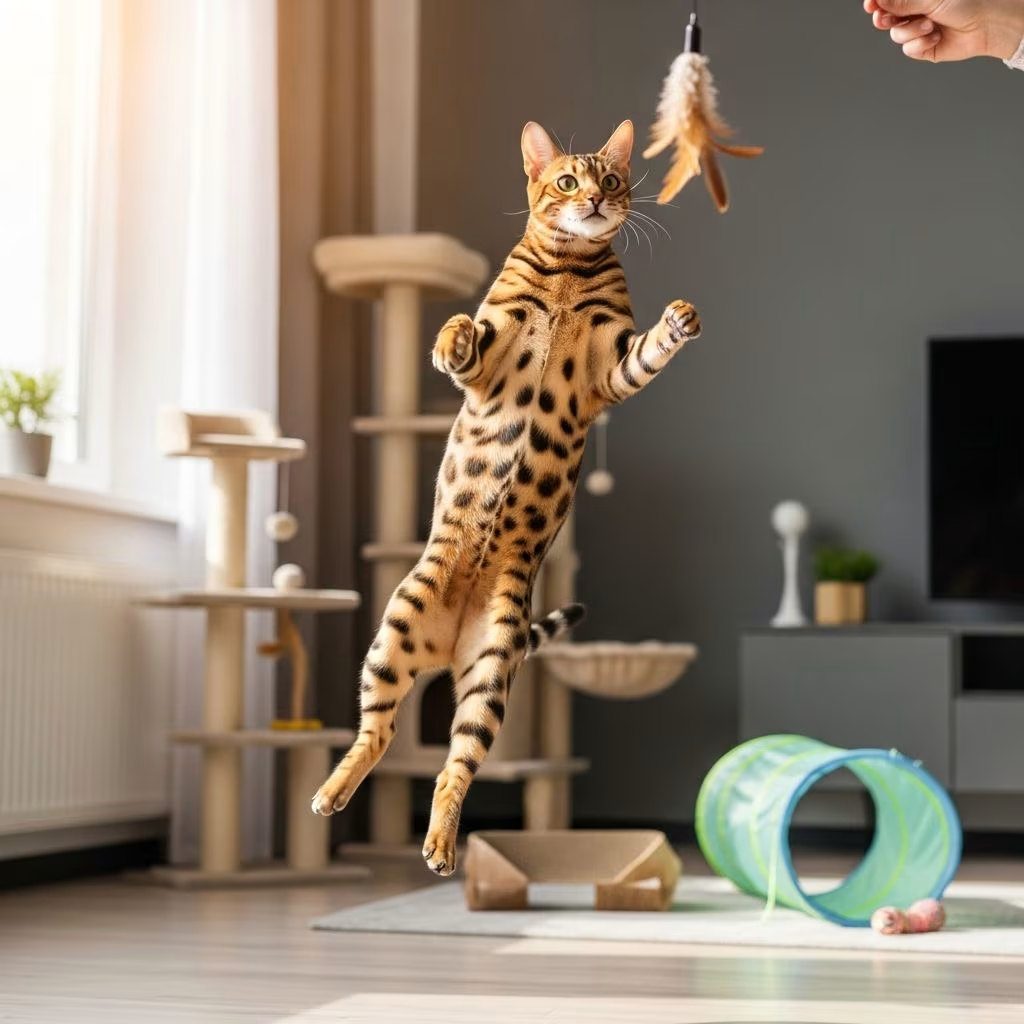
One of the most transformative things you can do for your feline companion is to ensure they receive sufficient exercise throughout their day. Exercise is far more than just physical activity—it’s a cornerstone of feline wellness that impacts multiple aspects of your cat’s life. When cats engage in regular physical activity, they experience significant improvements in both their physical and mental health. Exercise helps prevent obesity-related diseases, strengthens muscles and bones, and keeps your cat’s cardiovascular system healthy. Beyond the physical benefits, regular activity reduces stress, decreases anxiety, and helps prevent destructive behavior problems that often stem from boredom and pent-up energy. Perhaps most importantly, making exercise a shared activity between you and your cat deepens your bond, creating positive associations and quality time together. Understanding how to make exercise enjoyable and accessible for your cat ensures they’ll want to participate actively in their own wellness journey.
Understanding Why Exercise Matters for Cats
Cats are natural hunters with instincts honed over thousands of years of evolution. Despite their domestication, these instincts remain deeply ingrained in their behavior and psychology. When indoor cats don’t have appropriate outlets for these instincts, they can develop behavioral issues including aggression, excessive meowing, destructive scratching, and inappropriate elimination. Regular exercise provides the necessary physical exertion that helps satisfy these hunting instincts in safe, appropriate ways.
The mental health benefits of exercise cannot be overstated. Cats that receive adequate stimulation and activity are less prone to anxiety and stress-related behaviors. Active cats sleep better, maintain healthier weights, and show improved overall temperament. They’re also less likely to develop chronic health conditions associated with sedentary lifestyles, such as diabetes, heart disease, and joint problems. Additionally, when cats achieve successful “hunting” and play activities, their confidence increases, which positively affects their overall behavior and social interactions within the home.
Interactive Play: The Foundation of Feline Exercise
Interactive play is perhaps the most direct and effective way to encourage exercise in your cat. During interactive play sessions, you become an active participant in your cat’s physical activity, creating opportunities for bonding while keeping them moving. Interactive toys that involve wands, strings, or feathers attached to poles are particularly effective because they simulate the movement of prey animals, triggering your cat’s natural hunting responses.
When engaging in interactive play, observe your cat’s preferences and energy levels. Some cats prefer quick, intense bursts of activity followed by rest periods, while others enjoy longer, more gradual play sessions. Start by dangling toys at your cat’s eye level and varying the speed and direction of movement to maintain their interest. Move the toy unpredictably—cats are attracted to quick movements and directional changes that mimic real prey behavior.
The key to successful interactive play is consistency and duration. Aim for multiple short play sessions throughout the day rather than one long session. Most cats respond well to two to three 10-15 minute sessions daily, though some highly energetic cats may benefit from more frequent engagement. Pay attention to your cat’s body language during play—dilated pupils, focused attention, and a twitching tail indicate engagement, while turned-away head or withdrawal suggests your cat needs a break.
Toys and Environmental Enrichment
Beyond interactive play, providing a variety of toys and environmental enrichment gives your cat opportunities for self-directed exercise. Cats have diverse play preferences, so offering multiple toy types increases the likelihood that something will capture their interest. Consider rotating toys every few weeks to maintain novelty and prevent boredom with the same items.
Types of toys to consider:
- Feather wands and string toys for interactive play sessions
- Ball toys that can be batted around independently
- Crinkle toys that provide sensory stimulation
- Laser pointers for dynamic movement play
- Motorized toys that move unpredictably
- Tunnels and tents for stalking and hiding behaviors
- Balls with bells inside for independent pouncing
Vertical spaces play a crucial role in encouraging exercise. Cats naturally love climbing, perching, and surveying their territory from elevated positions. Cat trees, wall-mounted shelves, and multi-level furniture encourage your cat to jump, climb, and move vertically, which engages different muscle groups and provides excellent cardiovascular exercise. Position these structures near windows so your cat can combine physical activity with mental stimulation from watching outdoor activity.
Food-Based Enrichment and Puzzle Feeders
One of the most innovative ways to encourage exercise is to link physical activity with feeding time. Rather than placing your cat’s food in a stationary bowl, use puzzle feeders and food-dispensing toys that require your cat to work for their meals. This approach provides multiple benefits: it slows down fast eaters, provides mental stimulation, encourages physical activity, and more closely mimics the natural hunting and eating patterns of wild cats.
Food-based enrichment ideas:
- Hide treats under cups or in small containers that cats must knock over to retrieve
- Place food treats inside puzzle feeders that require manipulation to access
- Toss treats or small portions of food for your cat to chase and pounce on
- Use feeder balls that dispense kibble as your cat rolls them around
- Hide food throughout your home to encourage hunting and foraging behaviors
- Create treat obstacles by placing food items underneath overturned cups in a series
The treat-toss game is particularly effective and simple to implement. Present a treat your cat enjoys and gently toss it a short distance away. As your cat becomes comfortable with the game, you can increase the distance and intensity of the toss. For cats that enjoy fetching, try tossing ball-shaped feeder toys filled with treats or kibble. This combines the satisfaction of the chase, the reward of obtaining food, and the physical exercise of pursuit and capture, mimicking natural predatory behavior while keeping your cat active and engaged.
Leash Training and Outdoor Exploration
For many cats, walking on a leash and harness opens up exciting new opportunities for exercise and environmental exploration. Outdoor time provides unparalleled mental and physical stimulation through new sights, sounds, smells, and surfaces. Outdoor walks expose your cat to natural enrichment that simply cannot be replicated indoors.
To successfully train your cat to walk on a leash, begin by introducing them to a properly fitted harness indoors. The harness should be snug enough that your cat cannot slip out, but loose enough to fit comfortably without restriction. Allow your cat to wear the harness indoors for several short periods before attaching a leash, letting them adjust to the feeling without the pressure of outdoor exploration.
Once your cat is comfortable with the harness, attach the leash and practice walking indoors on familiar territory. Allow your cat to lead the way and explore at their own pace—leash walks aren’t about covering distance but about allowing your cat to safely experience and investigate their environment. Take walks during quieter times of day to minimize stress from traffic and other outdoor stimuli.
For cats that resist leash training or seem anxious about outdoor environments, a pet stroller offers an excellent alternative. Strollers allow your cat to enjoy outdoor sights, sounds, and fresh air while remaining safely contained and secure. Many cats enjoy stroller time and gain similar mental enrichment benefits as those who walk on leashes.
Mental Stimulation Through Training and Tricks
Teaching your cat commands and tricks provides excellent mental exercise that complements physical activity. Contrary to popular belief, cats are highly intelligent and can learn a variety of cues and behaviors when trained using positive reinforcement methods. Training engages your cat’s cognitive abilities, provides problem-solving challenges, and strengthens your relationship through cooperative learning experiences.
Clicker training is one of the most effective and humane methods for teaching cats. This technique uses a small clicking device to mark the exact moment your cat performs a desired behavior, immediately followed by a reward. The consistency of the click creates a clear communication system that cats quickly understand and respond to.
Behaviors you can teach your cat:
- Sit and down commands
- Wave or give high-five with their paw
- Come when called
- Ring a bell to request attention or treats
- Jump through hoops or over obstacles
- Use the toilet for elimination
- Retrieve small toys
Start training sessions when your cat is alert and food-motivated, typically before regular meal times. Keep sessions brief—5 to 10 minutes is ideal—to maintain focus and enthusiasm. Always use high-value rewards that your cat finds irresistible, and maintain a positive, patient demeanor. The goal is to make training fun and rewarding for both of you, creating an enjoyable bonding experience while providing crucial mental stimulation.
Creating a Stimulating Indoor Environment
While interactive play and specialized activities are important, the overall design of your home environment significantly impacts your cat’s natural activity levels and opportunities for exercise. A thoughtfully enriched living space encourages movement, exploration, and natural behaviors throughout the day.
Environmental enrichment elements:
- Multiple cat trees and climbing structures at varying heights
- Window perches for bird watching and outdoor observation
- Hiding spots and enclosed spaces for security and play
- Scratching posts in multiple locations
- Tunnels and tents for stalking and pouncing behaviors
- Open spaces for running and chasing games
- Varied flooring surfaces for tactile stimulation
Window perches deserve special attention as they provide exceptional environmental enrichment. Cats naturally enjoy watching outdoor activity—birds, squirrels, vehicles, and people moving past provide hours of mental stimulation. Position comfortable perches, cat trees, or beds near windows to encourage your cat to spend time observing the outdoor world. Some cats will engage with window perches independently for extended periods, providing self-directed mental and visual stimulation.
Social Interaction as Exercise Motivation
While cats are sometimes stereotyped as solitary creatures, they are actually social animals that benefit significantly from human interaction. Meaningful social engagement through petting, gentle brushing, and proximity to people serves as both emotional enrichment and motivation for physical activity. When your cat associates playtime and exercise with positive human interaction, they’re more likely to remain engaged and active.
Some cats enjoy interactive activities like gentle brushing or grooming sessions alongside physical play. Others prefer a combination of activities—intense play followed by calm petting sessions. Learning your individual cat’s preferences and adjusting your approach accordingly strengthens your relationship while ensuring they receive the type of enrichment they most enjoy.
Frequently Asked Questions
How much exercise does my cat actually need?
Most adult cats benefit from at least 30 minutes to an hour of physical activity throughout the day, distributed across multiple play sessions. Young, energetic cats and certain active breeds may need more, while senior cats typically need less intense activity focused on gentler movement. Observe your individual cat’s energy levels and adjust accordingly.
What if my cat doesn’t seem interested in playing?
If your cat shows little interest in play, consult your veterinarian to rule out underlying health issues. Otherwise, try different toy types, play styles, and times of day. Some cats prefer playing early morning or late evening. Experiment with various interactive toys and observe what captures their attention naturally.
Is laser pointer play safe for cats?
Laser pointers can provide excellent exercise, but some experts recommend ending laser play sessions with a physical toy your cat can actually catch and grab. This allows your cat to achieve the satisfaction of capturing prey rather than eternally chasing a point of light they cannot catch.
Can senior cats still exercise?
Yes, senior cats benefit from exercise adapted to their abilities. Gentle play, shorter sessions, and low-impact activities keep senior cats active and mentally engaged. Always consult your veterinarian about appropriate activity levels for aging cats, especially those with arthritis or other health conditions.
What’s the best time of day to play with my cat?
Cats are naturally most active during dawn and dusk (crepuscular), though individual patterns vary. Pay attention to when your cat naturally seems most playful and schedule interactive sessions during those times. Multiple sessions throughout the day accommodate different energy peaks.
References
- How to Help Your Cat Get Exercise — Best Friends Animal Society. 2025. https://bestfriends.org/pet-care-resources/how-help-your-cat-get-exercise
- The Best Indoor Cat Enrichment Ideas: Toys, Puzzles, and More — Best Friends Animal Society. 2025. https://bestfriends.org/pet-care-resources/best-indoor-cat-enrichment-ideas-toys-puzzles-and-more
- Enrichment for Shelter Cats — Best Friends Animal Society. 2025. https://bestfriends.org/pet-care-resources/enrichment-shelter-cats
- Prevent Cat Behavior Problems — Best Friends Animal Society. 2025. https://bestfriends.org/pet-care-resources/how-prevent-cat-behavior-problems



