

How to Give Liquid Medication to Cats: A Complete Guide
Administering medication to your feline companion can be one of the most challenging aspects of pet ownership, particularly when dealing with liquid medications. However, with the right approach, patience, and knowledge, you can successfully administer liquid medications to your cat while minimizing stress for both you and your pet. This comprehensive guide will walk you through various methods and techniques recommended by veterinary professionals to make the process as smooth and safe as possible.
Understanding Your Options: When and How to Administer Liquid Medication
Before attempting to give your cat liquid medication, it’s important to understand that you have multiple options available. The method you choose will depend on several factors, including your cat’s temperament, dietary restrictions, and the specific medication being administered. Some medications require administration on an empty stomach, which will limit your options, while others can be mixed with food without any issues. Always consult with your veterinarian about the best approach for your cat’s specific medication before proceeding.
Method One: Mixing Liquid Medication with Canned Food
The easiest and least stressful method to administer liquid medication to your cat is to mix it with canned food, provided that the medication does not require an empty stomach. This approach takes advantage of your cat’s natural eating habits and makes the medication essentially invisible to your pet. To ensure maximum success with this method, follow these important guidelines:
When mixing medication with food, use a small amount of canned food that you hand-feed to your cat rather than mixing it into a full bowl. This is crucial because if you mix the medication into a large portion of food and your cat doesn’t finish the entire serving, you cannot be certain that your pet received the complete dose. By hand-feeding a small amount, you can monitor exactly how much your cat consumes and verify that all medication has been swallowed.
Some cats may be unwilling to eat food mixed with medication, or they may have dietary restrictions that prevent you from using this technique. Additionally, certain medications have unpleasant tastes that cats can detect and reject. In such cases, you will need to administer the medication directly into your cat’s mouth using alternative methods described below.
Method Two: Direct Oral Administration Using a Syringe
When mixing medication with food isn’t an option, you’ll need to administer the liquid medication directly into your cat’s mouth. This method requires more technique and patience but can be mastered with practice. The following step-by-step process has been proven effective by veterinarians and pet owners worldwide.
Preparation and Initial Steps
Step 1: Prepare the Medication Properly
Begin by gently shaking or mixing the liquid medication as indicated on the label. This ensures that the active ingredients are evenly distributed throughout the liquid. Failing to shake the medication properly could result in inconsistent dosing.
Step 2: Draw Up the Correct Dose
Using a syringe or dropper, carefully draw up the liquid medication according to the dosage instructions provided by your veterinarian. Double-check the dosage before proceeding to avoid medication errors. Take your time with this step, as accuracy is essential for your cat’s health and safety.
Step 3: Temperature Adjustment
If the medication was refrigerated, hold the syringe in your hand for one to two minutes to warm it up, or place it in a warm water bath. This step is important because cold medication can be uncomfortable and may trigger your cat’s gag reflex. Never microwave the medication, as this can damage the active ingredients and create unpredictable temperature hotspots that may harm your cat’s mouth and throat.
Positioning and Calming Your Cat
Step 4: Create a Comfortable Environment
Hold your cat in your lap and place the prepared medication within reach before you begin. Take time to massage or cuddle your cat to help them relax and become comfortable with your presence. A calm, relaxed cat is significantly easier to medicate than an anxious or stressed one. For particularly anxious cats, consider wrapping them gently in a blanket or towel with only the head exposed. This creates a sense of security and prevents the cat from wriggling free during medication administration. If you’re struggling to maintain control, consider having another person gently hold the wrapped cat while you administer the medication.
Administering the Medication
Step 5: Allow Licking if Possible
Hold the syringe or dropper with your dominant hand. If your cat likes the taste of the medication, you can allow them to lick it from the tip of the syringe as you slowly depress the plunger. This is the least stressful method and should always be attempted first. Some cats, particularly those who enjoy certain flavors, may willingly cooperate with this approach, making medication administration quick and painless.
Step 6: Opening Your Cat’s Mouth
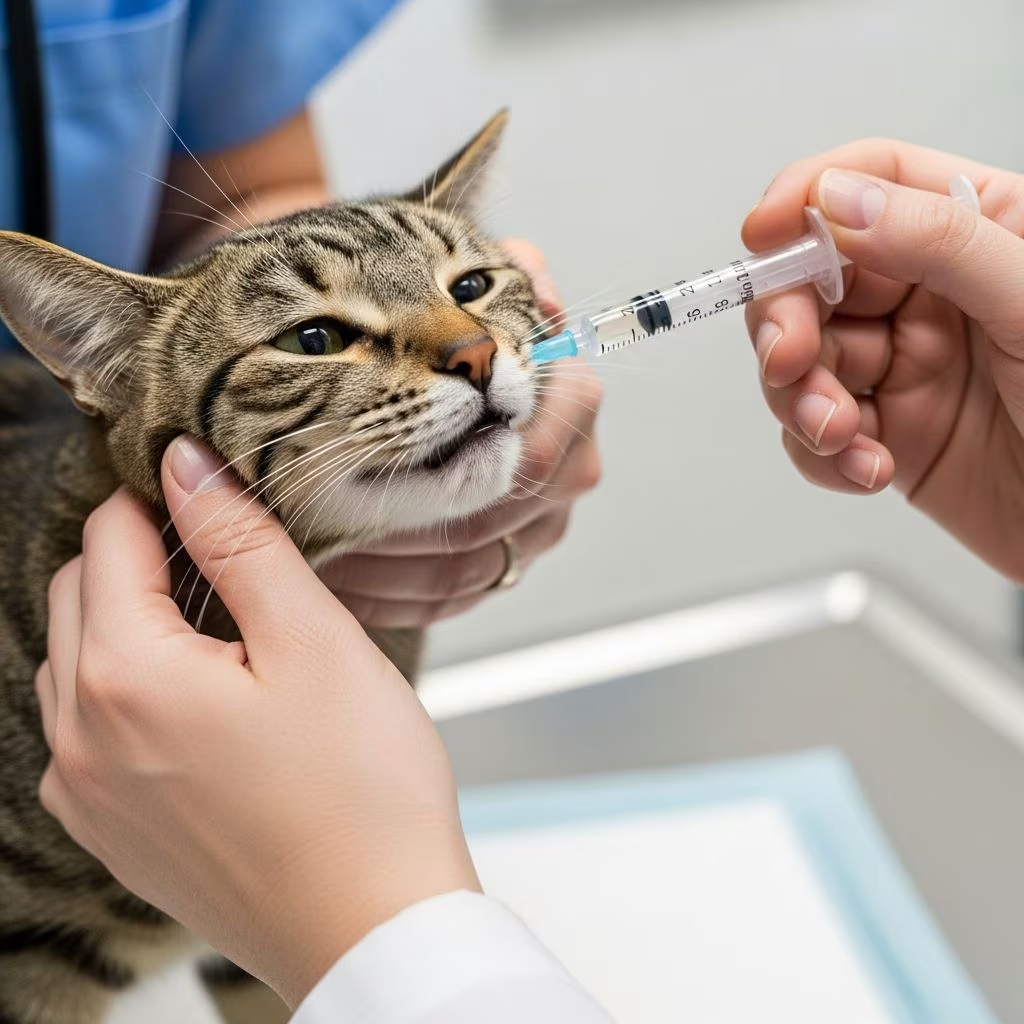
If your cat does not lick the liquid from the syringe, you’ll need to gently open their mouth manually. Gently place your non-dominant hand on the cat’s head, holding their cheekbones. If needed, you can gently tilt the head back slightly, causing the mouth to open just enough to insert the syringe. Avoid tilting the head too far back, as this can make it difficult for your cat to swallow and may cause the medication to go down the wrong way.
Step 7: Proper Syringe Placement
Using your dominant hand, place the tip of the syringe in the cat’s mouth, positioning it just behind one of the canine teeth, commonly called “fangs.” Advance the tip into the slight gap between the canine tooth and the pre-molars behind it. This positioning is critical for safe medication administration. Angle the syringe slightly to the side so that the tip deposits the medication onto the tongue, not straight into the back of the throat, which may cause your cat to inhale the liquid into its lungs. Proper placement prevents aspiration and ensures the medication goes where it should.
Step 8: Slow and Controlled Dispensing
Slowly squeeze the syringe to dispense the liquid medication. This is not a step to rush. Make sure your cat has adequate time to swallow the liquid and breathe between squirts. Administering medication too quickly can overwhelm your cat and cause them to spit out the dose or inhale it. Take your time and be patient throughout this process.
Post-Medication Care
Step 9: Don’t Re-Medicate Unnecessarily
Most cats will spit out some of the medication during administration, and this is completely normal. Do not attempt to re-medicate unless you are absolutely certain that none of the medication was swallowed. Many pet owners make the mistake of re-dosing when only a small portion was rejected, which can lead to overdosing. You may follow the medication with some water or encourage your cat to drink afterward. Sometimes cats will foam at the mouth from the taste of the medication, but this is usually harmless and will pass quickly.
Step 10: Proper Cleanup and Storage
After administering the medication, rinse the dropper or syringe thoroughly with water. Store any remaining medication according to the label instructions, typically in the refrigerator. Proper storage ensures the medication remains effective for future doses.
Making the Experience Positive for Your Cat
The way you handle medication administration can have long-term effects on how your cat responds to future treatments. Consider the following strategies to make the experience as positive as possible:
Use a syringe regularly to give your cat liquid treats or water, even when medication isn’t needed. This helps your cat become familiar with the syringe and learn to associate it with positive experiences rather than just medication. Over time, your cat may become more cooperative and less resistant.
Give your cat praise throughout the medication procedure and offer a special treat after giving the medication. This positive reinforcement creates an association between medication time and good things, making it easier to medicate your cat the next time. Consistency and patience are key to developing this positive association.
Remain calm and confident throughout the process. Cats are highly perceptive and will pick up on your anxiety or stress, which can make them more resistant to cooperation. Approach medication administration with the attitude that it’s a routine part of your cat’s care, and your cat is more likely to accept it as such.
Important Considerations and Safety Tips
Always follow your veterinarian’s dosing instructions precisely. Never attempt to adjust the dose on your own, even if you think your cat needs more or less medication. Your veterinarian has calculated the appropriate dose for your cat’s specific situation.
Be aware that some medications must be given on an empty stomach, while others should be given with food. Ask your veterinarian specifically about your cat’s medication and whether it can be mixed with food. If a medication requires an empty stomach and your cat is extremely difficult to medicate orally, discuss alternative formulations such as injections or transdermal patches with your veterinarian.
Never give your cat any medications other than those prescribed by your veterinarian. Do not give over-the-counter medications unless specifically instructed by your veterinarian, including aspirin, acetaminophen, or ibuprofen, which can be toxic to cats.
If you’re having difficulty giving your cat any form of medication, contact your veterinarian. They may be able to prescribe an alternative formulation, such as a different liquid or a long-acting injectable version that requires less frequent administration.
Frequently Asked Questions
Q: What should I do if my cat spits out the entire dose of medication?
A: Do not re-medicate unless you are completely certain that none of the medication was swallowed. If you’re unsure, contact your veterinarian for guidance. Many cats spit out small amounts of medication while still ingesting the majority of the dose.
Q: Can I crush a tablet and mix it with water to give it by syringe instead of using liquid medication?
A: Some medications can be crushed and mixed with water for oral administration via syringe. However, not all medications are suitable for crushing, as this can destroy their efficacy or cause irritation. Always ask your veterinarian before crushing any medication.
Q: How can I make liquid medication taste better to my cat?
A: If your medication can be mixed with food, try mixing it with highly palatable wet foods like tuna, chicken, or fish-based canned cat food. Some medications may also be available in flavored formulations from your veterinarian or pharmacy.
Q: What if my cat has a dietary restriction that prevents me from using the food-mixing method?
A: If your cat is on a special diet due to health conditions, inform your veterinarian about the restriction. They may be able to recommend specific approved foods for mixing the medication, or they may suggest an alternative medication formulation.
Q: Is it safe to warm refrigerated medication in the microwave?
A: No, you should never microwave medication. Microwaving can damage the active ingredients and create unpredictable hot spots. Instead, hold the syringe in your hand for 1-2 minutes or place it in a warm water bath.
Q: How often should I practice with the syringe before my cat actually needs medication?
A: Ideally, you should familiarize your cat with the syringe well in advance of needing medication. Use it to give water or cat-safe treats regularly so your cat becomes comfortable with the process and views the syringe as a positive thing rather than something to fear.
References
- Giving Liquid Medication to Cats — VCA Animal Hospitals. https://vcahospitals.com/know-your-pet/giving-liquid-medication-to-cats
- Managing the Sick Cat — VCA Animal Hospitals. https://vcahospitals.com/know-your-pet/managing-the-sick-cat
- Giving Your Cat Oral Medications — Cornell University College of Veterinary Medicine. https://www.vet.cornell.edu/hospitals/pharmacy/consumer-clinical-care-guidelines-animals/giving-your-cat-oral-medications



