

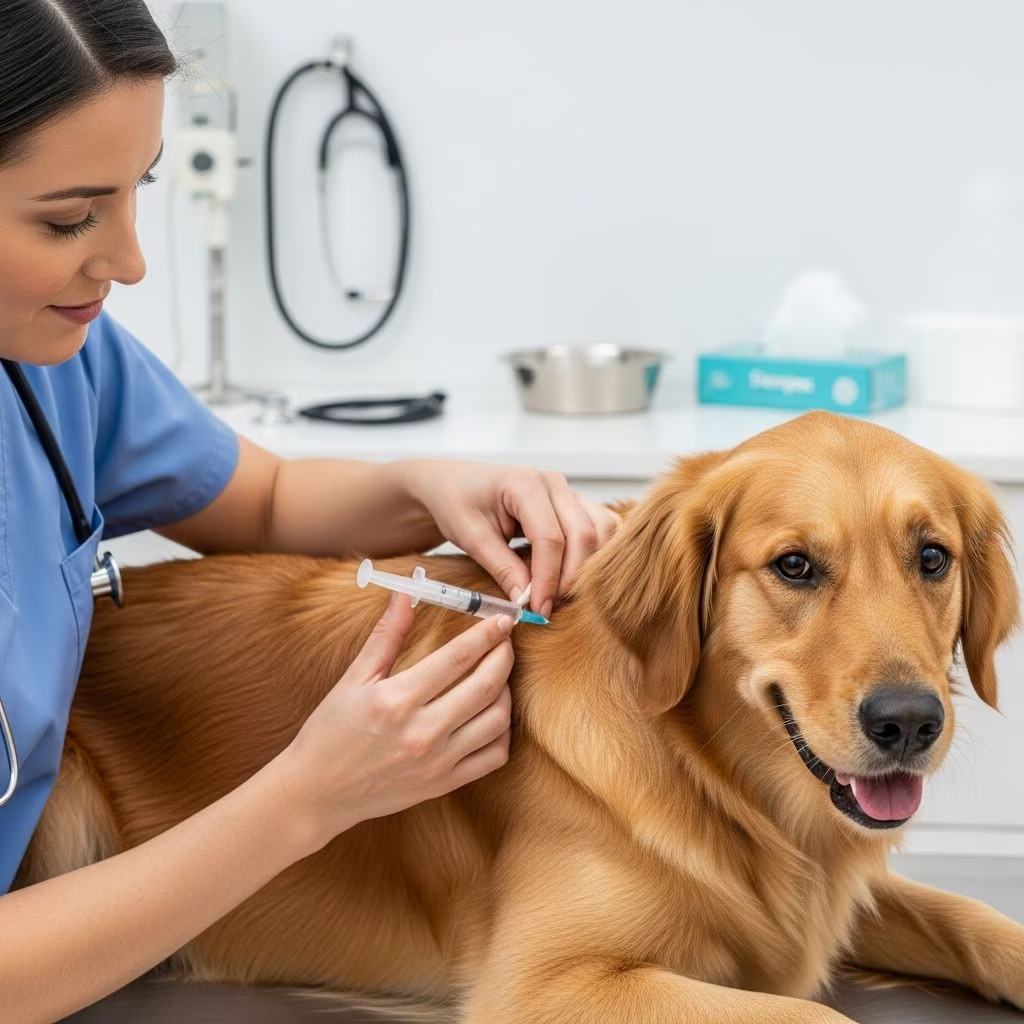
Understanding Dog Injections: A Comprehensive Guide
Many pet owners feel apprehensive about administering injections to their dogs. However, with proper instruction and practice, giving injections to your dog is a manageable skill that can significantly improve your pet’s health outcomes. Whether your dog requires insulin for diabetes, subcutaneous fluids for dehydration, or routine vaccinations, understanding the correct technique is essential for safe and effective treatment at home.
Is Injection Painful for Dogs?
One of the most common concerns pet owners have is whether injections cause pain or discomfort to their dogs. The good news is that most dogs do not seem to mind routine injections when administered correctly. Modern veterinary care uses disposable, single-use needles that ensure the needle tip remains very sharp, which minimizes pain during insertion. Your veterinarian will prescribe the appropriate needles and syringes specifically designed for your pet’s needs, taking into account their size, weight, and the type of medication being administered.
The brief discomfort of a sharp needle entering the skin is typically far outweighed by the health benefits your dog receives from the medication. Many dogs show little to no reaction to properly administered injections, especially when they are distracted with treats or positive reinforcement.
What Happens If Your Dog Moves During Injection?
Pet owners often worry about their dog moving during an injection and the potential consequences. The reality is that having a helper during the procedure, especially for your first few attempts, makes the process considerably easier. Offering your dog a special food or treat as a distraction is an excellent strategy. Many pet owners find it easier to administer injections while their dog is eating a regular meal, as the food naturally keeps their attention focused away from the injection.
Common concerns about needle breakage are largely unfounded. While the needle may bend if your dog suddenly moves, it is much more likely that the injection will end up outside the pet rather than breaking off inside the skin. If you are unsure whether your pet received the full amount of the injection due to movement, contact your veterinary hospital for guidance. Never administer additional medication unless specifically directed by your veterinarian, as this could result in overdosing.
The Technique for Giving Subcutaneous Injections
Injections to dogs are typically given in the subcutaneous tissue, which is the layer of tissue just under the skin. The term “subcutaneous” comes from “sub,” meaning under, and “cutaneous,” referring to skin. This tissue is considerably looser in dogs than in humans, making it an ideal location for injection administration.
Step-by-Step Injection Procedure
Step 1: Prepare the Injection Site
Begin by pinching some loose skin from the back of your dog’s neck, specifically from the “scruff” region between the shoulder blades. This area is ideal because it is easily accessible and your dog cannot see what you are doing, which reduces anxiety. Use your thumb and forefinger to create a small fold or “tent” of skin.
Step 2: Position the Syringe
Hold the syringe firmly in your dominant hand in a way that feels comfortable and natural to you. It is crucial not to place your hand or finger over the plunger of the syringe. If your dog suddenly moves and pushes your hand downward, this could result in the contents being wasted or accidentally injected at an incorrect rate or location.
Step 3: Insert the Needle
Insert the needle swiftly into the fold of skin, angling the needle downwards at a 30-degree to 45-degree angle. This angle helps ensure the needle enters the subcutaneous tissue rather than hitting muscle or other structures. Most syringes are small enough to allow the plunger to be depressed with the palm of the same hand once the needle is properly positioned underneath the skin.
Step 4: Administer the Medication
Once the needle is in position, administer the contents of the syringe quickly and smoothly. Slow injection can cause discomfort and may result in some medication leaking back out around the needle. A quick, confident motion is generally better tolerated by your dog.
Step 5: Withdraw and Massage
After injecting the medication, withdraw the needle smoothly and gently massage the area. This massage helps distribute the medication and can provide comfort to your dog. Gentle massage also helps the skin settle back to normal more quickly.
Additional Considerations for Long-Haired Dogs
If you have a long-haired dog, you may need to part the fur or ask your veterinarian to shave a small patch of skin at the injection site. This ensures you can be more precise with needle placement and reduces the risk of accidentally injecting medication into hair rather than skin. Most veterinarians can perform this simple grooming task during your training session or prior to your first at-home injection attempt.
Making the Process Easier for Your Dog
Having someone assist you during the injection procedure makes the process considerably easier, particularly when you are still building confidence. An assistant can help keep your dog calm, provide treats, or help position your dog if needed. Additionally, having someone hold your dog steady reduces the likelihood of unexpected movement during needle insertion.
With consistent practice, most pet owners find they have no problems administering routine injections to their dog without assistance after the first few attempts. The key is to approach the task with confidence and calm energy, as dogs can sense hesitation or anxiety in their owners.
Subcutaneous Fluid Administration Using the Bag Method
For dogs requiring subcutaneous fluids—such as those with kidney disease or dehydration—the bag method offers an effective way to administer larger volumes of fluid. This method involves using a fluid bag with a drip set and is often faster than other methods while providing good control over the administration rate.
Preparing the Fluid Bag Setup
Step 1: Unpack the Equipment
Remove the fluid bag and the fluid drip set from their protective packaging. Handle all components carefully to maintain sterility and prevent contamination.
Step 2: Close the Line Lock
Locate the line lock in the middle of the tubing, also called the fluid line. Close the line lock by moving the roller so it squeezes the tubing shut. On a new fluid set, the lock is usually set in the open position, so you will need to manually close it.
Step 3: Connect the Needle to the Bag
Find the exit port on the bottom of the fluid bag and pull the protective cover off this port, exposing the hole that will accept the pointed end of the fluid set. Remove the protective cap from the top (pointed) end of the fluid set and push it firmly into the open hole of the bag, puncturing the bag as you insert it. Attach it firmly to prevent leaks during fluid administration.
Step 4: Prime the Drip Chamber
Gently squeeze and release the bulb at the top of the drip set until the bulb chamber is approximately half-full of fluid. This step ensures that fluid is ready to flow through the tubing.
Step 5: Fill the Tubing
Remove the protective cap on the lower end of the fluid set and fill the tubing with fluid from the bag by opening the line lock. Be careful to ensure that all large air bubbles run out of the tubing. Do not allow the lower end of the fluid set to touch anything, as this could introduce contamination. Once the tubing is full of fluid, close the lock again by moving the roller downward.
Step 6: Prepare the Needle
Replace the protective cap on the lower end of the fluid set. Open the protective wrapping around the needle so that the open end (not the sharp end) is exposed. Critically, do not allow the open end of the needle to touch anything, as this could compromise sterility and introduce bacteria.
Administering Subcutaneous Fluids
Step 1: Prepare the Injection Site
Your veterinarian will advise you on how much fluid to give your dog based on their condition. If administering fluids in two locations on your dog’s body, give half the amount in each location to distribute the fluid more evenly and promote better absorption.
Step 2: Create the Skin Tent
Gently pull the skin away from your dog’s body to create a tent-like fold. You can do this on the back of the neck, between the shoulder blades, or on the side of the body, depending on what feels most comfortable for both you and your dog.
Step 3: Position the Needle
Lay the point of the needle at the base of the roll of skin (the bottom of the “tent”). Keep the needle horizontal and pointing toward your dog’s head if your dog is in an upright or standing position. Advance the needle slightly forward while pulling the roll of skin towards the needle with a firm and steady motion, not shaky or timid. This motion will place the point of the needle just under the skin.
Step 4: Secure the Needle
Release the roll of skin, and the point of the needle should remain positioned under the skin. The skin now holds the needle in place without requiring you to hold it.
Step 5: Begin Fluid Flow
Grasp the line fluid lock in one hand and move the roller upward to start the fluids flowing. Watch the line of fluids in the bag as it descends to ensure you are giving the recommended amount. The line typically starts at the highest amount marked on the bag (for example, 1000 mL) and decreases as the fluids are administered. If your veterinarian recommended 100 mL and you started at 1000 mL, you will stop when the line hits 900 mL.
Important Tips for Successful Injection Administration
Skin Sterilization is Not Necessary
It is usually not necessary to sterilize the skin with alcohol before inserting the needle. Wiping alcohol on the skin does not truly sterilize it in a medical sense, and the odor and feel of alcohol may aggravate or stress your dog unnecessarily. Your veterinarian may provide specific instructions if sterilization is needed for your particular situation.
Maintain Appropriate Fluid Temperature
Ideally, subcutaneous fluids should be administered at approximately body temperature. While most dogs tolerate fluid administration well, if the fluids are unusually cold or hot, they may experience discomfort. Warm the fluids in a water bath to increase comfort if they have been stored in a cool location. Check the temperature by placing your wrist on the bag before administration. Never refrigerate subcutaneous fluids before use, as cold fluids can cause discomfort and may affect absorption rates.
Use Positive Reinforcement and Distraction
Use a creamy treat or baby food (ensuring it contains no garlic or onion, which are toxic to dogs) to keep your dog’s focus away from the injection. Alternatively, if your dog prefers physical affection, you or an assistant can gently rub them around their head and neck while you administer the injection. This positive reinforcement helps create a calm atmosphere and can reduce anxiety during treatment.
Practice Without the Needle
Practice the injection procedure without a needle but with the same rewards to help your dog relax for the real injection. This desensitization technique allows your dog to become familiar with the positioning and handling without the stress of an actual injection. Many dogs who have practiced this way show significantly less anxiety during real injections.
When to Contact Your Veterinarian
If you are unsure whether your dog received the full amount of the prescribed injection due to movement or other complications, contact your veterinary hospital for instructions rather than guessing or self-administering additional doses. Your veterinarian can advise you on whether you need to repeat the injection or if the amount administered was sufficient.
Frequently Asked Questions About Dog Injections
Q: Will my dog experience pain from the injection?
A: Most dogs do not seem to mind routine injections when administered using sharp, disposable needles. The brief discomfort is typically minimal, and your veterinarian will select appropriate needle sizes to minimize any potential pain.
Q: What should I do if my dog moves during the injection?
A: Having an assistant and offering treats can help keep your dog still. If movement occurs, the needle may bend but is unlikely to break off in the skin. Contact your veterinarian if you are unsure whether the full dose was administered.
Q: Can I use alcohol to sterilize the injection site?
A: While not necessary, light alcohol wiping is acceptable. However, many dogs find the odor and sensation unpleasant, so it is often better to skip this step unless your veterinarian specifically recommends it.
Q: How should I store subcutaneous fluids?
A: Store subcutaneous fluids at room temperature and warm them to body temperature before administration using a water bath. Do not refrigerate them, as cold fluids can cause discomfort to your dog.
Q: How can I help my dog feel calm during injections?
A: Use treats, gentle massage, positive reinforcement, and practice sessions without the needle to help your dog feel more comfortable with the injection process.
References
- Giving Injections to Dogs — VCA Animal Hospitals. 2025. https://vcahospitals.com/know-your-pet/giving-injections-to-dogs
- Subcutaneous Fluid Administration in Dogs: Bag Method — VCA Animal Hospitals. 2025. https://vcahospitals.com/know-your-pet/subcutaneous-fluid-administration-in-dogs
- Insulin Administration in Dogs — VCA Animal Hospitals. 2025. https://vcahospitals.com/know-your-pet/insulin
- Vaccines for Dogs — VCA Animal Hospitals. 2025. https://vcahospitals.com/know-your-pet/vaccines-for-dogs
- 2022 AAHA Canine Vaccination Guidelines — American Animal Hospital Association. 2022. https://www.aaha.org/resources/2022-aaha-canine-vaccination-guidelines/



