

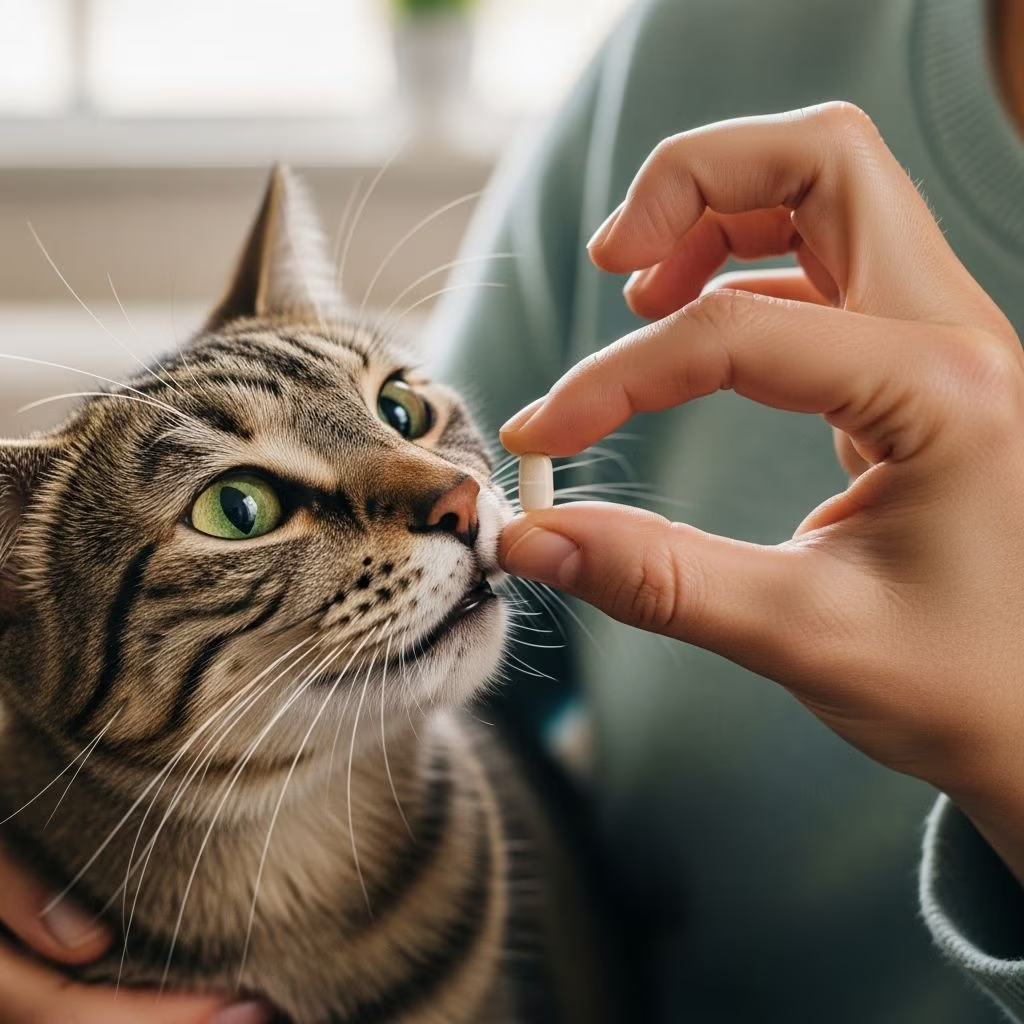
How to Give a Cat a Pill: 3 Vet-Approved Methods
Administering medication to your feline companion can be challenging, but with the right approach and preparation, you can make the process smoother for both you and your cat. Whether your veterinarian has prescribed antibiotics, pain relief, or other medications, knowing how to properly give your cat a pill is essential for their health and well-being. This comprehensive guide explores three effective methods recommended by veterinarians to help you successfully medicate your cat at home.
Method 1: Teaching Your Cat to Take Pills Like Treats
One of the most effective and stress-free methods for giving your cat medication is to train them to accept pills as treats before they actually need medication. This preventative approach can save you considerable frustration when your cat requires long-term treatment.
The Training Process
Start by obtaining some tiny, empty gelatin capsules from your veterinarian or a pet supply store. These capsules serve as training tools and can later hold actual medication. Coat the empty capsules with a highly palatable lickable cat treat, such as Churu or similar products that cats find irresistible.
Present these coated capsules to your cat as you would any regular treat, using your special treat-calling word or signal. Most cats will quickly learn to associate these capsules with positive experiences and delicious flavors. Repeat this training several times over a period of days or weeks, gradually building positive associations with capsules.
Implementation with Actual Medication
Once your cat is comfortable taking empty capsules as treats, you can transition to placing their prescribed medication inside the capsule before coating it. For cats on multiple medications, ask your veterinarian if different medications can be combined into a single capsule, making administration even simpler.
Always discuss your plan to use pill capsules with your veterinarian before implementing this method. Some medications may have specific requirements that make capsule administration unsuitable, or your vet may have recommendations about how to properly prepare the capsule for your cat’s particular prescription.
Method 2: Using a Pill Gun for Direct Administration
A pill gun, also known as a pill popper or pill applier, is a specialized device designed to help pet owners safely administer pills to cats without risking bites or hand injuries. This mechanical tool can be particularly helpful when your cat is resistant to taking medication through other methods.
How the Pill Gun Works
The pill gun features a soft nozzle at the end where the tablet or capsule is placed. When you press the plunger, it ejects the pill into the back of your cat’s mouth, encouraging them to swallow. This method allows you to maintain a safe distance from your cat’s mouth and teeth, reducing the risk of injury to your hands.
Proper Technique for Using a Pill Gun
Before restraining your cat, prepare the pill gun completely. Place the tablet or capsule in the soft nozzle and ensure the plunger is just in contact with the medication, making it as easy as possible to release the pill at the back of your cat’s tongue. Having everything ready before you handle your cat helps reduce stress for both of you and ensures a quicker procedure.
Approach your cat calmly and with confidence. Gently restrain your cat using appropriate techniques, then use the pill gun to place the medication as far back on your cat’s tongue as possible. The further back the pill goes, the more likely your cat will simply swallow it rather than attempt to spit it out.
Important Considerations
Cats understandably dislike this method, and veterinarians do not recommend using a pill gun for long-term medication administration. Frequent use of a pill gun can cause some cats to become anxious, run and hide, or display signs of stress. This forceful method is particularly unsuitable for shy, nervous, or anxious cats who may develop medication-related behavioral issues.
However, for short-term medication needs or when other methods have failed, a pill gun can be an effective solution. If you’re concerned about proper technique or afraid of being bitten, request training from your veterinarian or veterinary technician. Many online tutorials also provide detailed demonstrations of correct pill gun usage.
Method 3: Direct Hand Administration
When hiding medication in treats isn’t possible or pill guns aren’t suitable, direct hand administration of pills may be necessary. This method requires proper technique, patience, and ideally, two people to ensure success.
Preparation and Setup
Before attempting to give your cat a pill by hand, ensure you have everything ready. Have the tablet, a small treat or water for after administration, and any other necessary items within easy reach. Never restrain your cat until you’re completely prepared, as prolonged restraint causes stress and anxiety.
Place your cat on a stable, non-slip surface such as the floor or a sturdy table. Having two people is ideal whenever possible—one person to administer the pill and one to gently restrain the cat. This makes the procedure faster and calmer for your feline companion.
Step-by-Step Administration Process
Step 1: Proper Head Positioning
Approach your cat from the side rather than from above, as this is less threatening and stressful for the animal. Place one hand on the top of your cat’s head, gently but firmly holding their head between your thumb and fingers.
Step 2: Opening the Mouth
Extend your thumb and forefinger downward to either side of your cat’s jaw. Gently tilt their head upward. Using the middle finger of your hand that’s holding the tablet, carefully pull down the lower jaw to open their mouth.
Step 3: Placing the Pill
While keeping your cat’s head tilted up, quickly place or drop the tablet as far back on your cat’s tongue as possible. Always aim for the center of the tongue, extending as far back as you can see. The further back the pill is placed, the harder it becomes for your cat to do anything other than swallow it.
Step 4: Encouraging Swallowing
Hold your cat’s jaw closed for a few seconds and wait for them to swallow. Gently rubbing their throat under the chin may help encourage swallowing. When your cat licks their lips or nose, you can be confident they’ve swallowed the medication.
Handling Rejection and Follow-Up
If your cat spits the tablet out and doesn’t appear distressed, you can attempt the procedure again. Some cats require multiple attempts. Offering a small treat or a small amount of water after successful administration helps prevent irritation to the esophagus, though always check with your veterinarian first, as some medications require specific timing.
If your cat becomes upset, stressed, or refuses medication repeatedly, contact your veterinary team immediately. They may recommend alternative formulations, such as liquid medications or compounded prescriptions, that could be easier to administer.
Alternative Administration Methods
Hiding Medication in Food or Treats
If your veterinarian confirms the medication can be given with food, this non-stressful method may be ideal. Hide crushed medication (if appropriate) in a highly palatable treat like tuna juice or special commercial medication treats designed for cats. However, never mix medication into your cat’s main meal, as this could deter them from eating and make it difficult to verify complete medication consumption.
Liquid Medications and Pipette Application
Some medications, particularly flea and worm preventatives, come in liquid form that’s applied to the back of your cat’s neck. Read the manufacturer’s instructions carefully before handling your cat. Wear recommended gloves, apply the liquid to the spot where your cat cannot lick it off, and wash your hands thoroughly after application.
Important Considerations Before Administering Medication
Before giving your cat any medication, always consult with your veterinarian about the following:
Can the medication be given with food? Some medications must be given with food for proper absorption, while others should be given on an empty stomach.
Can the tablet be crushed or split? Never crush extended-release tablets, as this destroys their special formulation. Ask your vet before crushing any medication.
What’s the simplest administration method? Consider what’s easiest for both you and your cat, and discuss options with your veterinary team.
Should food be withheld before administration? If giving medication with food is safe, consider removing all food for 12 hours beforehand to ensure your cat is hungry and more likely to eat the medicated treat.
When to Seek Professional Help
If you’re experiencing ongoing difficulties giving your cat medication, your veterinarian has several options to make treatment easier. These may include:
– Requesting medication in an alternative form, such as liquid instead of pills
– Having medication compounded into a flavor your cat enjoys
– Requesting professional administration at the veterinary clinic
– Exploring other treatment options that may be more easily administered
Remember, if your cat becomes distressed or you’re uncertain about proper administration technique, always contact your veterinary team for guidance and support. Your cat’s well-being and your peace of mind are priorities.
Frequently Asked Questions About Giving Cats Pills
Q: Is it safe to crush my cat’s medication?
A: Not all medications can be safely crushed. Extended-release tablets should never be crushed, as they’re designed to release medication slowly. Always check with your veterinarian before crushing any medication, as some formulations can lose effectiveness or cause harm if altered.
Q: What should I do if my cat spits out the pill?
A: If your cat spits out the pill and isn’t distressed, you can try administering it again using the same or a different technique. If your cat repeatedly rejects medication or becomes upset, contact your veterinarian for alternative administration methods or formulations.
Q: Can I give multiple medications in one capsule?
A: This depends on the specific medications prescribed. Some medications interact with each other and shouldn’t be combined. Always discuss your plan with your veterinarian before combining multiple medications into a single capsule.
Q: How can I train my cat to accept pills as treats?
A: Start with empty gelatin capsules coated in lickable treats like Churu. Give these to your cat regularly as treats before they need actual medication. Once they’re comfortable, you can place real medication inside the coated capsule.
Q: Is a pill gun safe for all cats?
A: Pill guns can cause stress, particularly for shy or anxious cats. They’re best used for short-term medication needs rather than long-term treatment. Nervous cats may develop anxiety or avoidance behaviors with repeated pill gun use.
Q: Should I give food before or after administering medication?
A: This depends on your cat’s specific medication. Some medications must be taken with food, while others should be taken on an empty stomach. Always follow your veterinarian’s specific instructions regarding food and medication timing.
References
- How to Give a Cat Medication — International Cat Care. 2024. https://icatcare.org/articles/how-to-give-a-cat-medication
- How to Give a Cat a Pill — Best Friends Animal Society. 2024. https://bestfriends.org/pet-care-resources/how-give-cat-pill
- Tips on Medicating Your Cat More Easily — Feline CRF Online. 2024. https://www.felinecrf.org/medicating_your_cat.htm
- Medical Care for Kittens Playbook — Best Friends Animal Society. 2024. https://bestfriends.org/network/resources-tools/medical-care-kittens-playbook



