

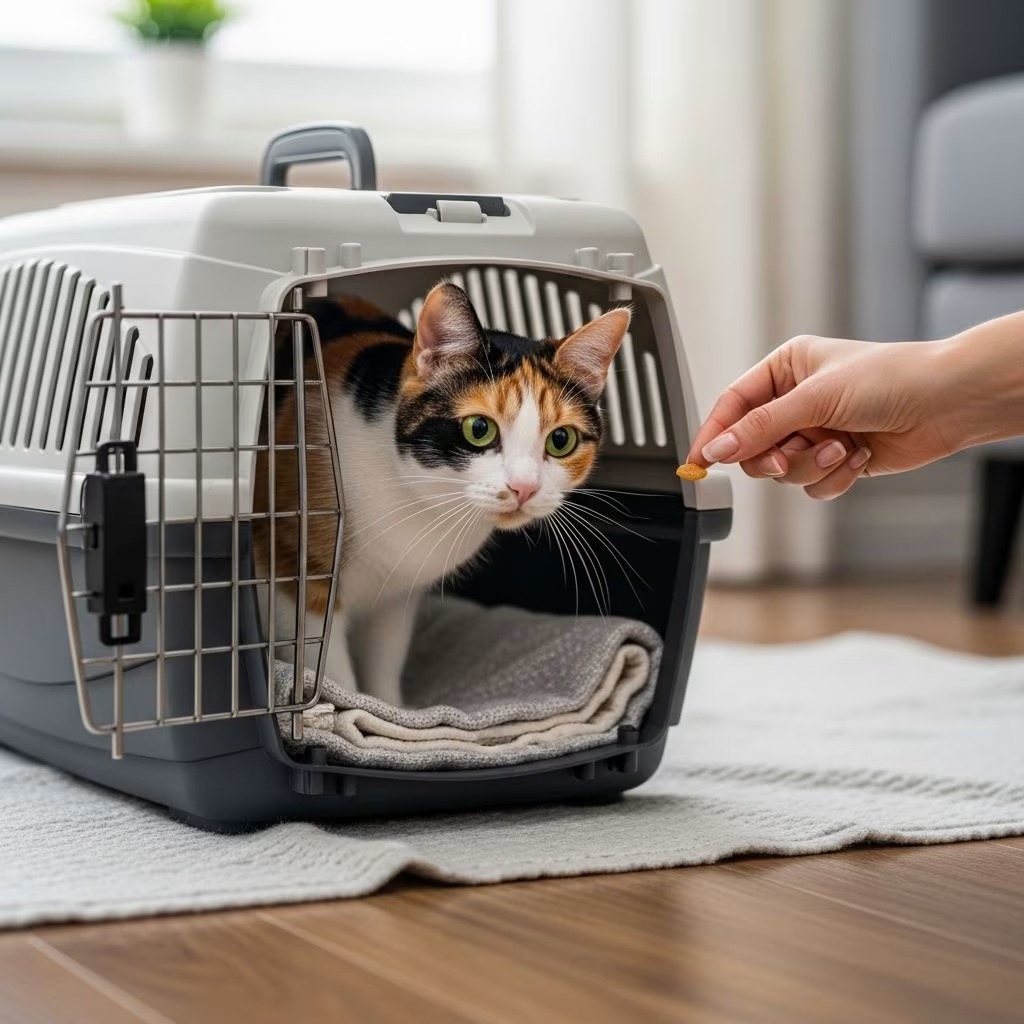
How to Get Your Cat Into a Carrier: Step-by-Step Guide
Getting your cat into a carrier can be one of the most stressful parts of pet ownership, whether you’re heading to a veterinary appointment or planning to travel. Many cat owners resort to chasing their feline companions around the house, resulting in anxiety for both pet and owner. However, with patience, proper training techniques, and positive reinforcement, you can teach your cat to willingly enter their carrier. This comprehensive guide will walk you through proven methods to make carrier entry a positive experience for your cat.
Understanding Your Cat’s Fear of Carriers
Before diving into training techniques, it’s important to understand why many cats fear carriers. Cats often associate carriers with negative experiences, such as trips to the veterinarian or being transported in a car. This learned behavior can persist for years if not addressed properly. The key to successful carrier training is creating new, positive associations with the carrier itself.
If your cat has had multiple negative experiences with their current carrier, consider starting fresh with a new carrier of a different design. This gives your cat a clean slate and prevents them from triggering old anxious memories when they see the familiar carrier.
Step 1: Make the Carrier Part of Your Home Environment
The first step in carrier training is to normalize the carrier’s presence in your home. This desensitization phase is crucial for cats with previous negative associations.
- Leave the carrier out permanently rather than storing it in a closet or basement
- Place it in a common area where your cat naturally spends time
- Make the carrier inviting by adding soft bedding, blankets, or a familiar-smelling item
- Never force your cat into the carrier during this phase
- Allow your cat to explore the carrier at their own pace
During this initial stage, you can enhance the carrier’s appeal by placing treats or toys inside. Some cats will naturally investigate and spend time in the carrier when it’s presented as a non-threatening space. Reward any voluntary interaction with praise or treats.
Step 2: Create Positive Associations With Rewards
Once your cat is comfortable with the carrier’s presence, begin pairing it with something they find delightful. Positive reinforcement is the cornerstone of successful carrier training.
Using Food as Motivation
Food is one of the most effective tools for carrier training. Begin by feeding your cat near the carrier, gradually moving their food bowl closer with each meal. Once they’re comfortable eating directly in front of the carrier, place the bowl just inside the entrance. Over several meals, gradually move the food bowl deeper into the carrier until your cat must enter completely to eat.
This method works because it creates a positive, low-pressure association. Your cat learns that the carrier equals food, not a trip to the vet. The process should happen gradually—rushing this step can cause your cat to become wary again.
Using Treats and Rewards
Beyond meals, scatter high-value treats throughout the carrier during the day. These should be treats your cat doesn’t receive otherwise—special snacks that are irresistible. When your cat discovers these treats, they begin to actively seek out the carrier.
During training sessions, use treats to reward your cat for increasingly challenging behaviors. Start by rewarding them simply for entering the carrier, then for staying longer, then for remaining calm while the door is near or closed.
Step 3: Increase the Challenge Gradually
As your cat becomes comfortable remaining in the carrier for several seconds between treats, gradually introduce additional elements that replicate actual carrier use. This phase requires patience and careful observation of your cat’s body language.
Introducing the Lid
If your carrier has a removable top, the next step is getting your cat comfortable with the lid being placed over them. Begin by:
- Placing the lid over your cat for just a moment while providing treats through the holes
- Immediately removing the lid and giving another reward
- Gradually increasing the duration the lid stays in place
- Never trapping your cat—always show them they can exit freely
Closing the Door
Once your cat is comfortable with the lid, practice gently closing the door while they’re eating or receiving treats. Start with very brief door closures—just a second or two. Open it immediately and provide a reward. Gradually increase the duration the door stays closed over multiple sessions.
Step 4: Practice Movement and Handling
Now that your cat is comfortable in a closed carrier, they need to become accustomed to the carrier being moved. Movement can trigger anxiety in cats, so this phase should be done gradually.
Lifting the Carrier
Start by lifting the closed carrier just a few inches off the ground while providing treats through the door or lid. Set it back down immediately and reward your cat. Progress to:
- Lifting the carrier a few feet off the floor
- Holding it fully off the ground for a few seconds
- Lifting it for longer durations
- Walking a few steps while carrying it
Important note: Always lift the carrier from the base rather than the handle. This provides better stability and is more comfortable for your cat. Handles can swing or shift, which may startle your pet and create negative associations.
Walking With the Carrier
Once your cat is comfortable being lifted, begin walking short distances while carrying the closed carrier. Start with just a few steps in your home, providing treats and praise. Gradually extend the distance and duration. This mimics what will happen during actual trips to the veterinarian.
Step 5: Add Environmental Elements
To further reduce stress during actual travel, introduce additional elements to your training sessions.
Using Blankets and Covers
Once your cat is comfortable with a closed carrier, place a blanket or sheet over it. This can lower stress during travel and in the waiting room at your veterinarian’s office by blocking your cat’s view of unfamiliar surroundings. It may also prevent motion sickness. Some cats may need to repeat earlier training phases when you add this element, but they should progress more quickly through steps they already know.
Using Feline Pheromone Sprays
Spray Feliway or another feline pheromone product on the towel or blanket before your cat enters the carrier. These products have been shown to help relieve stress in cats and can make the carrier experience more pleasant.
Important Training Tips and Best Practices
Successful carrier training requires understanding how cats learn and respond to training. Keep these principles in mind throughout the process:
Keep Sessions Short
Training sessions should last no more than two minutes. Cats satiate quickly with food rewards, and extended sessions can lead to frustration for both you and your cat. Instead, aim for two brief sessions daily, perhaps before regular feeding times. Short, positive sessions are far more effective than longer, potentially frustrating ones.
End on a Positive Note
Always end training sessions while things are still going well. If your cat is still engaged and responding positively, this is the perfect time to stop. This ensures they’ll be eager to participate in the next session.
Give Your Cat Choices
Never force your cat into the carrier. Always give them the choice to walk away and reward them generously when they choose to approach and remain in the carrier. This voluntary participation is what transforms the experience from stressful to positive.
Watch Body Language
Pay close attention to your cat’s body language throughout training. Signs of stress include flattened ears, dilated pupils, tail tucking, or attempts to escape. If you notice these signs, go back to the previous step and progress more slowly. Every cat learns at their own pace, and forcing progress can undo previous training gains.
Timeline Expectations
How long carrier training takes varies significantly based on your individual cat. Several factors influence the timeline:
- Previous experience: Kittens trained early may learn in just a few days, while adult cats with negative carrier associations may require several months
- Individual temperament: Some cats are naturally more food-motivated and adaptable than others
- Consistency: Daily training sessions will produce faster results than sporadic efforts
- Trainer patience: Rushing the process or showing frustration can slow progress
Remember that even “several months” of training typically involves only a few minutes of daily practice. This minimal time investment pays dividends in reducing stress for both you and your cat during necessary veterinary visits and travel.
Beyond the Vet Visit: Other Benefits of Carrier Training
While carrier training is often approached as a solution for veterinary visits, the benefits extend much further. A cat that willingly enters their carrier is safer during emergencies. In case of a house fire, natural disaster, or other situation requiring rapid evacuation, a cat that enters their carrier voluntarily can be safely transported without delay. This training essentially provides disaster preparedness for your household.
Common Challenges and Solutions
| Challenge | Solution |
|---|---|
| Cat refuses to eat near the carrier | Move the food bowl further away and progress more slowly, taking several weeks to gradually move it closer |
| Cat shows stress when door closes | Go back to previous steps with the door open; practice closing and opening many times before closing for longer |
| Cat was traumatized by previous carrier experiences | Consider purchasing a new carrier of a different design to create a fresh start without triggering old memories |
| Cat loses interest in training | Use higher-value treats and keep sessions shorter to prevent satiation |
| Progress stalls at a particular step | Don’t rush; some cats need more repetitions to feel confident. Stay at the current step longer before progressing |
Frequently Asked Questions
Q: How long does cat carrier training typically take?
A: Timeline varies by cat. Kittens may learn in days, while adult cats with negative associations might need several months. However, this typically involves only 2-4 minutes of daily practice, making it a manageable commitment.
Q: Can I train an adult cat that has always feared the carrier?
A: Yes, absolutely. Adult cats can learn to enjoy their carriers through positive reinforcement training. It may take longer than training a kitten, but success is achievable with patience and consistency.
Q: What if my cat refuses to take treats from the carrier?
A: Try even higher-value treats that your cat rarely receives otherwise. You might also try moving the food bowl method instead, as cats often respond better to regular meals than individual treats.
Q: Should I practice closing the carrier door with my cat inside?
A: Yes, but gradually. Start with very brief closures while your cat is eating or receiving treats, then immediately open and reward. Slowly increase the duration over many sessions.
Q: Is it normal for my cat to regress in training?
A: Yes, cats can regress if stressed or if you progress too quickly. If this happens, simply return to the previous step and move forward more slowly. This is a normal part of the training process.
Q: What type of carrier works best for training?
A: Carriers that disassemble into separate pieces (top and bottom) are often easier for training, as you can work with just the bottom half initially. Ensure the carrier is appropriately sized for your cat—not too small, but not so large that your cat feels insecure.
Q: Can I use punishment or force to get my cat into a carrier?
A: No. Punishment and force create negative associations and make future carrier interactions more difficult. Positive reinforcement is the only effective long-term solution.
References
- Cat Carrier Training Simplified — Insightful Animal Behavior. 2025. https://www.insightfulanimals.com/cat-carrier-training-simplified
- Teaching Your Cat to Love Their Carrier — CattleDog Publishing. 2025. https://cattledogpublishing.com/blog/teaching-your-cat-to-love-their-carrier/
- Teach Your Cat To Go Into A Carrier—Without A Struggle — Fear Free Happy Homes. 2025. https://www.fearfreehappyhomes.com/teach-your-cat-to-go-into-a-carrier-without-a-struggle/
- Teaching Your Cat to Ride in a Carrier — ASPCApro. 2020. https://www.aspcapro.org/sites/default/files/resource/downloads/2020-2020-06/aspca-teaching-cats-to-ride-in-carriers.pdf
- Teach Your Cat to Love the Carrier — Wisconsin Humane Society. 2025. https://www.wihumane.org/behavior/ask-the-experts/cat-behavior/teach-your-cat-to-love-the-carrier
- Choosing & Using a Cat Carrier — Cats Protection. 2025. https://www.cats.org.uk/help-and-advice/getting-a-cat/how-to-choose-and-use-a-cat-carrier



