

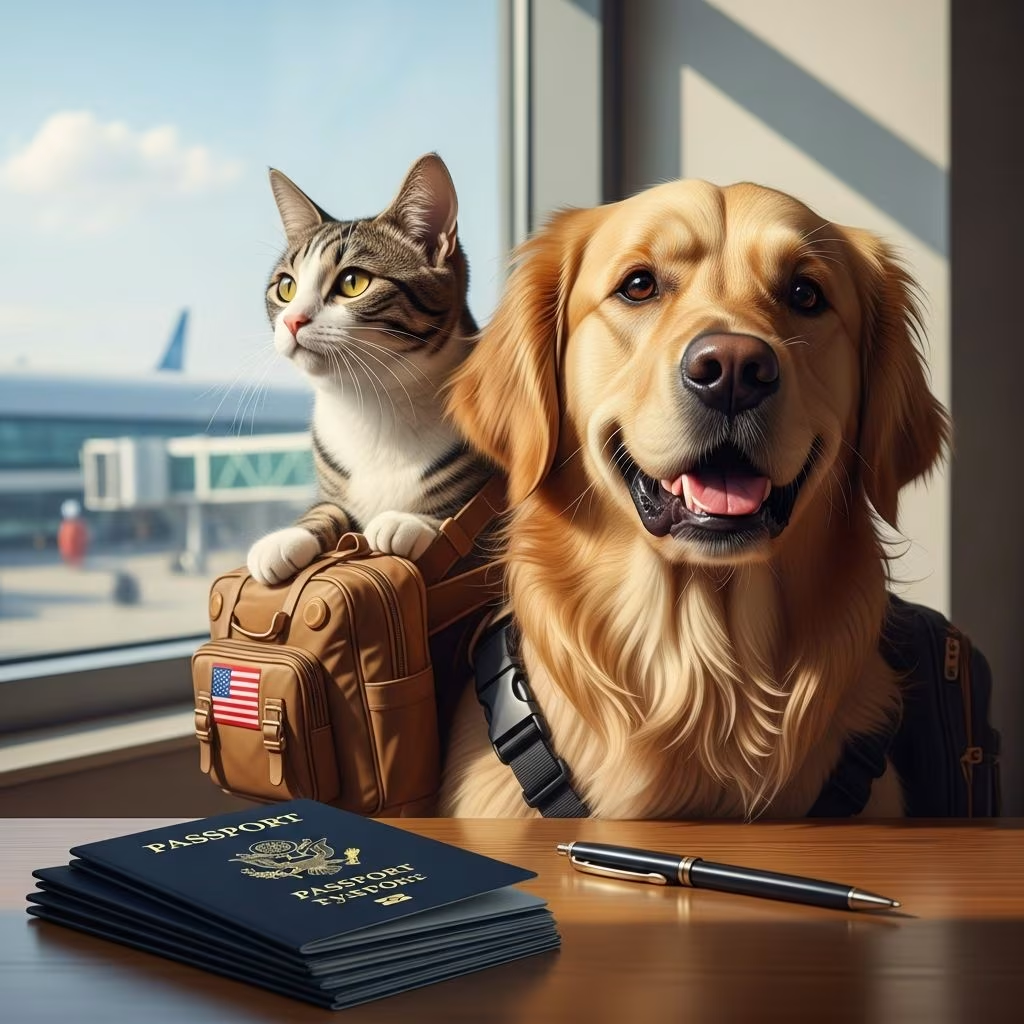
How to Get a US Pet Passport in 2026: Your Complete Guide
Traveling internationally with your beloved pet can be an exciting adventure, but it requires careful planning and proper documentation. A US pet passport is not a single document like a human passport. Rather, it refers to a comprehensive collection of health records, vaccination certificates, and government endorsements that allow your pet to legally enter foreign countries. The process of obtaining all necessary documentation typically takes several weeks to a couple of months, making it essential to start early when planning international travel with your furry companion.
Understanding the requirements for pet travel is crucial before you pack your bags. Different countries have varying regulations and health standards, and the airline you choose will also have specific pet policies. By learning the proper steps and gathering the right documentation, you can ensure a smooth and stress-free travel experience with your pet.
Before You Start: Research Your Destination
The first critical step in obtaining a US pet passport is researching your destination country’s specific requirements. Every country has unique laws and regulations governing pet importation, and these requirements vary significantly. Before you even schedule a veterinary appointment, spend time on your destination country’s government travel website to understand what documentation is needed.
Most countries require similar baseline documentation, including:
- Updated rabies vaccinations
- Current health records from an accredited veterinarian
- USDA endorsement of health certificates
- Microchip identification meeting ISO standards
- Proof of parasite treatments or diagnostic testing
Some countries with more stringent regulations may require additional documentation beyond these baseline requirements. For example, Australia and New Zealand have particularly rigorous quarantine and blood test requirements that can take several months to prepare. Additionally, you should familiarize yourself with your chosen airline’s pet travel policies, as these may differ from country requirements. Working simultaneously on country requirements and airline policies will streamline your preparation process.
Step 1: Make a List of Health Requirements
Once you’ve researched your destination country, create a comprehensive checklist of all health requirements needed for your pet’s international travel. This organized list will serve as your roadmap throughout the documentation process and help ensure nothing is overlooked.
Your checklist should include:
- Current rabies vaccination with documentation
- Microchip information and registration
- Core vaccinations and booster schedule
- Any additional country-specific vaccines or treatments
- Health certificate from a USDA-accredited veterinarian
- USDA endorsement requirements
- Airline-specific health documentation
- Proof of parasite prevention or treatment
- Any diagnostic test results if required
Having this comprehensive list in one organized location prevents confusion and ensures you don’t miss any critical requirements. As you gather documentation, check off items as they’re completed. This organized approach transforms what could be an overwhelming process into manageable steps.
Step 2: Schedule an Appointment With a Veterinarian
Before scheduling your veterinary appointment, complete the USDA worksheet that outlines your destination country’s requirements. This worksheet will help your veterinarian understand exactly what documentation needs to be prepared for your specific travel plans.
When selecting a veterinarian, ensure they are USDA-accredited and authorized to issue health certificates that can be endorsed by the USDA. Not all veterinarians have this certification, so ask when scheduling your appointment. During your visit, your veterinarian will:
- Conduct a thorough health examination
- Verify all vaccinations are current and properly documented
- Issue an International Health Certificate (IHC)
- Confirm your pet meets the destination country’s health standards
- Sign and authorize required documentation
Schedule this appointment well in advance—ideally at least 10 days before your planned travel date. Some vaccination requirements have specific timing requirements. For example, rabies vaccinations often must be administered 21 or more days before travel for certain destinations. Your USDA-accredited veterinarian will ensure all timing requirements are met and proper documentation is in order.
Step 3: Submit Documents, Forms & Fees to USDA
After your veterinary appointment, you’ll need to submit your pet’s documentation to the USDA for official endorsement. The USDA provides a helpful checklist ensuring all required forms and documents are included in your submission. Review this checklist carefully before gathering your materials.
You have two main options for submitting documents to the USDA:
Option 1: Work With Your Accredited Veterinarian
Many accredited veterinarians have access to the Veterinary Export Health Certification System (VEHCS), which allows them to submit your pet’s paperwork to the USDA electronically on your behalf. This streamlined process eliminates the need for you to personally manage the submission to the USDA and typically results in faster processing. Ask your veterinarian if they have VEHCS access when scheduling your appointment.
Option 2: Direct Submission
If your veterinarian doesn’t have VEHCS access, you can submit documentation directly to the USDA yourself. Gather all required documents, include any applicable fees, and follow the USDA’s submission guidelines. This option takes longer and requires more personal effort in managing the process.
Regardless of submission method, expect the USDA endorsement process to take additional time beyond your veterinary visit. Planning several weeks in advance ensures you receive endorsement before your travel date.
Understanding Pet Passport Documentation
Your complete pet passport is a compilation of several essential documents rather than a single credential. This package includes microchip details, vaccination proof, government endorsements, and health certificates. Understanding what comprises your pet’s complete travel documentation helps ensure nothing is missing.
Key documents typically included:
| Document | Purpose | Issuing Authority |
|---|---|---|
| Microchip Documentation | Permanent pet identification meeting ISO standards | Veterinarian/Microchip Registry |
| Rabies Vaccination Certificate | Proof of rabies protection | Veterinarian |
| Core Vaccination Records | Proof of other required vaccinations | Veterinarian |
| Health Certificate | Confirmation pet is fit for travel | USDA-Accredited Veterinarian |
| USDA Endorsement | Official government approval for export | USDA/APHIS |
| Parasite Treatment Records | Proof of preventative treatments | Veterinarian |
Important Timeline Considerations
The process of gathering all appropriate documentation for international pet travel is time-intensive and typically takes several weeks to a couple of months from start to finish. Understanding the timeline helps you plan accordingly and avoid last-minute stress.
Recommended timeline:
- 3 months before travel: Research destination requirements and consult with your veterinarian
- 2-3 months before travel: Ensure all vaccinations are current and scheduled
- 6-8 weeks before travel: Complete veterinary appointments and USDA worksheet
- 4-6 weeks before travel: Submit documentation to USDA for endorsement
- 2 weeks before travel: Confirm all documentation is complete and in order
- 1 week before travel: Organize all documents in a travel folder for easy access
Starting early is not just recommended—it’s essential for reducing stress and ensuring nothing is overlooked.
Special Requirements for Different Countries
While the general process outlined above applies broadly, pet passport requirements vary significantly by country. Understanding destination-specific requirements prevents last-minute surprises.
European Union
EU countries require an ISO microchip, current rabies vaccination, and an official EU animal health certificate. Pets already residing in the EU may be eligible for an EU Pet Passport, which streamlines repeat travel.
Australia and New Zealand
These countries maintain some of the world’s strictest pet importation policies. Entry requires extensive quarantine periods, blood tests, and several months of advance preparation. Planning should begin at least 6-8 months before travel for these destinations.
Asia and the Middle East
Requirements in Asian and Middle Eastern countries vary widely. Some nations require import permits and pre-approval before any travel documentation is submitted. Research thoroughly as requirements differ significantly country-to-country.
Canada and Low-Risk Rabies Countries
Dogs entering the United States from Canada and other low-rabies-risk countries like the European Union have simplified requirements. These pets only need to be at least six months old, have a microchip, and owners can submit a single health form. This reduced burden reflects lower disease risk in these regions.
Protecting Your Pet’s Documentation
Keep original documents (not copies) organized together in a dedicated travel folder for easy access during your journey. Store this folder in an easily accessible location where you can quickly retrieve it if needed at airports or border crossings.
Best practices for document management:
- Use a clear folder or document organizer to keep papers together
- Arrange documents in logical order matching destination country requirements
- Carry originals, not photocopies, as officials may reject copies
- Take high-quality photos of all documents as digital backup
- Keep a copy of the documentation list with your pet travel folder
- Share digital copies with travel companions in case of emergency
Frequently Asked Questions
Q: Does my pet actually need a passport to travel?
A: Your pet doesn’t need a traditional U.S. passport document, but they require all the health certificates and documentation collectively referred to as a “pet passport” to enter most foreign countries. Traveling without proper documentation can result in denied boarding, extended quarantine, or being returned to your origin country.
Q: Can I travel within the United States without a pet passport?
A: For domestic U.S. travel, you don’t need a pet passport or USDA endorsement. However, airlines typically require a health certificate dated within 10 days of travel, so check with your specific airline about their requirements.
Q: Do cats need passports for international travel?
A: Yes, cats must meet similar requirements as dogs, including microchipping, vaccinations, and health certification for international travel. The documentation process is essentially identical for cats.
Q: How much does getting a pet passport cost?
A: Costs vary based on your veterinarian, destination country, and specific requirements. Expect to budget for veterinary examination fees, USDA endorsement fees, and possibly additional tests or vaccinations. Planning ahead allows you to budget appropriately.
Q: How long does the USDA endorsement process take?
A: Processing times vary, but expect 2-4 weeks for USDA endorsement. Submitting through VEHCS with an accredited veterinarian often speeds the process compared to direct submission.
Q: What happens if my pet’s documentation is incomplete?
A: Incomplete documentation can result in denied boarding, extended quarantine periods, or being forced to return to your origin country, all of which are stressful and costly. This is why thorough preparation and checklists are essential.
Getting Started on Your Pet’s Travel Documentation
Obtaining a US pet passport and traveling internationally with your pet is achievable with proper planning and organization. The key to success is starting early—ideally 2-3 months before your planned departure. By following the steps outlined in this guide, working with a USDA-accredited veterinarian, and staying organized with your documentation checklist, you can ensure your pet has all the necessary papers for smooth international travel.
Remember that requirements continue to evolve. Before finalizing your travel plans, verify current requirements directly with your destination country’s government and the USDA. With thorough preparation and attention to detail, you and your pet can embark on exciting international adventures together with complete peace of mind.
References
- How to Get a US Pet Passport in 2026? Expert Guide & Tips — Catster. Accessed January 14, 2026. https://www.catster.com/lifestyle/how-to-get-a-us-pet-passport/
- How to Get a Pet Passport: Everything You Need to Know — World Care Pet. October 17, 2025. https://worldcarepet.com/2025/10/17/how-to-get-a-pet-passport/
- Take a Pet From the United States to Another Country (Export) — USDA APHIS. https://www.aphis.usda.gov/pet-travel/us-to-another-country-export
- Cornell Provides Pet Travel Documentation Amid Changing U.S. Requirements — Cornell College of Veterinary Medicine. August 16, 2024. https://www.vet.cornell.edu/about-us/news/20240816/cornell-provides-pet-travel-documentation-amid-changing-us-requirements
- International Pet Travel Requirements — Oregon Veterinary Medical Association. https://www.oregonvma.org/care-health/companion-animals/travel/international-pet-travel-requirements
- Pets — U.S. Department of State Travel Advisory. https://travel.state.gov/en/international-travel/planning/personal-needs/pets.html
- USDA APHIS Pet Travel Requirements: What Pet Owners Must Know — ARK JFK Pet Travel Blog. https://arkjfk.com/blog/f/usda-aphis-pet-travel-requirements-what-pet-owners-must-know?blogcategory=Travel+Tips



