
How to Get Rid of Fleas on Kittens Safely
Learn safe and effective methods to eliminate fleas from your kittens without harmful chemicals.
How to Get Rid of Fleas on Kittens: A Complete Guide
Fleas are more than just a minor nuisance for kittens—they can pose serious health risks to your young feline companion. These tiny parasites can cause kittens to become itchy, sick, and in severe cases, lead to anemia or other life-threatening conditions. The challenge for cat parents is finding effective flea treatment methods that are safe for delicate, developing kittens. Unlike adult cats, very young kittens cannot tolerate many of the stronger flea medications available on the market, making it essential to understand which treatments are appropriate for different ages and weights.
Kittens are particularly vulnerable to fleas because their immune systems are still developing, and they have little body mass to absorb medications safely. Some flea treatments that work perfectly fine for adult cats can actually poison young kittens. This guide will walk you through the safest and most effective methods to eliminate fleas from your kittens while protecting their health.
Understanding the Flea Problem in Kittens
Fleas can make kittens dangerously sick in multiple ways. Beyond the obvious itching and discomfort, fleas feed on your kitten’s blood, and a significant infestation can cause anemia. Additionally, fleas can transmit parasites like tapeworms and diseases such as cat scratch fever. The severity of the risk depends on the kitten’s age, weight, and overall health status.
It’s crucial to understand that simple methods like bathing and flea combing only eliminate the adult fleas currently on your kitten. These approaches do not prevent new fleas from jumping onto your pet or spreading through your home. For this reason, a comprehensive approach that includes environmental treatment and appropriate preventive measures is necessary for long-term flea control.
Never attempt to treat a sick kitten for fleas without first consulting your veterinarian. Some flea treatments can worsen existing health conditions or interact negatively with other medications your kitten may be taking.
Method 1: Give Your Kitten a Bath
Bathing is one of the fastest ways to begin managing a flea problem on young kittens, especially when combined with cleaning their environment and treating all other pets in the household. A warm water bath can physically remove a significant number of adult fleas without exposing your kitten to potentially harmful chemicals.
For very young kittens under 12 weeks of age, skip the flea shampoo entirely and simply rinse your kitten in warm water. This gentle approach effectively removes many adult fleas while being completely safe. The warm water will cause the fleas to lose their grip and wash away.
If your kitten is older than 12 weeks, you may consider using a specialized cat flea and tick shampoo, but only if your veterinarian recommends a specific product for your kitten’s age and weight. Always read the label carefully to confirm it’s appropriate for kittens. Never use dog flea shampoos or products designed for adult cats on young kittens, as the dosages may be too strong.
Tips for bathing your kitten:
– Use lukewarm water, not hot- Have all supplies ready before beginning to minimize stress- Work gently and calmly to reduce fear- Use a washcloth to carefully clean the face and ears- Thoroughly dry your kitten afterward with soft towels- Have treats ready as a reward for cooperation
Method 2: Avoiding Dangerous Products
One of the most critical aspects of flea treatment for kittens is understanding which products are toxic to them. The biggest culprit is permethrin, a common flea treatment ingredient that is safe for dogs but extremely toxic to cats and kittens. Even small amounts of permethrin can cause serious poisoning in felines.
Permethrin affects cats’ nervous systems and can cause tremors, seizures, and even death. Because permethrin is so dangerous for cats, it’s absolutely essential to read every label on any flea product you consider using. Check three times if necessary. Look specifically for permethrin in the ingredient list.
Beyond permethrin, be aware that not all products labeled as “safe for cats” are safe for kittens. Medications are typically tested on animals of certain minimum ages and weights. If a product is safe for adult cats, it does not automatically mean it’s safe for an 8-week-old kitten weighing only 2 pounds. When in doubt, consult your veterinarian before applying any product to your kitten.
Essential oils, while sometimes promoted as natural flea treatments, should also be avoided for young kittens. These concentrated plant extracts can be toxic to young animals and may cause respiratory or skin irritation.
Method 3: Understanding Age and Weight Requirements
The safety and efficacy of flea treatments for kittens depends critically on their age and weight. Most flea prevention products have minimum age and weight requirements because they haven’t been tested on younger, smaller animals. Using a product on a kitten below these thresholds could result in an overdose or adverse reactions.
Typical minimum requirements for flea treatments are:
| Age Range | Typical Weight | Treatment Options |
|---|---|---|
| Under 8 weeks | Under 2 pounds | Bathing, flea combs only |
| 8-10 weeks | 2-3 pounds | Limited topical options, consult vet |
| Over 10-12 weeks | Over 3-4 pounds | Most prescription topical treatments available |
An 8-week-old kitten typically weighs around 2 pounds. Many flea products have been tested only on kittens at or above this age and weight threshold. Manufacturers are cautious about certifying products for younger animals because the dose-to-body-weight ratio becomes critically important with such tiny creatures.
Always verify your kitten’s current age and weight before selecting any flea treatment. Your veterinarian can provide an accurate weight measurement if you’re unsure.
Method 4: Using Natural Methods for Very Young Kittens
For kittens too young to safely use flea products—typically those under 8 weeks old—there are two natural methods that can help manage fleas while you wait until they’re old enough for prescription treatments.
Using a Flea Comb
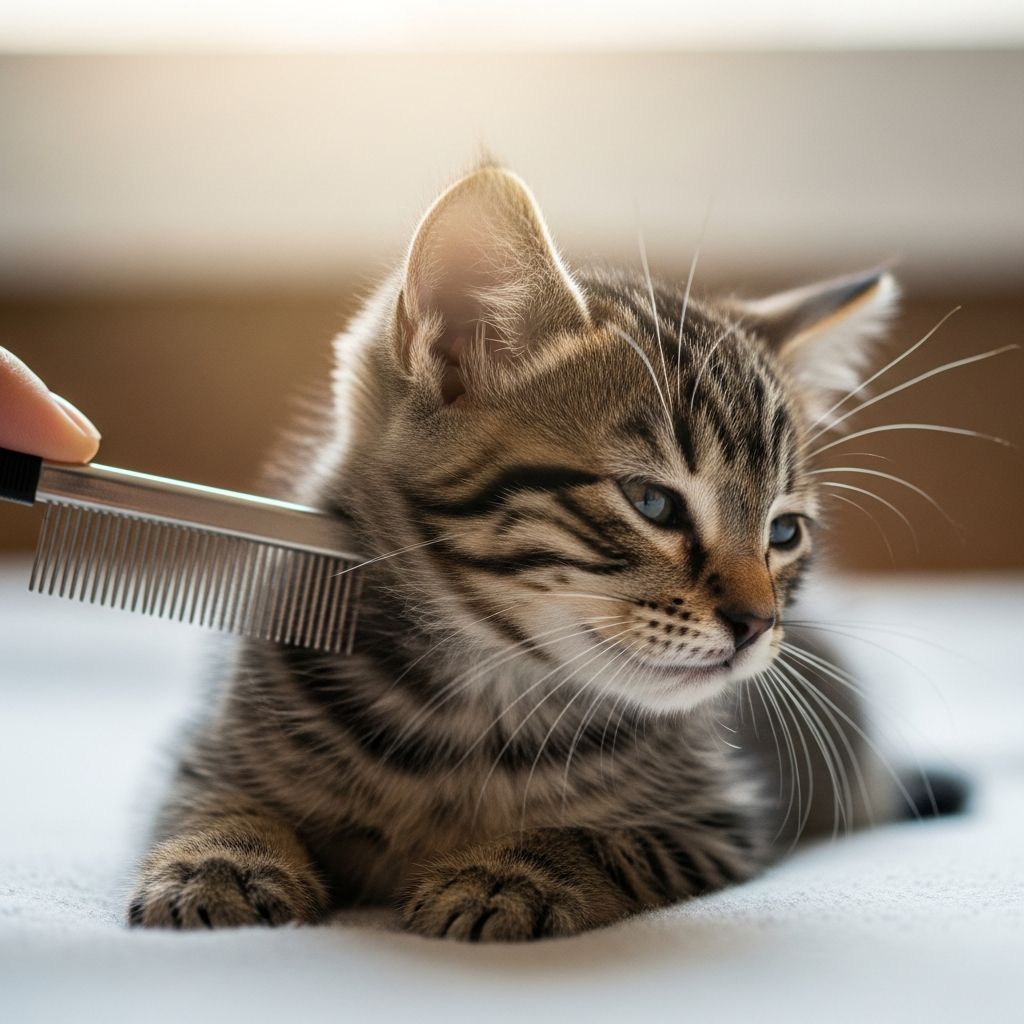
A flea comb is an excellent tool for very young kittens. This fine-toothed comb is specifically designed to physically trap and remove adult fleas from your kitten’s fur. Use the flea comb once or twice daily, paying special attention to the head, neck, and base of the tail where fleas tend to congregate.
To use a flea comb effectively:
– Start with a calm kitten in good lighting- Comb small sections of fur at a time- Dip the comb frequently in a bowl of warm soapy water to drown trapped fleas- Check behind the ears, under the chin, and around the tail- Be gentle to avoid pulling fur or irritating the skin
This method allows you to physically remove adult fleas without exposing your young kitten to potentially toxic ingredients. However, understand that flea combing does not prevent new fleas from entering your home or jumping onto your kitten, nor does it eliminate flea eggs or larvae developing in the environment.
Giving Your Kitten Regular Baths
As discussed earlier, regular bathing with warm water is another safe option for very young kittens. Combine bathing with flea combing for improved results. The warm water loosens fleas’ grip, making them easier to comb out.
Method 5: Starting Topical Treatments
Once your kitten reaches 8 to 10 weeks of age and weighs between 1.5 and 2 pounds—or according to your veterinarian’s recommendations—you can begin using topical flea prevention products. These are typically the most effective flea treatments available for kittens.
Topical treatments, also called “spot-on” medications, are applied directly to your kitten’s skin, usually at the base of the neck where they cannot lick it off. These products not only kill existing fleas but also prevent new fleas from successfully establishing themselves on your kitten. This dual action makes them superior to bathing and combing for long-term flea control.
Popular prescription topical treatments approved for kittens include products containing selamectin, fipronil, or imidacloprid. Your veterinarian can recommend the best option based on your kitten’s specific age, weight, and health status.
Advantages of topical treatments:
– Kill adult fleas quickly- Prevent flea reinfestation for weeks- Easy to apply once monthly- Generally well-tolerated by kittens- Can be obtained through veterinarians only (ensuring appropriate use)
Important Considerations for Safe Flea Treatment
Treating your kitten’s fleas is just one part of a comprehensive flea control strategy. Remember that fleas live most of their life cycle in your home’s environment, not on your pet. For this reason, environmental treatment is equally important as treating your kitten.
All pets in your household must receive flea prevention. If you have multiple cats or dogs, they all need appropriate flea protection. Even indoor-only pets can get fleas, so don’t skip any animal in the home.
Once your kitten is old enough for prescription flea prevention, maintain year-round protection rather than treating seasonally. Fleas can survive indoors during winter and can resurface at any time.
If your kitten is sick or on other medications, always inform your veterinarian before starting any flea treatment. Some medications can interact negatively with flea preventives.
Frequently Asked Questions
Q: Can I use dog flea shampoo on my kitten?
A: No. Many dog flea products contain permethrin, which is toxic to cats and kittens. Always use products labeled specifically for cats or kittens.
Q: How often should I bathe my kitten to remove fleas?
A: Bathing once or twice weekly with warm water can help manage fleas, but this should be combined with flea combing and environmental cleaning for best results.
Q: What’s the minimum age for flea treatments on kittens?
A: Most topical flea treatments are safe for kittens 8-10 weeks old and weighing at least 2 pounds, but this varies by product. Consult your veterinarian for your specific kitten.
Q: Can fleas cause serious health problems in kittens?
A: Yes. Severe flea infestations can cause anemia, transmit parasites like tapeworms, and potentially lead to life-threatening conditions in young kittens.
Q: Should I treat my home for fleas even if I treat my kitten?
A: Yes. Environmental treatment is essential because fleas spend most of their lifecycle in your home’s environment, not on your pet. Treat carpets, bedding, furniture, and other areas.
Q: Is it safe to use essential oils for fleas on kittens?
A: No. Essential oils can be toxic to kittens and may cause respiratory or skin irritation. Stick to veterinarian-approved treatments.
Q: What should I do if my indoor kitten gets fleas?
A: Contact your veterinarian immediately. Start appropriate flea prevention, treat all pets in the home, and thoroughly clean your indoor environment including carpets, furniture, and bedding.
Q: How long does it take to get rid of a flea infestation?
A: Complete eradication typically takes several months because flea eggs and larvae in the environment continue to develop into adults. Consistent treatment of pets and environment is necessary.
References
- How to Get Rid of Fleas on Kittens — PetMD. 2024. https://www.petmd.com/cat/parasites/how-get-rid-fleas-kittens
- How To Get Rid of Fleas on Cats — PetMD. 2024. https://www.petmd.com/cat/general-health/get-rid-of-fleas-on-cats
- 5 Ways Indoor Cats Can Get Fleas — PetMD. 2024. https://www.petmd.com/cat/general-health/ways-indoor-cats-can-get-fleas
- Fleas, Ticks, Heartworms, and Your Cat — PetMD. 2014. https://www.petmd.com/blogs/thedailyvet/lorieahuston/2014/july/fleas-ticks-heartworms-and-your-cat-31861
- Common Cat Parasites and Reasons to Avoid Them — PetMD. 2013. https://www.petmd.com/blogs/thedailyvet/lhuston/2013/july/common-cat-parasites-and-why-to-avoid-them-30651
- Flea Bites: 4 Diseases These Parasites Can Spread — PetMD. 2024. https://www.petmd.com/general-health/flea-bites-diseases-these-parasites-can-spread
- What Do Fleas Look Like on Cats? — PetMD. 2024. https://www.petmd.com/cat/general-health/what-do-fleas-look-cats
Similar Articles








Read full bio of Sneha Tete


