

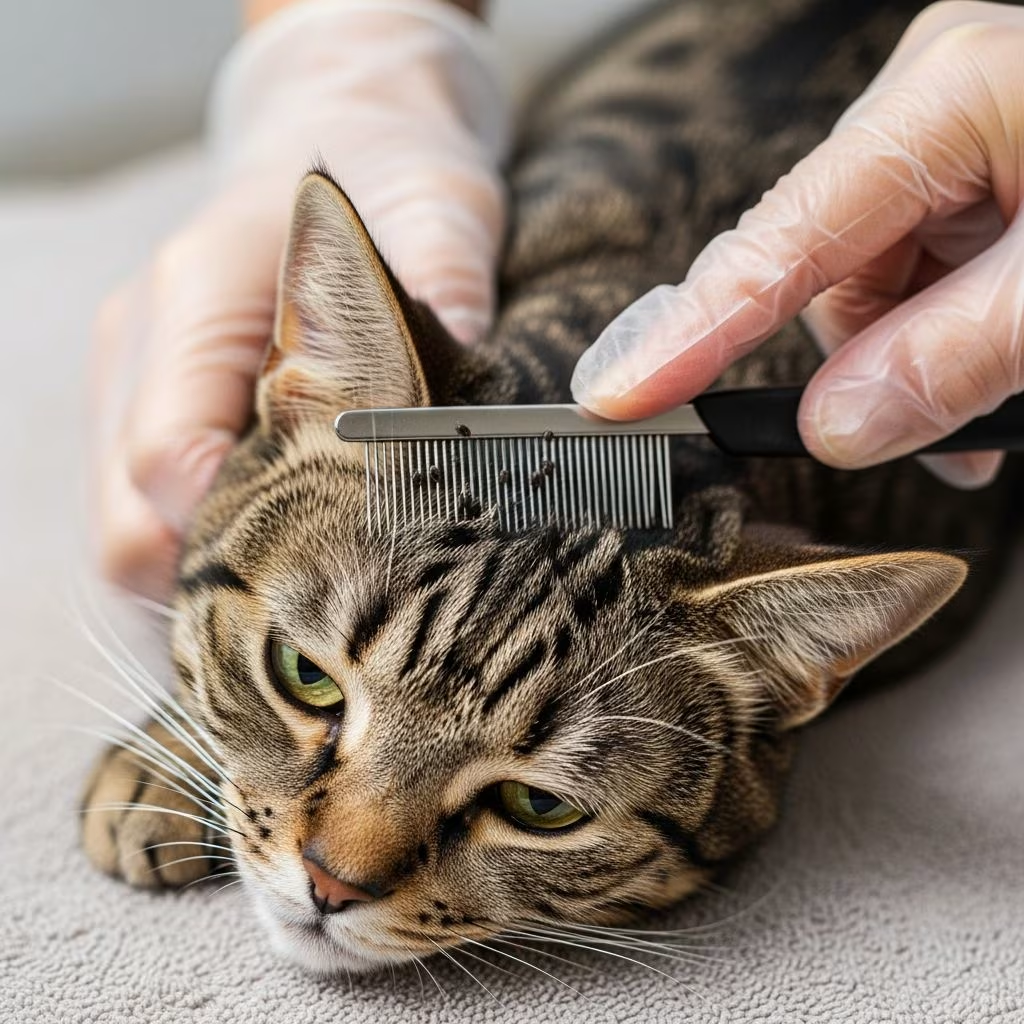
Fleas are a common and persistent pest for cats, causing itching, discomfort, and potential health issues like flea allergy dermatitis or parasite transmission. Effective flea control requires targeting all life stages—adults, eggs, larvae, and pupae—on both the cat and in the environment. Veterinarians recommend combining pet treatments with thorough home cleaning for complete eradication.
The flea life cycle complicates removal: adults live on the host, but eggs and pupae drop into the surroundings, where they can survive months before hatching. Killing only adults leaves 95% of the population untouched. Prescription medications targeting multiple stages, alongside environmental control, provide the fastest results.
How to Spot Fleas on Your Cat
Early detection prevents severe infestations. Look for these **signs of fleas**:
- Excessive scratching, biting, or licking, especially around the tail base and hindquarters.
- Visible flea dirt: black specks that turn red when wet with saliva.
- Hair loss, red inflamed skin, or scabs from scratching.
- Live fleas: tiny, fast-moving brown insects in the fur.
- Allergy symptoms: intense itching in flea-allergic cats.
Part the fur in low-light areas to check. Use a flea comb to capture fleas or dirt for confirmation. If symptoms persist, consult a vet to rule out other issues like mites or allergies.
The Flea Life Cycle: Why It’s Hard to Eliminate
Understanding the flea life cycle is crucial for success. It has four stages:
- Eggs: Tiny, white, slippery; 50% of infestation falls off into the environment within days.
- Larvae: Worm-like, feed on organic debris and dried blood; sensitive to insect growth regulators (IGRs).
- Pupae: Cocoon-protected; resistant to most treatments, can remain dormant up to a year.
- Adults: Jump onto hosts within hours of emergence; females lay 50 eggs/day.
Only 5% of fleas are adults on the pet at any time. Environmental stages require vacuuming, washing, and IGRs to break the cycle.
Home Remedies to Get Rid of Fleas on Cats
Home remedies offer quick relief for live adults but won’t eliminate eggs or larvae. Use them as a first step while obtaining proper treatments.
- Bathe your cat: Use cat-safe shampoo or mild dish soap like Dawn. Lather, let sit 5 minutes to drown fleas, then rinse thoroughly. Avoid frequent baths to prevent dry skin. Dry with a towel; fleas can’t survive water.
- Flea comb daily: Comb from head to tail over white paper. Dip comb in soapy water to kill captured fleas/eggs. This reduces numbers mechanically.
- Salt or diatomaceous earth: Sprinkle food-grade diatomaceous earth (DE) on bedding/carpets; vacuum after 48 hours. DE dehydrates fleas but use cautiously around cats.
These methods kill visible fleas but miss 95% of the problem. Pair with vet-approved products.
Over-the-Counter Flea Treatments
OTC options kill adults and some immature stages but vary in efficacy. Choose cat-specific products with adulticides (e.g., pyrethrins) and IGRs (e.g., methoprene).
| Product Type | Active Ingredients | Pros | Cons |
|---|---|---|---|
| Topical Spot-On | Fipronil, Imidacloprid | Easy application, 30-day protection | May irritate skin; avoid in kittens <8 weeks |
| Flea Collars | Tetrachlorvinphos + IGR | Long-lasting (up to 8 months) | Less effective against eggs; contact dermatitis risk |
| Sprays/Shampoos | Pyrethrins | Immediate kill | Short-term; requires frequent use |
| Oral Tablets | Nitenpyram | Fast-acting (30 min) | Adults only; monthly repeat needed |
No OTC kills pupae; clean environment repeatedly. Beware counterfeits containing toxic pesticides like pirimiphos-methyl, which have hospitalized cats. Buy from reputable sources.
How to Get Rid of Fleas on Cats Naturally
Natural remedies appeal to holistic owners but lack robust evidence and can be risky for cats, who metabolize essential oils poorly.
- Apple cider vinegar spray: Dilute 1:1 with water; spray fur (avoid eyes). Repels but doesn’t kill.
- Lemon juice rinse: Boil lemons, strain, apply post-bath. Citric acid deters fleas mildly.
- Brewer’s yeast: Add to food; garlic-like odor repels (controversial efficacy).
Warning: Essential oils (tea tree, eucalyptus) are toxic to cats, causing tremors or death. Stick to vet-approved naturals or avoid altogether.
Prescription Flea Treatments for Cats
Veterinarians unanimously endorse prescription treatments for speed and spectrum. These target adults, eggs, larvae, and often other parasites.
- Revolution Plus (Selamectin + Sarolaner): Topical; kills fleas/ticks/worms in 12-24 hours, prevents egg hatching for 5 weeks.
- Stronghold Plus: Breaks flea cycle by killing adults/larvae, preventing eggs. Monthly spot-on; covers mites, lice, heartworm.
- Bravecto/Comfortis: Oral/topical; long-lasting, waterproof.
Require vet exam for dosing by weight. Safer for kittens/pregnant cats than OTC. Seresto collars (imidacloprid/flumethrin) show long-term efficacy in field studies.
Deep-Cleaning Your Home
Treat the environment as aggressively as the cat—fleas thrive in carpets, furniture, and yards.
- Vacuum daily: Focus on cracks, under furniture, pet areas. Empty bag outside immediately.
- Wash bedding: Hot water (>60°C), dry on high heat weekly.
- Steam clean: Kills all stages in carpets/upholstery.
- IGRs/Powders: Apply to floors (e.g., Precor); vacuum after.
- Yard treatment: Mow grass, use nematodes (flea parasites) spray—pet-safe.
Treat all pets simultaneously. Expect 2-4 weeks for full control.
Preventing Fleas on Cats Year-Round
Monthly preventatives halt reinfestation. Rotate products if resistance suspected. Regular vet checks catch issues early. Avoid fake products; wash hands post-application to prevent pesticide residue exposure.
Frequently Asked Questions (FAQs)
Can I use dog flea products on cats?
No. Dog products contain permethrin, lethal to cats. Always use cat-specific.
How long does it take to get rid of fleas?
With proper treatment: 1-4 weeks. Pupae delay full elimination.
Are flea collars safe for kittens?
Only from 8 weeks; check labels. Prefer spot-ons for young kittens.
Do indoor cats need flea prevention?
Yes. Eggs hitchhike indoors via shoes/clothes.
What if my cat is still itchy after treatment?
Consult vet: could be allergies, secondary infection, or resistant fleas.
References
- Evaluation of the Long-Term Efficacy and Safety of an Imidacloprid 10%/Flumethrin 4.5% Polymer Matrix Collar (Seresto®) in Dogs and Cats — Stanneck, Dorothee, et al. 2014. https://www.kinship.com/cat-health/how-to-get-rid-of-fleas-on-cats
- Stronghold Plus For Cats: Uses and Benefits — Kinship. 2023. https://www.kinship.com/uk/cat-health/stronghold-plus-cats
- Urgent warning to pet owners as toxic chemicals found in fake flea treatments — UK Government (GOV.UK). 2023-10-25. https://www.gov.uk/government/news/urgent-warning-to-pet-owners-as-toxic-chemicals-found-in-fake-flea-treatments
- Flea Treatments: How to Treat Your Home and Yard for Fleas — Kinship. 2023. https://www.kinship.com/pet-lifestyle/house-flea-treatment
- Counterfeit Flea Treatment: How to Tell If Yours Is Real — Kinship. 2023. https://www.kinship.com/uk/news/fake-flea-treament-counterfeit



