

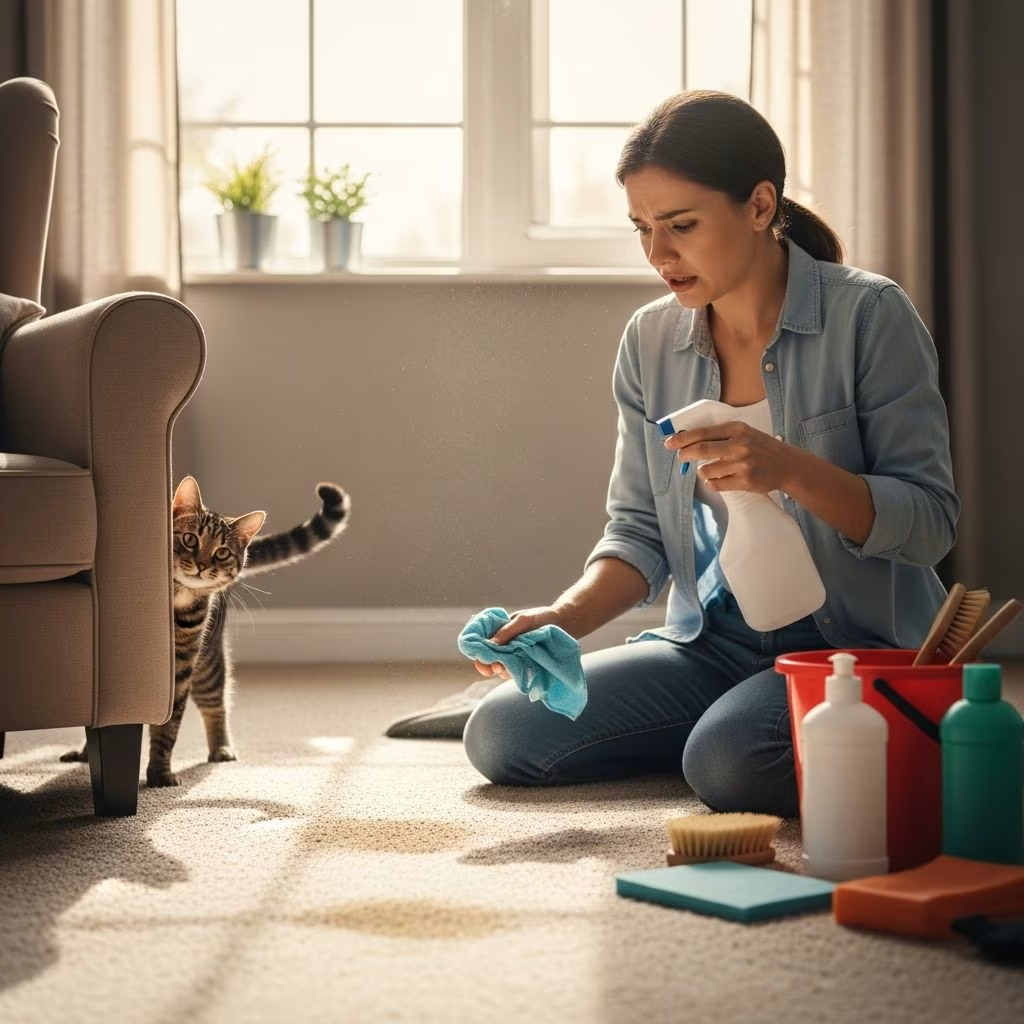
How to Get Rid of Cat Spray Smell: Complete Guide
Cat spray odor is one of the most challenging pet-related problems homeowners face. Unlike regular cat urine accidents, spray has a particularly pungent smell that can persist for months or even years if not properly addressed. Whether your cat has sprayed on carpets, furniture, walls, or hardwood floors, understanding the science behind the odor and employing the right removal techniques is essential to restoring your home’s freshness.
Understanding Cat Spray and Why It Smells So Bad
Cat spray is a territorial marking behavior that differs from regular urination. The spray contains concentrated urine compounds, pheromones, and other organic matter that create an especially strong and persistent odor. The smell comes from ammonia and other organic compounds that bond deeply with surfaces, making them difficult to eliminate without the right approach.
The longer cat spray sits on a surface, the deeper it penetrates. This is particularly true for porous materials like carpet, carpet padding, upholstery, and wood. Understanding this chemical composition is key to selecting effective cleaning methods.
Immediate Steps: Act Quickly
The first rule of cat spray odor removal is timing. The sooner you address the problem, the easier it will be to eliminate. Follow these immediate action steps:
- Locate the affected area as soon as you notice the smell
- Blot up excess liquid with clean towels or paper towels—do not rub, as this pushes the urine deeper into the material
- Use a blacklight to identify all affected areas, as cats often return to spray the same spots multiple times
- Remove as much urine as possible before applying any cleaning solution
Acting quickly prevents the urine from setting into deeper layers of carpet padding and subflooring, which can make professional removal necessary.
Enzymatic Cleaners: The Gold Standard
Enzymatic cleaners are the most effective solution for cat spray odor removal. These products contain specialized enzymes that break down the uric acid crystals and other organic compounds in cat urine, eliminating the source of the smell rather than just masking it.
Products like Nature’s Miracle® Cat Stain Remover & Odor Eliminator are specifically formulated to neutralize cat spray. When using enzymatic cleaners:
- Apply generously to the affected area
- Let the cleaner sit for 10–15 minutes (or as directed on the product label)
- Blot thoroughly with clean towels
- Allow the area to dry completely before allowing your cat back
- Reapply if necessary for stubborn or older stains
Enzymatic cleaners work best on fresh stains but can also be effective on older odors when applied multiple times.
DIY Solutions for Cat Spray Odor
If you prefer home remedies or need an immediate solution before purchasing specialty products, several household items can help neutralize cat spray smell.
Vinegar and Water Solution
Vinegar is highly acidic and effectively neutralizes the alkaline salts that form in dried cat urine stains. The acidic nature of vinegar helps offset the bacteria responsible for the foul odor.
- Mix white vinegar or apple cider vinegar with water in a 1:1 ratio
- Spray the solution generously on affected areas
- Blot with clean towels until mostly dry
- Repeat as needed
Important warning: Do not mix vinegar with bleach, as this creates toxic chlorine gas. Use one or the other, never both.
Hydrogen Peroxide
Hydrogen peroxide is 30% more oxidizing than chlorine and effectively eliminates the ammonia smell from cat spray. It works particularly well on hardwood floors, carpets, couches, and clothing.
- Pour hydrogen peroxide directly on the affected surface
- Let it sit for at least 5 minutes
- Blot the area thoroughly with clean towels
- Note: Test on a small, inconspicuous area first, as hydrogen peroxide may cause discoloration
Baking Soda
Baking soda (sodium bicarbonate) is excellent for deodorizing and absorbing lingering odors. It works best after initial cleaning.
- Ensure the area is completely dry after cleaning
- Sprinkle baking soda generously over the affected area
- Leave it for 15–30 minutes
- Vacuum thoroughly
- Note: Some baking soda particles may remain, so avoid overuse
Surface-Specific Removal Techniques
Cat Spray on Carpets
Carpets are the most common victims of cat spray, and they require thorough treatment because urine can penetrate the carpet fibers and padding.
- Blot up as much urine as possible immediately
- Rinse with clean water and use a wet/dry vacuum to remove excess liquid
- Avoid steam cleaners, as heat can set the stain permanently
- Apply enzymatic cleaner generously and let sit for 10–15 minutes
- Blot again with clean towels
- Cover the area until completely dry
- Repeat if necessary for older or particularly strong odors
If the odor persists after multiple treatments, the carpet padding underneath may be saturated. Professional carpet cleaning or carpet pad replacement may be necessary.
Cat Spray on Furniture and Cushions
Sofas, chairs, and cushions absorb urine quickly, trapping the smell deep within the filling.
- Soak the affected area with water and blot thoroughly
- Pour enzymatic cleaner on and around the affected area
- Let sit for approximately 15 minutes
- Blot with clean towels to remove excess liquid
- Keep your cat away from the area until completely dry
Cat Spray on Mattresses
Mattresses present special challenges due to their density and size.
- Blot up as much urine as possible with towels
- Pour or spray enzymatic cleaner generously on the affected area
- Let sit for 15 minutes
- Blot thoroughly
- Allow to air-dry completely—if needed before sleep, layer clean towels over the spot
- Change towels daily until fully dry
- Multiple applications may be required
Cat Spray on Hardwood and Sealed Wood Floors
Wood surfaces require gentler treatment to avoid damage.
- Spot-clean with a damp sponge and water first
- For stubborn areas, apply enzymatic cleaner according to product instructions
- Wipe clean with a sponge and plain water
- Dry the area thoroughly to prevent water damage
Cat Spray on Clothing and Fabric Items
Clothes and washable fabrics can often be saved with proper treatment.
- Rinse the spot in cool water immediately
- Place items in the washing machine
- Add 1 cup of baking soda or ¼ cup vinegar along with regular detergent
- Wash normally
- If odor persists, add enzymatic cleaner to a second wash cycle
- Always air-dry, as heat from the dryer can lock in remaining odor
What NOT to Use When Cleaning Cat Spray
Certain cleaning products will make the cat spray problem worse rather than better. Never use ammonia-based cleaners. Ammonia is a component of cat urine, and cats can still smell it even after cleaning. This actually encourages them to spray in the same area again.
Common ammonia-containing products to avoid include:
- All-purpose cleaners
- Glass and window cleaners
- Toilet and bathroom cleaners
- Floor cleaners
- Oven cleaners
Additionally, do not mix vinegar with bleach, as this combination produces toxic chlorine gas.
Professional Cat Spray Removal
For severe or long-standing cat spray problems, professional carpet cleaning and odor removal services offer the most effective solution. Professional cleaners have access to industrial-strength enzymatic products and equipment that can penetrate deep into carpets and padding. In cases where the carpet padding is heavily saturated, professionals may recommend replacing it entirely.
Preventing Future Cat Spray Incidents
While odor removal is important, preventing future spraying is equally critical.
- Keep litter boxes clean—scoop daily and completely change litter regularly
- Use the correct number of boxes—the rule is one box per cat plus one extra
- Place boxes in accessible locations away from food and water bowls
- Consider enclosed litter systems or large storage totes with entrance holes to contain accidents
- Address medical issues—consult your veterinarian to rule out urinary tract infections or other health problems
- Reduce stress—spray is often a territorial response to stress or perceived threats
- Use pheromone diffusers—products that mimic calming cat pheromones can reduce spraying behavior
Frequently Asked Questions
Q: How long does cat spray smell last if untreated?
A: Cat spray odor can persist for months or even years if not properly treated. The longer it sits, the deeper it penetrates surfaces, making removal increasingly difficult.
Q: Is enzymatic cleaner safe for all surfaces?
A: Most enzymatic cleaners are safe for carpets, upholstery, and sealed wood. However, always test on a small, inconspicuous area first and follow product instructions carefully.
Q: Why do cats spray, and how can I stop it?
A: Cats spray to mark territory, respond to stress, or due to medical issues. Spaying/neutering, reducing stress, maintaining clean litter boxes, and consulting a veterinarian are effective prevention strategies.
Q: Can I use a steam cleaner on cat spray?
A: No. Steam cleaners apply heat that can permanently set cat urine stains. Use enzymatic cleaners or wet/dry vacuums instead.
Q: What’s the difference between cat spray and regular urine accidents?
A: Cat spray is a territorial marking behavior with a much stronger smell. It typically occurs on vertical surfaces like walls and furniture, while accidents are on horizontal surfaces like floors and litter box areas.
References
- How to Remove Cat Urine Smell for Good — ServiceMaster Clean. 2022. https://www.servicemasterclean.com/servicemaster-of-kalamazoo/tips-and-resources/local-blog/2022/june/how-to-remove-cat-urine-smell-for-good/
- How To Stop Cat Spraying (And Why Cats Do It in the First Place) — Chewy. https://www.chewy.com/education/cat/health-and-wellness/cat-spraying
- How To Get Rid of Cat Pee Smell — PetMD. Written by Katie Grzyb, DVM. https://www.petmd.com/cat/general-health/how-to-get-rid-of-cat-pee-smell



