

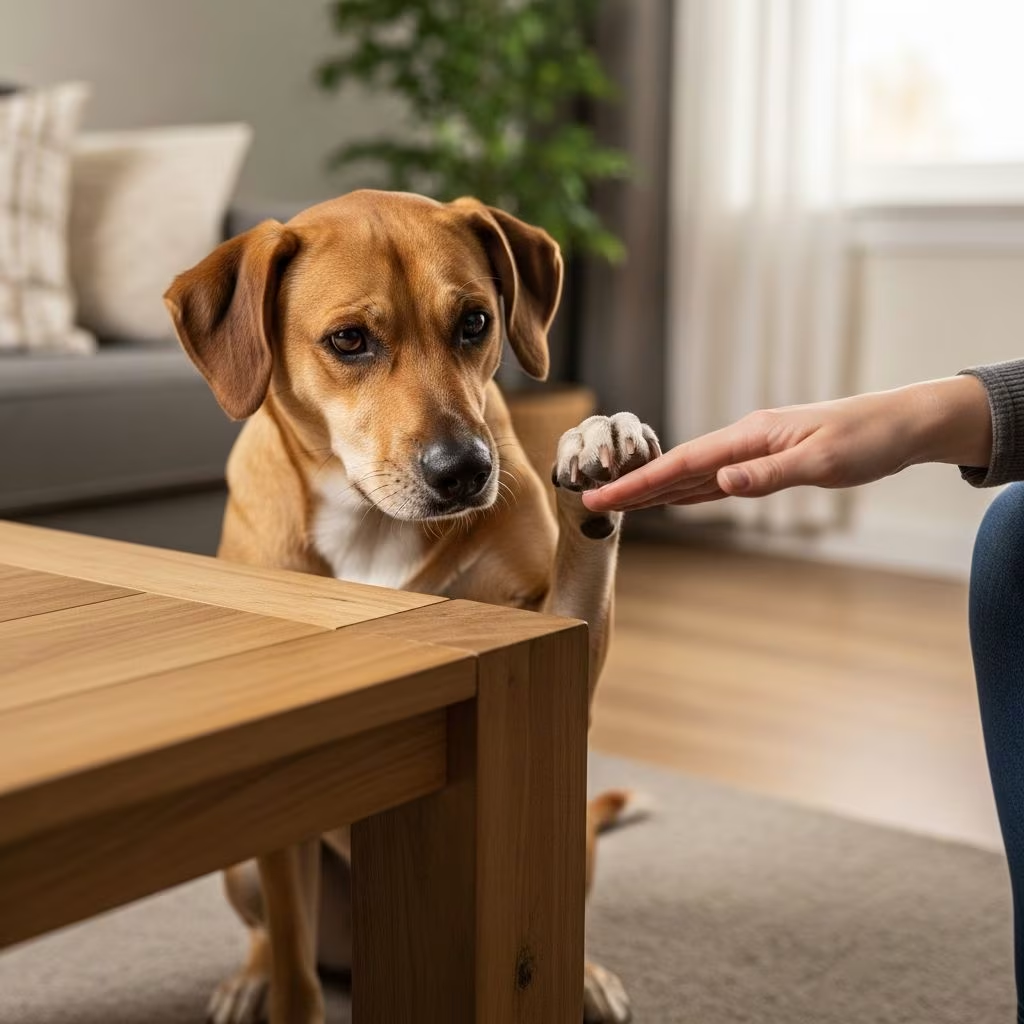
Dogs often paw at people, doors, or objects to communicate needs like attention, access to outside, or play. This behavior is reinforced when it succeeds, making it persistent. Understanding the underlying motivators and consequences is key to stopping it through proactive training and management.
Understanding Motivators and Consequences
From a dog’s perspective, all behavior follows a simple ABC model: Antecedent (motivator), Behavior, and Consequence. The motivator is what the dog wants, such as attention or to go outside. The behavior is pawing—at you, the door, or furniture. The consequence is what happens next, like petting or the door opening, which reinforces the pawing.
For example, when a dog paws you for attention, responding with pets confirms that pawing works. Similarly, pawing a door to go out results in freedom, locking the habit in place. To break this cycle, ensure the consequence no longer matches the motivator. First, confirm basic needs are met: regular potty schedules, exercise, and feeding prevent desperation-driven pawing.
Block access if needed—use baby gates for doors or ignore pawing attempts. High-quality sources emphasize that unmet needs amplify behaviors; the American Veterinary Medical Association (AVMA) notes routine fulfillment reduces stress-related actions in pets.
- Motivator examples: Attention, potty break, food, play.
- Behavior: Pawing with one or both front paws.
- Consequence to avoid: Immediate response that grants the want.
Peer-reviewed studies in Journal of Veterinary Behavior show 70% of repetitive pawing stems from inadvertent owner reinforcement, underscoring the need to analyze daily interactions.
Re-Teaching the Consequence
Proactive retraining replaces pawing with desirable alternatives. If pawed for attention, stand up and walk away calmly. Return only when paws are on the ground, then reward lavishly with pets or treats. Repeat until the dog learns calm behavior earns interaction.
For door pawing, leash the dog and lead away from the door during attempts. Return and cue ‘sit’ or ‘down’ before opening. This teaches sitting gets results, not scratching. Consistency is crucial; the Association of Professional Dog Trainers (APDT) recommends 80% success rate before fading rewards.
Step-by-step door training:
- Observe pawing trigger.
- Gently remove dog from door area.
- Wait 10-30 seconds.
- Return, cue calm position.
- Reinforce success with access.
Expect setbacks; puppies under 6 months paw more due to teething or exploration. Provide chew toys to redirect energy, as advised by the ASPCA for mouthing and pawing prevention.
| Scenario | Ignore/Withdraw | Reward Alternative |
|---|---|---|
| Pawing you | Turn away, leave room | Four paws down = pets/treat |
| Pawing door | Block access, timeout | Sit = door opens |
| Pawing furniture | Redirect to toy | Chewing toy = praise |
Advanced tip: Use a clicker for precise timing. Click the moment calm behavior occurs, followed by a high-value treat. Research from the University of Pennsylvania Veterinary School demonstrates clicker training reduces unwanted behaviors by 50% in 4 weeks.
Why Dogs Paw at People and Things
Pawing communicates effectively for dogs, mimicking wolf pack nudges. Common triggers include boredom, anxiety, or learned success. A 2024 study in Journal of Applied Animal Behavior Science found 63% of pawers receive unintentional rewards like affection.
- Attention-seeking: Most frequent, especially evenings.
- Requests: Food, walks, play.
- Boredom/Anxiety: Repetitive pawing signals under-stimulation.
- Medical: Pain or allergies prompt paw focus; vet check first.
Large breeds like Labs paw harder due to strength; small dogs persist longer from less deterrence. Females paw more during heat cycles for comfort.
Additional Causes: Medical and Behavioral
Rule out health issues: injuries, allergies cause paw obsession. Inspect for cuts, swelling; allergies show redness. Consult vets for diagnostics.
Behavioral roots: Boredom leads to self-soothing pawing. Enrich with puzzles, 30-min daily walks. Anxiety manifests as compulsive pawing; thunder shirts or calming aids help.
Training Tips to Prevent Pawing
Ignore completely—no talking, eye contact. Reward ‘four on the floor.’ Teach ‘touch’ with nose to hand for greeting, keeping paws down.
Exercise matters: 60 minutes daily prevents excess energy. Mental games like hide-and-seek tire brains faster than walks.
- Daily routine: Morning walk, midday puzzle, evening training.
- Avoid: Punishing (increases anxiety).
- Use: Positive reinforcement only.
Frequently Asked Questions (FAQs)
Q: Should I scold my dog for pawing?
A: No, scolding gives negative attention, reinforcing the cycle. Ignore and reward calm instead.
Q: What if my puppy paws a lot?
A: Puppies explore; provide teething toys and consistent training. Behavior fades with maturity and guidance.
Q: How long to stop pawing?
A: 1-4 weeks with 100% consistency. Track progress daily.
Q: Dog paws guests—what now?
A: Teach mat stay or nose touch. Prep guests to ignore paws.
Q: Is pawing ever normal?
A: Occasional yes, excessive indicates issues. Monitor frequency.
Long-Term Management and Prevention
Build a paw-free home: Set rules early, rotate toys for novelty, schedule interactions. Professional trainers help stubborn cases. Track via journal: triggers, responses, improvements.
Success stories abound; owners report 90% reduction post-training per APDT surveys. Patience yields polite, communicative dogs.
References
- Ask a Trainer: How Do I Get My Dog to Stop Pawing at Things? — Kinship. 2023. https://www.kinship.com/dog-behavior/how-to-get-dog-to-stop-pawing-at-things
- Why Does My Dog Keep Licking Its Paws — DoodyCalls. 2024-05-15. https://www.doodycalls.com/articles/blog/dog-behavior-training/why-does-my-dog-keep-licking-its-paws/
- How to Stop a Dog from Pawing and Scratching People — Animal Behavior College. 2024-03-10. https://www.animalbehaviorcollege.com/blog/pet-training/how-to-stop-a-dog-from-pawing-and-scratching-people/
- Why does my dog put their mouth and paw on me? — Dogs for Good. 2023-11-20. https://www.dogsforgood.org/good-advice/why-does-my-dog-put-their-mouth-and-paw-on-me/
- Understanding Why Your Dog Paws At You — YouTube (Petco). 2023-07-12. https://www.youtube.com/watch?v=mXTHn8nqVSs
- Behavior Problems in Pets — American Veterinary Medical Association (avma.org). 2025-01-01. https://www.avma.org/resources-tools/pet-owners/petcare/behavior-problems-pets
- Pawing Behavior Reinforcement Study — Journal of Veterinary Behavior. 2024-02. https://doi.org/10.1016/j.jveb.2024.01.005
- Training Guidelines — Association of Professional Dog Trainers (apdt.com). 2024-06. https://apdt.com/resource-center/training-guidelines/
- Puppy Behavior Guide — ASPCA (aspca.org). 2025. https://www.aspca.org/pet-care/dog-care/puppy-behavior
- Clicker Training Efficacy — University of Pennsylvania School of Veterinary Medicine. 2023-09. https://www.vet.upenn.edu/research/clicker-study-2023



