How to Get Dog Pee Out of Carpet, Floors, and Couches
Complete guide to removing dog urine stains and odors from home surfaces effectively.
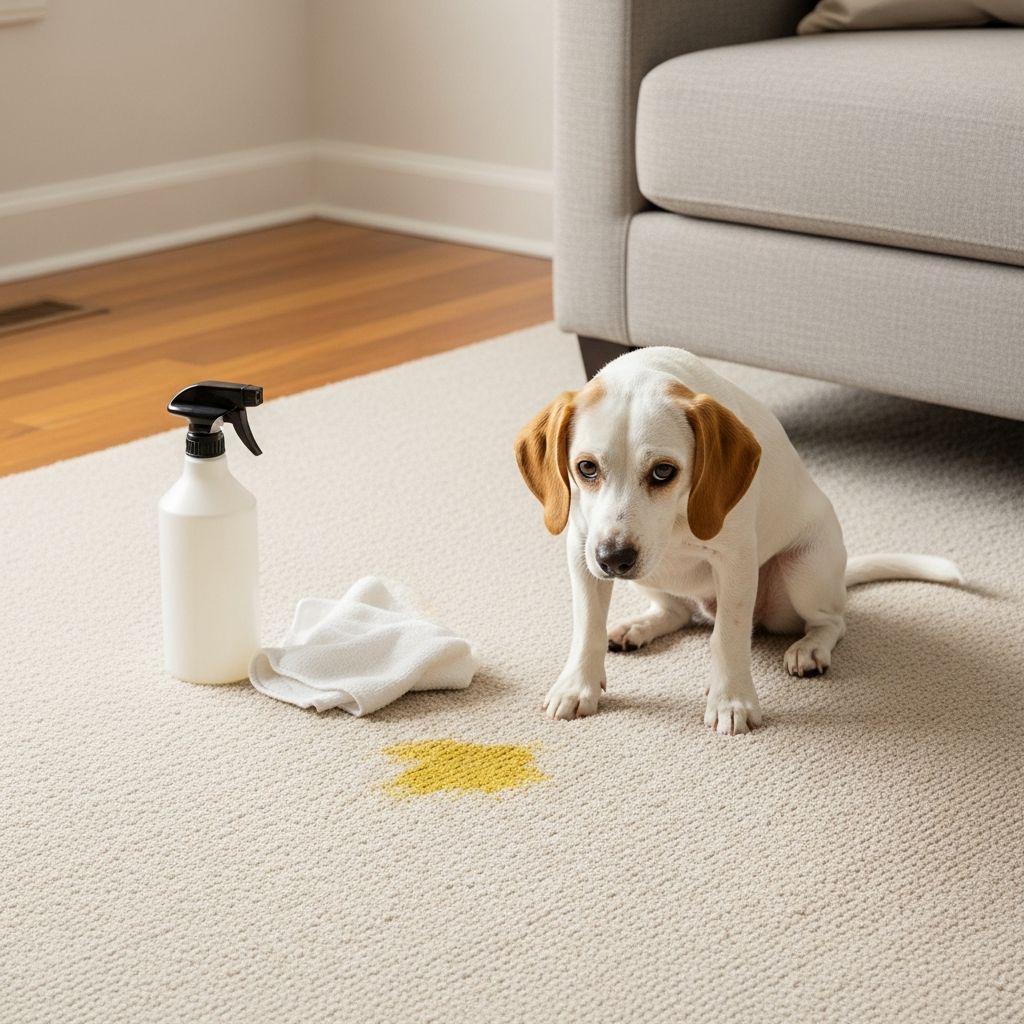
Dog accidents happen, and knowing how to properly clean up urine is essential for maintaining a fresh-smelling home. Whether your dog has had an accident on carpet, hardwood floors, or upholstered furniture, the key to successful cleanup is acting quickly and using the right approach. Pet urine can damage carpet fibers, penetrate underlayment, and leave stubborn odors if not addressed properly. This comprehensive guide covers everything you need to know about removing dog urine from various surfaces in your home.
Understanding Why Dog Urine Is Difficult to Remove
Dog urine contains uric acid crystals and ammonia compounds that bond to carpet fibers, padding, and subflooring. When left untreated, urine doesn’t just sit on the surface—it penetrates deep into carpet layers, backing, and even the padding underneath. This is why fresh accidents are easier to clean than old stains. The longer urine sits, the stronger the odor becomes and the more difficult it is to remove completely. Understanding this helps explain why certain cleaning methods work better than others.
Immediate Steps for Fresh Accidents
Act Quickly When You Discover the Accident
The first rule of cleaning dog urine is timing. Fresh urine is significantly easier to clean than old, set-in stains. As soon as you discover your dog has had an accident, follow these immediate steps to prevent the urine from setting into your carpet and padding.
Blotting vs. Scrubbing: The Critical Difference
When dealing with fresh urine, your technique matters significantly. Blotting is far more effective than scrubbing. By gently pressing an absorbent material like paper towels or a clean cloth onto the wet spot, you lift the liquid away without forcing it deeper into the carpet fibers. Scrubbing, on the other hand, spreads the urine across a larger area and pushes it deeper into carpet backing where it becomes embedded in the padding. This embedded urine causes persistent odors that are difficult to eliminate. Additionally, scrubbing can damage carpet fibers, making the stained area more noticeable even after cleaning.
For best results, press down firmly with paper towels or cloth for several seconds, then replace with fresh towels and repeat until no more liquid transfers to the cloth. Get into crevices and seams where urine may have traveled, and use a wet vacuum if available for maximum moisture extraction.
Effective Cleaning Methods for Dog Urine
Method 1: Enzymatic Cleaners
Enzymatic cleaners are specially formulated to break down the organic compounds in pet urine, including uric acid crystals. These cleaners work by using enzymes that chemically break down the urine components, effectively neutralizing both stains and odors at their source. This method is highly recommended by cleaning professionals for thorough removal of both visible stains and lingering smells.
Steps for using enzymatic cleaners:
- Blot the affected area thoroughly with paper towels or clean cloth
- Test the enzymatic cleaner on an inconspicuous carpet area to ensure it won’t cause discoloration
- Apply the enzymatic cleaner generously over the stained area
- Allow the cleaner to sit for the recommended time, typically 15 to 20 minutes, so enzymes can work effectively
- For stubborn stains, use a soft brush or old toothbrush to gently agitate the fibers and loosen the stain
- Extract the cleaner using a wet-dry vacuum or carpet spot extractor
- Blot excess moisture with paper towels and allow the area to air dry completely
- Vacuum the area once dry to restore carpet texture and remove any residue
- Repeat the process if staining or odors persist, as deep-set stains may require multiple applications
Method 2: Hydrogen Peroxide and Ammonia Solution
For stubborn, set-in stains, a two-part approach using hydrogen peroxide and ammonia can be highly effective. Ammonia increases the pH of hydrogen peroxide, which activates the stain removal process. However, these products must be kept in separate containers and sprayed into the carpet separately—never mix them together as that would create a dangerous chemical reaction.
Steps for using this method:
- Apply hydrogen peroxide directly to the stained area by spraying it on
- Allow it to sit for 10 to 15 minutes to break down the stain compounds
- Spray ammonia over the hydrogen peroxide to activate the chemical reaction
- Cover the area with plastic wrap and allow it to work for approximately 30 minutes
- Use a white towel to absorb the solution from the carpet
- Note that rinsing with water is optional since ammonia evaporates naturally and hydrogen peroxide breaks down on its own
Method 3: Baking Soda and Vinegar Solution
This natural and pet-safe method combines two common household ingredients to tackle dog urine effectively. Baking soda absorbs odors while vinegar helps break down urine compounds. This combination is particularly useful for dogs that frequently have accidents, as you can keep the solution readily available.
Basic approach: Pour baking soda on the wet spot and allow it to sit overnight. In the morning, apply white vinegar over the baking soda (which creates a fizzy chemical reaction) and let it sit for 5 to 10 minutes. Then dab the area dry with a cloth.
Spray solution for frequent accidents: Mix 1 cup water, 1 cup white vinegar, and 2 tablespoons of baking soda in a spray bottle. Shake well before each use. Spray directly onto the stained area, allow it to rest for 5 to 6 minutes, then blot thoroughly. A one-to-one solution of white vinegar and water can also be rubbed onto stains with a sponge, left for 5 to 10 minutes, then wiped clean.
Method 4: Professional Carpet Cleaning
For extensive soiling, old urine stains, or when DIY methods haven’t worked, professional carpet cleaning is an excellent option. You can either purchase a carpet cleaner (typically around $175) or rent one from a hardware or home improvement store. Modern carpet cleaning machines use heated water and specialized cleaning solutions to deeply clean carpet fibers and padding, effectively removing embedded odors.
Carpet cleaning machine steps:
- Fill the carpet cleaner with a pet urine-specific cleaning solution
- Spot clean the affected area and extend cleaning to 2 inches beyond the visible stain since urine can spread underneath the carpet surface
- Make one forward pass with the sprayer on and one backward pass with the sprayer off, repeating 2 to 3 times
- Use the cleaner’s suction function to extract as much moisture as possible
- Repeat the entire process if any staining or odors remain
Removing Dog Urine from Hardwood Floors
Hardwood floors present a different challenge than carpet because urine can seep into wood, causing permanent damage if not addressed promptly. Act quickly to prevent lasting harm to your flooring. Blot up the urine immediately, then clean the area with a mixture of equal parts white vinegar and water using a cloth or sponge. For stubborn stains on wood floors, enzymatic cleaners designed for hard surfaces can be effective, though you should test them first on an inconspicuous area to ensure they don’t damage the wood finish.
Cleaning Dog Urine from Couches and Upholstered Furniture
Upholstered furniture requires careful handling to avoid damaging the fabric while removing urine. Use the same blotting technique as with carpet, pressing down with absorbent cloths to remove as much liquid as possible. A wet vacuum can be particularly effective on upholstery. After blotting, apply an enzymatic cleaner specifically formulated for upholstery, follow the product instructions, and allow adequate drying time. For valuable furniture or persistent odors, professional upholstery cleaning may be the best option.
Addressing Stubborn Odors in Carpet
Sometimes even after cleaning, old urine smells persist. This occurs because urine has penetrated deep into carpet padding, where odor-causing compounds become trapped. Several strategies can help eliminate these stubborn smells:
Deep Cleaning Approach
If you know the general location of the smell but cleaning treatments haven’t eliminated it, a professional deep clean using a carpet cleaning machine can help. The hot water and suction action can reach deep into padding where odors hide.
Replace Carpet Padding
For persistent odors that won’t disappear with cleaning, you may need to replace the carpet padding. This more involved approach involves taking up the carpet, removing the urine-soaked padding, cleaning any urine spots on the subfloor, allowing it to dry completely, and then replacing the padding with new material before reinstalling the carpet. To prevent future problems, consider using carpet padding with a moisture barrier, which makes it harder for liquid to penetrate.
Prevention Strategies for Future Accidents
While accidents happen, especially with puppies or senior dogs, taking preventative measures can reduce the frequency and severity of incidents. Proper house training, regular bathroom breaks, and addressing any underlying medical issues (such as urinary tract infections) are essential. Additionally, using carpet protector sprays like Scotchgard can help protect carpet fibers and make future cleanup easier.
Important Safety Considerations
When using cleaning solutions, always ensure your home is well-ventilated. Some combinations of chemicals can be dangerous—specifically, never mix ammonia with bleach or other strong cleaners. Always test any cleaning solution on a hidden area of carpet or furniture first to ensure it won’t cause discoloration. Keep pets away from treated areas until they are completely dry and any fumes have dissipated. Choose pet-safe cleaning products when possible, and read product labels carefully.
Frequently Asked Questions
Q: How quickly should I clean up dog urine?
A: Ideally, clean up accidents immediately. Fresh urine is much easier to remove than old, set-in stains. The longer urine sits, the deeper it penetrates carpet padding and the stronger the odor becomes.
Q: Why shouldn’t I rub or scrub urine stains?
A: Scrubbing spreads the urine across a larger area and forces it deeper into carpet fibers and backing, embedding odor-causing compounds. Blotting lifts the liquid away without spreading contamination.
Q: What’s the best method for old, stubborn urine stains?
A: Enzymatic cleaners are highly effective for old stains because they chemically break down uric acid crystals and organic compounds. For very stubborn stains, the hydrogen peroxide and ammonia method or professional carpet cleaning may be necessary.
Q: Can I use bleach to clean dog urine?
A: While bleach can disinfect, it doesn’t effectively remove urine odors and may damage carpet fibers or create dangerous chemical reactions if mixed with other cleaning agents like ammonia.
Q: When should I consider replacing carpet padding?
A: If odors persist after thorough cleaning and you’ve identified the specific location, replacing the padding may be necessary. This is especially true if urine has saturated the padding extensively, as this traps odor-causing compounds.
Q: Is it safe to use enzymatic cleaners on all carpet types?
A: Always test enzymatic cleaners on an inconspicuous area first, especially on delicate or non-colorfast carpet, as some products may cause discoloration.
Q: What should I do if my dog keeps having accidents in the same spot?
A: First, ensure the area is completely cleaned and deodorized—residual scent can encourage repeat accidents. Then consult your veterinarian to rule out medical issues like urinary tract infections. Continue with proper house training and consider using enzymatic cleaners regularly on problem areas.
References
- Technical Bulletin: Pet Urine and Carpet — Carpet and Rug Institute. https://carpet-rug.org/technical-bulletin-pet-urine-and-carpet/
- How to Remove Dog and Cat Urine Smell from Carpet — BISSELL Pet Products. https://www.bissell.com/en-us/blog/how-to-remove-dog-and-cat-urine-smell-from-carpet/
- How to Remove Set-In Urine Stains From Carpet (Dog or Cat) — Professional Cleaning Techniques. https://www.youtube.com/watch?v=P29Og0OLgfc
- How to Remove and Prevent Pet Urine Odor and Stains on Your Carpet — Flooring Inc. https://www.flooringinc.com/blog/remove-pet-urine-from-carpet
- How To Remove Dog Pee from Carpets, Beds & Car Upholstery — Rover.com. https://www.rover.com/blog/5-best-tricks-getting-rid-dog-pee-smell/
- How to Get Dog Pee Out of Carpet: Smells and Stains on Fabric — American Kennel Club. https://www.akc.org/expert-advice/home-living/dog-urine-stains/
Similar Articles








Read full bio of medha deb