

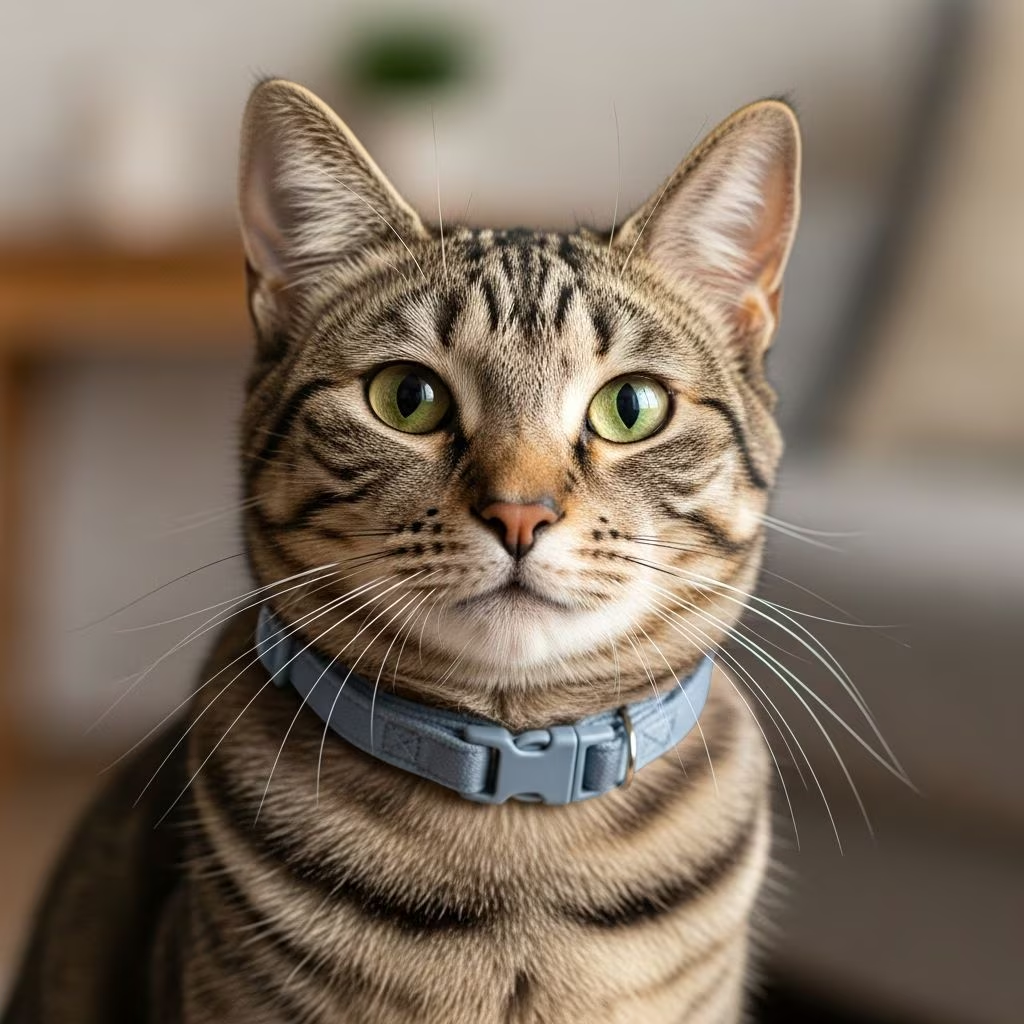
Many cat owners face the challenge of introducing a collar to their feline friends. Collars provide essential identification, especially for outdoor cats, and can hold GPS trackers or bells to prevent hunting. However, cats often resist due to the unfamiliar sensation around their necks. With patience and positive reinforcement, you can successfully train your cat to wear a collar comfortably. This guide covers everything from selecting the right collar to troubleshooting, ensuring a safe and stress-free process.
Why Should Cats Wear Collars?
Collars are vital for cat safety. For outdoor cats, they display ID tags with your contact information, increasing the chances of reunion if your cat gets lost. GPS trackers attached to collars allow real-time location monitoring, which is crucial for adventurous felines. Even indoor cats benefit from collars as a backup to microchipping, providing immediate identification in emergencies.
Bells on collars can reduce hunting success, protecting local wildlife. According to safety guidelines, collars prevent cats from becoming “strays” in neighborhoods. However, traditional collars pose risks like getting caught on objects, leading to choking or injury. That’s why **breakaway collars** are recommended—they release under pressure.
- Identification: ID tags and microchip compatibility.
- Tracking: GPS for outdoor cats.
- Noise reduction: Bells to alert prey.
- Safety: Breakaway mechanism prevents accidents.
Choosing the Right Collar for Your Cat
Select a collar that prioritizes safety and comfort. The best option is a **breakaway or safety collar**, which unfastens if snagged, avoiding strangulation. Ensure it’s adjustable for a proper fit: snug but with two fingers’ space between the collar and neck. Avoid leather or non-breakaway types for cats.
Consider your cat’s needs:
| Collar Type | Best For | Pros | Cons |
|---|---|---|---|
| Breakaway | Outdoor/Indoor | Safe release, adjustable | May come off too easily |
| Reflective | Nighttime | Visibility | Bulkier |
| With GPS | Roaming cats | Tracking | Added weight |
Start with a plain collar without bells or tags to ease introduction. Softer materials like nylon suit sensitive cats. Check weight minimums for breakaways—kittens under a certain weight may not generate enough force to release them.
Preparation Before Collar Training
Prepare your cat mentally. Choose high-value treats like tuna or chicken to create positive associations. Observe your cat’s body language: relaxed ears and tail mean green light; flattened ears signal stress—stop immediately.
Timing matters: Train during calm moments, not mealtime or playtime initially. Gather tools: treats, clicker (optional), and the collar. Rub the collar on your cat’s bedding or a cloth with their scent to familiarize them.
Step-by-Step Guide to Collar Training Your Cat
Follow these phases patiently, advancing only when your cat is relaxed. Sessions should last 5-10 minutes, 2-3 times daily.
Phase 1: Introduce the Collar
Leave the collar near your cat’s favorite spot. Reward sniffing or approaching with treats and praise. Let them play with it to reduce fear. This builds curiosity without pressure.
Phase 2: Touch and Hold the Collar
Once comfortable, hold the collar near their neck, rewarding calm behavior. Gently touch their neck with it under their chin, lifting slightly each time. Green body language? Treat! Repeat until they remain relaxed.
Phase 3: Create a Loop and Head-Through
Use a loosened collar, leash handle, or slip loop (ensure it doesn’t tighten). Lure with food or a target stick to pass their head through. Click and treat as it rests on their back, then remove gently. Fade lures for independence.
Phase 4: Practice Clasp and Removal
With the loop on their back, practice opening/closing the clasp behind their neck. Mimic fastening motions. Reward throughout to desensitize to neck handling.
Phase 5: First Fitting
Secure the collar briefly (seconds), praise, treat, and remove. Your cat may paw or shake—stay calm, distract with play. Gradually increase time: minutes, then hours.
Phase 6: Build Duration and Add Distractions
Once wearing for hours, add play, treats, or walks (harness first if outdoors). Check fit regularly, especially for growing kittens. Supervise initially.
Phase 7: Full-Time Wear and Accessories
When fuss-free, leave on 24/7. Introduce ID tags, bells, or GPS one at a time. Outdoor cats? Combine with microchip.
Troubleshooting Common Collar Training Issues
Not all cats adapt quickly. Here’s how to handle setbacks:
- Cat panics or paws excessively: Remove immediately, shorten sessions, use calming aids like pheromone sprays.
- Sensitive to texture: Switch to softer collar.
- Refuses head-through: Revert to Phase 1, try harness first.
- Over-stressed body language: Take breaks, resume in days.
Never punish— it creates fear. Consistency and positivity win.
Collar Training Don’ts
- Don’t leave unsupervised during early training.
- Don’t add accessories too soon.
- Don’t force or scold.
- Don’t use shock collars— they cause fear and aggression.
- Avoid permanent collars without breakaway.
Frequently Asked Questions (FAQs)
Can all cats wear collars?
Most can, but very lightweight kittens may not safely use breakaways. Consult a vet.
How long does collar training take?
1-4 weeks, depending on the cat. Patience is key.
Is a harness better than a collar?
Harnesses suit walks; collars for ID. Train harness first if needed.
What if my cat hates the collar forever?
Try different types or professional training. Microchipping is an alternative.
Should indoor cats wear collars?
Yes, for ID in escapes or emergencies.
Conclusion
Collar training enhances your cat’s safety with proper technique. By choosing a breakaway collar and using gradual, treat-based methods, most cats adapt happily. Monitor fit and behavior ongoingly for best results.
References
- Cat Collar Training: How and Why to Do It — Cat School. 2023-05-15. https://www.catschool.co/cat-training-articles/cat-collar-training-how-and-why-to-do-it
- How to Train Your Cat to Wear a Collar — Neater Pets. 2024-02-10. https://neaterpets.com/blogs/news/how-to-collar-train-your-cat
- Cat Collar Training & Fitting — Supakit. 2023-11-20. https://supakit.co/blogs/cat-guides/cat-collar-training-fitting
- Cat Collar Training & How To Nail It In Just 3 Steps — Tractive. 2024-08-05. https://tractive.com/blog/en/training-en/cat-collar-training
- Training Tips: Collars and IDs for Cats! — Berkeley Humane (YouTube). 2022-07-12. https://www.youtube.com/watch?v=EldlxWDbi8A



