

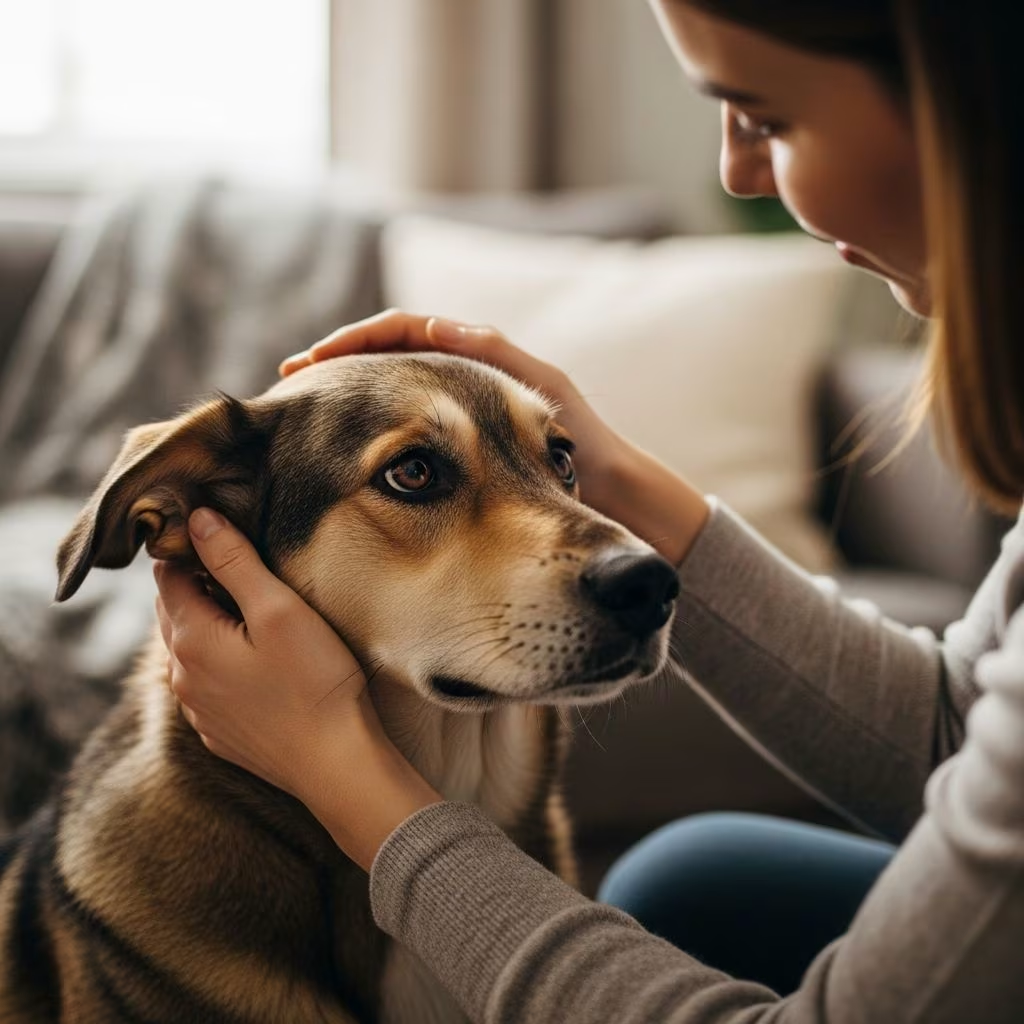
Watching a dog you love struggle with fear can be heartbreaking. Whether your pup trembles during thunderstorms, barks at strangers, or panics at the vet, there are kind, evidence-based ways to help them feel safer. This guide explains what fear is, why comforting your dog is not a mistake, and how to use classical counter-conditioning and your own calm presence to reduce their anxiety over time.
Understanding Fear in Dogs
Fear is not misbehavior or stubbornness; it is a survival emotion designed to keep an animal safe. When your dog is afraid, their brain and body are telling them that something might be dangerous and that they should take action to protect themselves.
Researchers define fear-related stress in dogs as a state in which the body releases stress hormones such as cortisol, increases heart rate, and prepares the dog to fight, flee, or freeze in response to a perceived threat. This reaction is automatic, not something your dog chooses on purpose.
Common Triggers of Fear
Dogs can become fearful around many different cues in their environment, including:
- Loud noises such as thunder, fireworks, construction, or traffic
- Strangers, including visitors entering the home or people approaching on walks
- Other animals, especially if past interactions were frightening or painful
- New places such as the veterinary clinic, groomer, or boarding facility
- Objects and surfaces like slippery floors, vacuum cleaners, or unfamiliar equipment
Some dogs have mild, occasional worries, while others live with intense, chronic fear or phobias, such as thunderstorm phobia. Dogs with severe noise fears show elevated cortisol and more intense behavioral distress compared with non-phobic dogs.
Why Fear Is So Powerful
From an evolutionary perspective, fear exists to keep animals alive. When a dog’s brain detects danger, it prioritizes safety over everything else. In that moment:
- Your dog’s body mobilizes energy for escape or defense.
- Thinking and learning become harder; survival is the priority.
- Pleasant experiences (like treats or petting) struggle to compete with fear.
This is why fearful behavior is not something dogs repeat just because it “works.” The emotion of fear itself is unpleasant, and they do not want to feel it again.
Does Comforting or Treating a Fearful Dog Make It Worse?
A common piece of outdated advice is to ignore your dog when they are scared, for fear of “reinforcing” the fear. This misunderstanding has led many pet parents to feel guilty for comforting their dogs. The evidence does not support that guilt.
Fear vs. Reinforcement: Why They Are Different
Reinforcement in training refers to consequences that make a behavior more likely in the future because they are rewarding. For reinforcement to occur, the dog has to find the situation itself pleasant or worth repeating. Fear is the opposite of pleasant.
Imagine you were eating your favorite dessert when someone tried to break into your home. The pleasure of the dessert would not make you want another break-in. If anything, you might later feel uneasy when eating that dessert because your brain linked it with the frightening event. The same logic applies to dogs. A few treats or gentle petting cannot make fear enjoyable.
What Research Shows About Petting During Fear
A study on thunderstorm-phobic dogs and their caregivers measured cortisol levels during storms, comparing different forms of support. The researchers found:
- Petting by guardians did not significantly reduce the dogs’ cortisol levels during the storm.
- The presence of other dogs in the household was associated with lower cortisol in the fearful dog.
This suggests that petting by itself may not erase the physiological stress of a storm, but it also does not make the fear worse. It simply is not powerful enough on its own to override that level of fear.
| Support Type | Effect on Dog’s Stress (Cortisol) |
|---|---|
| Guardian petting during storm | No significant decrease; does not worsen fear |
| Presence of other dog(s) | Associated with lower cortisol in the fearful dog |
Social Bonding Benefits
Other research on human–dog interaction shows that when people and dogs interact in a friendly way, cortisol levels in humans tend to decrease, while both humans and dogs experience increases in hormones linked with affiliation and positive social bonding, such as oxytocin, prolactin, and beta-endorphin. These changes support connection and emotional well-being, even if they do not eliminate fear entirely.
In practical terms, this means:
- Comforting your dog when they are afraid does not reward the fear.
- Kind touch and presence can still contribute to your bond and your dog’s overall sense of safety.
- You do not have to withhold comfort out of concern that you are “spoiling” your dog.
Why Forcing Exposure Can Backfire
Another outdated strategy is the idea that a dog will eventually “get over it” if they are repeatedly exposed to what scares them. When the exposure is intense and the dog cannot escape, this is more like marinating them in stress than teaching them to cope.
Studies of dogs with noise phobias show that repeated, uncontrolled exposure to frightening sounds can maintain or worsen the problem. Instead of learning that the sound is harmless, the dog learns that they are trapped with the threat and that panic is justified. This can generalize to other situations, creating a more anxious dog overall.
A Classical Counter-Conditioning Approach
One of the most powerful tools for changing fear-based behavior is classical counter-conditioning (CCC). This method does not punish or suppress behavior; it aims to change the underlying emotion that drives it.
What Is Classical Counter-Conditioning?
Classical counter-conditioning pairs something that currently predicts fear (like a stranger, loud noise, or scary object) with something your dog loves (like very special food or a favorite toy). Over time, the scary thing begins to predict good things, and your dog’s emotional response gradually shifts from fear toward neutrality or even enjoyment.
Key principles of CCC include:
- The scary trigger appears at a low enough intensity that your dog notices it but is not overwhelmed.
- Immediately after the trigger appears, you present a high-value reward (treats, toys, or other preferred rewards).
- The trigger goes away, and the rewards stop.
- Sessions are kept short, safe, and predictable.
Example: A Dog Afraid of Strangers
Suppose your dog barks and growls when strangers visit your home. In a classical counter-conditioning plan, you might:
- Start with a visitor standing at a distance where your dog is alert but can still eat.
- Have the visitor toss extremely tasty treats in the dog’s direction without approaching.
- End the session before your dog escalates to intense barking or lunging.
- Gradually, over many sessions, let the visitor move a little closer only if your dog remains relatively relaxed and willing to take treats.
Because fear is aversive, tossing treats during barking does not tell the dog that barking is “good.” Instead, the brain starts to associate the presence of unfamiliar people with yummy food. With careful planning, the emotional meaning of “stranger” shifts from threat to predictor of good stuff.
Why CCC Is Harder for Humans Than for Dogs
For many people, CCC feels counterintuitive. It can look like you are “rewarding” bad behavior by feeding a dog that is growling or hiding. However, behavior science and clinical experience in veterinary behavior medicine support CCC as a humane and effective approach for fear-related problems when applied correctly.
In a culture that historically emphasized dominance and punishment-based methods, it can take a mindset shift to embrace treating fear with kindness, distance, and high-value rewards. Nevertheless, CCC is a core tool for board-certified veterinary behaviorists and many qualified trainers.
Your Role: How Your Emotions Affect Your Dog
When your dog is afraid, your own emotional state becomes part of the picture. Dogs are highly sensitive to human body language, tone of voice, and even scent. Research indicates that dogs can respond to human emotional cues and may show changes in behavior and stress hormones depending on their caregiver’s state.
Staying Calm for Your Dog’s Sake
If you become frantic, angry, or highly anxious when your dog is scared, you may unintentionally add more worry to the situation. You cannot instantly make yourself relaxed, but you can practice behaviors that send calmer signals to your dog and to your own nervous system, such as:
- Slowing down your breathing and taking deeper, steadier breaths.
- Softening your posture—unclenching your hands, lowering your shoulders.
- Moving more slowly and deliberately instead of rushing.
- Speaking in a low, quiet, and even tone—or not speaking at all if words feel tense.
By acting calm first, you often begin to feel calmer as well. Your dog, who watches you closely for cues about safety, can then take comfort from your steadier presence.
Practical Tips to Help a Fearful Dog
Putting this all together, there are several practical steps you can start using to support a fearful dog while you seek professional guidance when needed.
1. Protect Your Dog from Overwhelming Situations
- Give your dog a safe retreat, such as a quiet room or covered crate, during storms or fireworks.
- Avoid forcing your dog to approach people, dogs, or objects that scare them.
- Use management tools (baby gates, leashes, curtains, white noise) to reduce exposure to triggers.
2. Comfort Is Allowed
- If your dog seeks contact, you can calmly pet or sit near them without worrying that you are “reinforcing fear.”
- Offer gentle touch, but never physically restrain or crowd a dog that wants space.
- Pair your presence with predictably good things (soft words, calm touch, special chews).
3. Use High-Value Rewards Strategically
- Reserve extra-delicious treats for training around triggers so they stay special.
- Start far from the trigger, where your dog can notice it and still eat.
- Stop the session if your dog refuses food, shuts down, or escalates.
4. Work with Qualified Professionals
- Consult your veterinarian to rule out medical issues that might be contributing to fear or pain.
- For moderate to severe fear, ask for a referral to a veterinary behaviorist or a trainer who uses reward-based, fear-free methods.
- In some cases, behavior medication may be recommended as part of a comprehensive plan.
5. Be Patient and Realistic
- Changing emotional responses takes time and many small, positive experiences.
- Set goals around comfort and coping, not perfection. Your dog may always be somewhat sensitive.
- Celebrate small signs of progress: taking treats, exploring a little more, or recovering more quickly after a scare.
Frequently Asked Questions (FAQs)
Q: Will I make my dog more fearful if I pet them during a storm?
A: No. Research on thunderstorm-phobic dogs found that petting did not increase fear or stress hormone levels, although it also did not completely remove the physiological stress response. Comforting your dog will not teach them to be more afraid.
Q: Won’t giving treats while my dog is barking just reward the barking?
A: When the behavior is driven by fear, high-value treats function as part of classical counter-conditioning rather than simple reinforcement. Your dog is not barking to get treats—they are barking because they are scared. Pairing the scary thing with great food over time can change their emotional response, as long as you keep the dog under threshold and work carefully.
Q: How is counter-conditioning different from just exposing my dog to what scares them?
A: Counter-conditioning uses controlled, low-intensity exposure paired with something your dog loves, so the fearful trigger predicts good things. Flooding or forced exposure overwhelms the dog with intense triggers and can worsen fear. With CCC, your dog should be able to eat, move away if needed, and stay relatively calm.
Q: Can my own anxiety make my dog’s fear worse?
A: Dogs are highly sensitive to human emotional cues and can respond to our body language, voice, and behavior. If you are visibly tense or frantic, your dog may feel less secure. Practicing calm breathing, slower movements, and gentle handling can help both of you.
Q: When should I seek professional help for my dog’s fear?
A: Seek professional help if your dog’s fear is intense, frequent, interfering with daily life, or involves aggression (growling, snapping, or biting). A veterinarian or veterinary behaviorist can help assess your dog and design a behavior plan that may include training, environmental changes, and, in some cases, medication.
References
- Dog aggression, fear, and anxiety — American College of Veterinary Behaviorists. 2021-09-01. https://fearfreepets.com/dog-aggression-fear-and-anxiety/
- Physiological and behavioral reactivity to stress in thunderstorm-phobic dogs and their caregivers — Nancy A. Dreschel & Douglas A. Granger, Applied Animal Behaviour Science. 2005-05-01. https://doi.org/10.1016/j.applanim.2005.04.009
- The effects of human–animal interaction on oxytocin and other neurobiological variables — Andrea M. Beetz et al., Frontiers in Psychology. 2012-07-03. https://doi.org/10.3389/fpsyg.2012.00234
- Specific fears and phobias in companion animals — Veterinary Behavior Guidelines, American Veterinary Medical Association. 2020-01-15. https://www.avma.org/resources-tools/avma-policies/guidelines-behavioral-issues-companion-animals
- Recognizing and treating canine anxiety — American Kennel Club Canine Health Foundation. 2021-06-10. https://www.akcchf.org/canine-health/your-dogs-health/recognizing-and-treating-canine-anxiety.html



