

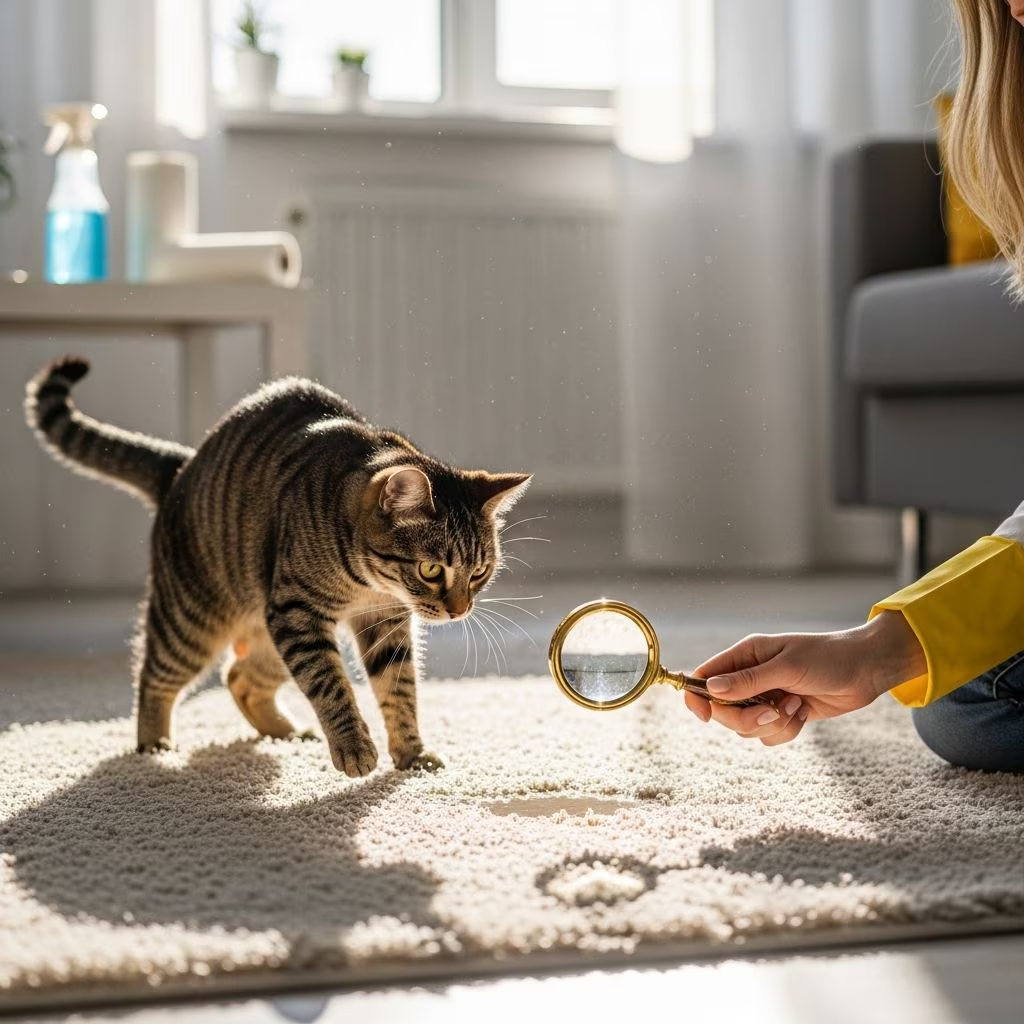
How to Find Cat Urine Without a Blacklight: Practical Methods for Pet Owners
Discovering that your beloved cat has had an accident outside the litter box is frustrating, especially when you can’t locate the spot. The challenge becomes even more difficult when the urine has dried, leaving behind only a faint (or not-so-faint) ammonia smell. While blacklights are effective tools for detecting cat urine, they’re not the only solution. If you’re dealing with a cat that’s had an accident and you don’t have access to a blacklight—or prefer not to invest in one—there are several reliable methods you can use to find and eliminate the problem.
Understanding Why Cats Miss the Litter Box
Before diving into detection methods, it’s helpful to understand why cats urinate outside their litter boxes. Cats have an extraordinarily sensitive sense of smell—approximately 14 times better than humans. This means that even after you’ve thoroughly cleaned a soiled area, your cat can still detect microscopic traces of urine left behind by enzymes and pheromones. These lingering scents create a chain reaction, encouraging your cat to use the same spot repeatedly as a makeshift litter box.
This behavior is particularly common when a cat has previously soiled an area. If your feline friend has had an accident in one location, there’s a significant chance they’ll target the same spot or nearby areas again, even if the cleaning was thorough from a human perspective.
Method 1: Check Specific Spots First
The most logical starting point is to check areas where your cat has previously had accidents. Even if you can’t smell or see evidence of urine, your cat certainly can. This method takes advantage of your cat’s natural inclination to revisit familiar spots.
Begin by inspecting corners, under furniture, and along baseboards—areas where cats naturally gravitate. If you’ve had previous incidents, examine those exact locations first, as well as the surrounding area. Your cat may not use the identical spot every time, but they’ll typically stay within a general vicinity. Pay special attention to:
- Bedroom closets and under beds
- Corners of bathrooms
- Areas near doors and windows
- Under or behind furniture
- Laundry baskets and clothing piles
This targeted approach can save considerable time and effort compared to searching your entire home randomly.
Method 2: Harness Your Sense of Smell
Sometimes the most effective tool is already built into your body: your nose. While cat urine has an extremely pungent ammonia smell that most people find unpleasant, this quality actually works in your favor. The odor is distinctive and relatively easy to detect once you’re in close proximity to the source.
Get down on your hands and knees and systematically sniff around suspected areas. Pay particular attention to corners, seams in flooring, and fabric items like curtains, bedding, and cushions. The closer you get to the affected area, the stronger the smell becomes, making precise location identification easier.
If your sense of smell isn’t particularly keen, consider enlisting help from a family member with a better olfactory sense—or even your dog. Dogs have an exceptional ability to detect cat urine and can effectively locate problem spots. This unconventional method can be surprisingly effective and efficient.
Method 3: The Baking Soda Application Technique
Baking soda is a versatile household item that serves multiple purposes in the hunt for cat urine. This simple powder can help you identify wet or recently soiled areas while simultaneously beginning the deodorization process.
To use this method, generously sprinkle baking soda over areas you suspect may contain cat urine. If the spot is wet or recently soiled, the baking soda will dissolve or clump upon contact with the moisture, visually revealing the urine location. Even if the area has already dried, the baking soda will begin neutralizing odors and sanitizing the fabric immediately.
Beyond detection, baking soda offers several benefits:
- Neutralizes ammonia smell naturally
- Sanitizes affected fabrics and surfaces
- Helps remove visible and invisible stains
- Works on carpets, upholstery, and other fabrics
- Cost-effective and non-toxic
Allow the baking soda to sit for several hours or overnight before vacuuming thoroughly. For enhanced results, you can combine baking soda with other treatments.
Method 4: Comprehensive Cleaning and Enzyme Removers
Once you’ve located the affected area, aggressive cleaning is essential—not just for hygiene purposes, but to prevent future incidents. Generic cleaning products won’t eliminate the microscopic residues that attract cats back to the same spot.
Enzyme-based cleaners are specifically formulated to break down the organic compounds in cat urine, including uric acid crystals and proteins. These products penetrate deep into fabrics and surfaces, removing traces that regular cleaners miss. When using enzyme cleaners:
- Strip beds and remove all affected linens
- Take down curtains and wash separately
- Remove couch covers and cushion covers
- Wash affected items in the washing machine with enzyme cleaner additive
- Treat hard floors and carpets with enzyme-based sprays or concentrates
Many pet product companies offer enzyme removers in various formulations: sprays for spot treatment, concentrated solutions for large areas, powders for carpets, and specialized laundry detergents for fabric items. Using these products significantly reduces the likelihood of repeat offenses in the same location.
Moisture Meters: A High-Tech Detection Alternative
If you’re struggling to locate urine through smell or visual inspection, a moisture meter offers a scientific approach. These instruments detect moisture in carpets and padding—even in dried urine, which naturally absorbs moisture from the air. This technology provides an objective way to identify problem areas without relying on your senses.
Moisture meters are particularly useful for:
- Detecting dried urine that’s difficult to smell
- Identifying moisture in carpet padding beneath the surface
- Confirming suspected areas before cleaning
- Checking treated areas to ensure complete moisture removal
While not as visually obvious as blacklight detection, moisture meters provide reliable data about affected locations.
Understanding the Blacklight Alternative
While this guide focuses on methods without blacklights, it’s worth understanding why blacklights are effective. Blacklights use ultraviolet (UV) light technology to illuminate urine stains that are invisible to the naked eye. The UV wavelengths (ideally 380-385 nanometers for pet urine) cause certain compounds in urine to fluoresce, creating a visible glow.
However, blacklights have limitations. Their effectiveness depends on several factors: carpet color (darker carpets absorb more light and show less fluorescence), surface type, the age of the urine, and the concentration of urine present. Light-colored carpets work best with blacklights, as they reflect more light and make glowing stains more visible against the background.
Despite these limitations, blacklights can be surprisingly affordable—often costing less than repeated purchases of ineffective cleaning products. For persistent urine problems, investing in a blacklight might ultimately save money.
Preventing Future Accidents
Successfully finding and cleaning cat urine is only half the battle. Preventing future incidents requires addressing underlying causes:
- Medical evaluation: Schedule a veterinary checkup to rule out urinary tract infections or other medical issues
- Litter box management: Ensure you have at least one litter box per cat, plus one extra. Clean boxes daily and change litter regularly
- Litter box placement: Position boxes away from food and water bowls, in quiet, accessible locations
- Stress reduction: Identify and minimize stressors in your cat’s environment
- Complete odor removal: Use enzyme cleaners to eliminate all traces of previous accidents
Choosing the Best Method for Your Situation
The ideal approach combines multiple methods. Start by checking specific spots your cat has targeted before, then use your nose to narrow down the location. Apply baking soda to confirm wet spots and begin deodorization. Follow up with enzyme-based cleaners for thorough elimination of residual compounds. If problems persist or you have difficulty locating spots, consider investing in a moisture meter or blacklight.
This comprehensive, multi-method approach addresses both detection and prevention, giving you the best chance of resolving your cat’s inappropriate elimination issues.
Frequently Asked Questions
Q: How long does cat urine smell last?
A: Cat urine can produce a noticeable ammonia smell for several days to weeks, depending on the amount of urine, surface type, and ventilation. However, cats can detect residual odors for much longer—even after human cleaning has removed all detectable smell.
Q: Can I use regular cleaning products instead of enzyme cleaners?
A: Regular cleaners may mask the smell temporarily, but they won’t eliminate the microscopic compounds that attract cats back to the same spot. Enzyme cleaners are specifically designed to break down these organic substances and are far more effective for preventing repeat incidents.
Q: How sensitive is a cat’s sense of smell compared to humans?
A: Cats possess a sense of smell approximately 14 times better than humans. This exceptional olfactory ability means they can detect urine traces that are completely undetectable to people, even after thorough cleaning.
Q: Is baking soda safe for cats?
A: Yes, baking soda is non-toxic and safe for cats when used as directed. However, avoid allowing cats to inhale large amounts of baking soda powder, and ensure thorough vacuuming after application to prevent respiratory irritation.
Q: Should I punish my cat for having accidents outside the litter box?
A: No. Punishment is ineffective and can increase stress, leading to more inappropriate elimination. Instead, focus on finding and treating the problem area, improving litter box hygiene, and consulting your veterinarian to rule out medical issues.
Q: Can fluorescein help identify which cat is urinating outside the box?
A: Yes. Fluorescein is an ingested dye prescribed by veterinarians that’s excreted in urine and fluoresces brightly under UV light. It can help identify which cat is causing problems and track their urination patterns, making it particularly useful in multi-cat households.
References
- How to Find Cat Urine Without a Blacklight – 4 Easy Methods — Hepper. https://articles.hepper.com/how-to-find-cat-urine-without-blacklight/
- Why Does My UV Light Not Make Urine Glow — Urine Eradication Systems. http://www.urineeradicationsystems.com/dog-cat-urine-removal/why-does-my-uv-light-not-make-urine-glow-1373/
- Using the Black Light to Identify Urine Spots — Let’s Inspect. YouTube. https://www.youtube.com/watch?v=hITT52u-NGU



