

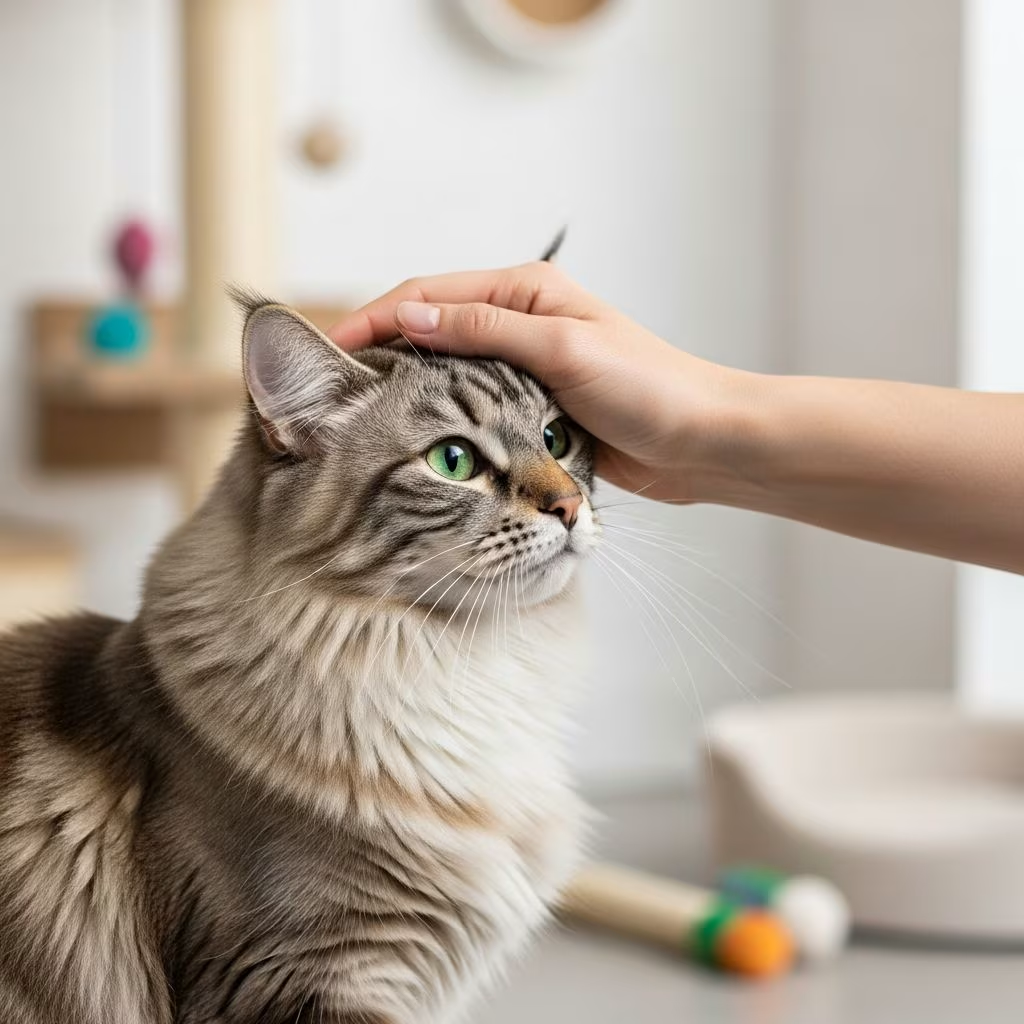
Choosing a **reputable cat breeder** is crucial for bringing home a healthy, well-socialized kitten. Ethical breeders prioritize feline welfare over profit, conducting health screenings and providing transparent information. This guide outlines key steps to identify responsible breeders affiliated with organizations like CFA or TICA, ensuring your new pet thrives.
Why Choose a Reputable Breeder?
Reputable breeders adhere to strict standards, selecting cats with strong pedigrees free from hereditary defects and providing proper nutrition, veterinary care, and socialization. They focus on breed standards—detailed attributes defining ideal physical and temperamental traits—crafted by parent clubs like those under CFA. This results in kittens less prone to genetic issues such as hypertrophic cardiomyopathy (HCM) common in breeds like Maine Coons.
Unlike mills supplying pet stores, ethical breeders sell directly to screened homes, avoiding impulse sales and ensuring compatibility. Adopting from rescues is ideal, but for specific breeds, a responsible breeder guarantees better long-term health and temperament.
Research the Breeder’s Reputation
Begin by investigating online reviews, social media, and local pet communities for feedback. A strong reputation, such as high client satisfaction rates from testimonials, signals reliability. Check purebred registries like CFA’s Approved Cattery program or TICA listings for endorsed breeders.
Ask local veterinarians, groomers, or breed club members for recommendations—they often know ethical sources. Avoid breeders with complaints about health issues or poor conditions.
Visit the Cattery or Home
Always schedule an in-person visit to assess living conditions. Responsible breeders welcome inspections, showing clean, spacious environments where kittens interact positively with humans and each other. Observe if cats appear healthy, active, and well-socialized, not confined in cramped, dirty cages.
Key checks include ample play space, fresh food/water, and no signs of overcrowding. Ethical catteries mimic home environments to prepare kittens for family life. If visits are refused or delayed excessively, it’s a red flag.
Ask About Health Testing of Parents
Request documentation on genetic and health screenings for the queen (mother) and tom (father). Reputable breeders test for breed-specific issues like HCM via services such as Optimal Selection Feline. Parents should be “certified” free of common genetic conditions by veterinary specialists.
Inquire about litter history: ethical breeders limit queens to fewer litters to protect health. Vaccinations, deworming, and vet records for kittens must be provided. Healthy parents produce robust kittens conforming to breed standards.
Evaluate Breeding Practices and Transparency
Probe the breeder’s philosophy: they should explain lineage, pairing criteria (genetics, temperament, blood type compatibility), and commitment to minimizing inbreeding. Membership in CFA, TICA, or GCCF indicates adherence to ethical codes.
Transparent breeders share pedigrees and willingly answer questions. Reluctance or vague responses suggest issues. They prioritize welfare, not volume, often maintaining waiting lists.
Review Contracts and Return Policies
Ethical breeders use detailed contracts outlining health guarantees, spay/neuter requirements, and return policies. If circumstances change, kittens can be returned, reflecting lifelong commitment.
Understand feeding, socialization protocols, and post-adoption support. Reputable contracts protect both parties and ensure kittens go to suitable homes.
Check for Affiliations and Certifications
Verify membership in cat fancier associations like **CFA** or **TICA**, which enforce health, registration, and welfare standards. These groups provide resources and credibility, listing breeders meeting rigorous criteria.
- CFA: Emphasizes pedigrees, genetic health, and nurturing environments.
- TICA: Sets breed standards and promotes ethical practices.
Assess Knowledge, Passion, and Socialization
Genuine breeders demonstrate deep breed knowledge, answering queries on traits, care needs, and issues confidently. They show passion through enthusiasm for placements and future family matching.
Socialization is vital: kittens should be handled daily, exposed to household sounds, and vet-checked. Ask about diet transitions and exercise to ease home adjustments.
Red Flags to Avoid
Steer clear of breeders pushing impulse buys, lacking paperwork, or operating via pet stores. Other warnings:
- Overcrowded, unclean facilities.
- No parent health tests or meeting parents.
- Excessive litters per queen or no association ties.
- Poor communication or pressure tactics.
Key Questions to Ask Breeders
Arm yourself with these vetted questions:
| Question | Why Ask? |
|---|---|
| Are parents certified for genetic diseases? Can I see results? | Confirms health screening. |
| Can I visit and meet parents/litter? | Assesses environment. |
| What genetic/DNA tests do you perform? | Verifies proactive health measures. |
| How do you socialize kittens? | Ensures well-adjusted pets. |
| What’s your return policy and contract? | Shows commitment. |
| Are you in CFA/TICA? Breed club member? | Proves credibility. |
Frequently Asked Questions (FAQs)
Should I buy from a pet store?
No—avoid pet stores linked to mills. Buy directly from breeders.
How many litters is too many for a queen?
Fewer is better; ethical breeders limit to preserve health.
What if a breeder won’t let me visit?
Walk away—transparency is key.
Is rescue better than breeding?
Yes for most, but breeders suit specific breed needs.
Do all breeders test for HCM?
Reputable ones do, especially for at-risk breeds.
Final Thoughts
Finding a reputable cat breeder requires diligence but yields a joyful companion. Prioritize health, ethics, and transparency for a lifetime bond. Your kitten deserves the best start.
References
- 10 Essential Tips for Identifying a Responsible and Ethical Cat Breeder — Little Paw Products. 2023. https://www.littlepawproducts.co.uk/post/10-essential-tips-for-identifying-a-responsible-and-ethical-cat-breeder
- Become a Breeder — The Cat Fanciers’ Association (CFA). 2024-01-14. https://cfa.org/become-a-breeder/
- Navigating the World of Cat Breeding: A Beginner’s Guide — Purrfectly Fold. 2023. https://www.purrfectlyfold.com/kitten-cat-blog-tips/-how-to-become-a-cat-breeder-a-comprehensive-guide
- How To Find an Ethical, Reputable, and Responsible Breeder — PetMD. 2024. https://www.petmd.com/dog/how-to-find-ethical-reputable-responsible-breeder
- 15 Questions You Should Ask Cat Breeders — PetPlace.com. 2023. https://www.petplace.com/article/cats/pet-care/15-questions-you-should-ask-cat-breeders
- How to Evaluate a Breeder — Animal Humane Society. 2024. https://www.animalhumanesociety.org/resource/how-evaluate-breeder



