

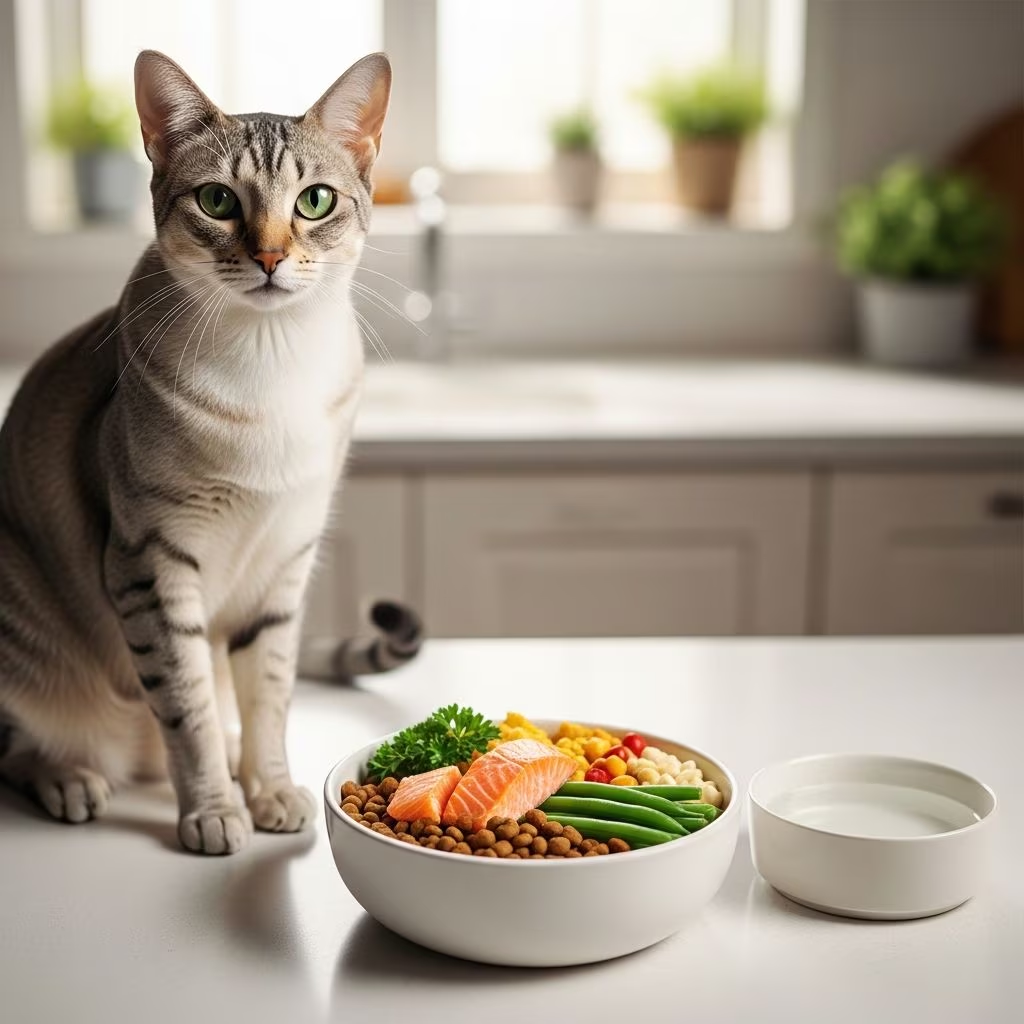
How to Feed Cats Properly: Complete Nutrition Guide
Feeding your cat properly is one of the most important aspects of pet ownership, yet many cat owners struggle to determine the right amount, type, and frequency of food for their feline companions. Cats have unique nutritional requirements that differ significantly from other pets, and understanding these needs is essential for maintaining optimal health, preventing obesity, and ensuring a long, healthy life. This comprehensive guide covers everything you need to know about feeding cats at every life stage, from kittens to senior felines.
Understanding Feline Nutritional Requirements
Cats are strict carnivores with specific dietary needs that must be met for optimal health. Unlike dogs or humans, cats require a diet rich in high-quality fats and proteins, along with specific amino acids. The most critical amino acid for cats is taurine, which isn’t found in dog food or human food and must be included in feline diets.
All cats require the following essential nutrients:
- Amino acids (which make up protein, listed on cat food packages as “crude protein”)
- Arginine
- Histidine
- Isoleucine
- Leucine
- Lysine
- Methionine and cystine
- Phenylalanine and tyrosine
These nutrients are critical for maintaining muscle mass, supporting immune function, and promoting overall wellness. When selecting commercial cat food, always verify that it contains these essential amino acids and meets the standards set by the Association of American Feed Control Officials (AAFCO).
Feeding Guidelines by Life Stage
Proper nutrition varies significantly depending on your cat’s age and life stage. Understanding the specific needs of each stage ensures your cat receives appropriate nutrients for growth, maintenance, or aging.
Feeding Kittens
Kittens have dramatically different nutritional needs compared to adult cats due to their rapid growth and development. Kittens require extra calories, fats, proteins, vitamins, and minerals to support their growth.
Feeding Frequency and Amounts:
- Kittens up to 6 months: 3–4 meals per day
- Kittens less than 4 months old: 3–4 feedings per day with specially formulated kitten food
- Daily caloric intake: 2 to 3 times the amount of an adult cat
- Kitten body weight 5 lbs: approximately 320 calories per day
- Kitten body weight 10 lbs: approximately 540 calories per day
You can feed kittens free-choice—meaning food is available at all times—which works particularly well with dry kitten food that won’t spoil when left out. However, this method is less appropriate for wet food, which can spoil and may lead to overfeeding.
Kittens should continue eating specially formulated kitten food until they reach adulthood, which typically occurs between 9–12 months of age. During the weaning process, around 6–8 months, you can gradually transition them to adult cat food. By the time weaning is complete, 80 to 90% of the kitten’s total nutrient intake should come from kitten food.
Feeding Adult Cats
Adult cats, typically aged 1–7 years, have different nutritional requirements than kittens or senior cats. As a general rule of thumb, all adult cats should be fed twice daily using the portion control feeding method.
Feeding Frequency:
- Adult cats (1–7 years): 1–2 meals per day
- Recommended minimum: Two meals daily with 8–12 hours between feedings
- Optional: Up to six meals per day if preferred
Daily Caloric Intake by Weight:
- Adult cat weighing 8–12 pounds (average): 200–300 calories per day
- 7.5 lbs: 210 kcal per day (standard weight)
- 10 lbs: 260 kcal per day (spayed/neutered); 303 kcal per day (intact)
- 15 lbs: 354 kcal per day (standard weight); 413 kcal per day (intact)
- 20 lbs: 440 kcal per day (standard weight)
Feeding Senior Cats
Senior cats, aged 7 years and older, may benefit from smaller, more frequent meals to support digestion and maintain energy levels. Senior cats typically require slightly fewer calories than younger adults due to decreased metabolism and activity levels.
Feeding Frequency and Amounts:
- Senior cats (7+ years): 2–3 smaller meals per day
- Daily caloric intake: 180–220 calories per day
- Dry food: 1/4 cup (30–40g) per day
- Wet food: 3 ounces (85g) per day
Dry Food vs. Wet Food: Making the Right Choice
One of the most common questions from cat owners is whether to feed dry kibble, wet canned food, or a combination of both. Both options have distinct advantages and disadvantages.
Wet Food Benefits
Wet food contains 60–80% water content and requires fewer carbohydrates compared to dry kibble. This high moisture content is particularly beneficial for maintaining your cat’s kidney health long-term. Wet food also tends to be more palatable for many cats, making it an excellent choice for picky eaters.
Wet Food Guidelines:
- Adult cat of average size: 7–11 oz of wet food per day
- Adult cat 10 lbs: 9 oz per day (approximately 3 cans of 3 oz or 2 cans of 5.5 oz)
- Adult cat 15 lbs: 11 oz per day (approximately 4 cans of 3 oz or 2 cans of 5.5 oz)
Dry Food Benefits
Dry kibble is convenient, economical, and won’t spoil when left out, making it suitable for free-feeding if appropriate for your cat. Dry food also tends to support dental health through the mechanical action of chewing.
Dry Food Guidelines:
- Adult cat of average size (8–12 pounds): 1/2 cup to 2/3 cup per day
- Adult cat 10 lbs (average): 1/3 cup (40–60g) per day
- Adult cat 15 lbs: 1/3 cup to 1/2 cup per day depending on activity level
Combination Feeding
Many veterinarians recommend combining both dry and canned food for optimal nutritional balance and hydration. When mixing dry and wet food, a general guideline is approximately 1/4 cup of dry food twice daily for adult cats, supplemented with approximately 1/4 to 1/2 can of canned food (thinned with water) as a snack.
Combination Feeding Benefits:
- Provides varied texture and flavor to prevent boredom
- Combines the convenience of dry food with the hydration benefits of wet food
- Allows customization based on your cat’s preferences
- Supports kidney health through increased water intake
Portion Control and Caloric Calculation
To determine the appropriate portion size for your cat, start by dividing the amount suggested on your pet food’s label into the number of meals you plan to offer daily. Begin with the manufacturer’s recommendation and adjust portions as you learn your cat’s ideal daily “maintenance” amount.
Formula for Multiple Meals:
If your cat requires 260 kcal per day and you’re feeding twice daily, divide 260 by 2 to get 130 kcal per meal. Consult your food’s nutrition label to determine the appropriate portion size that provides this caloric amount.
Monitoring Your Cat’s Weight:
- Weigh your cat regularly to ensure stable weight maintenance
- Adjust portions if your cat gains or loses weight unexpectedly
- Consult your veterinarian if your cat appears overweight or underweight
- Consider special diet formulations for overweight cats, which typically require fewer calories
Special Dietary Considerations
Overweight Cats
Overweight cats require careful caloric management to prevent serious health complications. An overweight cat weighing 15 lbs requires only 280 calories per day (compared to 360 for a healthy 15 lb cat), and a 20 lb overweight cat needs 310 calories daily.
Pregnant Cats
Pregnant cats have significantly increased caloric needs to support fetal development and milk production. A 10 lb pregnant cat requires 390 calories per day, while a 15 lb pregnant cat needs 510 calories daily. Pregnant cats should continue eating kitten food during pregnancy and lactation to meet these elevated nutritional demands.
Raw and Freeze-Dried Diets
Some cat owners opt for raw or freeze-dried raw diets. Adult cats on these diets typically require 3/4 cup to 1 1/4 cups of freeze-dried or frozen raw dinner morsels per day. If transitioning to a raw diet, do so slowly, especially for cats with sensitive stomachs or digestive issues.
Treats and Supplements
While treats can enhance your cat’s diet and provide enrichment, they should be given in moderation. Treats should represent no more than 5% of your cat’s daily food intake, with the remaining 95% coming from nutritionally complete cat food.
Alternatively, some sources recommend that treats not exceed 10–15% of a cat’s daily caloric intake. This guideline ensures that treats enhance rather than compromise nutritional balance. Always choose high-quality treats formulated specifically for cats, and avoid foods toxic to felines such as chocolate, onions, and xylitol-containing products.
Feeding Methods and Schedules
Portion Control Feeding
Portion control feeding involves measuring specific amounts of food and offering them at predetermined times. This method allows precise caloric management and is ideal for monitoring intake, particularly for overweight cats or those with dietary restrictions.
Free Feeding
Free feeding makes food available at all times, allowing your cat to eat whenever desired. This method works best with dry kibble, which won’t spoil when left out, and is particularly appropriate for kittens who need frequent access to food for growth. Some cats naturally self-regulate and maintain healthy weights with free feeding, while others tend to overeat and gain excessive weight.
Automatic Feeders
Automatic cat feeders are helpful tools for portion control, allowing you to program the correct portion size and feeding schedule to avoid overfeeding. These devices are particularly useful for busy owners or multi-cat households where individual portion control is necessary.
Frequently Asked Questions
Q: How much should I feed my kitten?
A: Kittens up to 6 months old should eat 3–4 meals per day, consuming 2–3 times the calories of an adult cat. A 5 lb kitten needs approximately 320 calories daily, while a 10 lb kitten requires about 540 calories. Transition to adult food around 6–8 months of age, with complete transition by 9–12 months.
Q: How often should I feed my adult cat?
A: Adult cats should ideally be fed twice daily using the portion control method, with meals spaced 8–12 hours apart. However, feeding once or up to six times daily can work depending on your schedule and your cat’s preferences.
Q: How many calories does my cat need daily?
A: Caloric requirements vary by weight, age, and activity level. An average adult cat weighing 10 lbs requires 260 kcal per day if spayed/neutered and moderately active. Consult your veterinarian or use feeding calculators based on your cat’s specific characteristics.
Q: Should I feed my cat wet food, dry food, or both?
A: Many veterinarians recommend combining both dry and wet food for optimal nutrition and hydration. Wet food (60–80% water) supports kidney health, while dry kibble offers convenience and supports dental health. A combination provides the benefits of both options.
Q: How much wet food should I feed my cat?
A: An average adult cat needs 7–11 oz of wet food per day as a complete meal. A 10 lb cat needs about 9 oz daily (approximately 3 cans of 3 oz), while a 15 lb cat needs 11 oz daily (approximately 4 cans of 3 oz).
Q: How much dry food should I feed my cat?
A: An average adult cat weighing 8–12 pounds needs 1/2 to 2/3 cup of dry food per day. A 10 lb cat requires approximately 1/3 cup (40–60g) per day, while feeding amounts vary by specific food formulation.
Q: Can I free-feed my cat?
A: Free feeding works best for kittens and can work for adult cats if they naturally maintain healthy weights. However, many cats overeat with free feeding, leading to obesity. Portion control feeding is generally recommended for weight management.
Q: What percentage of my cat’s diet should be treats?
A: Treats should represent 5–15% of your cat’s daily caloric intake, with the remaining 85–95% from complete and balanced cat food. This ensures treats enhance nutrition without compromising dietary balance.
Q: How should I transition my cat to a new food?
A: Gradually transition over 7–10 days by mixing increasing amounts of new food with the old food. This slow transition prevents digestive upset and helps your cat adjust to the new diet. For raw or freeze-dried diets, transition even more slowly if your cat has a sensitive stomach.
References
- Ask the Vet: How Much Should I Feed My Cat? Feeding Chart — Whisker.com. Accessed January 2026. https://www.whisker.com/blog/how-much-should-i-feed-my-cat
- Cat Nutrition Tips — ASPCA (American Society for the Prevention of Cruelty to Animals). https://www.aspca.org/pet-care/cat-care/cat-nutrition-tips
- Proper Nutrition for Cats — Merck Veterinary Manual, Merck & Co. https://www.merckvetmanual.com/cat-owners/selecting-and-providing-a-home-for-a-cat/proper-nutrition-for-cats
- How Much to Feed Your Cat: Portions, Calories, and More — Chewy.com Education. https://www.chewy.com/education/cat/food-and-nutrition/how-much-should-i-feed-my-cat
- How Much to Feed Your Cat — Stella & Chewy’s Pet Food. https://www.stellaandchewys.com/blogs/articles/how-much-to-feed-cats
- Feeding Your Cat — Cornell University College of Veterinary Medicine, Cornell Feline Health Center. https://www.vet.cornell.edu/departments-centers-and-institutes/cornell-feline-health-center/health-information/feline-health-topics/feeding-your-cat
- Nutrition – General Feeding Guidelines for Cats — VCA Animal Hospitals. https://vcahospitals.com/know-your-pet/nutrition-feeding-guidelines-for-cats



