

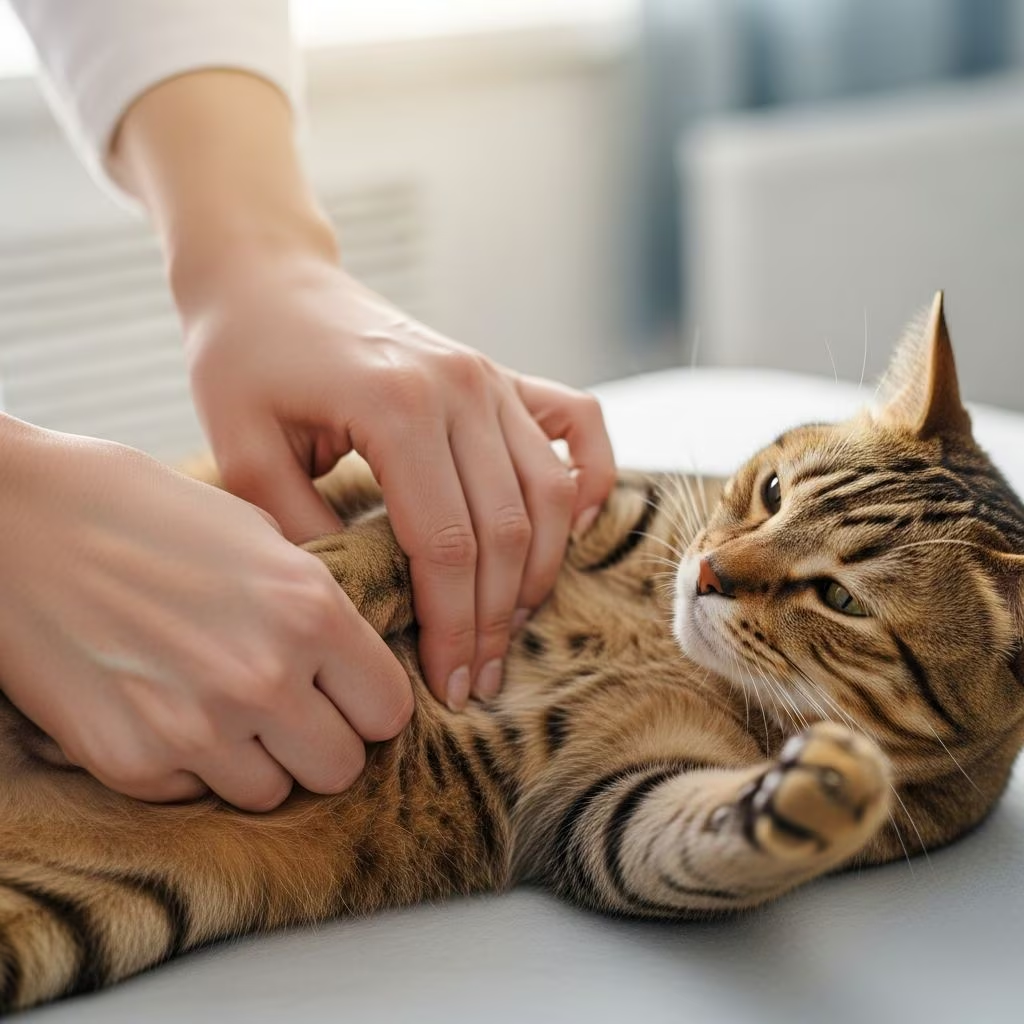
How to Express a Cat’s Bladder
If you are caring for an incontinent cat, you might need to manually express your cat’s bladder. While it takes a bit of practice, it is a simple, straightforward procedure that anyone can learn. However, before you begin any treatments for your cat’s incontinence, including bladder expression, it is crucial to consult with your veterinarian. Inappropriate expression can be harmful and even dangerous, so proper hands-on instruction in technique and knowledge of how to avoid complications is absolutely necessary. Do not attempt expression without consulting a veterinarian and without receiving proper training from a qualified professional.
Understanding Cat Bladder Expression
What Is Bladder Expression?
A healthy bladder is meant to fill and empty, expand and release. When a cat’s bladder is expressed, the expresser’s hand acts to squeeze the urine out of the bladder through the urethra and out of the body through the urethral opening. Bladder expression is a procedure used to help cats who are unable to empty their bladder on their own. It is often necessary for cats with conditions like urinary retention, neurogenic bladder, or those recovering from surgery.
A degree of mechanical irritation cannot be avoided and increases with the length of time the bladder needs expressing. The goal is to be as gentle as possible to avoid damaging the bladder walls while moving out as much urine as possible each time. This helps prevent complications such as urine retention, infection, or discomfort.
Learning the Two-Part Process
Learning how to express a cat’s bladder is a two-part process:
- The Physical Action: The first part is learning the physical action of squeezing the urine out of the bladder. The factors involved are the location, the position of the cat, how you hold the cat, where you place your hand, and how you move your hand to encourage the bladder to release and express the urine.
- The Art of Expression: The second part is learning the \”art\” of bladder expression, which includes how to balance the stress level of both you and your cat, how to gauge when the bladder is adequately empty, and how to tell when there is a problem. As with any skill, the more you practice, the more adept you become.
Preparation and Setup
Choosing a Location
The location you choose to express your cat’s bladder will depend on your physical needs and preferences as well as those of your cat. For example, if it is difficult or painful for you to bend down, you should select a location where you can be standing.
You can express your cat’s bladder in several different locations:
- Onto a towel, pee pad, or litter box on the floor
- From a counter into a sink or onto a towel or pee pad
- Into a toilet
A calm, quiet environment helps your cat feel relaxed. A soft mat or towel placed on the floor provides comfort and reduces stress. Ensure the area is well-lit and positioned for easy access to the cat’s lower abdomen. This allows for accurate palpation and ensures the bladder can be located with ease.
Positioning Your Cat
Proper positioning is essential to ensuring the bladder expression process is comfortable for your cat. Some recommendations for positions to express a cat’s bladder include:
- For some cats, it is helpful to hold the hind legs together and pull them in toward the belly with your non-squeezing hand. This puts the bladder in a good position for expressing. This restraint also prevents the cat from \”rabbit-kicking\” you as you express the bladder.
- Standing, lying on their side, or being held upright are all acceptable positions depending on what works best for both you and your cat
- For male cats, support their front legs and apply gentle pressure around the rib cage
- Female cats may require a slightly different technique, but ensure even pressure is applied to the lower abdomen for comfort
The procedure will be carried out gently and slowly to minimize any discomfort, ensuring your cat receives the best care possible.
Step-by-Step Bladder Expression Technique
Step 1: Locate the Bladder
Slip your dominant (squeezing) hand under the cat’s belly slightly closer to the rear than right below the ribs. Place your other hand along the cat’s side opposite from you, so you can gently hold and/or lift the cat. When the cat has settled into position, feel the abdomen, slightly higher than the leg sockets. Beneath the spine is the colon, and beneath that is the bladder. Gently feel for a round, firm mass in the lower abdomen. It may take some practice to find. By feeling for a firm, round shape, you can pinpoint the bladder and prepare to apply the right amount of pressure.
Step 2: Position Your Hand Correctly
The proper hand placement is critical for effective bladder expression. Cradle the cat’s bladder in your hand, positioning it so you can apply steady, controlled pressure. Some bladders are wiggly. Using your thumb to brace the bladder while moving your fingers can help steady it. Using your non-expressing hand to press down on the abdomen from above can also provide additional stability and support.
Step 3: Apply Gentle but Firm Pressure
The goal is to cradle the cat’s bladder in your hand, applying the least amount of pressure needed to release the urine. Sometimes, with a very full bladder, you can release some urine just by rolling your fingers along the sides of it. Using your palm or fingertips, apply gentle but firm pressure to the bladder, directing it toward the urethra. Once the bladder is located, gently squeeze the abdominal area, applying even pressure to express the urine. The goal is to release the urine without causing discomfort, ensuring the process is as gentle as possible for the cat.
Step 4: Monitor Urine Flow and Adjust as Needed
As you squeeze and the urine comes out, try to maintain the position for as long as the stream of urine continues. When the urine stops, pause for a moment and then squeeze again. If the stream continues and you feel the bladder shifting and shrinking, it’s OK to move your fingers to encourage a continuing stream or to pulse slowly. It’s also OK to pull your hand completely away from the cat and reposition your hand for the next squeeze.
As the bladder becomes smaller, let it settle into the palm of your hand and slowly make a fist, while still not using your fingertips. Once the bladder is about the size of a grape or you feel the bladder walls touching, it is empty. You can stop.
Advanced Techniques and Tips
Managing Difficult Bladders
If a cat resists during the procedure, remain calm and gentle, ensuring the cat is held securely. Use a soothing voice to reassure the cat and may pause if necessary to allow the cat to relax before continuing. Inconsistent urine flow may indicate an underlying concern, such as a urethral blockage. If the issue persists, consult with a veterinarian immediately. Carefully monitor the cat’s response during the procedure. If the urine stops or the bladder isn’t fully emptied, adjust the pressure or reposition the cat to complete the process safely and effectively.
Genital Stimulation Technique
Sometimes, gently stimulating the cat’s penis or vulva while squeezing the bladder helps relax the opening and release the urine without a forceful squeeze. This technique is preferred over continual squeezes with little output and helps reduce the irritation of the bladder walls caused over time by manual expressing. \”Stimulate\” means gently rubbing your finger on the area in short bursts until you feel the urine coming. Your finger will get wet, so we recommend wearing gloves.
Taking Breaks
At any point in the process, you can stop and rest a little or let the cat have a minute to walk around. This helps reduce stress for both you and your cat and allows for more successful expression sessions.
Important Safety Considerations
When to Seek Veterinary Help
Before beginning any treatments for your cat’s incontinence, including bladder expression, reach out to your veterinarian. Inappropriate expression can be harmful and even dangerous, so it’s necessary to have proper hands-on instruction in technique and in how to avoid complications. Do not attempt expression without consulting a veterinarian and without receiving proper training.
If you notice signs of urethral blockage, persistent difficulties with expression, or if your cat shows signs of pain or distress, contact your veterinarian immediately. Some conditions may require professional medical attention rather than home care.
Supplies You’ll Need
Have the following supplies on hand before beginning the bladder expression process:
- Gloves (nitrile or latex)
- Clean towels or pee pads
- Veterinarian-recommended lubricant (if advised)
- Access to a sink, toilet, or designated disposal area
Frequently Asked Questions
Q: How often should I express my cat’s bladder?
A: The frequency depends on your cat’s specific condition. Your veterinarian will recommend the appropriate schedule. Some cats may need expression multiple times daily, while others may need it less frequently.
Q: Is bladder expression painful for my cat?
A: When performed correctly with gentle pressure, bladder expression should not be painful. However, some mild discomfort is normal. If your cat shows signs of severe pain, consult your veterinarian immediately.
Q: Can I hurt my cat while expressing their bladder?
A: Inappropriate expression can be harmful and dangerous. This is why proper hands-on instruction from a veterinarian is essential. With proper training and technique, you can safely express your cat’s bladder at home.
Q: What if I cannot find my cat’s bladder?
A: It may take some practice to locate the bladder. Ask your veterinarian to show you exactly where it is located on your specific cat. They can guide your hand to help you understand the proper placement.
Q: What should I do if my cat becomes stressed during expression?
A: If your cat becomes stressed, take a break and allow them to calm down. You can resume the procedure once they have settled. Balancing the stress level of both you and your cat is part of learning the \”art\” of bladder expression.
Q: How do I know when the bladder is completely empty?
A: Once the bladder is about the size of a grape or you feel the bladder walls touching, it is empty. You’ll learn to recognize this with practice.
Q: Can I express my cat’s bladder if they are pregnant?
A: If the cat is pregnant, do not express the bladder. Contact your veterinarian for alternative care instructions.
Mastering the Skill
Learning to express your cat’s bladder is a skill that improves with practice. Initially, you may feel uncertain about your technique, but as you perform the procedure regularly, you will become more confident and adept. The combination of understanding the physical mechanics and developing the intuitive \”art\” of the procedure will help you provide effective and comfortable care for your incontinent cat.
Remember that proper veterinary guidance is essential before you begin. Your veterinarian can provide hands-on training, demonstrate the correct technique on your individual cat, and help you understand your cat’s specific needs. With proper training, patience, and practice, you can successfully manage your cat’s bladder expression at home, improving their quality of life and comfort.
References
- How to Express a Cat’s Bladder — Best Friends Animal Society. 2024. https://bestfriends.org/pet-care-resources/how-express-cats-bladder
- How to Express Cat Bladder: Expert In-Home Care for Your Cat — Pad Health & Professional Services. 2024. https://padhps.com/blogs/pad/how-to-express-cat-bladder
- How to Express Your Pet’s Bladder — Vet Neuro Chesapeake. 2024. https://www.vetneurochesapeake.com/bladder-expression
- Bladder Expression Technician Guide — University of Florida College of Veterinary Medicine. 2014. https://www.vetmed.ufl.edu/files/2014/07/Pre-Prep-Bladder-Express.pdf



