

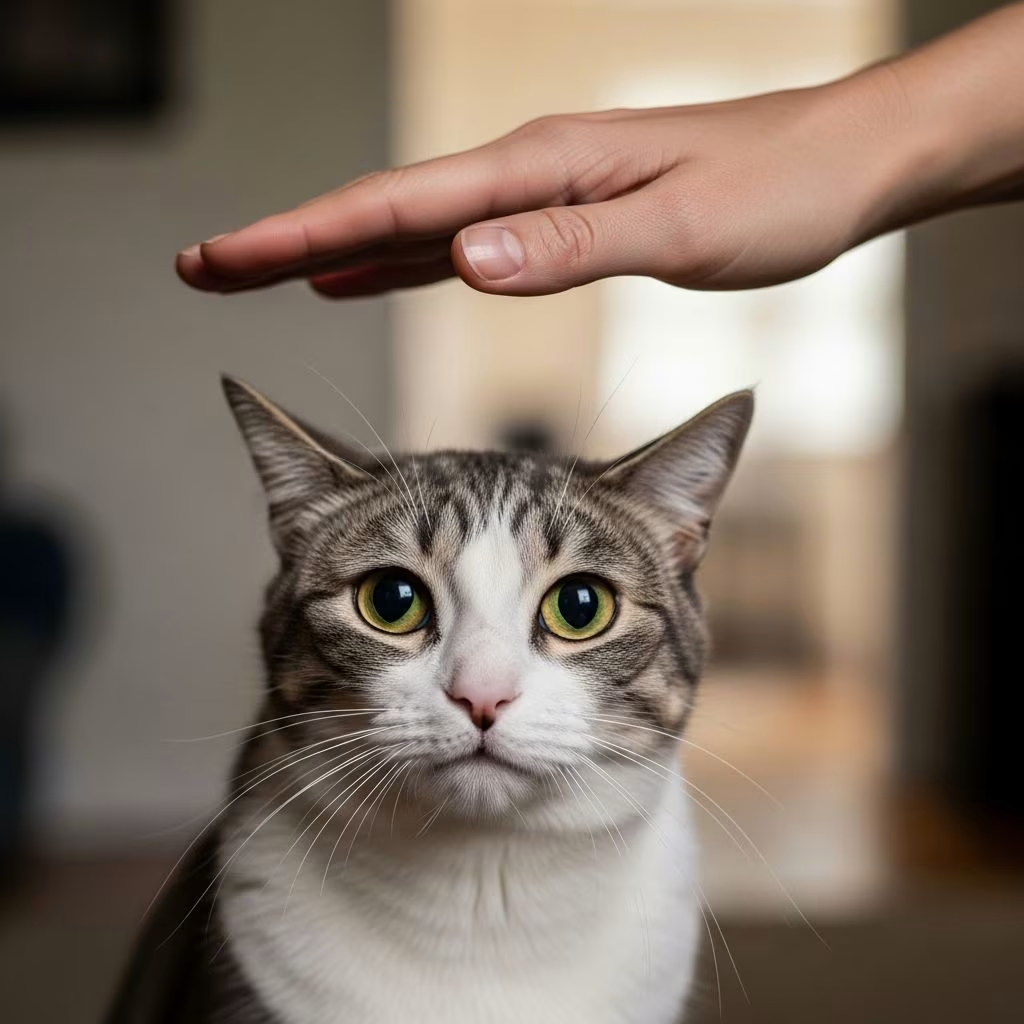
The straightforward answer is that you shouldn’t discipline your cat in the traditional sense. Tactics involving pain, stress, or fear are ineffective and harmful, often increasing unwanted behaviors and damaging your relationship.
Positive training methods offer superior results by rewarding desired actions, fostering trust, and addressing root causes like unmet needs or instincts shaped over thousands of years. Cats are highly trainable, responding well to techniques similar to those for dogs, though motivated more by immediate rewards than people-pleasing.
Can Cats Be Trained Like Dogs?
Yes, cats are highly trainable, using methods akin to dog training but adapted to their barter-like motivation system. Cats perform actions for valuable rewards like treats or play; if the incentive isn’t compelling, they disengage.
Research on feline social organization highlights cats’ observational learning abilities. Kittens learn hunting and social behaviors by watching their mother, extending into adulthood through allogrooming and group dynamics. This underscores cats’ capacity for learning arbitrary tasks via demonstration and reinforcement, not punishment.
In multi-cat households, understanding hierarchies is key. Dominant cats maintain status through ritualized signals like staring or ear stiffening, rarely needing physical conflict. Subordinates defer via subtle cues, such as looking away or leaning back. Training respects these dynamics, using positive methods to avoid exacerbating aggression.
What to Do Instead of Disciplining Your Cat
Replace punishment with strategies addressing specific behaviors. Tailor approaches to the issue, focusing on prevention, alternatives, and rewards.
Avoid Punishment
Punishment fails against deep instincts; it heightens stress without changing behavior. Positive training overrides issues more effectively, promoting repetition of good actions. Studies confirm punishment creates fear, leading to avoidance or redirected aggression rather than compliance.
Don’t Use Physical Force
Physical actions, even reflexive responses to scratches or bites, worsen problems. They trigger defensive instincts, eroding trust. Manage impulses to intervene calmly, giving space during high arousal. In group settings, ‘bully’ cats emerge from poor socialization, confiscating resources and sparking conflicts; force amplifies this.
Provide Alternatives and Positive Outlets
Unwanted behaviors signal unmet needs—play, scratching, or territory marking. Offer ‘yes’ options: scratching posts, interactive toys, or elevated perches. This prevents self-solutions like furniture destruction.
For aggression, assess triggers. Breeds like Turkish Van show higher inter-cat aggression probabilities, while Persians are more sociable, influenced by early socialization. Ensure ample resources: multiple litter boxes dispersed to avoid bullying.
Use Positive-Reinforcement Training Techniques
Reward desired behaviors immediately with treats, praise, play, or pets. Praise litter box use, counter avoidance, or toy play over human attacks. Consistency builds habits; pair with trigger management, like scheduled play to meet hunting needs.
Clicker training exemplifies this: mark good behavior with a click, follow with reward. Cats learn associations quickly, as seen in observational learning studies. Track progress:
| Behavior Issue | Positive Alternative | Reward Type |
|---|---|---|
| Jumping on counters | Train to stool or platform | Treats, praise |
| Scratching furniture | Provide sisal post | Play sessions |
| Biting hands | Redirect to toys | Interactive wand toy |
| Not using litter box | Multiple clean boxes | Verbal praise, pets |
Common Cat Behavior Problems and Solutions
Address specifics like aggression, litter issues, or night zooming with positives. For inter-cat tension, slow introductions prevent rejection of ‘strangers,’ mirroring wild colony dynamics. Owner guilt studies note multi-cat aggression scales from avoidance to separation needs.
- Aggression: Space during incidents; enrich environment with vertical space and solo play. Reward calm coexistence.
- Litter Box Avoidance: Rule out medical issues; add boxes per cat plus one, in quiet spots.
- Scratching: Trim nails, offer varied posts, reward use.
- Meowing Excessively: Check hunger/health; ignore attention-seeking, reward quiet.
Early socialization prevents bullies; pedigree kittens benefit from breeder handling, reducing aggression.
Understanding Cat Social Dynamics
Cats form matrilineal groups with cooperative kitten-rearing, even among unrelated females. Mothers teach via prey release, modeling hunts. Juveniles learn deference signals, vital for multi-cat harmony.
Poor socialization yields social failures: one-cat isolates miss bonding, becoming wary adults. Introduce new cats gradually, respecting colony-like exclusivity. Manage hierarchies by feeding dominants first while ensuring access for all.
Building a Strong Cat-Human Bond
Positive methods strengthen kinship, unlike punishment’s damage. Niche expansion views human-cat homes as shared ecologies, where behaviors adapt mutually. Reward-based training aligns with cats’ independent nature, enhancing welfare.
Enrichment combats boredom-induced issues. Studies link owner traits and cat lifestyles to bond strength; guilt arises from unmet needs, resolved via interaction boosts. Daily routines—play, grooming, feeding—mirror social grooming, highest among mother-offspring pairs.
Frequently Asked Questions (FAQs)
What if my cat is aggressive?
Give space, identify triggers like play frustration or fear. Redirect to toys, use rewards for calm. Consult vets for pain-related issues; multi-cat aggression may need separation.
Can I spray water to discipline?
No, it causes fear without teaching alternatives, risking litter avoidance or hiding.
How do I stop counter jumping?
Remove access, train to alternative spots with treats. Make counters unappealing via foil or sticky tape temporarily.
Why does punishment backfire?
It induces stress, suppressing behavior temporarily but increasing problems like anxiety. Cats learn via association; pain links to you, not the act.
Are some cats untrainable?
No, all cats respond to positives if needs are met. Breed traits influence, e.g., higher aggression in Turkish Vans, but socialization overrides.
Bottom Line
Discipline via negatives damages; positives solve root issues, offering alternatives and rewards. Decode needs—hunger, play, territory—then reinforce goods. This builds harmony, leveraging cats’ trainability for a thriving bond.
Implement consistently: observe, redirect, reward. Patience yields results, preventing stress cycles. For persistent issues, seek certified behaviorists.
References
- How to Discipline a Cat: Why You Actually Shouldn’t — Kinship. 2023. https://www.kinship.com/cat-behavior/how-to-discipline-a-cat
- Social organization in the cat: A modern understanding — PMC / Bradshaw et al. 2024-01-15. https://pmc.ncbi.nlm.nih.gov/articles/PMC10822437/
- The Cat Breed-Behavior Connection — Kinship. 2023. https://www.kinship.com/cat-behavior/cat-breed-behavior
- The impact of owner personality traits and cat lifestyle decisions on … — CABI Digital Library. 2024. https://www.cabidigitallibrary.org/doi/10.1079/hai.2024.0022
- Niche Expansion and the Natural History of Human-Cat Kinship — University of Chicago Journals. 2024. https://www.journals.uchicago.edu/doi/10.1086/737151



