

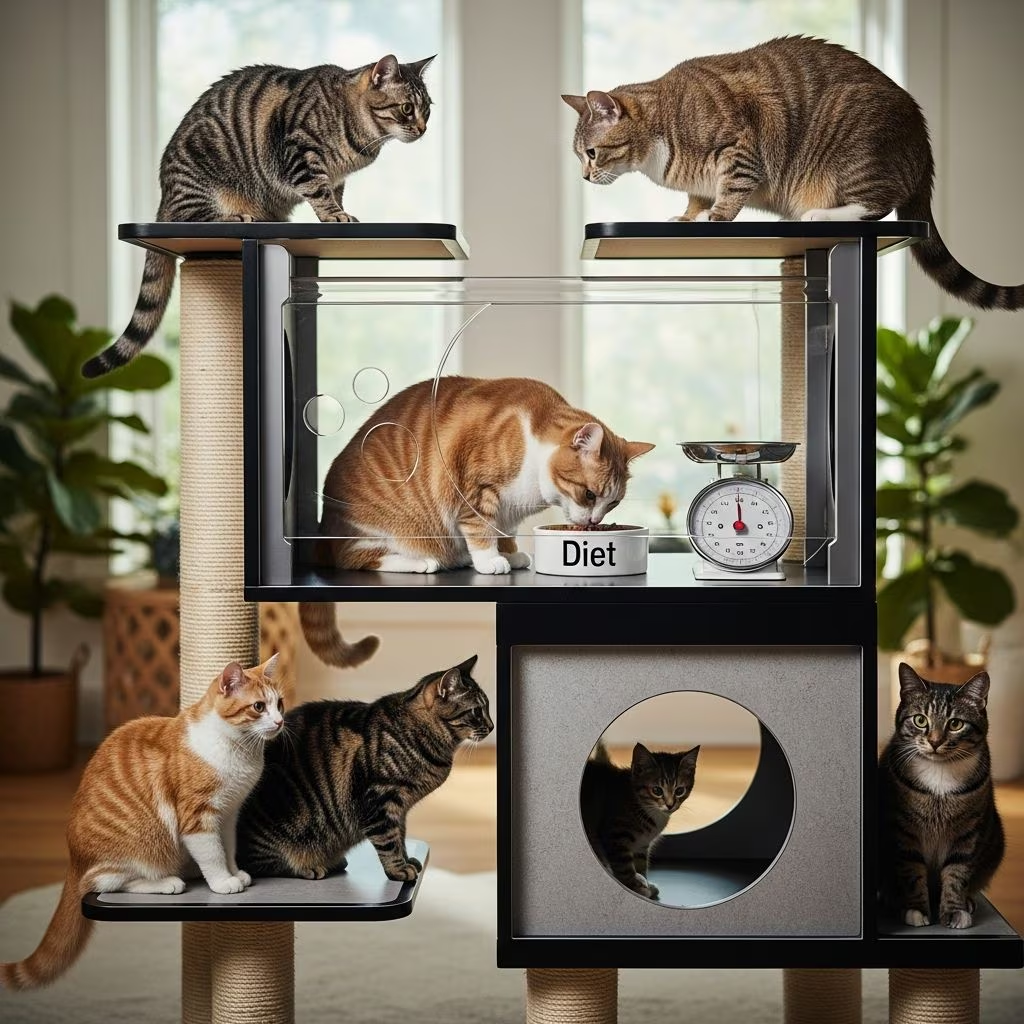
One chonky cat, three hungry housemates – here’s how to fix it.
The Multi-Cat Food Drama No One Warns You About
Picture this: you’re watching your cats at dinner time, and while one delicately nibbles their kibble, the other is practically inhaling everything in sight – including their sibling’s leftovers. Sound familiar? If you’re nodding along, you’re not alone in this multi-cat household struggle.
Whether you’ve adopted a new cat who’s carrying some extra weight or you’ve got a greedy kitty who likes to take an extra share of treats, you might be considering putting your cat on a diet. When there’s just one cat at home, it’s simple enough. You can carefully monitor how much food they’re getting. But when you have two or more cats, and only one needs to go on a diet, how can you ensure they’re not eating more than they need while making sure the others get enough food at the same time?
The good news? This is totally fixable. Experts recommend strategies like meal feeding, separate stations, and technology to manage intake precisely. From knowing when it’s time to go on a diet in the first place to the different ways to feed an overweight cat separately, these tips ensure harmony at mealtime.
How to Know If Your Cat Needs to Go on a Diet
Before diving into feeding changes, confirm if your cat truly needs a diet. Obesity affects up to 60% of cats in multi-pet homes, leading to diabetes, arthritis, and heart issues. Use the body condition score (BCS): feel your cat’s ribs – they should be palpable without excess fat, with a visible waist from above and a tummy tuck profile from the side.
Veterinarians like Dr. Georgia Woods-Lee from the University of Liverpool’s Weight Management Clinic emphasize ideal weight feeding over current weight. Feeding guidelines on bags often overestimate needs for housecats, so calculate based on target weight. Consult your vet for a personalized plan, including baseline health checks.
- Signs of overweight: Rounded abdomen, no waist, difficulty grooming, lethargy, or paw pad fat overflow.
- Ideal BCS: 4-5/9 on vet scales – ribs felt with slight fat cover.
- Risks: Joint strain, urinary issues, reduced lifespan.
In multi-cat homes, bullying or free-feeding exacerbates issues, with dominant cats stealing food and subordinates under-eating or stress-gorging.
How to Feed an Overweight Cat Separately
Now, let’s talk about the real challenge. Even if two or more cats are fed at the same time with the same access to food, it’s possible that just one might become overweight. It could be because one is less active, more confident in helping themselves when sharing food, or because you’re free feeding and they keep coming back.
Georgia Woods-Lee advises meal feeding instead of free-feeding to monitor intake. “Giving 30 minutes of supervised access to food 2–3 times a day will mean no food stealing can occur,” she says. “The cat on a diet may be best fed in a separate room during meals, particularly if they are very keen to swap bowls.”
Because cats are crepuscular – most active at dawn and dusk – align meals with these times to mimic natural hunting. Feed at least 3 feet apart or in private spaces to reduce competition; barriers like counters or doors prevent visual stress.
- Separate rooms: Lock the dieter in a quiet space (not near litter) for 30 minutes; supervise to prevent begging.
- Vertical feeding: Use cat trees or shelves – train each cat to their level with consistent placement.
- Timed access: Remove bowls after eating to enforce portions and build routine, reducing anxiety.
Tech Solutions: Microchip Feeders and More
Here’s where technology shines, especially if housemates resist schedule changes. Microchip-activated feeders dispense food only to the chipped cat, preventing theft. Brands like SureFeed allow the dieter exclusive access while others free-feed if needed.
For special diets (e.g., kidney or kitten food), these ensure compliance without isolation. Puzzle feeders add enrichment, slowing gulpers and burning calories mentally.
| Method | Pros | Cons | Best For |
|---|---|---|---|
| Separate Room | Full control, no stealing | Requires supervision | Highly food-motivated cats |
| Microchip Feeder | Hands-off, precise | Costly (£50-100) | Free-feeding others |
| Vertical Stations | Space-efficient | Training needed | Apartment dwellers |
| Puzzle Feeders | Enrichment bonus | Not for all cats | Slow eaters |
Leveled feeding on cat furniture alleviates bullying; one owner feeds the timid cat on the counter for peace.
How Do I Know How Much Food to Give My Cat?
“Feeding guidelines on bags of food may be higher than a typical housecat needs,” explains Dr. Rollins. “We should always provide the amount of food needed by the cat at their ideal weight, not necessarily their current weight if they are too heavy.”
Aim for 20-30 kcal/lb of ideal body weight daily, split into 3-4 meals. For a 10lb target cat: 200-300 kcal/day. Track with apps or charts, adjusting for activity and spay/neuter status (neutered cats need 20-30% less).
- Calculate: Ideal weight x 20 kcal/lb base, tweak per vet.
- Monitor: Weekly weighs; 1-2% body weight loss/week is safe.
- Rx diets: Vet-prescribed for obesity, fed separately.
What About Treats?
Let’s be honest – it’s easy to lose track of treats, especially with multiple humans dispensing. Treats should be 10% max of daily calories. Opt for low-cal options; coordinate household-wide.
“Another good option is cooked courgette,” adds Woods-Lee. “Peeled and cooked courgette can be a nice, very low-calorie, high-water treat for any cats.” Veggies like cucumber or green beans work too, bulking meals without calories.
- Low-cal picks: Freeze-dried meat (5kcal/piece), veggie sticks.
- Rule: Log treats like meals; skip on high-food days.
- Alternatives: Play sessions or lick mats with wet food smears.
Boosting Exercise and Enrichment
Diet alone isn’t enough – increase activity to burn calories. Multi-cat homes thrive with enrichment to curb food guarding.
Provide puzzle feeders, wand toys, and climbing structures. Aim for 15-30 min play twice daily, mimicking hunts. Track steps with collars if possible; indoor cats need vertical space and window perches.
- Ideas: Laser pointers, treat balls, cat wheels.
- Group play: Builds bonds, prevents bullying.
- Resources: Feline enrichment guides from vet sites.
Common Mistakes and Pro Tips
Avoid free-feeding, inconsistent portions, or punishing behaviors – it heightens stress. Patience during transitions; full routines take weeks.
- Mistake: Over-treating to compensate.
- Tip: Family agreements on feeding rules.
- Watch: Weight plateaus or regressions – vet check.
The Bottom Line: How to Put One Cat on a Diet in a Multi-Cat Household
Team up with your vet for tailored plans, products, and monitoring. Consistency from all household members ensures success. A slimmer cat means a healthier, happier life – for them and your home.
Speak to your vet if unsure; they guide meal plans and tools.
Frequently Asked Questions (FAQs)
Q: Can I free-feed other cats while dieting one?
A: Yes, with microchip feeders for the dieter. Otherwise, transition all to meals for fairness.
Q: How long until I see weight loss?
A: 1-2% weekly is ideal; full results in 2-6 months. Monitor monthly.
Q: What if my cats fight over food?
A: Separate stations, vertical feeding, or private meals reduce competition.
Q: Are veggies safe treats?
A: Yes, cooked courgette or green beans – low-cal, hydrating.
Q: Kitten in the mix?
A: Use all-life-stages food or separate; kittens need growth nutrition.
References
- 7 Ways to Manage a Multi-Cat Household — Kinship. 2023. https://www.kinship.com/uk/cat-behaviour/multi-cat-household
- How to Put One Cat on a Diet in a Multi-Cat Household: Expert Tips — Kinship. 2023. https://www.kinship.com/uk/cat-nutrition/how-to-diet-one-cat-multiple-cats
- Feeding Challenges In the Multi Cat Household — CatVets.com (AALAS conference notes). 2025-01. https://catvets.com/wp-content/uploads/2025/01/MulticatFeedingHomes_Notes.pdf
- Can a Kitten Eat Adult Cat Food? What to Know — Kinship. 2023. https://www.kinship.com/cat-nutrition/can-a-kitten-eat-adult-cat-food
- Feline Cognition and the Role of Nutrition — PMC/NIH (peer-reviewed). 2024. https://pmc.ncbi.nlm.nih.gov/articles/PMC11240355/



