

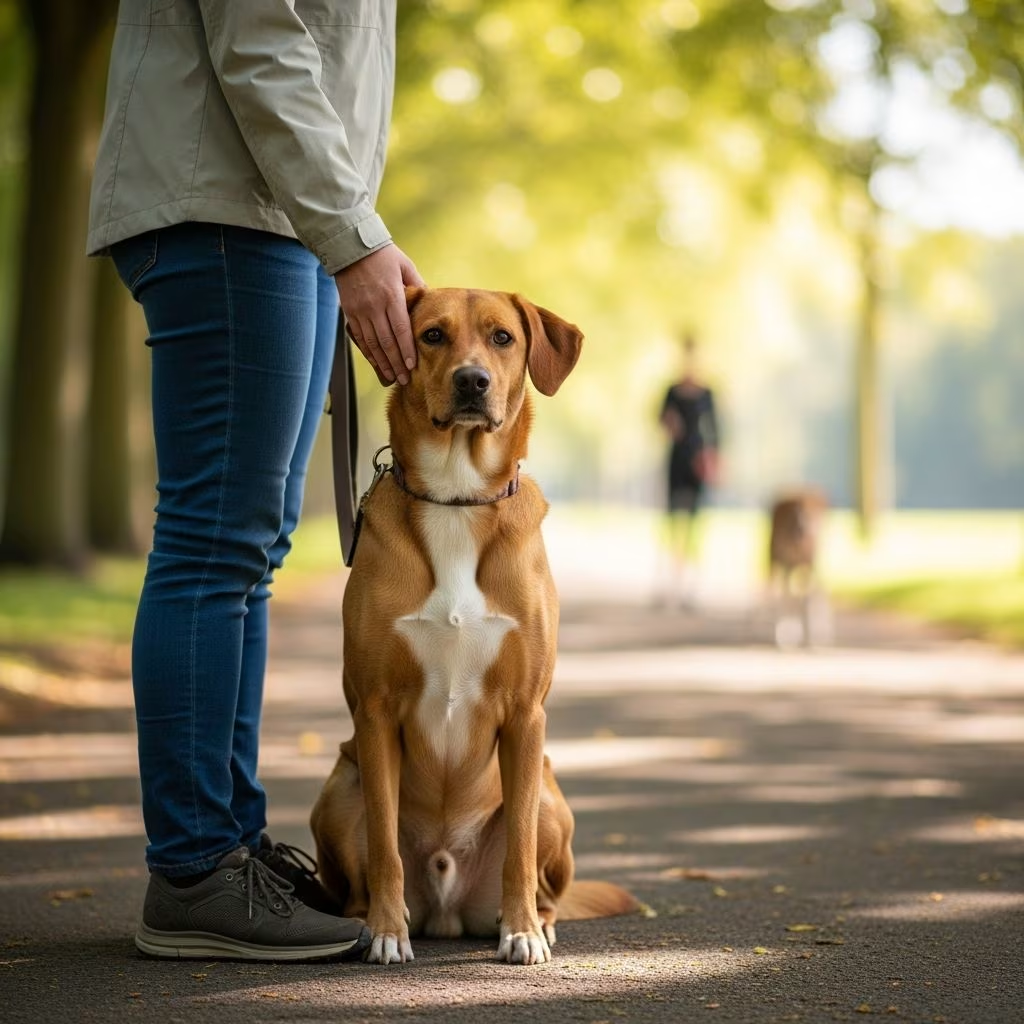
Your dog relies on you for protection, guidance, and consistency. Defending your dog means safeguarding their training, physical safety, emotional well-being, and social interactions from everyday threats. Whether it’s preventing training sabotage by well-meaning friends, managing encounters with aggressive dogs, or recognising when rough play crosses into danger, proactive defence ensures a happy, healthy companion. This comprehensive guide covers key strategies drawn from animal behaviour research and expert recommendations.
Recognising Real Aggression vs Play Fighting
Understanding the difference between **play fighting** and **real aggression** is crucial for defending your dog. Dog play often mimics fighting with growling, biting, and pinning, but key signals distinguish it from true conflict. In play, dogs use meta-communication—relaxed faces, play bows, and inhibited bites—to signal fun rather than threat.
Real fights lack these signals: stiff bodies, intense stares, deep growls without bows, and full-force bites that cause injury. Researchers like Marc Bekoff observed that play includes self-handicapping, such as rolling over or gentle chases, never seen in actual combat. Bystanders often misinterpret vigorous play as fighting, but established play partners rarely escalate.
- Play signals: Play bow (front down, rear up), bouncy movements, ‘smiling’ (open mouth, relaxed jaws), role reversals even if asymmetrical.
- Aggression signs: Frozen posture, raised hackles, pinned ears, snarling with lips curled over teeth, no breaks in intensity.
- Safe play traits: Equal enthusiasm, no yelps of pain, quick recovery to relaxed states.
Studies over 10 years with adult dogs, puppies, and littermates debunked the ’50/50 rule’—play doesn’t require perfect turn-taking. Dogs like Sage and Sam thrived in asymmetrical play where one dominated (neck biting, pinning) but bites remained harmless, and the submissive partner stayed eager. Similarly, puppies like Pink sought assertive playmates 100% dominant, showing preference for rough, imbalanced fun.
To defend your dog, intervene only if signals shift to aggression. Hundreds of hours of observation confirm rough play rarely escalates in familiar pairs.
Defending Against Training Sabotage
Well-intentioned people can undo months of training by rewarding bad habits. Defend your dog’s progress with proactive management and clear communication.
Use **unique cues** like ‘park it’ for sit or ‘orbit’ for heel instead of common words. Avoid ‘okay’ as a release to prevent accidental triggers. This reduces sabotage vulnerability.
Stay assertive: Direct interactions explicitly. If someone plays keep-away with stolen items, say: ‘That teaches stealing as a game. Trade the sock for treats instead’. For rough play: ‘They bite when overexcited. Use this tug toy or I’ll crate them to calm down’.
| Sabotage Scenario | Defensive Response |
|---|---|
| Encouraging jumping | ‘He only jumps for attention. Reward sits with pets.’ |
| Feeding table scraps | ‘That causes begging. Give kibble from his bowl.’ |
| Releasing from stay early | ‘Hold the cue until I say. Here’s a Kong reward.’ |
| Roughhousing | ‘Switch to tug. Crate if aroused.’ |
Prevent access when absent—crate or gate off. Most interferers comply with polite firmness.
Parenting Styles and Their Impact on Dog Defence
Your **parenting style** shapes how effectively you defend your dog. Research parallels human-child dynamics: Authoritative (warm, demanding, responsive) yields best outcomes, unlike authoritarian (harsh control) or permissive (overindulgent).
Dog orientations influence styles: Dominionistic views dogs as subordinates (linked to authoritarian correction); humanistic treats as humans (permissive); protectionistic balances companionship with species needs (authoritative). Protectionistic attitudes reduce authoritarian replication, promoting welfare.
- Authoritative: Addresses real needs, uses positive reinforcement—dogs show secure attachment, better problem-solving.
- Authoritarian: High corrections—linked to fear, anxiety in dogs.
- Permissive: Compensatory from tough childhoods—leads to poor boundaries.
Childhood experiences transmit: Protectionistic owners from humanistic/protectionistic upbringings foster healthier bonds. Defend via authoritative defence: Consistent rules protect without dominance.
Defending Against Off-Leash Dogs and Strangers
Off-leash dogs pose serious threats. Train a rock-solid recall and body block: Step between, use your body as a shield, cue ‘leave it’ or ‘come’. Carry deterrents like citronella spray for aggressive approaches.
Sudden stranger aggression may signal pain—sore ears, joints, teeth make touch painful. Vet check first: Tense reactions over wagging indicate issues.
For ecoexpansive kinship, view dogs as family: Expanded conceptualizations improve defence by prioritising welfare.
Health and Safety Defences
Defend against toxins (chocolate, xylitol), heatstroke, and parasites. Microchip, vaccinate, flea/tick preventives. Supervise play to avoid injuries from roughhousing.
Recognise stress: Lip licking, yawning, avoidance—remove from triggers promptly.
Training for Defence
Build resilience: Desensitise to strangers, practice emergency recalls. Use high-value rewards for reliability. Socialise widely but controlled.
Frequently Asked Questions (FAQs)
Q: How do I know if dogs are playing or fighting?
A: Look for play bows, relaxed faces, and enthusiasm. Real fights have stiff postures and injury-causing bites.
Q: What if someone spoils my dog’s training?
A: Use unique cues and direct them firmly: ‘Trade for treats, not keep-away’.
Q: Is rough play always bad?
A: No, if signals stay playful. Asymmetrical is fine if both enjoy it.
Q: Does my childhood affect dog parenting?
A: Yes, protectionistic views lead to better styles.
Q: Why is my dog suddenly aggressive to strangers?
A: Often pain-related; check with vet.
This guide empowers you to defend your dog comprehensively, fostering a secure bond. (Word count: 1678)
References
- Is Your Dog’s Rough Play Appropriate? — Kinship. 2023. https://www.kinship.com/dog-behavior/your-dogs-rough-play-appropriate
- Intergenerational Transmission of Human Parenting Styles to Dog-Directed Parenting Styles — PMC/NIH. 2024-04-05. https://pmc.ncbi.nlm.nih.gov/articles/PMC11010965/
- Don’t Let Others Spoil Your Dog’s Training — Kinship. 2023. https://www.kinship.com/dog-behavior/dont-let-others-spoil-your-dogs-training
- Dog Behavior — Kinship. 2023. https://www.kinship.com/dog-behavior
- This Is Why Your Dog Is Suddenly Aggressive Towards Strangers — AOL. 2023. https://www.aol.com/articles/why-dog-suddenly-aggressive-towards-193443368.html
- Ecoexpansive kinship: A model for expanding conceptualizations of companion animals — Wiley Online Library. 2023. https://onlinelibrary.wiley.com/doi/10.1111/jftr.12569



