

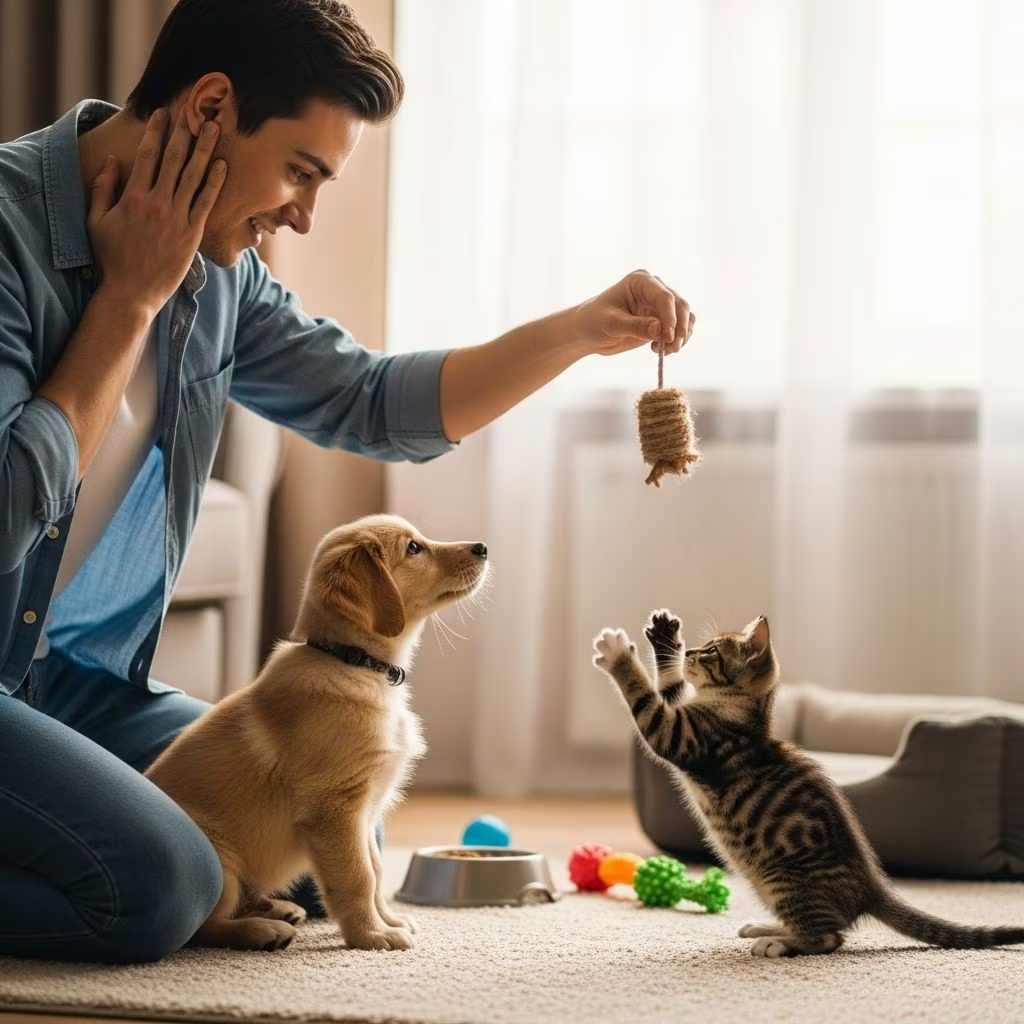
Becoming a new pet parent brings immense joy but also unexpected challenges like stress, behavioral issues, and caregiving doubts. This guide draws on research to help you navigate these hurdles, build secure attachments, and raise a happy, well-adjusted pet.
It’s Normal to Feel Stressed as a New Pet Parent
Many new pet parents experience anxiety about their abilities, with 52% reporting stress over being a ‘bad pet parent’ and 31% still concerned post-adoption. This mirrors human parenting worries, amplified by pets’ dependence on us for all needs. A Kinship survey found 62% prioritize pet happiness, and 71% credit pets for emotional support during tough times like 2020.
- Common stressors: Fear of inadequate care (30%), health decision-making, and behavioral problems.
- Emotional boost: 94% find pets comforting on bad days, 89% for anxiety relief.
- Tip: Normalize these feelings—90% built stronger bonds through dedicated time at home.
Recognize that this stress often stems from love. Pets respond positively to consistent care, reducing your worries over time.
Pets View You as Their Parent: The Science of Attachment
Studies confirm dogs and cats form parent-like bonds with owners. A 2019 study showed cats have attachment styles akin to human children, with secure attachments linked to responsive caregiving. Dogs exhibit similar patterns, seeking proximity in stress and relying on humans like offspring do.
Animal behavior researcher Kristyn Vitale notes this as an adaptation of offspring-caretaker bonds. Dog behaviorist Lauren Brubaker emphasizes that while breed genetics play a role, parenting style has the biggest influence on behavior.
- Dogs with authoritative parents show security, stress resilience, and problem-solving persistence.
- Cats’ behavior correlates with owners’ personalities via Big Five traits like conscientiousness.
- Interviews reveal childhood human parenting experiences transmit to dog parenting styles.
Different Parenting Styles Affect Pet Outcomes
Parenting styles—authoritative, authoritarian, permissive, neglectful—impact pets similarly to children. Authoritative (high expectations + responsiveness) yields the best results: confident, resilient pets.
| Style | Characteristics | Pet Outcomes |
|---|---|---|
| Authoritative | Consistent rules, warmth, reward-based training | Secure attachment, better problem-solving, low stress |
| Permissive | High warmth, low expectations | Potential insecurity, poor impulse control |
| Authoritarian | High control, low responsiveness | Fearfulness, reduced sociability |
| Neglectful | Low warmth and expectations | Behavioral issues, attachment problems |
Research by Udell tested dogs with puzzle toys under varying parental help, linking styles to sociability and persistence. Protectionistic orientations reduce authoritarian tendencies in dog parents.
Choose Authoritative Parenting for Your Pet
Adopt authoritative methods: Set realistic rules, use positive reinforcement, and respond to needs. This builds trust—pets learn humans control resources and provide reliably.
- Positive reinforcement: Reward desired behaviors to teach need fulfillment.
- Exercise and play: Essential for development; invest in toys.
- Consistency: Mirrors benefits for human children, fostering confidence.
It’s never too late to shift styles. Start with daily training sessions and observe improvements in security.
Pet Welfare Comes First in Parenthood
Prioritize physical, emotional, and behavioral health. New parents often worry about care quality—address via routine vet visits, balanced diet, and mental stimulation.
- Health decisions: 45% of co-parents discuss this.
- Emotional wellbeing: Plan for separations (34% discuss).
- Welfare link: Warm parenting increases proximity-seeking in threats.
Dogs with responsive parents show better welfare; neglect leads to issues.
Co-Parenting a Pet: Key Conversations
For shared custody, communication is vital. Kinship’s 2025 survey of 2,000+ parents revealed trends: 24% have pet-nups, Gen Z plans custody pre-adoption.
- Daily routines and costs (top discussion).
- Wellbeing/care communication (46%).
- Post-breakup custody (42%).
Set agreements early to avoid disputes, treating pets like family members.
Building a Strong Bond with Your Pet
Bonds strengthen via play, exercise, and responsiveness. 90% reported closer ties in 2020; replicate with quality time. Dog owners even gain better neighbor relations.
- Play: Boosts development.
- Training: Deepens trust.
- Mutual reliance: Pets calm anxiety, owners provide security.
Frequently Asked Questions (FAQs)
Is it normal to stress about being a good pet parent?
Yes, 52% of pet parents feel this; it’s a sign of care. Focus on consistent, loving routines to build confidence.
Do parenting styles really affect my pet’s behavior?
Absolutely—authoritative styles lead to secure, resilient pets per behavioral studies.
How can I strengthen my bond with a new pet?
Use positive reinforcement, play, exercise, and responsiveness; 90% saw gains from quality time.
What if I’m co-parenting a pet?
Discuss routines, costs, health, and custody early; 24% use pet-nups.
Can I change my parenting style later?
Yes, it’s never too late—start reward-based training for better outcomes.
References
- Does Your Parenting Style Actually Influence Your Pet’s Behavior? — Kinship. 2023. https://www.kinship.com/pet-behavior/nature-vs-nurture-dog-parenting
- How Americans Pet Co-Parent in 2025 — Kinship. 2025. https://www.kinship.com/pet-lifestyle/pet-co-parenting-survey
- Intergenerational Transmission of Human Parenting Styles to Dogs — PMC/NIH. 2024-04-02. https://pmc.ncbi.nlm.nih.gov/articles/PMC11010965/
- Report by Kinship Reveals Modern Pet Parents’ Concerns — Pet Insight. 2021. https://pet-insight.com/report-by-kinship-reveals-modern-pet-parents-concerns-and-expectations/
- Report by Kinship Reveals Modern Pet Parents’ Concerns and Expectations — Business Wire. 2021-02-17. https://www.businesswire.com/news/home/20210217005677/en/
- Dog Parents Have Better Relationships With Their Neighbors — Kinship. 2023. https://www.kinship.com/news/dogs-owners-more-connected-to-neighbors



