

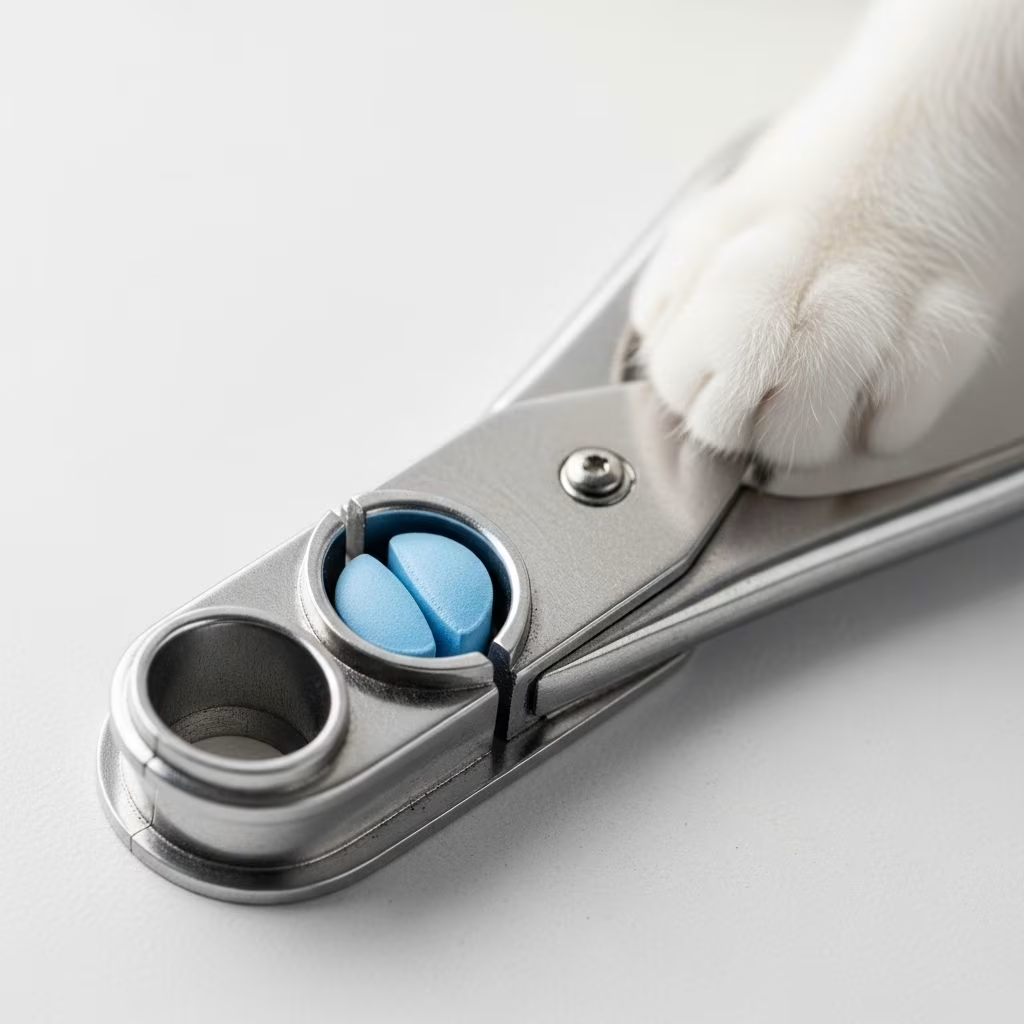
Administering medication to cats often requires precision, especially when pills need to be divided for the correct dosage. While modern veterinary medicine offers many cat-specific formulations, some situations still call for splitting tablets. This guide covers which cat pills can be safely cut, the best tools and methods for accurate splitting, and important precautions to avoid dosage errors or health risks.
Some pills are designed for splitting, featuring a **score line**—an indented line down the center indicating safe division. However, not all tablets are suitable for cutting, as it can alter release mechanisms or dosage accuracy. Always consult your veterinarian before splitting any medication to ensure safety and efficacy.
Can Cat Pills Be Cut Safely?
Yes, certain cat pills can be cut safely, but only under specific conditions. Tablets with a **score line** are generally safe to split along that line, as this ensures even dosage distribution without compromising the medication’s effectiveness. The score line signals that the manufacturer has tested and approved division at that point.
If a tablet lacks a score line, do not assume it is safe to cut. Contact your veterinarian for guidance—some unscored tablets may still be splittable, but others could lose potency or release too quickly if divided.
Avoid cutting the following types of medications:
- Extended-release or modified-release tablets: Splitting disrupts the controlled release, causing the drug to dump too rapidly, which may reduce effectiveness or cause side effects.
- Capsules: These are formulated for timed or targeted release in the body. Opening or cutting them can alter absorption. Exceptions exist for capsules labeled to sprinkle on food, but confirm with your vet first.
- Enteric-coated tablets: The coating protects the stomach or targets intestinal release; cutting destroys this protection.
Veterinarians emphasize that improper splitting can lead to under- or overdosing, potentially harming your cat. For instance, uneven cuts result in inconsistent doses, while damaged formulations may irritate the gastrointestinal tract.
How to Cut a Pill in Half Without a Pill Cutter
While a dedicated **pill cutter** is the gold standard for safety and precision, you can improvise in a pinch—but with caution. Place the scored pill on a stable, non-slip surface like a cutting board. Align the score line with your thumb and forefinger, then apply firm, even pressure to snap it along the line.
Avoid makeshift tools like knives, razors, or nail clippers, as they often produce jagged edges, crumble the pill, or pose injury risks to you. Small cat pills are particularly challenging to break evenly by hand, leading to inaccurate dosing.
Safety tips for manual splitting:
- Wear disposable gloves to avoid skin contact with the medication, as some drugs can be absorbed transdermally or cause irritation.
- Work in a well-lit area to visualize the score line clearly.
- Handle only one pill at a time to prevent mix-ups.
Despite these methods, veterinarians strongly recommend investing in a pill cutter for reliable results, available affordably at pharmacies.
How to Cut a Pill Into a Quarter Without a Pill Cutter
Cutting a pill into quarters is not recommended, even with a score line, as it frequently results in crumbling and imprecise portions. Without a pill cutter, achieving a true quarter dose is nearly impossible, especially for irregularly shaped pills (e.g., oval, hexagonal).
Manual quartering exacerbates issues:
- Pills shatter unevenly, making dosage estimation a guess.
- Small fragments are hard to measure and administer accurately.
- Dust from crumbling reduces the total recoverable dose.
If a quarter dose is needed, request a lower-strength tablet or liquid formulation from your vet instead of risking inaccuracy.
How to Cut a Pill Into Three-Quarters Without a Pill Cutter
Similarly, dividing a pill into three-quarters mirrors the challenges of quartering and is discouraged. This method involves first halving (risky without tools) then trimming one half, compounding errors from crumbling and uneven cuts.
Oddly shaped or brittle tablets fare worse, often disintegrating and yielding unreliable doses. The potential for overdose or underdose makes this approach unsafe for your cat’s health. Opt for vet-prescribed alternatives like compounded medications tailored to the exact dose.
Should I Cut My Cat’s Pills?
In most cases, no—modern veterinary pharmacology provides cat-friendly options that eliminate the need for splitting. Available formulations include:
| Formulation Type | Benefits | Examples |
|---|---|---|
| Liquid suspensions | Precise dosing via syringe; flavored for palatability | Antibiotics, pain relievers |
| Transdermal gels | Applied to ear; absorbs through skin | Methimazole for hyperthyroidism |
| Compounded treats/chews | Medication hidden in flavored base | Anti-seizure or heart meds |
| Small cat-specific tablets | No splitting required | Many flea preventives, vitamins |
Before splitting, discuss with your vet. They can assess if cutting is viable or switch to a better option. Compounding pharmacies legally create custom doses, though not all drugs qualify due to stability or regulatory limits.
Splitting was more common pre-2000s when fewer feline-specific meds existed. Today, it’s rare and only done with explicit vet approval to guarantee the right dosage.
Frequently Asked Questions (FAQs)
What pills are safe to cut for cats?
Only scored tablets approved by your vet. Avoid extended-release, capsules, or enteric-coated pills.
Is a pill cutter necessary?
Highly recommended for clean, accurate splits. Manual methods often fail, especially with tiny cat pills.
Can I cut pills into quarters or thirds?
No—pills crumble, leading to inaccurate dosing. Seek vet alternatives like liquids.
What if my cat refuses whole pills?
Explore pill pockets, liquids, or transdermals. Pill guns or treat-pasting techniques can help administer whole doses.
Are there risks to me when cutting pills?
Yes—wear gloves to prevent absorption through skin. Some meds are hazardous.
Advanced Tips for Accurate Pill Cutting and Administration
Beyond basic splitting, ensure success with these vet-verified strategies. Use a sturdy pill cutter with a sharp blade—V-shaped models grip small tablets best. Stabilize on a soft surface to prevent slipping.
For tiny doses, veterinary clinics sometimes pre-cut using precision tools like stainless steel nail trimmers for clients. At home, combine cutting with pilling aids:
- Treat-pasting: Insert quartered pill into a cut-open lickable treat tube (e.g., Churu), squeeze to deliver.
- Textured surface trick: Place pill on a bathmat or towel, top with A/D gruel—the cat’s tongue barbs catch and swallow it.
- Pill gun: Load 1-3 pills, insert deep, plunger quickly. Position cat between knees for control.
Training reduces stress: Pair pilling with rewards, use positive reinforcement videos for technique.
Monitor for swallowing—gently stroke throat, offer water chaser, check gums. Praise lavishly post-dose.
References
- How to Cut Pills Easily & Accurately for Your Cat: Vet-Verified Tips — Catster. 2023. https://www.catster.com/cat-health-care/how-to-cut-pills-easily-and-accurately/
- Giving Your Cat a Pill – Pill Training — The Feline Purrspective. Accessed 2026. https://www.felinepurrspective.com/giving-your-cat-a-pill-pill-training/
- How to Pill — IBDKitties (Veterinary-supported IBD resource). Accessed 2026. https://www.ibdkitties.net/how-to-pill/
- How to Cut Pills Accurately and Efficiently — Fundamentally Feline (Veterinary clinic). 2018-05-28. https://www.youtube.com/watch?v=KRF-bXfrzgo
- Happy Cat Month: Medicating Tips and Tricks — Georgia Veterinary Medical Association (GVMA). 2023-09-05. https://gvma.net/2023/09/05/happy-cat-month-medicating-tips-and-tricks/



