

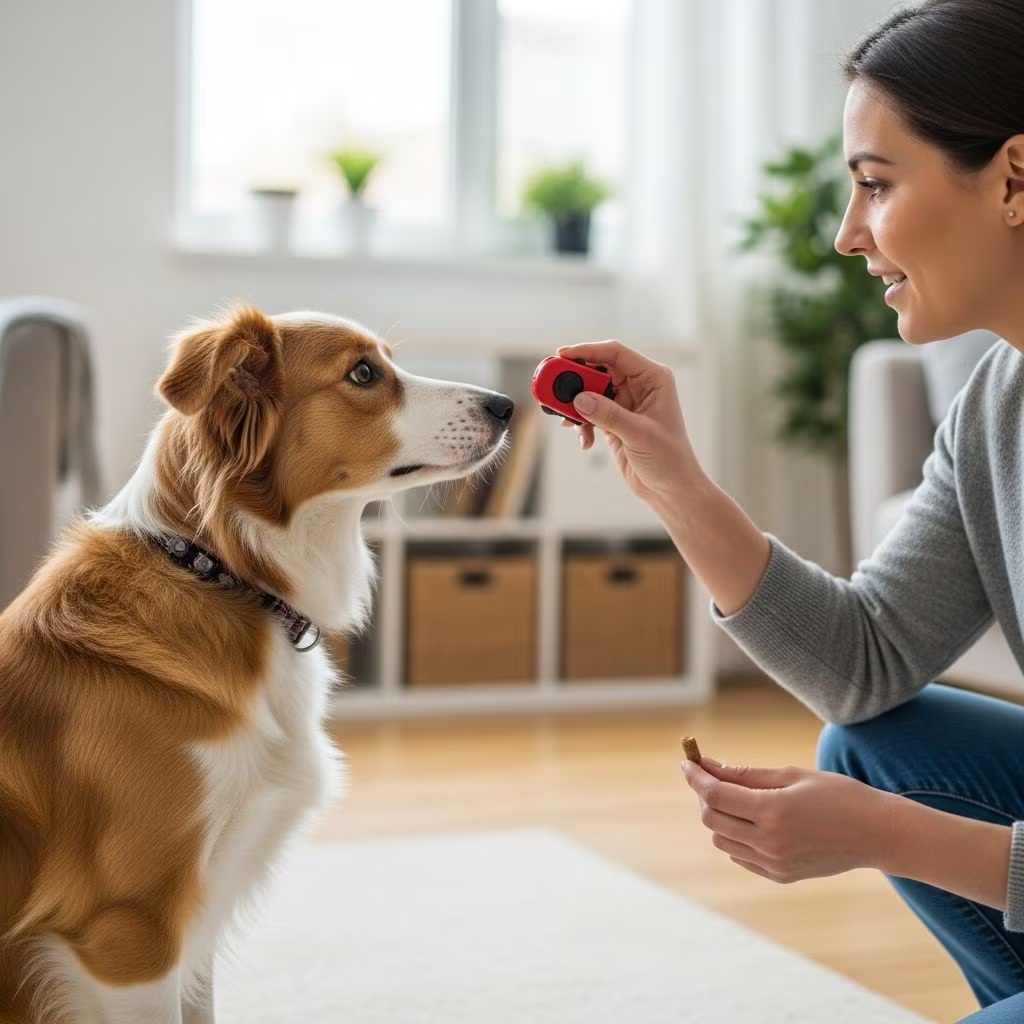
How to Clicker Train Your Dog
Clicker training is a simple, science-based way to communicate with your dog using a small device that makes a distinct clicking sound. The click marks the exact moment your dog does something you like, and that moment is always followed by a reward, usually a tasty treat. Over time, your dog learns that the click predicts something good and will repeat the behaviors that earn that sound.
This guide explains what clicker training is, why it works, how it differs from other methods, and how to get started step-by-step so you can teach your dog new skills in a clear, positive way.
What Is Clicker Training?
Clicker training is also known as marker training. A marker is any distinct signal (like a click or a specific word such as “Yes!”) that tells your dog, “That behavior right there is what earned you a reward.” In clicker training, the marker is a small handheld device that makes a sharp, consistent click sound when pressed.
This method is based on positive reinforcement, which means you increase the chance a behavior will happen again by following it with something your dog values, like food, play, or affection. Instead of focusing on punishing mistakes, clicker training focuses on reinforcing what you want.
How the Clicker Works
At first, the click is just a neutral sound. By repeatedly pairing the click with a reward, the sound becomes a conditioned reinforcer (or secondary reinforcer). This is a term from behavioral science meaning that the sound itself starts to carry value because it always predicts something your dog loves.
- You click the instant your dog does the desired behavior.
- You immediately follow the click with a reward.
- Your dog learns: behavior → click → treat.
Because the click is precise and always sounds the same, it helps your dog understand exactly which behavior earned the reward, even if the treat comes a second later.
Benefits of Clicker Training
- Clear communication: The click pinpoints the exact moment your dog made the right choice, which can be hard to do with treats alone.
- Faster learning: Studies in applied animal behavior suggest that secondary reinforcers like clickers can help dogs acquire new behaviors efficiently in many situations.
- Positive relationship: Because the method is reward-based, training becomes enjoyable for both you and your dog.
- Reduced confusion: The neutral, consistent sound is less likely to be mixed up with everyday speech or body language.
- Works at a distance: You can mark behavior from across a room or yard and then walk over to give the reward.
How Clicker Training Differs from Other Training Methods
Dog training methods differ mostly in what they reinforce or punish and how they communicate with the dog. Clicker training falls under the umbrella of reward-based, force-free training, which is supported by many veterinary behavior experts and welfare organizations.
| Training Approach | Main Idea | Typical Tools | Focus |
|---|---|---|---|
| Clicker / Marker Training | Mark and reward desired behavior. | Clicker, treats, toys, praise. | Teaching what to do, building habits through rewards. |
| Traditional Punishment-Based | Suppress unwanted behavior with corrections. | Leash corrections, harsh verbal scolding, sometimes aversive tools. | Stopping mistakes rather than reinforcing alternatives. |
| Food-Only Reward (No Marker) | Reward good behavior with treats, but without a distinct marker. | Treats, toys, praise. | Reinforcement is present, but timing can be less precise. |
Research comparing clicker-plus-food to food-only suggests that both can be effective, but clickers may provide an advantage when behaviors involve complex body movements or potentially confusing handler cues. In those cases, the click acts like a “snapshot” of the correct moment, cutting through extra motion or noise.
Why Clicker Training Is Rooted in Science
Clicker training is grounded in the principles of operant conditioning, a well-established area of behavioral science. In operant conditioning:
- Behaviors followed by pleasant consequences are more likely to occur again.
- Behaviors followed by unpleasant consequences are less likely to be repeated.
The clicker functions as a bridge between the behavior and the reward, which can improve timing and clarity. Some animal behavior researchers also link the effectiveness of such signals to activation of a brain system known as the SEEKING system, which drives exploration and learning through anticipation of reward.
How to Start Clicker Training Your Dog
To use a clicker successfully, your dog must first learn that the click means a reward is coming. This process is often called “charging the marker”.
Step 1: Charge the Clicker (Charging the Marker)
Charging the marker teaches your dog that the sound of the click predicts something wonderful. At this stage, you are not asking for any specific behaviors. You are simply building an association.
- Gather 20–30 small, soft treats your dog loves.
- Hold the clicker in one hand and treats in the other.
- Press the clicker once, then calmly deliver a treat to your dog.
- Pause a second or two, then repeat: click → treat.
- Continue until you have used most or all of the treats.
Your dog does not have to do anything special during this step. They are simply learning that the sound predicts food, much like a bell might predict dinner.
Step 2: Use the Clicker to Mark a Simple Behavior
Once your dog starts to look expectantly for a treat after hearing the click, you can begin using it to teach a simple behavior, such as sit or eye contact.
- Say your verbal cue (for example, “Sit”).
- Wait for your dog to put their bottom on the floor.
- The instant your dog sits, click.
- Follow the click with a treat, delivered right to your dog’s mouth.
- Repeat several times until your dog begins to sit quickly after you say the cue.
Over repetitions, your dog learns that offering that behavior when they hear the cue makes the click (and treat) happen.
Step 3: Practice in a Quiet Environment First
Dogs learn best in low-distraction environments. Start clicker sessions:
- Indoors, away from noise, other pets, and people.
- In short sessions of 3–5 minutes.
- With several small breaks instead of one long training block.
Once your dog responds reliably at home, gradually practice the same skills in more distracting places, such as the yard or a quiet park, keeping sessions short and successful.
Adding Cues, Hand Signals, and Distance
As your dog understands the clicker and begins to offer behaviors, you can pair these behaviors with verbal cues or hand signals and start working from different distances.
Pairing a Verbal Cue or Hand Signal
Dogs learn cues best when the sequence is:
- Cue → Behavior → Click → Treat.
To add or strengthen a cue:
- Say the cue (for example, “Down”).
- Wait for the behavior to happen.
- Click the moment your dog performs the behavior.
- Reward with a treat.
With repetition, your dog learns that the cue predicts which behavior will earn the click.
Working at a Distance
One advantage of a clicker is that your dog can hear it clearly even when they are not right beside you. For example:
- Coming when called: Call your dog. The instant they start moving toward you, click. Deliver the treat when they arrive.
- Stay at a distance: Ask your dog to lie down and stay while you step away. Click to mark the start of the successful stay, then walk back to deliver the reward.
In both cases, the click lets your dog know exactly which moment made the reward happen, even though the treat arrives a little later.
Do You Always Have to Give a Treat After the Click?
Yes. For the click to stay meaningful, it must always be followed by a reward. The sound only holds its power because it reliably predicts reinforcement.
If you start clicking without rewarding afterwards, the click will lose its value as a conditioned reinforcer. In other words, your dog will stop caring about the sound, and it will no longer help you communicate.
However, as your dog becomes fluent in a behavior in many different environments, you can:
- Use the clicker less frequently, reserving it for new or more complex skills.
- Continue to reward good behavior with treats, toys, or other life rewards (like going outside or greeting a friend), even without a click.
Tips for Successful Clicker Training
To get the most out of marker training, keep these practical tips in mind.
Keep Sessions Short and Fun
- Train for 3–5 minutes at a time.
- End the session while your dog is still interested and successful.
- Use high-value treats, especially when teaching something new or working around distractions.
Focus on Timing
- Click the exact moment your dog performs the desired behavior.
- If your click is late or early, simply reward and adjust your timing next repetition.
- Practice clicking while watching videos of dogs or even people moving to improve your reflexes, as some training studies do with owners.
Increase Difficulty Gradually
- Change only one thing at a time: distance, duration, or distraction level.
- If your dog struggles, go back to an easier version of the exercise.
- Reward generously when you raise the difficulty.
Common Mistakes to Avoid
Even though clicker training is straightforward, a few common missteps can slow your dog’s learning.
- Clicking without rewarding: Always follow a click with a reward, even if you clicked by mistake. You can then adjust your training plan for the next repetition.
- Using the clicker as a cue: The click should always mean “you earned a reward,” not “do something now.” Say or show your cue first; click after the behavior.
- Too-long sessions: Long, repetitive sessions can cause stress or boredom. Keep it short, upbeat, and successful.
- Jumping ahead too fast: If your dog can’t perform a behavior in a busy environment, go back to easier steps and rebuild.
When Clicker Training Is Especially Helpful
Clicker training can be used to teach basic manners, tricks, and even cooperative care for grooming and veterinary visits. Research suggests it can be particularly helpful when:
- The behavior involves complex body movements that are hard to reward with perfect timing using treats alone.
- The handler’s body language might be confusing (for example, leaning over the dog or moving around).
- You need to mark behavior at a distance, such as recalls or agility obstacles.
Because the click provides a distinct, information-rich signal, it can help dogs distinguish exactly which movement or choice is being reinforced, even when the situation is complex.
Frequently Asked Questions (FAQs)
Q: Do I always need to train with a clicker once my dog learns a behavior?
A: No. Once your dog reliably performs a behavior in many contexts, you can gradually stop using the clicker for that behavior. Continue to reinforce it with treats, toys, or life rewards, and reserve the clicker for teaching new or more complicated skills.
Q: Can I use a word instead of a clicker?
A: Yes. Many trainers use a consistent word such as “Yes!” as a marker. The advantage of a clicker is that it produces a neutral, consistent sound that is less likely to be influenced by your tone of voice and can be easier for some dogs to distinguish from everyday speech.
Q: Is clicker training suitable for all dogs?
A: Most healthy dogs can benefit from clicker training. For very sound-sensitive dogs, you can muffle the clicker in your pocket or use a softer mechanical marker. If your dog is extremely noise-averse, a verbal marker may be more comfortable.
Q: How many clicks should I use for each behavior?
A: Use one click per successful repetition. The single click marks the exact behavior you want and is immediately followed by a reward. Multiple clicks in a row can be confusing, because your dog will not know which moment earned the treat.
Q: What if my dog does the wrong behavior?
A: Simply do not click. Pause, reset the situation if needed, and try again with an easier version of the exercise or a clearer setup. Because clicker training focuses on reinforcing correct choices, unwanted behaviors gradually fade when they are not rewarded.
References
- How to Clicker Train Your Dog — Kinship. 2023-10-12. https://www.kinship.com/dog-behavior/dog-clicker-training
- Does Clicker Training Lead to Faster Acquisition of Behavior for Dog Owners? It Depends on the Behavior — IAABC Foundation Journal (Rooney et al.). 2021-03-01. https://journal.iaabcfoundation.org/does-clicker-training-lead-to-faster-acquisition-of-behavior-for-dog-owners-it-depends-on-the-behavior/
- A Guide to Clicker Training Pets — Best Friends Animal Society. 2022-05-05. https://bestfriends.org/pet-care-resources/guide-clicker-training-pets
- The Efficacy of Clickers and Other Reinforcement Methods in Training Dogs — Animal Behavior and Cognition (Feng et al.). 2020-02-19. https://www.ncbi.nlm.nih.gov/pmc/articles/PMC7906040/
- Why Is Clicker Training Effective? — Karen Pryor Clicker Training. 2019-08-14. https://clickertraining.com/why-is-clicker-training-effective/



