

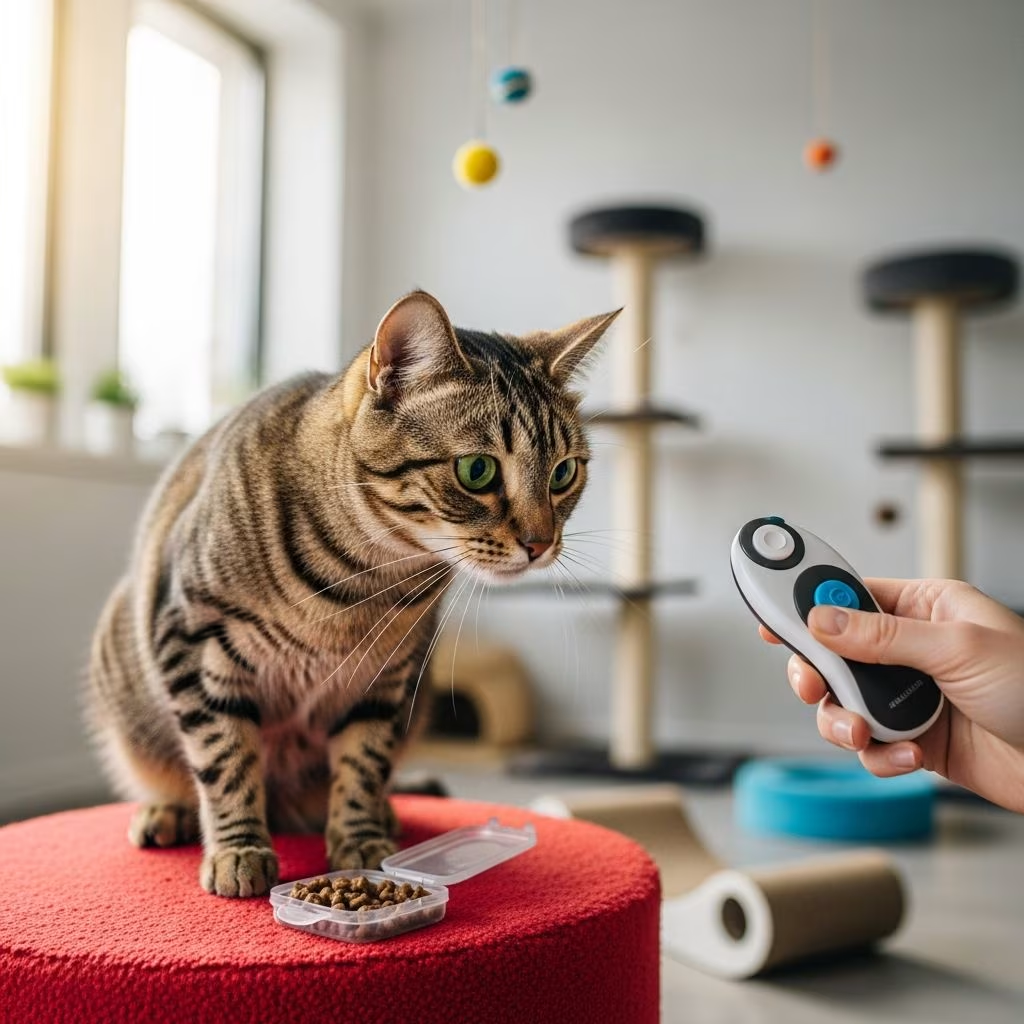
How to Clicker Train a Cat: A Complete Guide
Clicker training is one of the most effective and humane methods for teaching cats new behaviors and tricks. Unlike traditional training methods that rely on punishment or correction, clicker training uses positive reinforcement to encourage desired behaviors. This scientifically-backed approach harnesses the power of marking the exact moment your cat does something right, followed immediately by a reward. Whether you want to teach your cat to sit, come on command, or stop unwanted behaviors like jumping on counters, clicker training provides a framework that works for cats of all ages and temperaments.
What Is Clicker Training?
Clicker training is a form of operant conditioning that uses a distinct clicking sound to mark the precise moment your cat performs a desired behavior. The click serves as a bridge between the behavior and the reward, helping your cat understand exactly what action earned them the treat. This method is based on decades of behavioral science research and has been successfully used to train everything from household pets to wild animals in professional settings.
The beauty of clicker training lies in its clarity and consistency. Cats are intelligent creatures that respond well to clear communication. The clicker provides a unique, unmistakable sound that becomes associated with positive outcomes, making it easier for your cat to understand what behavior you’re rewarding.
Supplies You’ll Need Before Starting
Before you begin your clicker training journey, gather these essential supplies:
- Clicker device: A small handheld device that produces a distinct clicking sound. You can find these at most pet stores, or you can improvise with a clicking pen or even a click of your tongue, though a dedicated clicker produces a more consistent sound.
- Target stick: A lightweight stick or wand that you can train your cat to touch or follow. This is useful for luring behaviors and teaching targeting exercises.
- Treats: High-value rewards that your cat loves. These should be small, easy to consume quickly, and different from their regular food. Some cats also respond well to other reinforcers like verbal praise, petting, or playtime.
- Quiet training space: A calm environment with minimal distractions where your cat feels comfortable and focused.
For deaf cats, you can substitute the clicker with a small flashlight or visual signal, maintaining the same principle of marking behavior with a distinct signal followed by a reward.
Step 1: Charging Your Clicker
The first step in clicker training is “charging” your clicker, which means teaching your cat that the clicking sound predicts something good is about to happen. At this stage, the clicker has no inherent meaning to your cat, so you must create that association.
To charge your clicker:
- Press the clicker once and immediately present a treat to your cat.
- Repeat this process 10-20 times in short bursts.
- You’ll know your clicker is fully charged when your cat begins looking for the treat after hearing the click sound, before the treat is even presented.
- This process typically takes a few training sessions.
The key is consistency and timing. The treat must follow the click within a fraction of a second, so your cat makes the connection between the sound and the reward.
Step 2: Capturing Natural Behaviors
Once your clicker is charged, the next step is capturing—observing your cat’s natural behaviors and marking them with the clicker when they occur spontaneously. This teaches your cat that their natural actions result in rewards and helps you develop your timing skills.
Choose a behavior your cat already does naturally, such as:
- Making eye contact with you
- Looking in your direction
- Stretching
- Grooming
- Sitting
- Any other spontaneous action
When you observe your cat performing this behavior, click immediately and offer a treat. The timing must be precise—clicking within one second of the behavior is ideal. Continue capturing for at least 24 hours before moving to the next step, as this develops your ability to time the click correctly and helps your cat understand the connection between their action and the reward.
Step 3: Targeting
Targeting teaches your cat to touch a specific object or body part on command. This is one of the most useful foundation skills because it opens the door to teaching many other tricks and behaviors.
To teach targeting:
- Hold your target stick 2-3 inches away from your cat’s face.
- Most cats will naturally investigate the stick and touch it with their nose or head.
- The moment your cat makes contact, click and immediately offer a treat.
- Repeat this process consistently.
- Work on targeting for 3-4 days until your cat reliably touches the stick on presentation.
Some cats progress quickly to touching with their head, bumping it into the stick, or even high-fiving with their paw. Keep celebrating these variations! Targeting can be expanded to include finger targeting, where your cat learns to touch your finger with their nose, which is particularly useful for calling your cat to you or directing their attention.
Step 4: Luring and Shaping Behaviors
Luring involves using a treat or target stick to guide your cat into a desired position or behavior. This is particularly useful for teaching specific commands or breaking unwanted habits.
For example, if your cat frequently jumps on the kitchen counter, you can use luring to train them to come down on command:
- When your cat approaches the target stick, slowly guide them toward the place you want them to go.
- Once they arrive at that location, click and treat.
- Repeat this process until the behavior becomes reliable.
Shaping involves rewarding small steps toward a final behavior. If you want to teach your cat to lie down with their front legs extended, you might first reward any lowering of the body, then reward progressively lower positions until they fully lie down.
Step 5: Adding Verbal Cues
Once your cat reliably performs a behavior, you can add a verbal cue or hand signal. The order is important: always present the cue, wait for the behavior, then click and treat. This sequence helps your cat associate the cue with the action.
For example, if training your cat to come down from the counter:
- Use a consistent verbal cue such as “off,” “place,” or “down.”
- Say the cue, then show the target stick and guide them down.
- Click and treat immediately upon compliance.
- Repeat until your cat responds to the cue without needing the visual lure.
Consistency with your chosen cue is essential. Always use the same word or signal for the same behavior, and ensure all family members use the same cue.
Common Tricks and Behaviors to Teach
Once you’ve mastered the foundational steps, there are numerous tricks and behaviors you can teach your cat:
Sit
Hover a treat slightly above your cat’s head and slowly move it toward their tail. As they follow the treat with their eyes and nose, their hindquarters naturally lower to the ground. Click the moment their bottom touches the floor and treat immediately.
Come on Command
Use finger targeting to teach your cat to come to you. Once they reliably touch your finger, introduce a verbal cue like “come” before presenting your finger. Gradually increase the distance between you and your cat.
Lying Down
Once your cat knows sit, you can lure them further down. Hold a treat to their chest and slowly lower it toward the ground between their front paws. When their body lies down completely, click and reward.
Rolling Over
With your cat lying down, hold a treat near their head and slowly move it toward their side. This movement encourages them to roll their body to follow the treat. Mark the rolling motion with a click and reward.
High Five
Hold your hand at chest height in front of your cat. Reward any paw contact with your hand. As your cat becomes more interested in touching your hand, gradually raise it slightly higher until they’re reaching up to touch your palm.
Training Best Practices and Tips
Success with clicker training requires following these important principles:
- Keep sessions short: Work in 5-10 minute sessions to maintain your cat’s focus and prevent frustration. Cats have shorter attention spans than dogs, so brief, frequent sessions are more effective than long ones.
- Train before feeding: Conduct training sessions when your cat is hungry, making the food rewards more valuable and motivating.
- Maintain perfect timing: Click within one second of the desired behavior. Precision is crucial for your cat to understand the connection between action and reward.
- Be consistent: Use the same cues, signals, and rewards every time. Consistency helps your cat learn faster and more reliably.
- Practice patience: Remember that you’re teaching your cat a new language. Some behaviors may take several sessions to master. Avoid frustration and celebrate small progress.
- Repeat and reinforce: Even after your cat learns a behavior, continue to practice and occasionally reward to maintain the skill.
- Avoid free-feeding: If you feed your cat freely throughout the day, they may not be motivated by training treats. Consider scheduled meals on training days.
- Choose high-value rewards: Use treats your cat loves more than their regular food. Some cats also respond well to play, petting, or verbal praise as rewards.
Solving Common Behavioral Issues with Clicker Training
Clicker training isn’t just for teaching tricks—it’s equally effective for addressing unwanted behaviors:
Counter Jumping
Instead of punishing your cat for jumping on counters, use clicker training to teach them an alternative behavior. Train them to stay on the floor or on a designated cat furniture using the same click-and-reward method. Reward them generously for being on appropriate surfaces.
Scratching Furniture
Capture your cat scratching their cat tree or scratching post and immediately click and reward. Over time, this increases scratching on appropriate surfaces and decreases scratching on furniture.
Jumping on Guests
Train your cat to sit or stay in a specific location when guests arrive. Use the clicker to mark appropriate behavior and reward it consistently.
Frequently Asked Questions
Q: How long does it take to clicker train a cat?
A: The timeline varies depending on the behavior and your cat’s individual personality. Simple behaviors like sit may take a few sessions, while more complex tricks might take weeks. Consistency and daily practice significantly speed up the process. Some cats show progress within a week, while others take longer.
Q: Can older cats be clicker trained?
A: Absolutely. Cats of any age can learn through clicker training. While younger cats may sometimes pick up behaviors faster, older cats are often very capable learners and may appreciate the mental stimulation that training provides.
Q: What if my cat isn’t food motivated?
A: Not all cats respond equally to food rewards. Some cats prefer play, petting, or verbal praise. Experiment with different reinforcers to find what motivates your individual cat. You can also use a combination of rewards—click, treat, and praise together.
Q: Can I use clicker training for multiple cats?
A: Yes, you can train multiple cats, but it’s best to work with them individually during training sessions. Each cat has their own learning pace and preferences, and individual sessions allow you to provide personalized attention and timing.
Q: What’s the difference between clicker training and traditional training methods?
A: Clicker training uses positive reinforcement to reward desired behaviors, while traditional methods often relied on punishment or negative reinforcement. Clicker training is gentler, more effective, and creates a stronger bond between you and your cat.
Q: Can deaf cats be clicker trained?
A: Yes. Instead of an audible clicker, use a visual marker like a small flashlight or LED light. The principle remains the same—mark the behavior with a distinct signal followed by a reward.
Q: How often should I practice clicker training?
A: Daily practice is ideal, but even a few sessions per week will show progress. Multiple short sessions throughout the day are more effective than one long session.
Conclusion
Clicker training is a powerful, science-backed method for teaching cats new behaviors and tricks while strengthening your relationship with them. By following the step-by-step process outlined in this guide—from charging your clicker through capturing natural behaviors, targeting, luring, and adding verbal cues—you’ll be equipped to teach your cat almost anything. Remember that patience, consistency, and timing are the cornerstones of success. Start with simple behaviors, celebrate small victories, and gradually build your way to more complex tricks. Whether your goal is teaching entertainment tricks or solving behavioral challenges, clicker training offers a positive, rewarding path forward for both you and your feline companion.
References
- A Step-By-Step Guide to Cat Clicker Training — Pasadena Humane Society. 2025. https://pasadenahumane.org/cat-clicker-training/
- Clicker Training for Cats — Fresh Step. 2025. https://www.freshstep.com/cat-care/clicker-training-for-cats/
- Cat Clicker Training: The Easy Guide To Simple Training — Purina UK. 2024. https://www.purina.co.uk/articles/cats/behaviour/training/cat-clicker-training
- Ultimate Guide to Cat Training — Outdoor Bengal. 2025. https://www.outdoorbengal.com/blogs/clicker-training-cats/cat-training-guide
- Clicker Training Cats: All Your Questions Answered — Cat School. 2025. https://www.catschool.co/cat-training-articles/clicker-training-cats-all-your-questions-answered



