

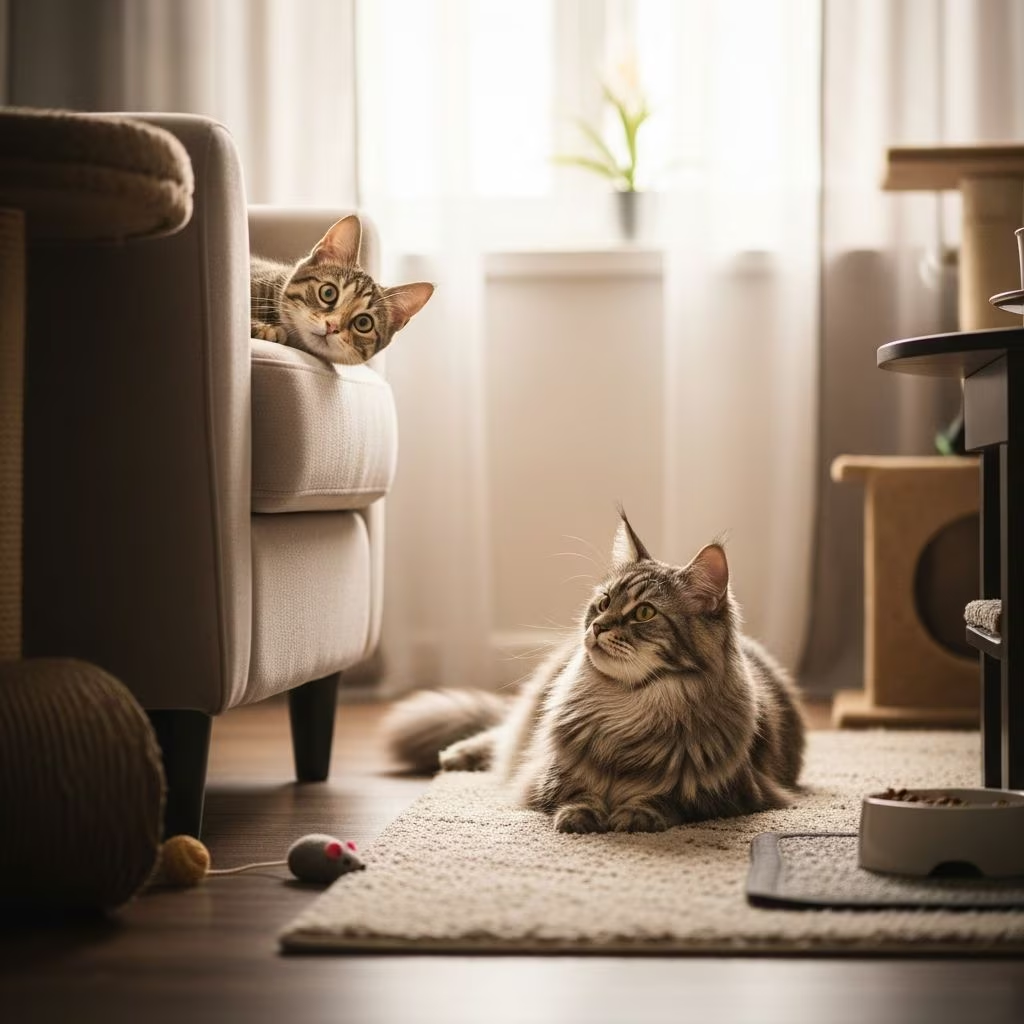
If you already have a beloved cat at home and are considering expanding your feline family, selecting the right second cat is crucial for a peaceful household. Cats are inherently territorial animals, and a mismatched companion can lead to stress, fights, or health issues. This comprehensive guide provides a step-by-step approach to choosing a compatible cat, drawing on veterinary insights to match personalities, ages, and lifestyles effectively. By thoughtfully preparing, you can increase the chances of a successful introduction and double the joy in your home.
Before diving into selection criteria, ensure you’re ready for the commitment. A second cat means doubling essentials like litter boxes (one per cat plus one extra), food and water stations, scratching posts, toys, and high perches. Budget for veterinary care, as multi-cat homes may face increased medical needs. Consult your veterinarian early to assess your current cat’s health and temperament.
How to Choose Your Second Cat
Choosing a second cat requires careful evaluation of your resident cat’s needs and your household dynamics. Rushing the decision can lead to regret, while a deliberate process fosters lifelong companionship. Follow these vet-recommended steps to find the ideal match.
1. Determine If Your Cat Needs a Companion
Not every cat benefits from a housemate. While you might feel compassion for a stray or shelter cat, your resident cat’s comfort comes first. Solitary cats, especially older ones never exposed to other pets, often experience severe stress from a new arrival, manifesting as hiding, aggression, or appetite loss.
Cats thrive on routine and territory. If your cat has always been alone, introducing another may disrupt this balance. Observe signs of loneliness, such as excessive meowing when you’re away or destructive behavior, which might indicate a companion could help. However, independent cats who enjoy their solitude may resent the intrusion.
- Signs your cat might welcome a friend: Playful demeanor, previous multi-cat experience, boredom during long absences.
- Red flags against adding a second cat: High territoriality, advanced age without prior companions, recent stress events.
Veterinarians note that cats accustomed to companions from kittenhood adapt best. If unsure, trial separations with scent swapping can gauge interest without full commitment.
2. Think About Your Cat’s Age
Age matching is one of the most critical factors for compatibility. Just as humans prefer peers with similar energy levels, cats do too. An energetic adult cat may become irritated by a hyperactive kitten’s constant pouncing, leading to swats or avoidance.
Senior cats with reduced mobility, perhaps due to arthritis or chronic conditions, fare better with calm, low-energy peers. A playful kitten could exacerbate joint pain or cause exhaustion from evasion. Conversely, pairing two kittens ensures matched vigor and mutual play, reducing household chaos.
| Resident Cat Age | Ideal Second Cat Age | Why It Works |
|---|---|---|
| Kitten (under 1 year) | Another kitten | Equal energy for play; learn social skills together. |
| Adult (1-7 years) | Similar adult or young kitten | Balanced activity; adults tolerate kittens better. |
| Senior (8+ years) | Older adult or senior | Low energy match; minimizes stress on joints/health. |
Always vet-check your cat’s health first. Conditions limiting stamina make kitten companions unwise.
3. Consider Your Cat’s Personality and Energy Level
Personality trumps many other factors. A laid-back lap cat won’t mesh with a high-strung explorer. Energy levels must align to prevent frustration—mismatched play styles lead to bullying or isolation.
Assess your cat: Is it dominant, shy, playful, or aloof? Shelters often provide temperament tests. Opt for a subordinate, friendly newcomer if yours is assertive. Multi-cat success stories highlight pairs with complementary traits, like a bold cat mentoring a timid one.
- High-energy cat: Choose active, playful peer.
- Low-energy cat: Select calm, sedate companion.
- Mixed personalities: Introduce gradually with supervision.
4. Evaluate Your Cat’s Health
Health compatibility is non-negotiable. A cat with feline leukemia (FeLV) or feline immunodeficiency virus (FIV) risks spreading to an unexposed companion. Ensure both undergo testing—many shelters do this pre-adoption.
If your cat has mobility issues or chronic illness, select a similar-profile adoptee to avoid accidental injuries. Post-adoption, quarantine the newbie for 2-4 weeks, monitoring for illnesses. Vaccinations, flea/tick prevention, and deworming protect the household.
Consult a vet for personalized advice, especially if using online services like PangoVet for quick assessments.
5. Determine How Much Space You Have
Space shortages amplify territorial disputes. Even in small apartments, multi-cat living succeeds with vertical real estate—cat trees, shelves, window perches create territories.
Rule of thumb: Enough room for two of everything (litter boxes, beds, bowls) plus escape routes. In tight spaces, prioritize scent-neutral zones and multiple resources to prevent competition. Larger homes allow natural separation during intros.
- Apartment dwellers: Focus on tall furniture, separate feeding areas.
- Houses: Use rooms for initial isolation.
- Minimum: 1 litter box per cat +1; multiple scratchers.
6. Pick Male or Female
Sex matters less for spayed/neutered adults, where behavior differences minimize. Temperament and age outweigh gender.
Exception: Young adult males may territorialize against other males—opt for a female kitten, as adults tolerate juveniles better. Female-female or male-female pairs often harmonize quickest.
| Resident Cat | Recommended Second Cat | Rationale |
|---|---|---|
| Neutered Male | Spayed Female | Low territorial risk; females less challenging. |
| Spayed Female | Any (prefer similar temperament) | Females adaptable if personalities match. |
| Unaltered (rare) | Avoid opposites until fixed | Prevent breeding/aggression. |
7. Match Personalities and Temperaments
Beyond basics, deep compatibility comes from observed behaviors. Visit shelters multiple times; watch interactions. Fostering tests real-world fit.
Ideal: Similar play styles, grooming tolerance, sleep patterns. Avoid opposites—one bold, one skittish spells trouble.
8. Decide on Indoor or Outdoor
Lifestyle alignment prevents health risks. Indoor cats shielded from diseases (rabies, FIV) and parasites (fleas, worms) lose benefits sharing space with outdoor roamers.
Match indoor-only for safety—enrich indoors with toys, puzzles for stimulation. Outdoor cats bring contaminants home, endangering fragile housemates.
Preparing for Your New Cat’s Arrival
Stock up: Carrier, quarantine room setup, pheromone diffusers (Feliway) ease stress. Plan slow intros—scent swapping, visual barriers before face-to-face.
- Day 1-3: Separate rooms, swap bedding.
- Day 4+: Supervised meetings, short sessions.
- Monitor: Hissing normal; aggression needs intervention.
Signs of Separation Anxiety That Might Warrant a Second Cat
If your cat shows distress alone—destructive scratching, overgrooming, litter issues—a companion might alleviate it. Vet rule-out medical causes first.
Pros and Cons of a Multi-Cat Household
Weighing benefits clarifies commitment.
| Pros | Cons |
|---|---|
| Companionship reduces boredom | Doubled costs (food, vet, litter) |
| Mutual grooming, play | Potential conflicts |
| Less owner dependence | Space/health management |
Frequently Asked Questions (FAQs)
Q: Should I get a kitten for my adult cat?
A: Possibly, if your cat is young adult and tolerant; seniors prefer peers to avoid exhaustion.
Q: How do I introduce the new cat?
A: Quarantine, scent exchange, supervised meets over weeks.
Q: Will a second cat help separation anxiety?
A: Often yes for social cats, but match carefully.
Q: Is it better to have two cats?
A: Yes for companionship if you can commit; enhances life with stimulation.
Q: What if they don’t get along?
A: Re-separate, use pheromones, consult behaviorist; rehoming last resort.
Final Thoughts
Selecting a second cat is an exciting step toward a vibrant multi-cat home, but prioritize compatibility to avoid pitfalls. Consider age, health, personality, space, gender, and lifestyle matches. Slow introductions and ample resources pave the way for friendship. Your patience yields snuggles, play, and enriched lives for all. Consult vets throughout for tailored success.
References
- How to Choose Your Second Cat: Vet-Approved Tips — Catster. 2023. https://www.catster.com/cat-health-care/how-to-choose-your-second-cat/
- Is It Better to Have Two Cats (or More)? — Catster. 2023. https://www.catster.com/cat-behavior/having-two-cats-or-more/
- Will a Second Cat Help With Separation Anxiety? — Catster. 2023. https://www.catster.com/cat-health-care/will-a-second-cat-help-with-separation-anxiety/
- What Are the Pros & Cons of Having Two Cats? — Catster. 2023. https://www.catster.com/lifestyle/what-are-the-pros-cons-of-having-two-cats/
- Dear Pammy, How can I choose a second cat? — Way of Cats. 2015-10-15. https://www.wayofcats.com/blog/dear-pammy-how-can-i-choose-a-second-cat/19752



