

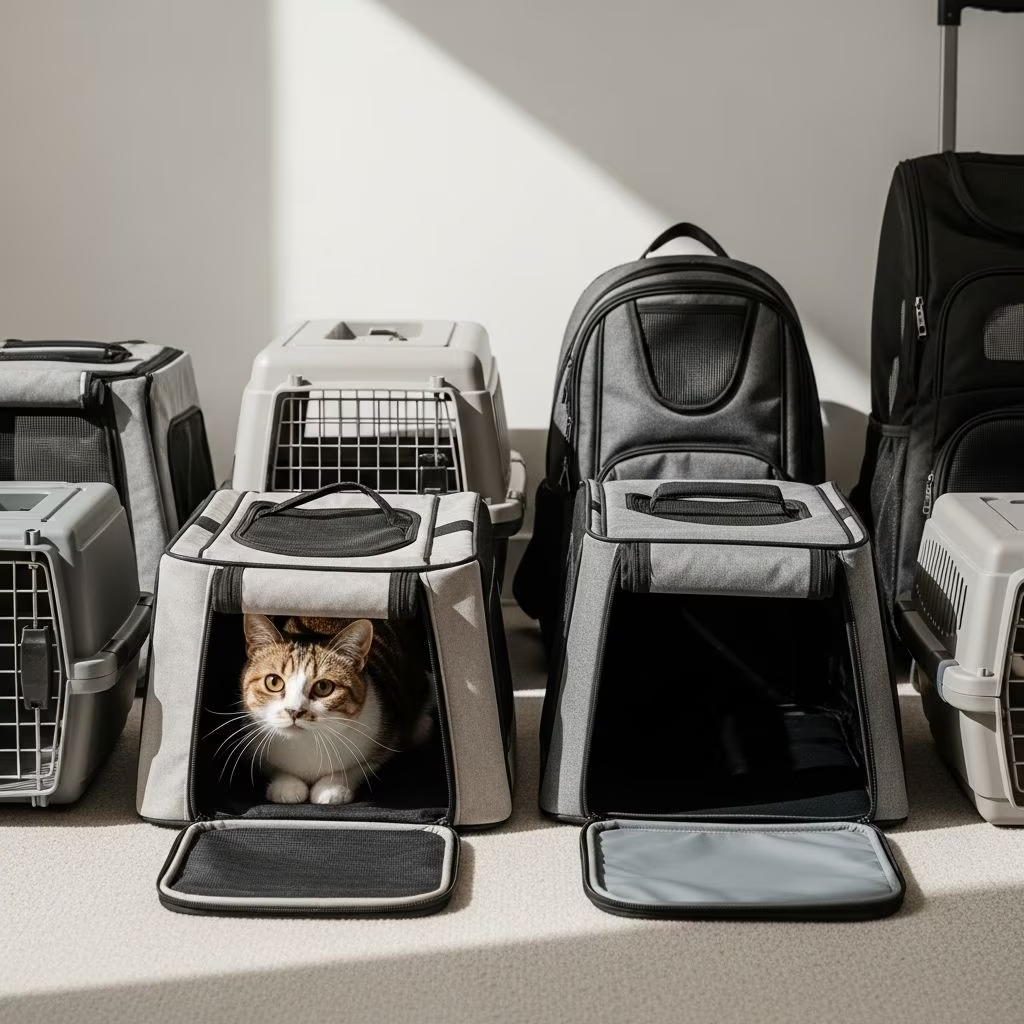
How to Choose the Right Cat Carrier
Finding the right cat carrier is one of the most important decisions you’ll make as a cat owner. Whether you’re heading to the veterinarian, traveling across town, or embarking on a cross-country journey, your cat’s carrier will be their home away from home. A well-chosen carrier provides safety, comfort, and peace of mind for both you and your feline companion. This comprehensive guide will walk you through everything you need to know about selecting the perfect carrier for your cat’s unique needs.
Understanding Carrier Types
The first step in choosing a cat carrier is understanding the different types available. Each carrier type has distinct advantages and disadvantages, and the best choice depends on your specific situation and your cat’s personality.
Hard-Sided Carriers
Hard-sided carriers are constructed from rigid plastic with metal door latches and secure closures. These classic carriers offer maximum protection during impacts or accidents, making them an excellent choice for car travel. The plastic construction provides durability and can last for decades with proper care. One of the most significant advantages is that hard-sided carriers are incredibly easy to clean and disinfect after vet visits or accidents. Many models are airline-approved for cargo travel, though you should always check specific airline regulations. The stable structure won’t collapse if something is placed on top, providing peace of mind during transport.
However, hard-sided carriers can feel bulky and less comfortable to carry over long distances. Some cats may experience anxiety in the enclosed design, and they take up more storage space when not in use.
Soft-Sided Carriers
Soft-sided carriers utilize fabric exteriors with mesh panels for ventilation. These carriers are significantly lighter and easier to carry for extended periods, making them ideal for cat parents who struggle with heavy loads. The collapsible design allows for compact storage, and the mesh panels provide superior ventilation compared to hard carriers. Many cats find soft carriers less intimidating, and they’re often available in airline-compliant sizes for cabin travel.
The main disadvantages of soft carriers are that they may not offer as much protection as hard-sided options and can collapse under pressure. Additionally, if your cat is an unhappy traveler, soft carriers are harder to clean than hard ones. Ambitious cats can claw their way through mesh windows or even unzip doors on their own, creating escape risks.
Hybrid and Expandable Carriers
Hybrid or expandable carriers combine elements of both hard and soft designs, offering versatility for various travel scenarios. Expandable models give cats more space when stationary, while combining a protective base with mesh ventilation. These modern designs address weaknesses of traditional options, making them attractive for frequent travelers. However, they tend to be more expensive than standard options, and expandable mechanisms can malfunction over time. Additionally, some may not meet all airline requirements.
Specialty Carriers
Beyond the primary types, several specialty carriers serve specific purposes. Backpack carriers are hands-free options perfect for adventurous cat parents, featuring clear bubble windows or mesh sides so your cat can observe their surroundings. Rolling carriers are lifesavers for long-distance travel with heavier cats, as the wheels reduce strain on your back and arms. However, they can be bulky and may not roll smoothly on all surfaces. Pet backpack carriers often include storage pockets for treats and toys, with comfortable waist and chest straps.
Selecting the Right Size
Choosing the correct carrier size is crucial for your cat’s comfort and safety. A carrier that’s too small will make your cat feel cramped and stressed, while one that’s too large may allow excessive movement that increases injury risk during transport.
Small Carriers
Small carriers typically measure approximately 17 to 19 inches in length, 12 inches in width, and 10 inches in height, accommodating cats weighing up to 8 pounds. These are ideal for kittens and small-breed cats.
Medium Carriers
Medium carriers feature interior dimensions of approximately 23 inches long, 15 inches wide, and 13 inches high, suitable for cats weighing between 8 and 15 pounds. Most average adult cats fit comfortably in medium carriers.
Large Carriers
Large carriers measure approximately 24 inches long, 16 inches wide, and 14 inches high, designed for cats weighing 15 to 20 pounds. These accommodate large breeds such as Maine Coons, Ragdolls, and British Shorthairs.
Extra-Large Carriers
Extra-large carriers exceed 28 inches in length, 18 inches in width, and 16 inches in height, designed for cats weighing 20 pounds or more. These are suitable for very large breeds, multiple small cats, or cats with mobility aids.
Entry Points and Access Features
How you get your cat into and out of the carrier significantly affects the experience and stress levels for both you and your pet. Different entry configurations offer distinct advantages.
Top-Loading Carriers
Carriers with openings on the top panel offer several benefits that veterinarians strongly prefer. Top-loading allows for gentle lowering of your cat into the carrier with less resistance than forward entry. Anxious cats can be examined in the carrier bottom without full extraction, reducing stress. This design also makes it easier to add bedding or arrange the interior before placing your cat inside. For cats who refuse to exit voluntarily, top-loading reduces the stress of the removal process.
Front-Loading Carriers
Front-loading carriers provide advantages for cats and owners who are comfortable with forward entry. This design is more intuitive for first-time carrier users and allows cats to walk in on their own, creating positive training opportunities. The mechanism is simpler with fewer parts that could fail. Cats may also find it easier to see out during travel with front-loading design.
However, front-loading makes it difficult to remove a reluctant cat, as vet techs may need to tip the carrier. Anxious cats might resist forward entry more than being gently lowered into a top-loader.
Dual-Entry Carriers
Carriers featuring both top and front openings offer maximum versatility. You can use top-loading for vet visits and reluctant cats, then switch to front-loading for training and voluntary entry. This flexibility adapts to different situations, and the multiple access points provide better access for cleaning all interior surfaces.
Matching Carriers to Travel Situations
Different travel scenarios require different carrier features to ensure your cat’s safety and comfort.
Air Travel
For airline travel, your carrier must meet specific requirements. Always check your airline’s size and specification requirements before purchasing. Many carriers come airline-approved, such as the Sherpa Travel Original Deluxe, which meets most major airline requirements. Soft carriers that can slide under the seat as carry-on luggage are particularly popular with plane travelers. Compact, collapsible carriers ensure you’re not paying extra for baggage while maintaining your cat’s safety.
Car Travel
Car travel requires carriers with specific features for safety and comfort. Your carrier should have secure seatbelt attachment points to prevent movement during sudden stops. Excellent ventilation is essential for temperature control in vehicles. The size should allow your cat to reposition during longer drives. For trips exceeding two hours, ensure access to water.
An important safety tip: never place a carrier in direct sunlight, as cars heat up rapidly and cats in carriers cannot escape heat stress. Use sunshades and ensure climate-controlled air reaches the carrier.
Veterinary Visits
Veterinary visits require carriers that provide easy access for examination and are simple to clean. Top-loading carriers are preferred by veterinarians, as they reduce stress and allow for examination without complete cat extraction. Easy-to-clean plastic construction is essential if accidents occur during anxious vet visits.
Key Features to Consider
Beyond carrier type and entry points, several features enhance your carrier choice:
- Ventilation: Adequate mesh panels or openings ensure your cat receives sufficient airflow, preventing heat buildup and anxiety
- Privacy Options: Some carriers include removable privacy shields or flaps that help anxious cats feel secure
- Storage Pockets: Additional compartments hold treats, toys, and essential items for convenient access during travel
- Crash Testing Certification: Look for carriers certified by the Center for Pet Safety (CPS) for additional safety assurance
- Material Quality: Durable plastic in hard carriers and strong fabric in soft carriers ensures longevity
- Weight Capacity: Choose carriers that comfortably accommodate your cat’s current weight with room for growth
- Easy Cleaning: Removable liners or washable interiors make maintenance simpler
Popular Carrier Options
The market offers numerous quality carriers tailored to different needs. The Sleepypod Air In-Cabin Pet Carrier is crash-tested and certified by the Center for Pet Safety, compressible for varied airline size restrictions, and comes with a privacy shield. The Sherpa Travel Original Deluxe Airline Approved Pet Carrier meets most major airline requirements and comes in small, medium, and large sizes for cats up to 22 pounds. The Petmate Two Door Top Load Pet Kennel features secure steel doors for simple loading and unloading, with easy-to-clean plastic construction.
For expandable options, the Petsfit Expandable Travel Carrier offers extended space allowing cats to sprawl out and relax. The Pet Magasin Hard Cover Collapsible Cat Carrier features a removable lid for easy access and opens from both top and front. Budget-conscious owners appreciate the Frisco Collapsible Cat Carrier Bag, which offers great value, collapses easily for storage, and weighs very little.
Making Your Final Decision
When selecting your cat carrier, consider these critical factors in order of importance:
- Your primary travel needs (air, car, or vet visits)
- Your cat’s size and breed
- Your cat’s temperament and stress levels
- Frequency of travel or carrier use
- Your physical ability to carry the carrier
- Storage space available at home
- Your budget for the carrier
- Durability and warranty considerations
The ideal carrier should provide safety, comfort, and ease of use for both you and your feline friend. Don’t hesitate to invest in a quality carrier, as it will be used frequently throughout your cat’s life.
Frequently Asked Questions
Q: What size carrier do I need for my cat?
A: Measure your cat from nose to tail and compare against carrier dimensions. Your cat should be able to stand, turn around, and lie down comfortably. Small carriers suit cats under 8 pounds, medium carriers fit 8-15 pounds, large carriers accommodate 15-20 pounds, and extra-large carriers are for cats over 20 pounds.
Q: Are soft or hard carriers better for airplane travel?
A: Soft carriers are often better for airplane travel because they’re lightweight, collapsible for compact storage, and can slide under seats as carry-on luggage. However, always verify your specific airline’s requirements, as some allow hard carriers in cargo holds.
Q: Why do veterinarians prefer top-loading carriers?
A: Veterinarians prefer top-loading carriers because they allow gentle lowering of cats with less resistance, enable in-carrier examinations without full extraction, and reduce stress for anxious cats.
Q: Can my cat escape from a soft-sided carrier?
A: Yes, ambitious cats can claw through mesh windows or unzip doors on soft carriers. Hard-sided carriers with secure latches provide better containment for escape artists.
Q: What features should I look for in a car travel carrier?
A: Look for carriers with secure seatbelt attachment points, excellent ventilation for temperature control, appropriate size for repositioning, and water access for longer trips. Never place carriers in direct sunlight.
Q: How do I clean my cat carrier?
A: Hard-sided carriers are easiest to clean with disinfectant spray or wipes. Soft carriers are harder to clean and should have removable liners when possible. Always follow the manufacturer’s cleaning recommendations.
References
- The 13 Best Cat Carriers for 2026: Unbiased Review — Cats.com. 2026. https://cats.com/best-cat-carrier
- How to Pick the Best Cat Carrier: Complete 2025 Guide — Pettsup. 2025. https://pettsup.com/blog/how-to-pick-the-best-cat-carrier
- Choosing the Perfect Cat Carrier — Kingstowne Cat Clinic. 2024. https://kingstownecatclinic.com/2024/10/choosing-the-perfect-cat-carrier-2/
- Best Cat Carrier for Travel & Vet Visits — Whisker. 2024. https://www.whisker.com/blog/cat-travel-part-ii-finding-the-right-cat-carrier



