

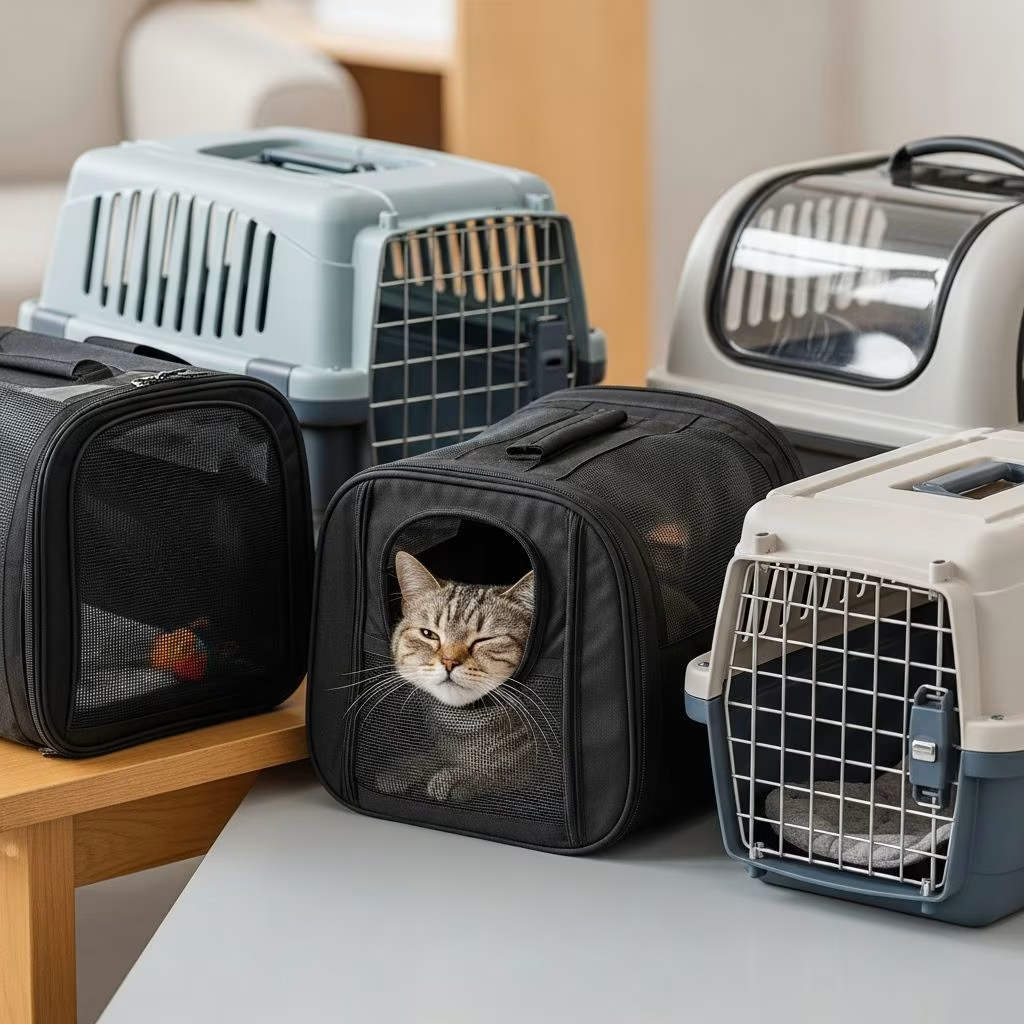
How to Choose the Best Cat Carrier for Your Favorite Feline
Selecting the right cat carrier is one of the most important decisions you’ll make as a cat owner. Whether you’re heading to a routine veterinary appointment, planning an emergency evacuation, or embarking on a cross-country adventure with your feline companion, having the appropriate carrier can make all the difference. A well-chosen carrier ensures your cat’s safety, comfort, and security while making transport easier for you. This comprehensive guide will help you navigate the various factors to consider when selecting the perfect cat carrier for your beloved pet.
Size Considerations for Your Cat Carrier
One of the first decisions you’ll need to make is determining the appropriate size for your cat carrier. The size requirement depends largely on the type of travel you’ll be undertaking with your feline friend.
Short-Distance Travel
For short trips—such as visits to the veterinarian or quick journeys to a friend’s house—your cat carrier only needs to be large enough for your kitty to accomplish a few basic movements. Your cat should be able to stand up, turn around comfortably, and lie back down without feeling cramped. This minimal sizing ensures your cat feels secure while not requiring you to invest in an oversized carrier for occasional use.
Long-Distance and Cross-Country Travel
When planning longer journeys or cross-country trips, you’ll need a roomier cat carrier that provides significantly more space. A larger carrier allows your cat to move about freely, stretch their legs, and shift positions during extended travel periods. Additionally, a more spacious carrier gives you room to attach and accommodate a water bowl and feeding dish, which becomes essential during lengthy trips. Proper hydration and nutrition are crucial for maintaining your cat’s well-being during extended travel, making the extra space well worth the investment.
Loading Speed and Accessibility
According to feline experts, the ease and speed with which you can load your cat into the carrier ranks as one of the most critical factors to consider—particularly during emergency situations. This consideration becomes even more important if you ever need to evacuate quickly with your pet in tow.
Top-Loading Carriers: The Superior Choice
Top-loading cat carriers represent the gold standard for accessibility and quick loading. Instead of struggling to coax your cat through a front-facing door, a top-loading carrier allows you to gently drop your cat in from above—a significantly easier and less stressful process for both you and your pet. This design is substantially more efficient than front-loading alternatives, particularly when dealing with anxious or reluctant cats.
Easy Disassembly Features
A carrier that can be taken apart and reassembled offers additional benefits beyond quick loading. This feature proves invaluable during veterinary visits, as it allows veterinary professionals to access your cat safely without having to “pour” them onto the examination table—a process that can be stressful for both the cat and the veterinarian. The ability to disassemble your carrier also simplifies the cleaning process after accidents or incidents.
Moisture Management and Comfort
Travel can be stressful for cats, and accidents happen. When selecting a carrier, consider moisture management features that contribute to your cat’s comfort and well-being during transport.
Absorbent Padding
Many quality cat carriers come lined with washable, absorbent removable pads specifically designed for your cat’s comfort. These pads serve multiple purposes: they provide cushioning for a more comfortable ride, absorb any accidents that might occur during travel, and make cleanup considerably easier. Look for carriers with removable pads that can be easily washed and dried, making maintenance simple and hygienic.
Ventilation and Air Flow
Proper ventilation is essential for your cat’s health and comfort during transport. However, the number and placement of air openings requires careful consideration, as different cats have different preferences and needs.
Balancing Ventilation with Security
While most carriers are designed with adequate oxygen flow in mind, it’s important to note that too many openings can actually intimidate cats. Cats are naturally inclined to seek shelter and security rather than to observe their surroundings. Excessive air openings can make your cat feel exposed and vulnerable, increasing anxiety during travel. Whenever possible, opt for a travel cat carrier with relatively solid sides that create a sheltered, den-like environment. This design helps your cat feel more secure and calm during the journey, reducing stress for both your pet and yourself.
Mesh Panels for Comfort
While solid sides are preferable, strategic mesh panels can provide ventilation while still maintaining the sense of security your cat needs. Mesh panels in key locations allow for adequate airflow without creating the feeling of complete exposure. Some carriers feature a balance of solid panels with selective mesh openings—the best of both worlds.
Cleaning and Maintenance
Cat carriers take a beating over time, particularly when dealing with anxious cats or unexpected accidents. Easy maintenance should be a significant consideration in your selection process.
Durability and Easy Cleaning
Carriers are designed to be nearly cat-proof, meaning your cat won’t be able to shred or otherwise destroy a quality carrier. However, they often accumulate dirt, hair, and occasionally bodily fluids. The ease with which you can wipe down and clean your carrier is therefore an important practical consideration. Look for carriers with smooth, wipeable surfaces that resist staining and can be quickly sanitized with pet-safe cleaning products. The simpler it is to clean, the more likely you’ll maintain your carrier in good condition for years to come.
Portability and Weight Considerations
The weight and portability of your carrier matter far more than many cat owners initially realize. This becomes especially important in emergency situations.
Ease of Transport
If a carrier is heavy when empty, it becomes exponentially more difficult to manage once your cat is inside. Portability is particularly crucial if you ever need to evacuate in an emergency—you’ll want to be able to grab your cat and carrier and exit a burning building or dangerous situation quickly and safely. A carrier that’s too heavy can slow you down in a critical moment. Additionally, for regular vet visits or travel adventures, a lighter, more portable carrier reduces physical strain and makes the entire experience more manageable.
Design Features That Aid Portability
Look for carriers with reinforced handles that distribute weight evenly, adjustable shoulder straps for comfortable carrying, or wheeled designs for extended trips. Some carriers offer collapsible or foldable designs that reduce storage space at home while remaining sturdy during use.
Types of Cat Carriers
Soft-Sided Cat Carrier Bags
Soft-sided carriers offer distinct advantages for many cat owners and their feline companions. The primary benefit of soft-sided carriers is their flexibility—you can compress them to fit into small spaces such as under an airplane seat or into compact storage areas in your home. This collapsible nature makes them ideal for travelers or those with limited storage space.
The mesh openings on soft-sided carriers provide your cat with a sense of being “hidden” while still allowing them to see their surroundings if desired. This design appeals particularly well to shy cats who appreciate the security of a carrier that doesn’t expose them completely. The sherpa or plush linings found on many soft-sided carriers add an extra layer of comfort for your traveling feline.
Best for: Most cats, particularly those who are shy or anxious about travel. Soft-sided carriers work well for cats of varying temperaments who appreciate the enclosed, secure feeling these carriers provide.
Hard-Sided Top-Loading Cat Carriers
Hard-sided, top-loading cat carriers represent an all-around ideal choice for most cat owners. These carriers feature an opening at the top that makes loading and unloading remarkably easy—you simply drop your cat in from above rather than struggling with front-loading doors. The hard plastic construction is durable and resistant to scratching, while the top-loading feature makes the carrier simple to disassemble for thorough cleaning.
Depending on the number of air vents, hard-sided carriers provide a good balance of ventilation and security. The solid plastic construction creates a sense of enclosure that many cats find comforting, while strategically placed vents ensure adequate airflow throughout the carrier.
Best for: Good-natured cats who are easy to load and unload, as well as anxious cats who benefit from the security of a hard-sided carrier. These carriers work well for most travel situations, from vet visits to air travel.
Comparison of Carrier Types
| Feature | Soft-Sided Carriers | Hard-Sided Carriers |
|---|---|---|
| Portability | Highly portable; can be compressed | Bulkier; less easy to compress |
| Weight | Lightweight and easy to carry | Heavier but sturdier |
| Loading Ease | Front-loading can be difficult | Top-loading option (easier) |
| Cat Comfort | Feels enclosed and secure | Provides strong structure and safety |
| Durability | Prone to wear from claws | Highly durable and resistant |
| Cleaning | Generally easier to wipe down | Can be disassembled for thorough cleaning |
| Storage | Stores compactly when not in use | Requires more storage space |
Additional Carrier Options
Collapsible Cat Carriers
If you’re short on storage space, collapsible cat carriers offer a stylish solution. These lightweight and foldable carriers maintain sturdiness despite their flexible design. Many feature mesh windows that allow your curious cat to peek out at their surroundings while feeling secure inside the carrier. When not in use, they collapse down to a fraction of their full size, making them perfect for apartment living or homes with limited storage.
Rolling Cat Carriers
For those planning very long trips involving airport terminals, train stations, or extensive walking, rolling cat carriers with telescoping handles offer a game-changing solution. These carriers function as wheeled luggage, rolling smoothly along with a telescoping handle for easy maneuvering. Many rolling carriers can serve multiple purposes, functioning as a car seat, backpack, or tote in addition to their wheeled carrier role. This versatility provides excellent value and convenience for frequent travelers with cats.
Frequently Asked Questions
Q: What is the best type of carrier for traveling with a cat?
A: The best carrier type depends on your cat’s personality and your travel method. Hard-sided carriers offer superior protection and structure, making them ideal for car or plane travel. Soft-sided carriers are lightweight and comfortable for quick trips, making them perfect for short journeys or situations where portability is essential. Consider your cat’s temperament and your typical travel needs when making your decision.
Q: Are soft-sided or hard-sided carriers better for cats?
A: Both have distinct advantages and disadvantages. Soft-sided carriers are easier to carry and store, providing portability that many cat owners appreciate. Hard-sided carriers offer greater durability, security, and structural integrity. If your cat tends to claw anxiously or panic during travel, a hard-sided option provides a safer, more secure choice. Ultimately, the best carrier depends on your individual cat’s needs and your lifestyle.
Q: How can I help my cat adjust to their carrier?
A: Introduce your cat to their carrier gradually by leaving it open in your home, allowing them to explore and become familiar with it. Place treats and toys inside to create positive associations. Practice short trips to help your cat become comfortable with the carrier experience. Gradually increasing exposure and using positive reinforcement helps reduce anxiety around travel.
Q: What features should I look for in an airline-approved cat carrier?
A: For air travel, ensure your carrier meets specific airline requirements regarding size, ventilation, and structural integrity. Look for carriers with secure latches, adequate ventilation holes, and enough space for your cat to stand and turn around. Soft-sided carriers that fit under seats are often preferable for air travel, as they allow your cat to remain with you in the cabin.
Q: How often should I clean my cat carrier?
A: Clean your carrier regularly, at minimum after each trip. If accidents occur, clean immediately to prevent odors and bacteria growth. For routine maintenance between trips, wipe down the interior with pet-safe cleaning products. Remove and wash any removable pads or liners according to the manufacturer’s instructions.
References
- How to Choose the Best Cat Carrier for Your Favorite Feline — Chewy. 2024. https://www.chewy.com/education/cat/general/how-to-choose-the-best-cat-carrier-for-your-favorite-feline
- Pet Carriers: Dog Carrier and Cat Carrier Options and Uses — Chewy. 2024. https://www.chewy.com/education/cat/pet-parenting/choose-pet-carrier
- The Best Cat Carriers, According to Cat Parents — Chewy. 2024. https://www.chewy.com/education/cat/general/best-cat-carriers



