

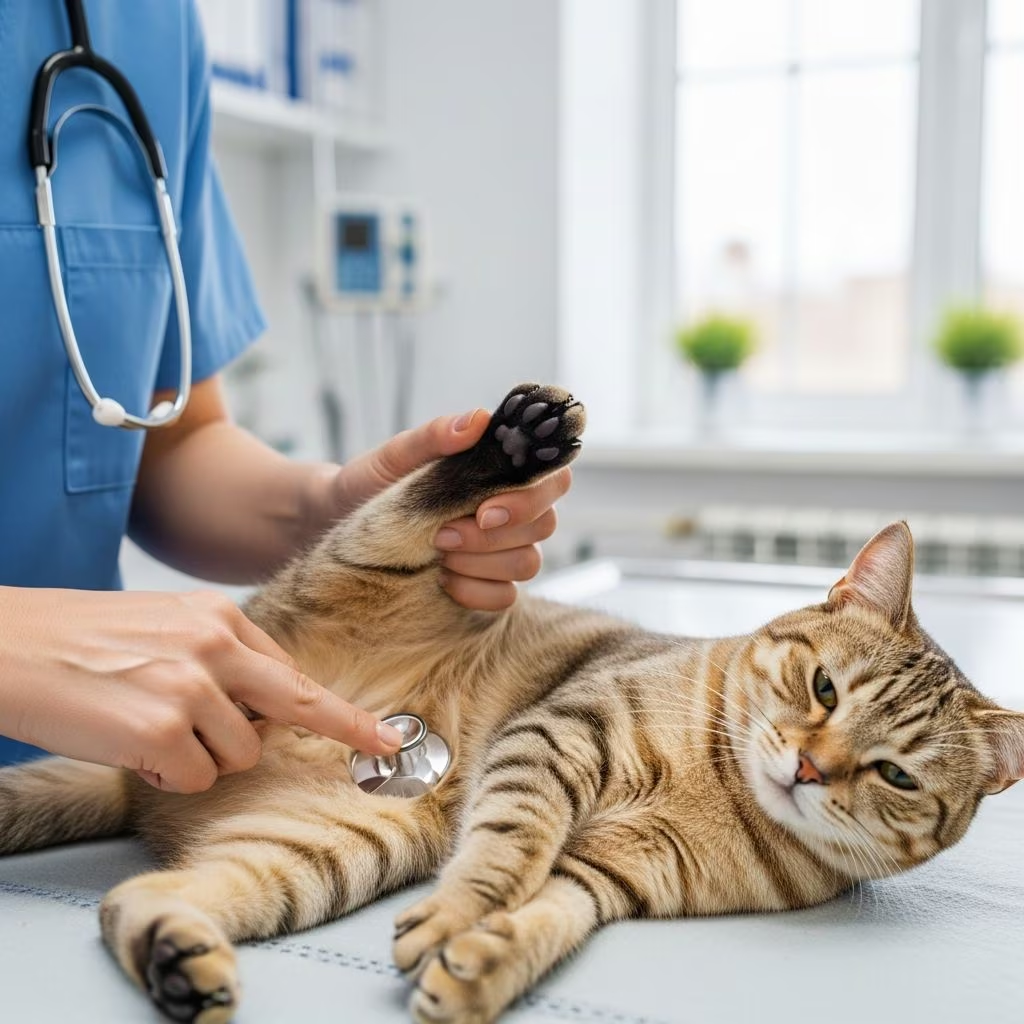
How to Check Your Cat’s Heart Rate: A Complete Guide
As a responsible cat owner, understanding your feline companion’s health is crucial for their well-being. One of the most important vital signs you can monitor is your cat’s heart rate. Being able to check your cat’s heart rate at home allows you to detect potential health issues early and provides valuable information to share with your veterinarian. This guide will walk you through everything you need to know about checking your cat’s heart rate safely and accurately.
Understanding Your Cat’s Normal Heart Rate
Before you begin checking your cat’s heart rate, it’s important to understand what constitutes a normal reading. A normal cat heart rate ranges from 160 to 220 beats per minute (BPM). This is significantly higher than a human heart rate, which typically falls between 60 and 100 BPM. Your cat’s resting heart rate may vary based on several factors including age, activity level, and overall health status.
Kittens and younger cats often have higher heart rates than senior cats. Additionally, a stressed or anxious cat will have an elevated heart rate, so it’s important to measure when your cat is calm and relaxed for the most accurate reading.
Why Check Your Cat’s Heart Rate?
Monitoring your cat’s heart rate serves several important purposes:
- Detecting early signs of cardiac problems or arrhythmias (irregular heartbeats)
- Establishing a baseline for your individual cat’s normal heart rate
- Tracking changes in heart rate over time that may indicate illness
- Providing your veterinarian with helpful diagnostic information
- Assessing your cat’s response to cardiac medications if prescribed
- Monitoring recovery from illness or surgery
Preparing Your Cat for Heart Rate Assessment
To obtain accurate heart rate measurements, proper preparation is essential. Your cat should be calm, resting, and ideally not stressed. Follow these preparation steps:
- Choose a quiet time when your cat is relaxed and comfortable
- Avoid checking heart rate immediately after play or exercise
- Ensure the environment is calm without sudden noises or disturbances
- Let your cat rest for several minutes before taking measurements
- Keep handling gentle and minimal to avoid stress
- Consider doing this during your cat’s natural resting periods
Method 1: Chest Pulse Technique
The chest pulse method is one of the most straightforward ways to check your cat’s heart rate at home.
Step-by-Step Instructions
- Position your cat: Lay your cat down on her right side in a comfortable, relaxed position
- Locate the pulse point: Place your hand on your pet’s chest at the point where the elbow meets it. You may need to slide your hand slightly forward or down depending on your cat’s chest depth
- Feel for the heartbeat: Apply gentle, steady pressure with your fingers to feel the heart beating beneath the skin
- Begin counting: Once you locate the heartbeat, use a watch or clock with a second hand to count the beats
- Count for the appropriate duration: Count the beats for 15 seconds, then multiply that number by 4 to get beats per minute, or count for 60 seconds for a direct reading
- Record your findings: Note the heart rate and the time of day for future reference
Tips for Success with the Chest Method
- Use light to moderate pressure—don’t press too hard as this may interfere with blood flow
- Keep your hand still once you’ve located the pulse
- If you have difficulty finding the pulse, try using a stethoscope placed over the same chest area
- Practice this technique when your cat is healthy so you’re comfortable with it if needed during illness
Method 2: Femoral Pulse Technique
The femoral pulse, located in the inner thigh, is another reliable location for measuring your cat’s heart rate.
Step-by-Step Instructions
- Position your cat: Ideally, your pet will be laying on his or her side. Ensure your cat is comfortable and relaxed
- Locate the femoral artery: Gently place the tips of your fingers on the inside of your pet’s rear leg about mid-thigh. The femoral artery runs down the inside and middle of the thigh along the bone
- Find the exact pulse point: You may have to move your fingers slightly closer to where the leg meets the body and press slightly firmer depending on your pet’s body conformation and weight. Feel for a recess in the middle of the leg approximately halfway between the front and back
- Apply appropriate pressure: Use three fingers (your index, middle, and ring finger) to feel for pulsations
- Begin your count: Once you feel the pulsations clearly, start counting using a clock or watch with a second hand
- Calculate the heart rate: Count the number of pulses you feel in 15 seconds. Multiply that number by 4 to get your pet’s heart rate in beats per minute. Alternatively, count the pulsations for six seconds and multiply the number of pulsations by 10
Advantages of the Femoral Pulse Method
- The femoral pulse is often easier to locate and feel than the chest pulse
- This method works well for cats with thick or dense chest fur
- Some cats find this method less invasive than chest palpation
- It provides a good secondary location if you have difficulty with the chest method
Advanced Heart Rate Monitoring Technology
While manual pulse checking is an excellent home monitoring technique, modern veterinary medicine offers advanced options for continuous heart rate monitoring.
Holter Monitors
A Holter monitor is a portable device used to continuously monitor the electrical activity of the heart. This device is particularly useful in certain situations:
Uses for Holter monitors include:
- Determining heart rate variability during normal activity, exercise, rest, or sleep
- Diagnosing the type of arrhythmia (abnormal or irregular heartbeat or rhythm) to determine the correct treatment
- Analyzing the effectiveness of prescribed cardiac drugs
- Evaluating pacemaker function
How Holter monitors work: The Holter monitor used for cats consists of a special vest, which contains the monitor, attached to several ECG lead wires. The device is unobtrusive, and most cats ignore its presence very quickly. Your veterinarian will provide specific instructions on use if this monitoring is recommended for your cat.
Contactless Heart Rate Monitoring
Emerging technology offers innovative approaches to heart rate monitoring. Researchers have proposed a novel, contactless approach for heart rate monitoring in pet cats, utilizing facial videos and imaging photoplethysmography (iPPG). This method involves recording a video of your cat’s face and extracting heart rate information from the video data, offering a non-invasive and stress-free alternative.
Accuracy of contactless monitoring: Experimental results indicated that the average absolute errors between reference monitors and iPPG estimates were 3.33 BPM for cats under natural light, and 2.33 BPM for cats under artificial light. While this technology is still primarily used in research settings, it represents the future of pet health monitoring.
What to Do When You’ve Measured the Heart Rate
After you’ve successfully measured your cat’s heart rate, proper documentation and interpretation are important:
- Record the measurement: Write down the heart rate, date, and time of measurement
- Note any observations: Record whether your cat was calm, stressed, or active during measurement
- Compare to normal range: Ensure the reading falls within the normal 160-220 BPM range
- Track patterns: Keep multiple measurements over time to establish your cat’s individual baseline
- Share with your veterinarian: Provide these measurements during check-ups or if you notice concerning changes
When to Contact Your Veterinarian
While some variation in heart rate is normal, certain readings warrant veterinary attention. Contact your veterinarian if:
- Your cat’s resting heart rate consistently falls below 160 or above 220 BPM
- You notice a sudden significant increase or decrease in heart rate
- Your cat’s heart rate appears irregular or skips beats
- Heart rate changes are accompanied by other symptoms such as lethargy, loss of appetite, or difficulty breathing
- You have any concerns about your cat’s cardiovascular health
Factors That Affect Cat Heart Rate
Understanding what influences your cat’s heart rate helps you interpret measurements more accurately:
- Age: Younger cats typically have faster heart rates than senior cats
- Activity level: Exercise and play elevate heart rate; rest lowers it
- Stress and anxiety: Fear, excitement, or unfamiliar environments increase heart rate
- Temperature: Higher body temperature raises heart rate; lower temperature decreases it
- Health conditions: Fever, pain, cardiac disease, and hyperthyroidism affect heart rate
- Medications: Some medications increase or decrease heart rate as a side effect
- Time of day: Heart rate may vary slightly throughout the day
Common Challenges and Solutions
Learning to check your cat’s heart rate may involve overcoming some common obstacles:
| Challenge | Solution |
|---|---|
| Difficulty locating the pulse | Practice on a healthy cat first; try different finger positions; use a stethoscope for audio confirmation |
| Cat becomes stressed during attempt | Work in shorter sessions; build up gradually; measure during naturally calm moments |
| Unable to keep cat still | Measure when cat is naturally sleepy; use treats as positive reinforcement; have a helper hold the cat |
| Inconsistent readings | Always measure when cat is rested; wait longer between measurements; use the same technique each time |
| Uncertain about accuracy | Compare your reading with veterinary assessment; ask your vet to demonstrate; use multiple counting methods |
Frequently Asked Questions
Q: How often should I check my cat’s heart rate?
A: For a healthy cat, checking heart rate during annual veterinary visits is sufficient. If your cat has a heart condition or is on cardiac medication, your veterinarian may recommend checking more frequently, such as weekly or monthly.
Q: Can stress affect my cat’s heart rate reading?
A: Yes, stress significantly affects heart rate. A stressed or anxious cat will have an elevated heart rate compared to a calm cat. Always ensure your cat is relaxed before measuring to get the most accurate baseline reading.
Q: What’s the difference between checking pulse manually and using a Holter monitor?
A: Manual pulse checking provides a snapshot reading at a specific moment, while a Holter monitor records heart rate continuously over an extended period (usually 24-48 hours), capturing variations throughout daily activities and sleep cycles.
Q: Is it normal for a cat’s heart rate to vary?
A: Yes, some variation is normal. A cat’s heart rate can fluctuate based on activity level, stress, time of day, and other factors. However, dramatic or sudden changes warrant veterinary evaluation.
Q: Should I use a stethoscope to check my cat’s heart rate?
A: A stethoscope can be helpful for hearing the heart clearly and confirming what you feel when palpating. However, it’s not necessary for manual pulse checking. If you use one, place it over the chest area where the elbow meets the chest.
Q: How accurate is contactless heart rate monitoring for cats?
A: Research shows that imaging photoplethysmography (iPPG), a contactless monitoring method, achieves accuracy within 2-3 BPM of traditional ECG measurements. While promising for research and future home monitoring, this technology is not yet widely available for consumer use.
Q: What should I do if I get an abnormal reading?
A: Don’t panic. First, ensure your cat was calm and rested during measurement. Retake the reading after your cat has rested more. If the reading remains abnormal or your cat shows other signs of illness, contact your veterinarian promptly.
Q: Can I check my cat’s heart rate while they’re sleeping?
A: Yes, while sleeping is an ideal time to check your cat’s resting heart rate. However, the heart rate may be slightly lower during deep sleep than during normal wakefulness, so be aware of this when interpreting readings.
References
- A novel approach for contactless heart rate monitoring from pet dogs and cats using imaging photoplethysmography — Frontiers in Veterinary Science. 2024-12-16. https://www.frontiersin.org/journals/veterinary-science/articles/10.3389/fvets.2024.1495109/full
- What’s a Normal Cat Temperature, Heart and Breathing Rate? — American Red Cross. 2025. https://www.redcross.org/take-a-class/resources/learn-pet-first-aid/cat/normal-temperature-heart-breathing-rate
- Holter Monitor in Cats — VCA Animal Hospitals. 2025. https://vcahospitals.com/know-your-pet/holter-monitor-in-cats
- How to Assess Your Pet’s Vital Signs — Preventive Vet. 2025. https://www.preventivevet.com/assessing-your-pets-vitals
- Cat and Dog Pulse Rate Training — ProTrainings. 2025. https://www.protrainings.com/training_video/cat-and-dog-pulse-rate



