

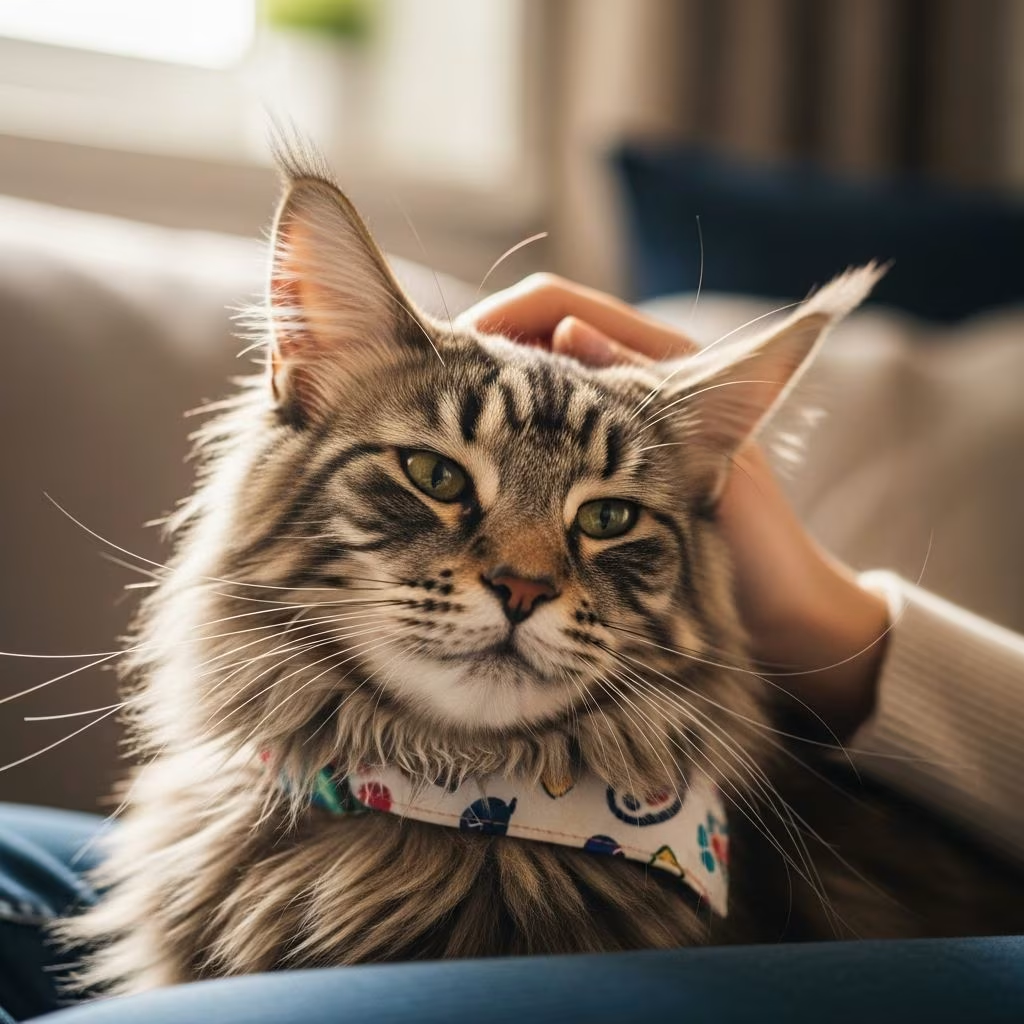
How to Care for a Deaf Cat: Complete Guide
Caring for a deaf cat requires understanding and patience, but the reward is a loving companion who can live a full, happy life. While deafness presents unique challenges, deaf cats are remarkably adaptable animals that can thrive with the right environment and care strategies. Whether your cat was born deaf or has experienced hearing loss, learning to communicate effectively and provide appropriate safety measures will help your feline friend flourish in their silent world.
Understanding Feline Deafness
Deafness in cats can occur for various reasons. Some cats are born deaf, particularly white cats or those with certain genetic predispositions. Other cats may experience hearing loss as they age or due to illness or injury. The key difference in caring for deaf cats is understanding that cats who are congenitally deaf often adapt more easily since they’ve never relied on hearing, while cats who have lost hearing gradually or suddenly may need more time to adjust to their new reality.
The most important thing to remember when caring for a deaf cat is that they are deaf. This may seem obvious, but it carries significant implications for their safety and quality of life. Unlike hearing cats, deaf cats cannot perceive traffic sounds, barking dogs, or other auditory warnings that help animals avoid danger. Understanding this fundamental difference shapes every aspect of caring for your deaf companion.
Communication Strategies for Deaf Cats
Deaf cats are highly visual creatures and naturally rely on their eyes to navigate and communicate. This visual acuity becomes your primary tool for connecting with your pet.
Visual Communication Methods
- Light signals: Flash the overhead lights when entering a room to prompt your cat to look around and notice you.
- Hand signals: Wave at your cat to get their attention, or create consistent hand signals for different commands.
- Laser pointers: Use a laser pointer to direct your cat’s attention when they’re facing away from you. Focus the beam on the floor ahead of your cat to lure them to turn around and notice you. Be careful never to shine the laser directly in their eyes.
- Flashlights: Point a flashlight or pen light toward your cat and turn it on and off, especially if followed by a tasty treat.
- Visual toys: Throw a small ball or soft toy into your cat’s line of sight to engage their attention, as long as it doesn’t startle them.
Touch and Vibration Communication
Touch and vibration are equally important for communicating with your deaf cat. These tactile methods create a bridge of understanding in their silent world.
- Floor vibrations: A firm stomp on the floor uses vibration to communicate your presence and causes your cat to look around for the source. You can then call your cat to you or head toward the food dish.
- Gentle touching: Stroking, brushing, and combing can be quite comforting to a deaf cat. Use touch as a way to show affection and reinforce positive behaviors.
- Purring vibrations: Try purring when you cuddle your deaf cat and observe if they respond to the vibrations.
- Voice vibrations: Even though your cat cannot hear you, touching them while you speak allows them to feel the vibration of your hand and voice, creating a connection.
Establishing Routines
Create a scheduled routine and stick to it to help teach your deaf cat important household routines. Deaf cats learn quickly when they can predict when meals happen and where the feeding and litter box locations are. Consistency is key to helping your cat feel secure and understand the rhythm of household life.
Safety Considerations for Deaf Cats
Safety is the paramount concern when caring for a deaf cat. The most critical safety decision you can make is keeping your deaf cat indoors.
Why Indoor Living is Essential
Never let a deaf cat outside unsupervised. The inability to hear traffic, honking automobile horns, barking dogs, and other outdoor dangers means your cat cannot react appropriately to life-threatening situations. Additionally, a deaf cat cannot hear you calling their name to come home, creating a significant risk of permanent loss.
Indoor living doesn’t mean a life devoid of enrichment and activities. Give your cat ample toys, playtime, and a window view to see all that’s happening outside.
Outdoor Enrichment Options
If you want your cat to experience outdoor environments safely, consider these alternatives:
- Outdoor enclosures: Construct a cattery or catio to enable your cat to enjoy the outdoors safely while remaining enclosed.
- Leashed walks: Many cats can learn to walk on a harness and leash. Start indoors and progress slowly with leash walks. If you take your cat on walks outdoors, write “I am deaf” on the cat’s collar, harness, or bandanna to alert people approaching your cat.
Identification and Tracking
Even with careful precautions, accidents happen. Protect your deaf cat with proper identification:
- Microchip: Ensure your cat is microchipped with current contact information.
- ID tags: Have your deaf cat wear an ID tag with “deaf cat” clearly noted on it.
- Cat locator pendant: Attach a Cat Locator pendant to your cat’s collar. The pendant emits a tone when the handheld applicator is activated to help you find your deaf cat. The vibration from the tone can also be used as a training signal to curb undesirable behaviors.
Training Your Deaf Cat
Training a deaf cat uses the same principles as training any cat, but relies on visual cues and hand signals instead of voice commands.
Basic Training Techniques
- Positive reinforcement: When your cat looks at you, crouch down toward the floor, extend your hand, and invite her to you. Reinforce her instinct to approach by using a small, tasty treat.
- Correcting unwanted behavior: If your cat is doing something she’s not supposed to do, such as jumping on a counter or scratching furniture, communicate your displeasure by standing tall, waving your arms above your head, and stomping your feet as you approach.
- Sign language: Some deaf cats have even been trained to understand sign language, demonstrating their intelligence and adaptability.
Managing Vocalizations in Deaf Cats
One common question cat owners have is whether deaf cats still meow. The answer is yes, but their vocalizations may be different from hearing cats.
Some deaf cats meow more often and more loudly because they cannot regulate their “volume.” Without the ability to hear their own voice, they cannot adjust the intensity of their meows. On the flip side, other deaf cats might become mute, rarely vocalizing at all.
If your deaf cat’s excessive meowing becomes a concern, try placing a small, gently vibrating dog collar under the cat’s bed pillow (not around the cat’s neck). The vibrations of the collar can have a calming effect.
Waking Your Deaf Cat Safely
One overlooked aspect of deaf cat care is the safest way to wake a sleeping cat. Since your cat cannot hear you approaching, waking them requires extra care to avoid startling them.
- Vibration method: Walk over to them and lightly tap the ground. The cat will feel the vibrations and wake up in a calm way.
- Surface tapping: Gently pat the surface where your cat is sleeping or flick the lights.
- What to avoid: It’s best not to touch the cat directly to wake them up because it could startle the cat and result in biting or scratching.
Special Care and Enrichment
Deaf cats need company and mental stimulation to thrive. Make time every day to pet, cuddle, and play with your cat. The warmth of your hands is soothing to them in a silent world.
Enrichment Activities
Offer your cat a variety of toys that engage their other senses—touch, smell, taste, and vision. Be creative in finding ways to stimulate your cat’s remaining senses:
- Toys with different textures for tactile exploration
- Toys with interesting scents to engage their sense of smell
- Moving toys and interactive games that rely on visual stimulation
- Window perches for bird watching and environmental observation
Showing Affection
To show your affection to your deaf cat, use loving touch or the “I love you” slow blink, and your cat will get the message. Physical affection becomes even more important for deaf cats, as it’s one of the primary ways you can communicate your care and bond with your companion.
Considering a Companion
If you feel that your cat is lonely, consider adopting another pet. A gentle companion can provide social interaction and play opportunities that enrich your deaf cat’s life. Carefully screen any new pet to ensure this new friend is gentle and will be a good companion for your deaf cat.
Alerting Your Cat to Your Presence
One important habit to develop is alerting your cat to your comings and goings by touching them gently (if they’re not sleeping) when you enter or leave a room. This prevents your cat from becoming anxious when they don’t know where you are. When you’re about to leave the room, get your cat’s attention and allow them to watch you go, so they understand your movements.
Frequently Asked Questions
Q: Do deaf cats need special care?
A: Yes, deaf cats need some special considerations, particularly regarding safety and communication. However, with proper care, they can lead normal, healthy, happy lives. The main differences involve using visual and tactile communication instead of auditory cues, keeping them indoors for safety, and providing consistent routines and enrichment.
Q: Can deaf cats go outside?
A: Deaf cats should not go outside unsupervised because they cannot hear traffic, horns, or other dangers. However, they can enjoy outdoor time through supervised leashed walks or in secure outdoor enclosures like catios. If your deaf cat does go outside on a leash, make sure they wear identification indicating they are deaf.
Q: How do I wake up a sleeping deaf cat?
A: The safest way to wake a deaf cat is by creating vibrations on the floor or surface they’re sleeping on, rather than touching them directly. You can lightly tap the ground or the surface where they’re sleeping, or flick the lights on and off. Avoid touching them directly as it could startle them and cause them to bite or scratch.
Q: Will my deaf cat meow?
A: Some deaf cats meow more frequently and loudly than hearing cats because they cannot regulate their volume. Others may become relatively mute. Both are normal behaviors for deaf cats. If excessive meowing becomes an issue, a gently vibrating collar placed under their bedding pillow can have a calming effect.
Q: How do I communicate with my deaf cat?
A: Deaf cats are highly visual, so use light signals, hand signals, laser pointers, and flashlights to get their attention. Touch and vibration are also crucial—stomp on the floor to alert them to your presence, pet and cuddle them regularly, and even try purring near them so they feel the vibrations.
Q: Can deaf cats be trained?
A: Yes, deaf cats can be trained using visual cues and hand signals instead of voice commands. Many deaf cats learn quickly through positive reinforcement with treats and can even be trained to understand sign language. Consistency and patience are key to successful training.
Q: How can I keep my deaf cat safe at home?
A: Keep your deaf cat indoors as a primary safety measure. Additionally, microchip your cat, use ID tags clearly marking them as deaf, attach a Cat Locator pendant to their collar, and alert your cat to your presence when entering or leaving rooms. Always avoid startling them, especially when they’re sleeping.
References
- Living with a Deaf Cat — VCA Animal Hospitals. https://vcahospitals.com/know-your-pet/living-with-a-deaf-cat
- Tips to Care for a Deaf Dog or Deaf Cat — Best Friends Animal Society. https://bestfriends.org/pet-care-resources/tips-care-deaf-dog-or-deaf-cat
- Adopting & Caring for a Deaf, Blind or Special Needs Cat — Purina. https://www.purina.com/articles/cat/getting-a-cat/adopting-special-needs-cats
- Sound Matters: Tips on Living With a Deaf Cat — Fear Free Happy Homes. https://www.fearfreehappyhomes.com/sound-matters-tips-on-living-with-a-deaf-cat/



