

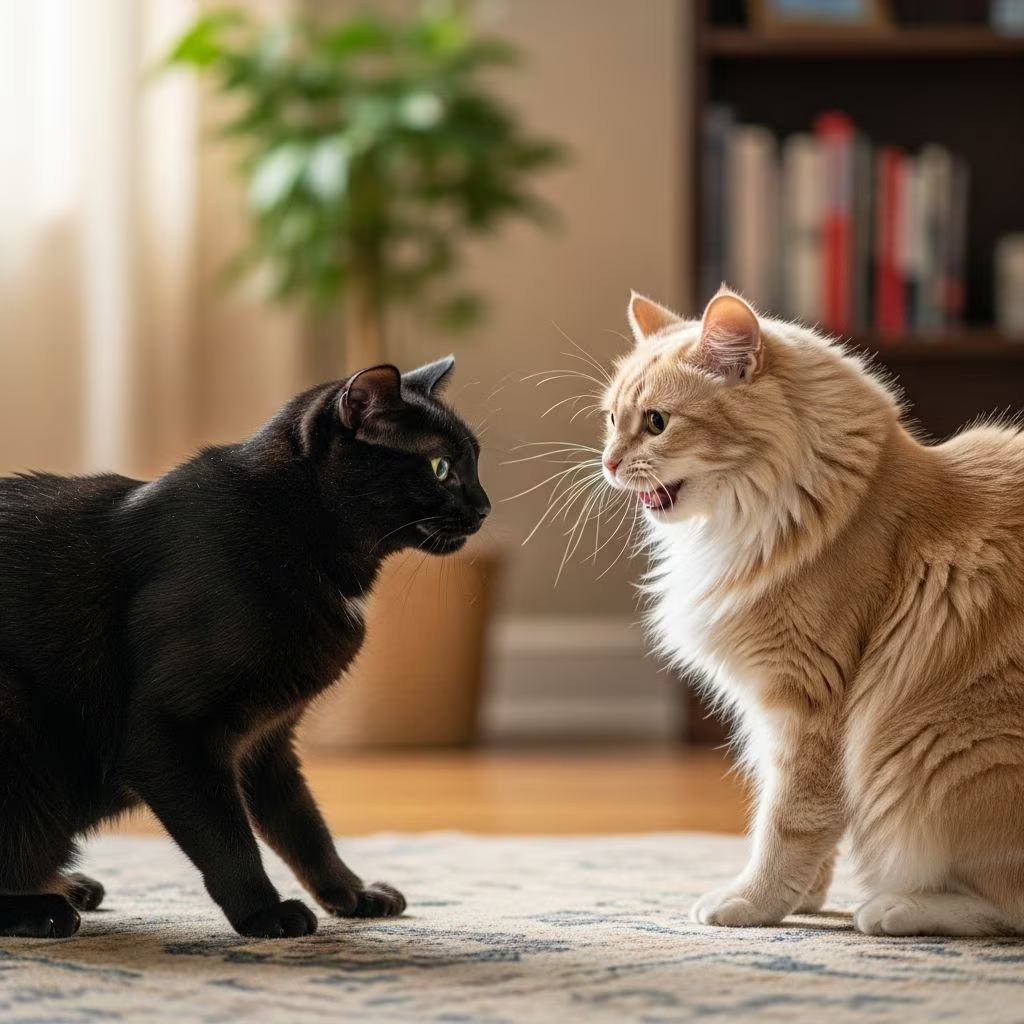
Cat fights can erupt suddenly in multi-cat households, causing stress for pets and owners alike. Knowing how to safely intervene prevents injuries and addresses underlying issues like territorial disputes or redirected aggression. This guide covers immediate intervention techniques, root causes, prevention strategies, and long-term harmony tips, drawing from veterinary and behavioral expertise.
Why Do Cats Fight?
Cats fight for various reasons, often rooted in instinctual behaviors. Common triggers include territorial disputes, fear, play escalation, or resource competition. In multi-cat homes, lack of space or resources heightens tension, leading to hissing, swatting, or full confrontations.
- Territorial Aggression: Cats are wired to defend their space; new cats or changes in environment spark conflicts.
- Fear or Defensive Aggression: A cat feeling threatened may lash out preemptively.
- Redirected Aggression: Frustration from external stimuli, like seeing an outdoor cat, gets misdirected at household cats.
- Play Turned Serious: Kittens roughhouse, but adults may cross into real aggression.
- Status-Related: One cat bullying another to establish dominance.
Understanding the ‘why’ is crucial—observe body language like dilated pupils, flattened ears, or arched backs to differentiate play from danger. Medical issues like pain can also trigger uncharacteristic fights, so a vet check is essential.
Signs Your Cats Are About to Fight
Early recognition allows safe de-escalation. Watch for precursors to full-blown fights:
- Staring contests with tails twitching rapidly.
- Hissing, growling, or yowling.
- Piloerection (fur standing on end) and ears pinned back.
- Swatting without contact or stalking behavior.
- Aggressive postures like crouching or pouncing readiness.
Intervene at these signs to avoid injury; cats’ claws and teeth can cause abscesses or infections.
How to Safely Break Up a Cat Fight
Never grab cats by the scruff or skin during a fight—this risks severe bites to you and escalates their fear. Instead, use non-physical distractions:
- Make Loud Noises: Clap hands, bang pots, or use a compressed air canister (not directly at them) to startle and separate.
- Water Spray: A gentle squirt from a spray bottle disrupts without harm; aim between them.
- Throw a Soft Object: Toss a pillow or towel to block and distract.
- Use Barriers: Slide a broom, cardboard, or pillow between them for safe separation.
- Isolate Immediately: Once apart, confine each to separate rooms with food, water, and litter to cool off.
After separation, check for wounds—clean minor scratches with saline and monitor for swelling. Seek vet care for punctures or lethargy. Avoid petting or consoling right away, as this may reinforce aggression.
Why You Should Never Physically Intervene
Physical handling during fights is dangerous. Cats in ‘fight mode’ can’t distinguish friend from foe, leading to redirected bites or scratches that cause infections. Grabbing amplifies stress hormones, worsening future incidents. Safer methods preserve trust and safety.
Immediate Steps After Breaking Up the Fight
Post-fight actions set the stage for resolution:
- Separate cats completely for 24-48 hours or until calm.
- Provide individual resources: food, water, litter (n+1 rule: one per cat plus one).
- Swap bedding to familiarize scents without visual contact.
- Consult a vet to rule out pain or illness.
Reintroduction too soon reignites tension; patience prevents cycles.
Preventing Cat Fights: Long-Term Strategies
Prevention focuses on a ‘house of plenty’—abundant resources reduce competition.
Resource Management
Follow the golden rules for multi-cat homes:
| Resource | Recommendation |
|---|---|
| Litter Boxes | One per cat +1, separated from food |
| Food/Water Bowls | One per cat +1, in different locations |
| Scratching Posts | One per cat, vertical spaces |
| Resting/Hiding Spots | Cat trees, shelves, boxes—elevated and private |
| Toys | Plenty, rotated to prevent boredom |
Distribute evenly to avoid ambushes.
Reintroduction Process
Treat as new introductions:
- Confine aggressor; let victim roam freely.
- Exchange scents via bedding/toys.
- Feed/play on opposite sides of a door.
- Controlled visuals: carriers at distance, rewarding calm.
- Gradual supervised contact; use leashes if needed.
This counter-conditions positive associations, taking weeks to months.
Enrich the Environment
- Vertical space: cat trees, shelves for perching.
- Interactive play: wands, lasers to burn energy.
- Pheromones: Feliway diffusers/collar reduce stress.
- Spay/neuter: Cuts 90% of inter-cat aggression.
Training and Behavior Modification
One-on-one time builds confidence:
- Hand-feed treats, teach ‘come’ command.
- Crate train for safe separations.
- Interrupt bad behavior with hiss/air, reward calm.
Avoid punishment—it increases fear.
Common Mistakes to Avoid
- Punishing cats: Heightens stress.
- Rewarding bullies with attention/food.
- Forcing proximity too soon.
- Ignoring medical checks.
- Unequal resources leading to competition.
When to Call a Professional
If fights persist despite prevention, or involve extreme injury, consult a veterinary behaviorist. Signs include constant hyper-vigilance, urine marking, or weight loss. Professionals use meds like anti-anxieties if needed.
Frequently Asked Questions (FAQs)
What should I do if my cats are fighting right now?
Use noise, water spray, or barriers to separate safely—never grab them. Isolate afterward.
How long should I separate fighting cats?
At least 24-48 hours, then reintroduce slowly over days/weeks.
Will my cats ever get along again?
Yes, with proper reintroduction and resources—most do.
Can pheromones really stop cat fights?
They reduce stress and aid harmony; use with other strategies.
Is spaying/neutering enough to prevent fights?
It helps greatly but combine with environmental enrichment.
Maintaining peace requires ongoing vigilance. By addressing triggers and enriching lives, your cats can coexist happily. Monitor progress and adjust as needed for a stress-free home.
References
- Cat Fight: 10 Tips for Stopping & Preventing Cat Aggression — Amy’s Shojai. Accessed 2026. https://amyshojai.com/cat-fight-what-to-do/
- How to Stop Cat Fights — SPCA of Wake County. Accessed 2026. https://spcawake.org/services/pet-behavior/how-to-stop-cat-fights/
- How To Stop Cats Fighting And Attacking Other Cats — FELIWAY. Accessed 2026. https://us.feliway.com/pages/how-to-stop-cats-fighting
- Feline Behavior Problems: Aggression — Cornell University College of Veterinary Medicine. Accessed 2026. https://www.vet.cornell.edu/departments-centers-and-institutes/cornell-feline-health-center/health-information/feline-health-topics/feline-behavior-problems-aggression
- Stop Indoor Cat Fighting: Proven Fixes — YouTube (Video Transcript). Accessed 2026. https://www.youtube.com/watch?v=XZnQkIHfysE
- Stop Feline Aggression to Keep Cats — Humane World. Accessed 2026. https://www.humaneworld.org/en/resources/stop-feline-aggression-keep-cats
- Cats and Fighting — Cats Protection. Accessed 2026. https://www.cats.org.uk/help-and-advice/cat-behaviour/cats-and-fighting



