

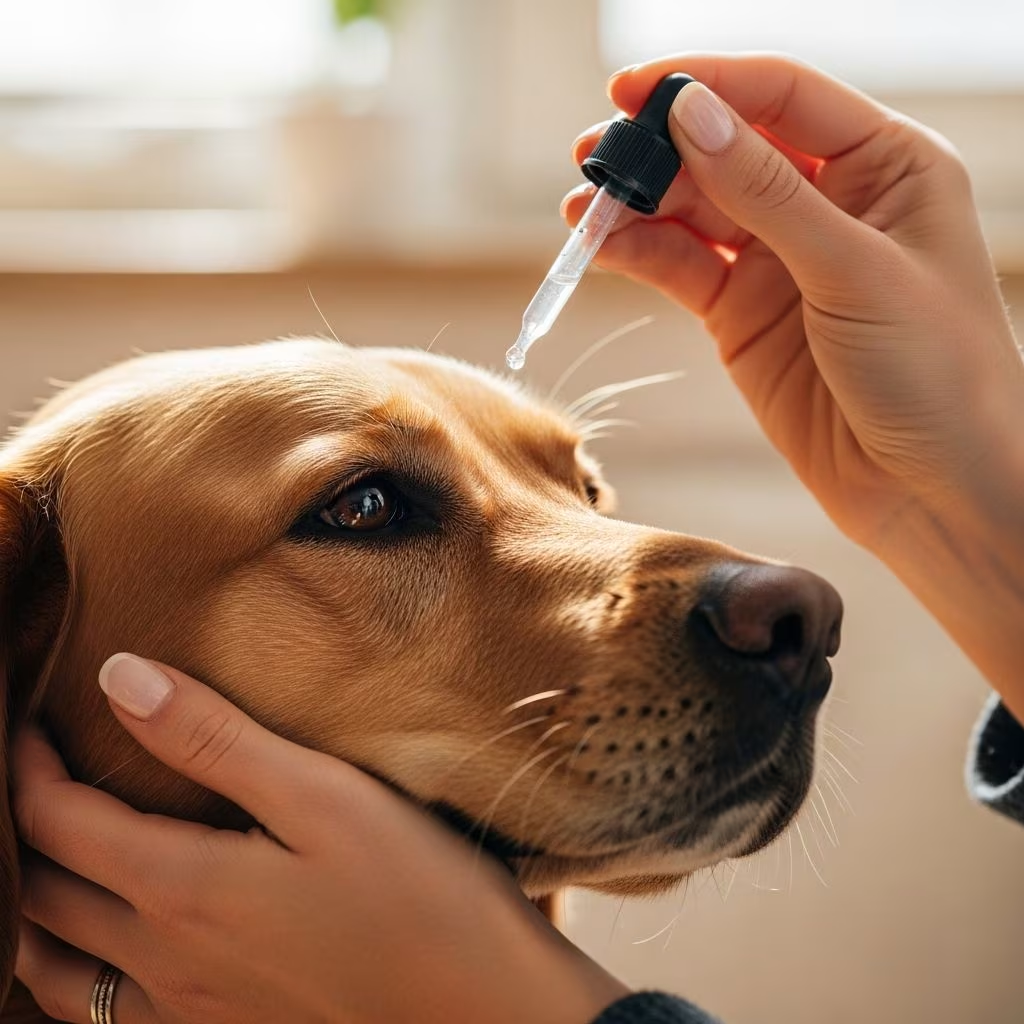
How to Apply Eye Drops to Dogs: A Complete Guide
Administering eye drops to your dog can be challenging, but with the right technique and preparation, you can make the process smooth and stress-free for both you and your pet. Whether your dog requires medication for an infection, inflammation, or other eye condition, learning the proper method ensures the drops are applied effectively and your dog remains calm throughout the process.
Why Proper Application Matters
Eye medications are prescribed to treat specific conditions affecting your dog’s vision and eye health. If drops are not applied correctly, they may not reach the affected area, reducing their effectiveness. Additionally, improper technique can cause discomfort to your dog and create anxiety around future medication applications. By following the correct steps, you maximize the medication’s therapeutic benefit while minimizing stress for your pet.
Pre-Application Preparation
Before you begin administering eye drops, proper preparation sets the foundation for success. Taking a few minutes to prepare ensures the process goes smoothly and your dog remains cooperative.
Step 1: Check the Label Instructions
Always read the bottle label carefully before use. Some eye drop formulations require shaking to ensure proper mixture of ingredients. If the label indicates shaking is necessary, gently shake the bottle as directed. This ensures the medication is evenly distributed and will deliver the correct dosage.
Step 2: Clean Your Dog’s Eyes
Gently clean any debris or discharge from your dog’s eyes using warm water and a soft washcloth. This preparation step is important for several reasons: it removes any foreign material that might interfere with medication absorption, it conditions your dog to expect eye handling, and it can be soothing for your pet. This is an excellent opportunity to reward your dog with gentle head rubs or treats, creating a positive association with eye care.
Step 3: Prepare Your Environment and Materials
Have all necessary materials ready before you begin. Ensure the eye drop bottle is open and accessible, and have treats readily available for positive reinforcement. Choose a comfortable location with good lighting so you can see clearly. Having everything prepared prevents fumbling around after you’ve positioned your dog, which could cause them to move or become anxious.
Positioning Your Dog
Proper positioning is crucial for successful eye drop application. A calm, stable dog is far easier to treat than one that is moving or struggling. The positioning technique may vary slightly depending on your dog’s size.
For Small Dogs
Small dogs can be positioned on a table or raised secure surface for easier access to their eyes. Alternatively, you can work with them on the floor by kneeling behind them. Form a gentle tunnel with your arms on each side of your dog, with their tail facing toward you. This creates a secure, enclosed space that helps prevent them from backing away or moving unexpectedly.
For Large Dogs
Lifting a large dog onto a table is typically impractical. Instead, leave your large dog on the ground and position yourself appropriately. One effective method is to ask your dog to sit, then walk behind them and place one foot on either side of their body, straddling them like a horse. This position gives you control while keeping your dog stable. Alternatively, position your dog so their rear end faces toward you and their nose points away, creating a comfortable working angle.
Create Stability with Head Support
Firmly hold your dog’s head close to your body to provide stability. With your non-dominant hand, place it underneath your dog’s chin and elevate their nose upward toward the ceiling. This positioning accomplishes multiple goals: it provides a stable anchor point, it prevents your dog from backing away, and it creates the optimal angle for drop application.
Proper Hand Positioning and Technique
The way you hold the eye drop bottle and manage your dog’s eyelids directly impacts the success of medication application. Mastering proper hand positioning takes practice but becomes second nature with repetition.
Holding the Bottle
Hold the bottle between your thumb and index finger of your dominant hand, with the bottle tip pointed downward. This positioning allows for precise control and makes it easy to squeeze out the prescribed number of drops. Rest this hand on top of your dog’s head or skull for stability. This contact point is crucial because if your dog suddenly moves, your hand moves with them, preventing accidental contact with the eye’s surface.
Managing the Lower Eyelid
With your non-dominant hand, gently pull down the lower eyelid using your thumb, creating a small pouch to receive the drops. The remaining fingers of this hand can rest under your dog’s jaw to support their head and maintain stability. This pouch serves as a receptacle for the medication and helps ensure the drops remain in contact with the eye rather than running off.
Lifting the Upper Eyelid
You have several options for lifting the upper eyelid. You can use the forefinger of your non-dominant hand, or if you have assistance, use the last two fingers of your dominant hand while your helper gently tips your dog’s head back and nose upward. Some veterinarians recommend using the back of your hand to delicately hold the upper eyelid open, as this provides excellent control and stability.
Administering the Drops
The actual administration of eye drops requires care and precision to ensure the medication reaches the eye effectively.
Step 1: Position the Bottle Close to the Eye
Hold the bottle close to the eye but do not allow the applicator tip to touch the eye’s surface. Touching the eye can cause discomfort, potentially damage the cornea, and contaminate the bottle opening with bacteria from the eye. Maintaining a small distance of a few millimeters ensures safety while allowing for accurate drop placement.
Step 2: Squeeze the Prescribed Number of Drops
Squeeze the prescribed number of drops directly onto the eyeball, aiming for the center of the eye when possible. One drop is typically the standard dose, though your veterinarian may prescribe a different amount. If a drop lands on the white of the eye or the clear cornea, this is acceptable and the medication will still be effective. Avoid placing drops only on the pink inside of the eyelid, as you want the medication to contact the eyeball itself.
Step 3: Allow Natural Spreading
Once the drops are administered, release your dog’s head and allow them to blink naturally. Your dog’s blink reflex will automatically spread the medication across the entire surface of the eye, ensuring complete coverage. Do not force the eye closed or apply pressure immediately after administration.
Post-Application Care
What you do after administering the drops is just as important as the application itself. Proper post-application care helps ensure medication effectiveness and sets a positive tone for future treatments.
Release and Reward
Release your dog from the holding position calmly and immediately provide praise and treats as a reward. This positive reinforcement helps your dog develop a favorable association with eye drop applications, making future treatments easier. The reward should come immediately after application so your dog understands what they are being praised for.
Multiple Medications
If your dog requires multiple eye medications, apply watery eye drops before thicker eye ointments. This sequence ensures optimal absorption and prevents the thicker ointment from creating a barrier that blocks the liquid drops. Leave at least 30 minutes between applications of different medications to allow each one to be absorbed properly.
Tips for Success
Mastering the technique of eye drop application involves more than just following the mechanical steps. These additional tips can significantly improve your success rate and reduce stress for both you and your dog.
Practice Before You Start
Before attempting to apply drops to your dog’s eyes, practice the technique on a cushion or stuffed animal. This allows you to develop muscle memory and coordinate your hand movements without worrying about your dog’s reactions. Once you’re comfortable with the mechanics, you’ll be able to work with your dog calmly and skillfully.
Ask Your Veterinarian for Guidance
Always ask your veterinarian or veterinary technician to demonstrate the proper technique before you leave the clinic or hospital. Having a professional show you the correct method in person is invaluable. Don’t hesitate to ask questions or request a second demonstration if you’re uncertain about any step.
Project Confidence
Your dog can read your emotions and will pick up on any anxiety or hesitation. If you’re anxious about the procedure, your dog will likely be anxious too, making the process more difficult. Take a deep breath, remind yourself of the steps, and approach the task with confidence. Your composed demeanor will help keep your dog calm.
Prepare Everything in Advance
Have all tubes or bottles opened and ready to go before you position your dog. This prevents delays and keeps your dog in position for the minimum amount of time necessary. The longer your dog must remain in the holding position, the more likely they are to become restless or anxious.
Common Challenges and Solutions
Even with proper technique, you may encounter challenges. Understanding how to address common issues helps ensure successful medication application.
Dog Keeps Moving
If your dog squirms or tries to move away, ensure you have them in the proper position with their body against you or in a secure location. A dog that is backed into a corner or against your legs has fewer options for escape. Sometimes having a second person assist by gently steadying your dog can help.
Dog’s Eye Keeps Closing
This is a natural protective reflex. Ensure you’re holding the eyelids open properly and try to work quickly and smoothly. Practice on that cushion until your movements are efficient. If your dog continues to have difficulty, consult your veterinarian—they may recommend a different application method or suggest using a soft collar to prevent your dog from rubbing their eyes after application.
Difficulty Seeing the Eye
Adequate lighting is essential. Position yourself in a well-lit area or use a flashlight to illuminate your dog’s eye. This not only helps you see what you’re doing but also allows you to place drops more accurately.
Frequently Asked Questions
Q: How often should I apply eye drops to my dog?
A: Follow your veterinarian’s specific instructions regarding frequency. This varies depending on the medication and the condition being treated. Some drops are applied once daily, while others may be required multiple times daily. Always adhere to the prescribed schedule for optimal effectiveness.
Q: What if I accidentally touch my dog’s eye with the bottle tip?
A: If you accidentally touch the tip to the eye surface, stop the application and contact your veterinarian. They may want to examine your dog’s eye to ensure there is no injury. For future applications, rest your hand on your dog’s head to stabilize it and prevent accidental contact if your dog moves.
Q: Can I apply eye drops to both eyes at once?
A: No, always apply eye drops to one eye at a time. This ensures you can see what you’re doing and control the application properly. After completing one eye, reward your dog and then proceed to the other eye.
Q: What should I do if my dog refuses to cooperate?
A: If your dog is extremely resistant, consult your veterinarian. They may be able to prescribe eye medication in a different form, such as ointment, or they may recommend using a soft collar to prevent your dog from rubbing their eyes. In some cases, your veterinarian may administer the drops at the clinic if home application is not feasible.
Q: Is it normal for my dog’s eye to water after applying drops?
A: Yes, some tearing is normal after eye drop application. Your dog’s eyes are naturally trying to flush out the medication. This is part of the normal response and usually subsides within a few minutes.
Q: Can I store eye drops in the refrigerator?
A: Check the label instructions—some eye drops should be stored at room temperature, while others may be stored in the refrigerator. Always follow the manufacturer’s recommendations to maintain medication effectiveness. Cold drops can be more soothing to apply, but always check whether refrigeration is appropriate for your specific medication.
References
- Applying Eye Drops to Dogs — VCA Animal Hospitals. 2024. https://vcahospitals.com/know-your-pet/applying-eye-drops-to-dogs
- How to Give Your Dog Eye Drops — American Kennel Club. 2024. https://www.akc.org/expert-advice/health/give-dog-eye-drops/
- Eye Drops for Dogs: Types & When to Give Them — Purina US. 2024. https://www.purina.com/articles/dog/health/symptoms/eye-drops-for-dogs
- How to Administer Eye Drops to a Small Dog — PVESC Specialty Care. 2024. https://www.pvesc.com/specialty-care/ophthalmology/how-to-administer-eye-drops-to-a-small-dog/
- How to Apply Eye Drops on Your Dog (Step-by-Step) — MedVet Ophthalmology. 2021. https://www.youtube.com/watch?v=g39HlGlSWLU
- How To Apply Eye Drops To Your Dog: PDSA Petwise Pet Health Hub — PDSA. 2024. https://www.youtube.com/watch?v=VZHtrertQNY
- Eye Drops – Your Vet Wants You to Know — Your Vet Wants You to Know. 2024. https://yourvetwantsyoutoknow.com/eyedrops/



