

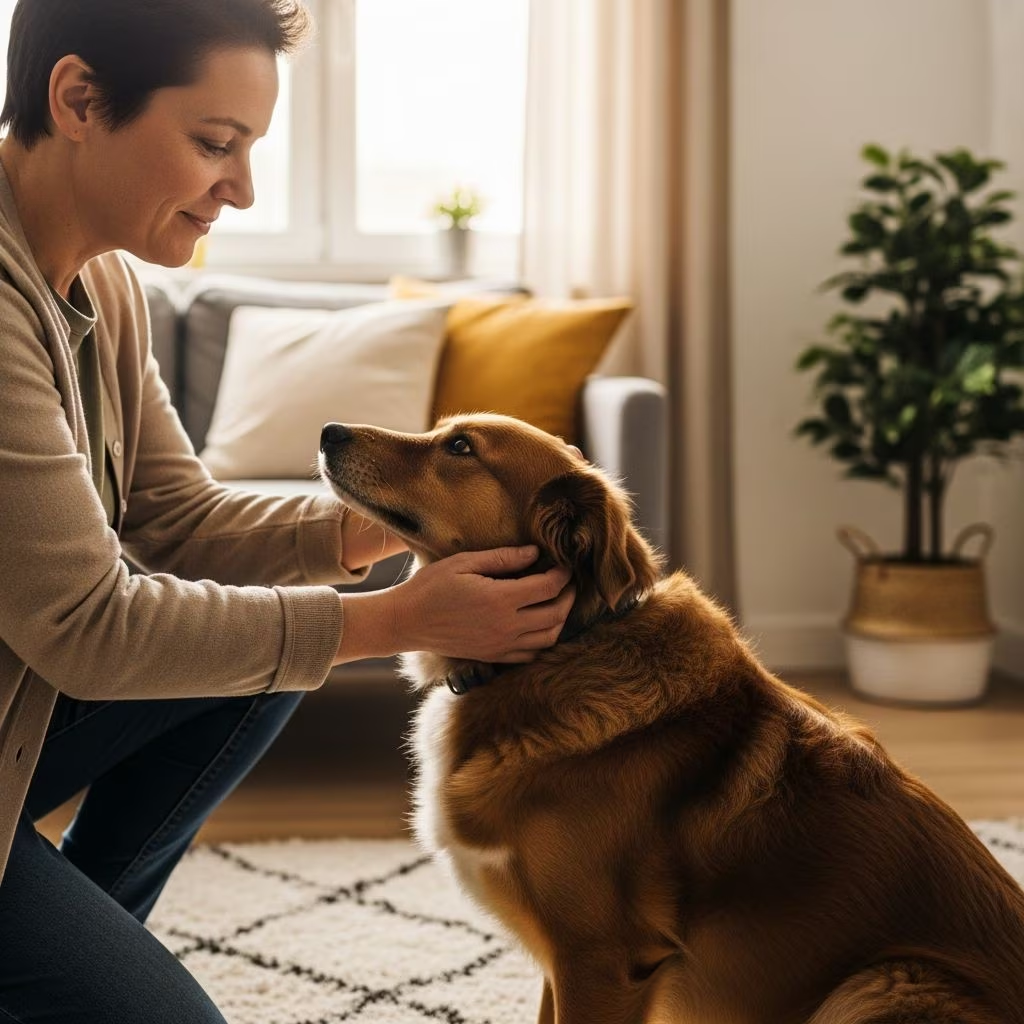
Dogs are incredibly forgiving creatures, but that doesn’t mean they don’t feel the impact of our mistakes. Whether you yelled in frustration, stepped on a paw accidentally, or left them alone too long, knowing **how to apologise to your dog** can restore harmony and deepen your bond. Unlike humans, dogs communicate primarily through body language, tone, and actions rather than words. This guide draws from canine behavior experts to outline practical steps, common dog apology signals, and ways to prevent future mishaps.
Do Dogs Understand Apologies?
Yes, dogs can understand apologies when delivered in their language. Research on canine behavior shows they respond to human tone, facial expressions, and gestures. A study from Butler University observed dogs in a dog park reconciling after minor fights primarily to reduce stress and uncertainty, not necessarily out of moral remorse. This mirrors human-dog interactions: dogs seek reconciliation to restore safety and affection. They don’t hold grudges like humans but gauge ongoing relationships through consistent positive signals.
Understanding this helps owners respond appropriately. Dogs process “apologies” as reassurance that the pack leader (you) is not a threat. Ignoring their signals or punishing further can increase anxiety, while calm reconnection promotes forgiveness.
Signs Your Dog is ‘Apologising’ to You
Before apologising, recognise when your dog is trying to make amends. Dogs exhibit specific body language to de-escalate tension after mischief, often in response to your reaction rather than innate guilt. These submissive or appeasement gestures aim to calm you and reaffirm the bond.
- Lowering head and airplane ears: The dog drops its head low and flattens ears against the head, signaling submission and acknowledgment of the misdeed to avoid punishment.
- Avoiding eye contact or hiding: Retreating to a crate or corner gives space, saying “I know I was wrong; let’s cool down”.
- Tail tucking: A tucked tail indicates recognition of error and submission, similar to wolf pack dynamics.
- Puppy dog eyes: Soft, wide eyes release oxytocin in humans, melting hearts and mending bonds.
- Licking your face or hands: Grooming behavior shows affection and seeks reassurance.
- Sticking close or nuzzling: Pressing against you like a child seeking comfort expresses loyalty despite the mistake.
- Pawing at you: Placing a paw on your leg or arm adorably asks, “Do you still love me?”.
- Whining: A soft whine, inherited from wolves, signals submission to rejoin the pack.
- Bringing a toy: Offering a favorite toy as a peace gesture invites play to diffuse tension.
These aren’t true guilt but adaptive responses to restore peace. Acknowledging them calmly reinforces trust.
How to Apologise: Step-by-Step Guide
To effectively say sorry, use a “dog apology protocol” focusing on non-verbal cues. Avoid yelling or staring, as these mimic threats. Instead, follow these evidence-based steps synthesised from behaviorist insights.
- Calm your energy first: Dogs mirror emotions. Take deep breaths to lower your stress; they sense cortisol spikes.
- Approach slowly at their level: Crouch down with soft eyes and open palms to appear non-threatening.
- Use a gentle, high-pitched voice: Say “I’m sorry” in soothing tones—dogs respond to pitch over words.
- Offer physical reassurance: Pet gently if they accept, focusing on chest or ears.
- Give treats or play: Positive reinforcement shifts focus to joy, accelerating reconciliation.
- Give space if needed: If they avoid, respect it—pushing prolongs stress.
This protocol works because it reduces uncertainty, much like dog park reconciliations where both parties spend more time together post-conflict.
Best Ways to Say Sorry to Your Dog
Here are targeted methods tailored to common scenarios:
| Scenario | Apology Method | Why It Works |
|---|---|---|
| Yelled during frustration | Sit quietly, offer a treat, speak softly | Counteracts fear response; rebuilds safety |
| Accidentally hurt them | Crouch, gentle pets, check for injury | Reassures physical and emotional security |
| Left alone too long | Extra playtime, puzzle toys upon return | Compensates separation anxiety with enrichment |
| Ignored their signals | Mimic their appeasement: soft eyes, yawns | Matches canine communication |
Incorporate these daily for proactive bonding.
Common Mistakes When Apologising to Dogs
Avoid these pitfalls that undermine your efforts:
- Using angry tones: Even “sorry” sounds punitive if growled.
- Too much eye contact: Staring feels confrontational.
- Punishing past errors: Dogs live in the moment; rubbing noses in messes confuses them.
- Ignoring their signals: Dismissing avoidance prolongs tension.
- Inconsistent actions: Apologising then repeating mistakes erodes trust.
Behaviorists note punishment often elicits appeasement displays mistaken for guilt, worsening anxiety.
Science Behind Dog Forgiveness
Dogs forgive quickly to minimise stress, per Butler University research on 177 dogs over eight months. After 14 minor fights, both aggressors and victims reconciled by increasing proximity, driven by stress reduction—not status or deep relationships. This aligns with wolves: submission whines prevent banishment. Oxytocin from puppy eyes and licks bonds humans and dogs evolutionarily. Kinship experts emphasise reconciliation signals the incident is over, not predicting future behaviour. Thus, consistent positive apologies prevent escalation in multi-dog homes or with owners.
Building a Stronger Bond Post-Apology
Apologies are opportunities for growth. Train with positive reinforcement: reward good behaviour to preempt issues. Daily routines like walks and training sessions build resilience. If conflicts persist, consult certified behaviourists like CAABs. Track progress: note triggers and responses in a journal.
Long-term, understanding pack dynamics fosters empathy. Dogs view us as family; apologies reaffirm leadership through kindness.
Frequently Asked Questions (FAQs)
Q: Do dogs really feel guilt?
A: No, displays like puppy eyes are appeasement responses to your cues, not moral guilt.
Q: How long does it take a dog to forgive?
A: Often immediately with proper apology; stress reduction happens fast in reconciliations.
Q: What if my dog keeps avoiding me after apology?
A: Give more space, then retry calmly—persistent avoidance may signal deeper anxiety; seek a vet.
Q: Can I apologise with just treats?
A: Treats help but pair with calm body language for full effect.
Q: Do puppies apologise differently?
A: Yes, more play bows and zooming, as they’re less attuned to submission.
Final Thoughts on Apologising to Your Dog
Mastering dog apologies transforms mishaps into bonding moments. By tuning into their world of tails, ears, and eyes, you communicate love effectively. Patience and consistency yield a joyful, trusting companion. Start today—your dog is waiting for that gentle crouch and soothing word.
References
- The Art Of Dog Apology: How Our Pooches Say Sorry — Dogington Post. 2023-05-15. https://www.dogingtonpost.com/the-art-of-dog-apology-how-dogs-say-sorry/
- After a Fight, Do Dogs Forgive? — Kinship (Butler University study by Melissa Shyan-Norwalt, PhD). 2023-08-22. https://www.kinship.com/dog-behavior/after-fight-do-dogs-forgive
- How to Say Sorry So Your Dog Actually Gets It — Kinship (Lisa Bowman, Newcastle University contributor). 2024-02-10. https://www.kinship.com/author/lisa-bowman



