

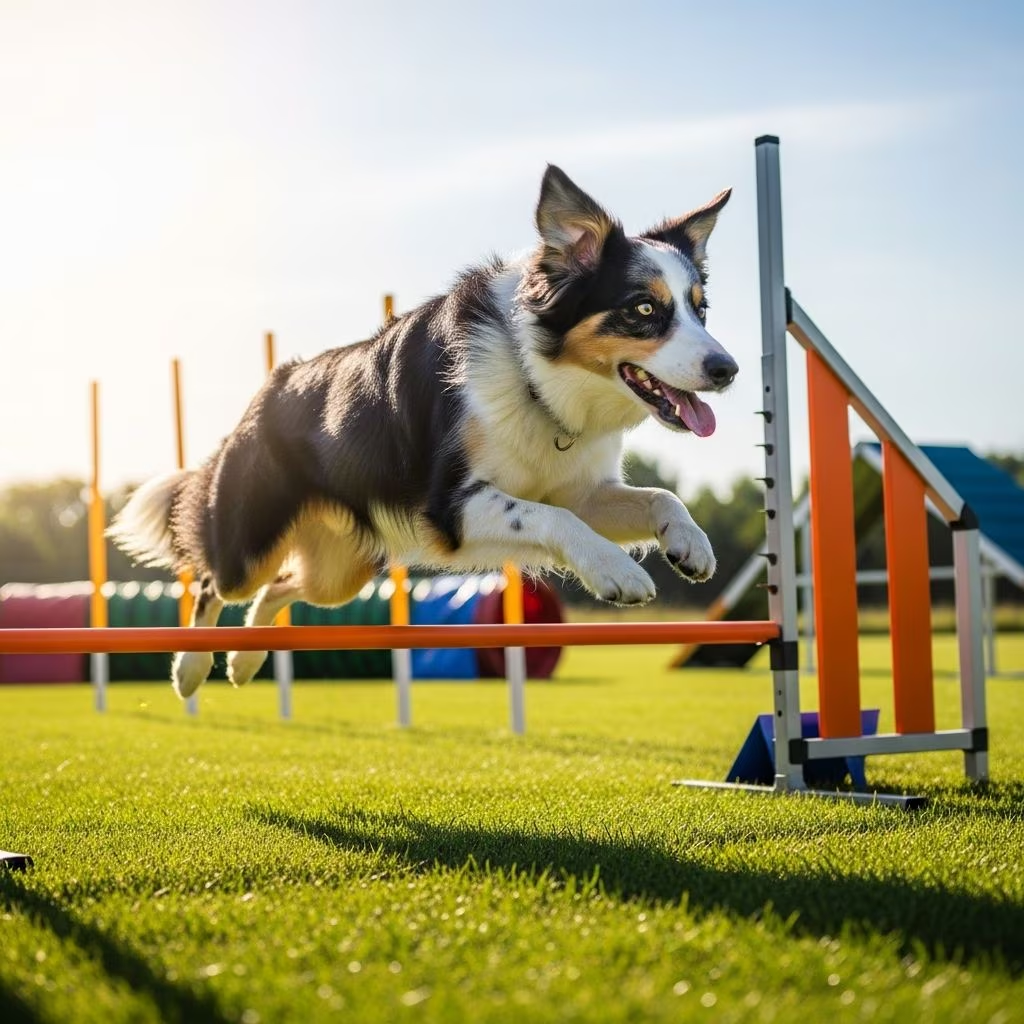
Dog agility training is a dynamic sport where you and your dog navigate an obstacle course together, enhancing physical fitness, mental sharpness, and your mutual bond. This guide covers everything from benefits and equipment to starting classes and indoor exercises, making it accessible for any dog owner.
What is Agility Training?
Agility training involves teaching your dog to maneuver through an obstacle course under your verbal directions while you guide from the side, fostering a seamless partnership between handler and dog. It’s not limited to competitions like those at Westminster; you can practice in your backyard using household items like tunnels, hoops, or even weaving through your legs.
The sport emphasizes speed and accuracy, with the fastest clean runs winning in professional settings. For casual fun, it provides endless opportunities to challenge your dog physically and mentally without needing advanced skills upfront.
5 Benefits of Dog Agility Training
Agility offers multifaceted advantages for dogs and owners alike. Here are the key benefits:
- Physical and Mental Exercise: Unlike simple walks, agility engages both body and mind as dogs navigate over, under, around, and through obstacles while responding to cues, providing comprehensive stimulation suitable for any eager breed—not just high-energy ones like Border Collies.
- Healthy Weight and Mobility: Training promotes body awareness, especially rear-end control for precise movements, supporting long-term joint health and agility. Trainers emphasize safe techniques to build enduring mobility.
- Refresh Basic Commands: It reinforces fundamentals like sit, down, watch me, and stay using positive reinforcement, rebuilding confidence with treats and praise.
- Stronger Handler-Dog Bond: Working as a team deepens trust and communication, turning training into quality time filled with fun and success.
- Confidence Building: Overcoming challenges boosts your dog’s self-assurance, especially for shy or reactive pups, when introduced gradually in low-stress environments.
How to Get Started
Begin with a positive-reinforcement-based local class to learn proper techniques safely. Avoid “balanced training” methods involving force or corrections, as they undermine trust and enjoyment. Progress at your dog’s pace: nervous dogs might start with one obstacle, using treats and toys lavishly.
Key prerequisites include basic obedience for focus, but agility is beginner-friendly. Private sessions suit dog-reactive pets, starting on familiar ground.
Choosing an Agility Class
Expert Julia Lane from Spot On K9 Sports recommends evaluating three factors:
- The Environment: Opt for spacious, distraction-free spaces with adjustable equipment sized to your dog’s height and build.
- The Instructor: Seek certified pros using reward-based methods, with experience matching your goals (fun vs. competition).
- The Dogs: Match class dynamics to your dog’s temperament—introductory groups for social butterflies, privates for shy ones.
Dog Agility Equipment
Standard agility courses feature specialized obstacles, each teaching unique skills. Equipment adjusts by height for fairness and safety. Common pieces include:
- Dog Walk: A narrow elevated plank; dogs cross end-to-end, hitting contact zones (colored areas) at entry/exit ramps for safety.
- A-Frame: Steep ramp climbed up and down, requiring contact zone touches.
- Seesaw: Teeter-totter where dogs ride the tip until it grounds, maintaining contact.
- Pause Table: Elevated platform for sit-stay or down-stay commands.
- Jumps: Bar jumps (hurdles), broad jumps (ground boards), winged jumps, tire jumps, and walls testing height/distance without knock-offs.
- Tunnels: Open tubes for speedy runs; chutes (closed) where dogs blast through fabric.
- Weave Poles: 12 upright poles in a row; dogs enter left-side first, snaking through—a motor skill challenge.
For home use, scale down with broomsticks for jumps or PVC pipes for mini-weaves.
Indoor Agility Training Exercises
No yard? No problem—indoor setups keep skills sharp safely. Focus on creativity with household items, progressing slowly.
Create an Indoor Obstacle Course
Build a sequence like tunnel through a cardboard box, jump pillows, hula hoop leap. Add one obstacle daily up to 5-6. Household staples:
- Couch cushions or poofs for tunnels/landing pads.
- Cardboard boxes for tunnels/jumps.
- Blankets/rough mats for texture training.
Lure with treats initially, then add cues like “tunnel” or “over.” Celebrate wildly.
Indoor Boot Camp
Practice core cues: come, stay, leave it. Short, frequent sessions maintain focus indoors.
Toy Search Game
- Dog sits; place toy visibly.
- Release, reward retrieval.
- Add cues, hide under objects for nosework challenge.
Training Tips for Success
- Master basics first: Obedience ensures attention amid excitement.
- Use high-value rewards: Tailor treats/toys to motivate.
- Adjust for breed/size: Shorter jumps for small dogs.
- Prevent burnout: End on highs, keep sessions 10-15 minutes.
- Safety first: Supervise contacts, warm up to avoid strains.
| Equipment | Beginner Focus | Advanced Challenge |
|---|---|---|
| Tunnel | Enter/exit confidence | Speed bursts |
| Weave Poles | Basic entry | Full 12-pole fluid weave |
| A-Frame | Climbing control | Contact precision at speed |
Frequently Asked Questions (FAQs)
What age can my dog start agility?
Puppies from 12-18 months post-growth plates; adults anytime if healthy. Consult a vet.
Any breed for agility?
Yes! Energy and willingness matter more than breed; mixes excel too.
How often to train?
3-5 sessions weekly, 10-20 minutes each for steady progress without fatigue.
Competition entry?
Pre-enter shows, walk courses beforehand. Start novice classes.
Reactive dog tips?
Private lessons first, desensitize gradually.
References
- 5 Benefits of Dog Agility Training — Kinship. 2023. https://www.kinship.com/dog-behavior/dog-agility-training
- How to get started in Dog Agility | Dog Tips and Tricks — Kennel Club UK (YouTube). 2023-10-15. https://www.youtube.com/watch?v=vkxggodZzqc
- Indoor Agility Obstacle Course for Dogs — Kinship. 2023. https://www.kinship.com/dog-lifestyle/agility-training-exercises-your-dog-can-do-indoors
- Agility – Kinship Dog and Puppy Training — Kinshipdogs.com. 2024. https://kinshipdogs.com/agility



