

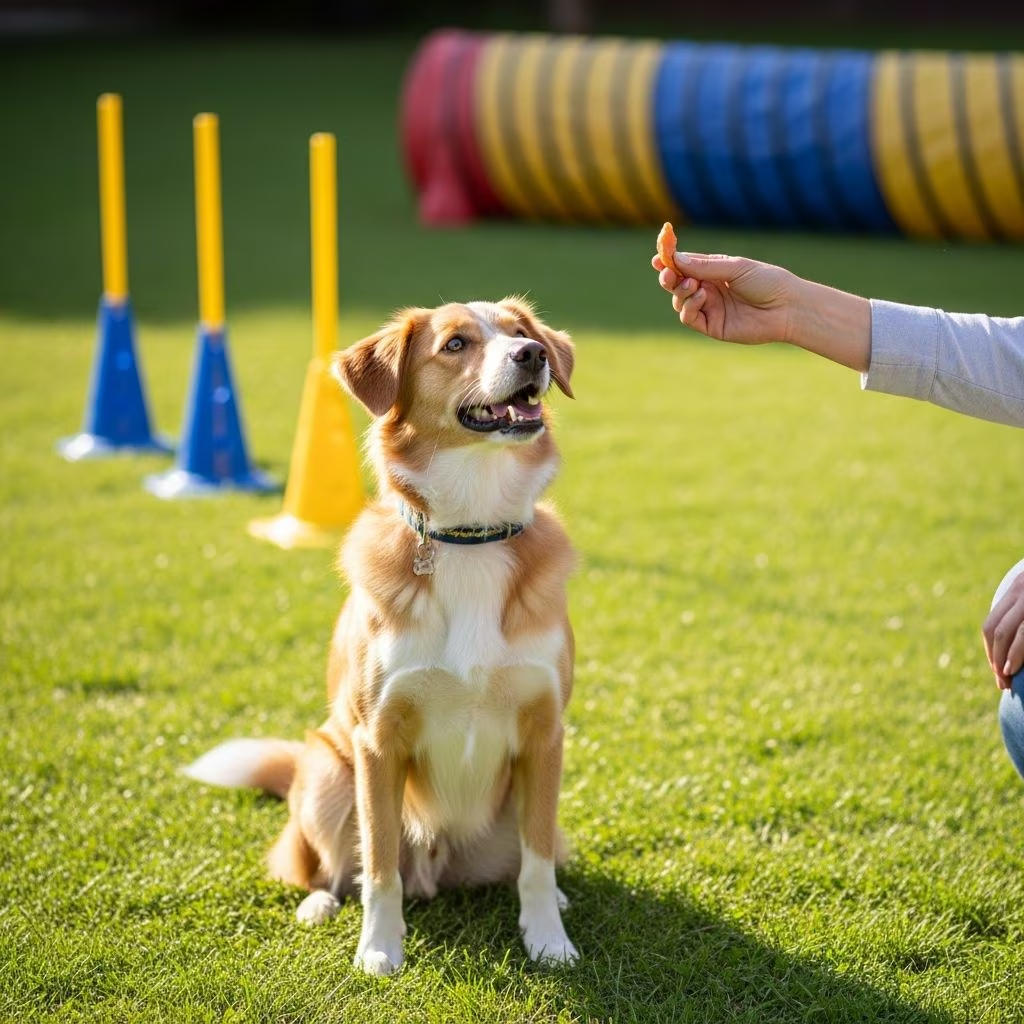
How to Teach Your Dog Essential Skills
Training your dog is one of the most rewarding investments you can make in your pet’s life. Whether you’ve just brought home a new puppy or adopted an adult dog, establishing a solid foundation of basic skills and good behavior creates a stronger bond between you and your furry companion. Beyond obedience, proper training helps prevent behavioral issues, keeps your dog safe, and ensures they can navigate the world confidently. This comprehensive guide covers the essential techniques you need to get started with your dog’s training journey.
Understanding the Basics of Dog Training
Before diving into specific commands and techniques, it’s important to understand the principles that make dog training successful. Modern dog training emphasizes reward-based methods that rely on positive reinforcement rather than punishment or coercion. When your dog associates learning with treats, praise, affection, and play, they become eager participants in the training process rather than reluctant subjects.
The key to successful training is consistency, patience, and clear communication. Your dog needs to understand exactly what behavior you’re rewarding. Every interaction with your dog is a training opportunity, so maintaining consistency across all family members and caregivers is essential. What one person allows, another shouldn’t discourage—otherwise, your dog receives mixed messages that undermine training progress.
Building the Foundation: Essential Skills Every Dog Needs
Establishing foundational skills creates the groundwork for all future training. These basic abilities help your dog understand how to navigate household life and respond to your guidance in various situations. The most important thing to remember is that every dog learns at their own pace, and that’s perfectly acceptable. Some dogs progress quickly through training stages, while others need more time and repetition. The goal is to work at your individual dog’s speed, never rushing the process.
The Importance of Positive Reinforcement
Make every training session a celebration of your dog’s successes. When your dog responds correctly to a command, reward them generously with praise, treats, affection, and toys. Vary your rewards to keep training exciting and engaging. Some dogs are highly motivated by food treats, while others respond better to play or physical affection. Discover what drives your individual dog and use those rewards strategically during training sessions.
Training should be fun for both you and your dog. Take frequent breaks to maintain enthusiasm and prevent mental fatigue. Short, focused training sessions of 5-10 minutes are often more effective than lengthy sessions that leave your dog confused or bored. The positive association you build during these sessions will encourage your dog to seek out training opportunities and eagerly await the next lesson.
Trading: Teaching Your Dog to Exchange Items
One of the most practical skills you can teach your dog is how to trade items. Many dog owners have experienced the frustrating game of “keep away” when their dog grabs something and refuses to return it. This can be comical in some situations but potentially dangerous if your dog has grabbed a hazardous item. Teaching your dog to trade—exchanging a low-value item for a high-value reward—transforms this dynamic and gives you a reliable way to retrieve items safely.
Trading skills are especially valuable for dogs who exhibit resource guarding behaviors or who are simply enthusiastic about grabbing toys from your hands or reluctant to drop items during games of fetch. Dogs can learn to politely exchange toys instead of creating conflicts, making shared activities more enjoyable for everyone.
Preparing for Trade Training
Before you begin teaching trades, assess your dog’s level of guarding behavior. If your dog guards rooms or spaces, shows warning signs like growling or stiff body posture, or has already bitten someone, consult a professional force-free, reward-based dog trainer before attempting this training. Serious guarding behaviors require specialized expertise to address safely.
You’ll need two essential tools for this training: a low-value item and high-value treats. The low-value item should be something your dog hasn’t shown any signs of guarding—perhaps a dog toy they don’t much care for or an item they’ve never shown interest in, such as a book or pencil. Contrast this with high-value treats that your dog absolutely loves and wouldn’t normally have access to. This stark difference in value is what makes the trade appealing.
Step-by-Step Trade Training Method
Step 1: Building Positive Associations
Start by offering your dog high-value treats while they’re focused on eating. Once they’re engaged with the treats, calmly remove the low-value item from their vicinity. If your dog shows interest in you taking away the low-value item, try making a trail of high-value treats leading away from the item to redirect their attention. Repeat this step several times over multiple sessions before progressing. The goal is to help your dog understand that your presence while they have items is associated with good things happening.
Step 2: Simultaneous Trading
Now make the trade simultaneous. Approach your dog and offer high-value treats in one hand while removing the low-value item with your other hand. The key is timing—you want your dog’s attention on the treats rather than on losing the item. Repeat this step multiple times until your dog becomes excited about your approach and naturally disengages from the low-value item on their own. You’ll know you’re making progress when your dog’s body language shows anticipation of the trade rather than defensiveness.
Step 3: Building the Sequence
Now introduce the proper sequence: approach your dog, remove the low-value item, and then offer the treats. If your dog shows no signs of guarding, repeat this step multiple times, waiting a few seconds between removal and reward to help your dog understand the exchange process. If at any point your dog doesn’t seem excited about your approach, return to Step 4 and rebuild enthusiasm before attempting again.
Step 4: Expanding to More Valuable Items
Practice the above steps with a variety of items your dog hasn’t shown any signs of guarding. Gradually work your way up to more valuable items following this progression: a toy your dog isn’t very interested in, then a toy they sometimes play with, then a favorite toy (such as an empty Kong or one containing some low-value treats), and finally a highly-coveted toy (such as a Kong filled with peanut butter or canned food). At any point where your dog doesn’t have an excited response to your approach, return to Step 4 and rebuild positive associations before progressing further.
Step 5: Generalizing the Skill
To help your dog understand that trading can happen anywhere and with anyone, practice in different locations and with different people. Start each new location or person at Step 2, allowing your dog to reestablish the pattern in the new context. The more you practice across various situations, the quicker your dog should progress through each step and generalize the skill to all contexts.
Maintaining Trading Skills
The adage “use it or lose it” applies perfectly to trading skills. Practice trading often to maintain your dog’s understanding and reliability with the behavior. Regular practice sessions keep the skill sharp and reinforce that trading is normal and rewarding. Even brief daily trading sessions can maintain your dog’s proficiency.
Managing High-Value Items During Training
Until your dog reliably demonstrates trading skills, never give them access to high-value objects they shouldn’t have unsupervised access to. If your dog does manage to grab something you need to retrieve, use the distraction method: offer high-value treats far enough away from the object that you can safely remove it without fear of confrontation. Wait until your dog is eating the treats before removing the item. Additionally, teach children never to approach any dog who is eating or has any object, even a toy, without adult supervision and permission.
Training Tips for Success
Successful dog training requires more than just knowing the techniques—it requires the right mindset and approach. Here are essential principles that apply to all dog training scenarios:
Take It at Your Dog’s Pace
Every dog is unique with different learning speeds, comfort levels, and temperaments. If you get stuck on any training step, stop and take a break. When you try again, go back to the previous step in your plan. If necessary, create intermediate steps with intensity and duration that your dog is comfortable with. Never rush your dog through the training process. Patient, gradual progression leads to more reliable, long-lasting learning.
Know When to Seek Professional Help
If your dog shows any serious guarding behaviors or aggression, stop training sessions immediately and consult a force-free, reward-based dog trainer. Professional trainers have the expertise to safely address serious behavioral issues using humane methods. Attempting to address serious behavioral problems without professional guidance can be dangerous for you, your family, and your dog.
Keep Training Sessions Short and Engaging
To keep training fun for your dog and help maintain focus, take frequent breaks and avoid rushing through lessons. Multiple short sessions are more effective than one long session. Dogs have limited attention spans, and mental fatigue can derail training progress. Aim for 5-15 minute sessions depending on your dog’s age and temperament, ending on a positive note when your dog is still enthusiastic.
Practice in Multiple Locations and Contexts
Dogs don’t automatically generalize skills learned in one location to other environments. Practice training in various locations, with different people, and in different contexts. This “proofing” process helps your dog understand that commands apply everywhere, not just during training sessions in a specific room. Start with easier contexts and gradually increase difficulty as your dog demonstrates reliability.
Creating a Training Schedule
Consistency is crucial for successful dog training. Establish a regular training schedule that fits into your daily routine. Many trainers recommend multiple short sessions spread throughout the day rather than one lengthy session. For example, a 5-minute session before breakfast, another before lunch, and a third in the evening provides varied practice without overwhelming your dog or yourself.
Record your progress by noting which steps your dog has mastered and which require more work. This documentation helps you stay consistent and allows you to see progress over time, which can be encouraging during challenging phases of training.
Frequently Asked Questions
Q: How long does it take to teach a dog to trade?
A: The timeline varies based on individual dogs and their previous experiences. Some dogs progress through the steps within a few weeks, while others may need several months. Consistency, patience, and regular practice significantly influence how quickly your dog learns. Work at your dog’s pace rather than rushing through steps.
Q: Can older dogs learn to trade?
A: Absolutely. Dogs of any age can learn to trade using these methods. Adult dogs and senior dogs are fully capable of learning new behaviors. In some cases, older dogs learn faster because they have greater impulse control and focus than puppies.
Q: What should I do if my dog doesn’t seem interested in the treats?
A: Find higher-value rewards. Experiment with different treats to discover what truly motivates your dog. Some dogs prefer fresh chicken, cheese, or commercial high-value treats. You can also use toys, play, or affection as rewards if your dog isn’t food-motivated.
Q: Is trading the same as the “drop it” command?
A: While related, they’re different concepts. “Drop it” means releasing an item immediately. Trading involves exchanging an item for something of greater value. Trading often works better for dogs with resource guarding issues because it’s mutually beneficial rather than feeling like a loss.
Q: Can I use this training method with multiple dogs in the household?
A: Yes, but train each dog individually first to ensure they understand the concept. Once each dog is reliable, you can practice together, but maintain separate training sessions initially to avoid competition and confusion.
Q: What if my dog shows warning signs during training?
A: Stop immediately and consult a professional trainer. Warning signs include stiffening, growling, snarling, or showing teeth. These indicate resource guarding behavior that requires expert intervention to address safely and humanely.
Building a Stronger Bond Through Training
Teaching your dog essential skills does more than create a well-behaved companion—it strengthens the bond between you and your pet. Training sessions are opportunities for positive interaction, communication, and building trust. Your dog learns that you’re a source of good things and that cooperation leads to rewards. This positive relationship foundation benefits every aspect of your life together.
Remember that patience and consistency are your greatest assets in dog training. Celebrate small victories, maintain realistic expectations, and enjoy the journey of helping your dog become their best self. Every dog has unique strengths and learning styles, and respecting those differences leads to the most successful training outcomes.
References
- How to Teach a Dog to Trade — Best Friends Animal Society. 2025. https://bestfriends.org/pet-care-resources/how-teach-dog-trade
- How To Train Your New Dog: Get the Basics — Best Friends Animal Society. 2025. https://bestfriends.org/pet-care-resources/how-train-your-new-dog-get-basics
- Basic Training & Socialization — Best Friends Animal Society. 2025. https://bestfriends.org/pet-care-resources/issues/basic-training-socialization
- Free Pet Care Resources: Health, Training & Rescue Guides — Best Friends Animal Society. 2025. https://bestfriends.org/pet-care-resources
- Dog Training — Best Friends Animal Society. 2025. https://bestfriends.org/pet-care-resources/issues/dog-training



