

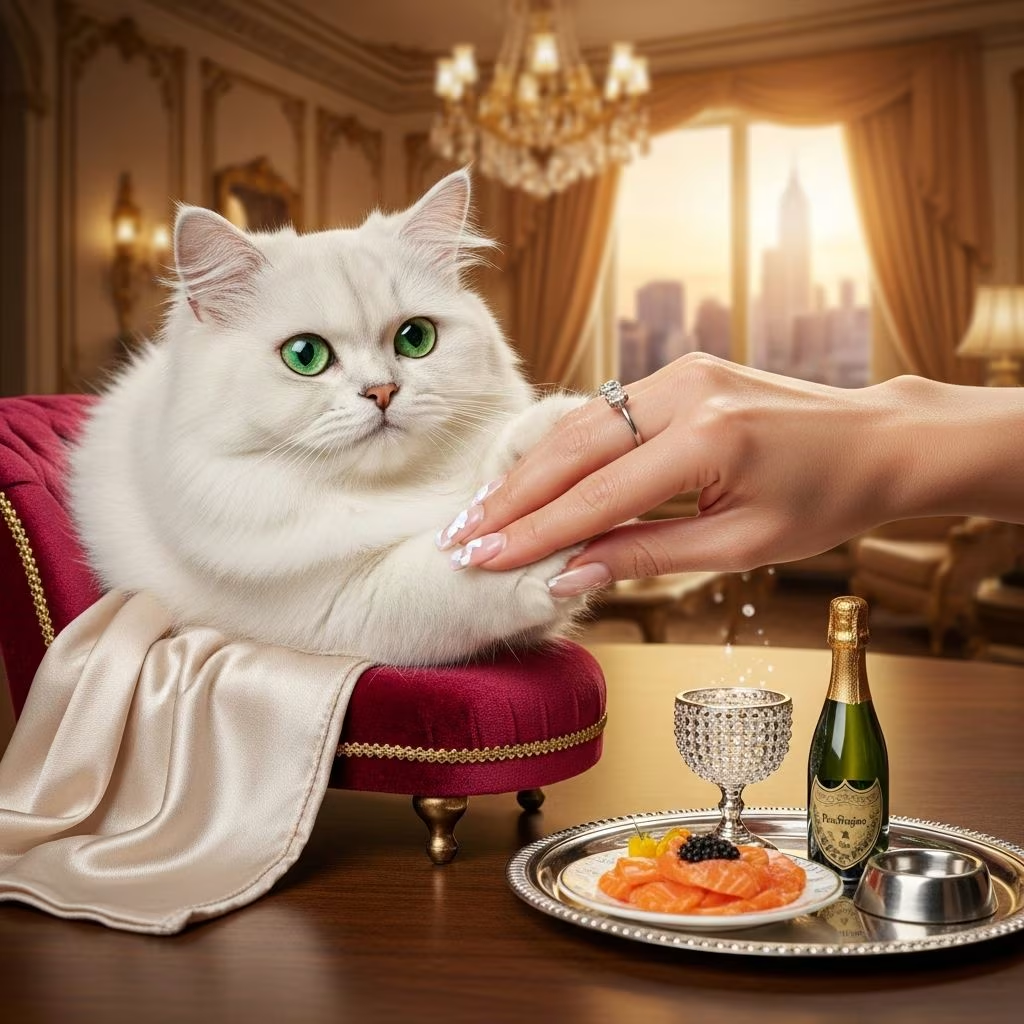
How the Rich Spoil Their Pets: Luxury Lifestyles for the Ultra-Pampered
The gap between the lifestyles of the wealthy and the average person extends far beyond their own luxuries it even encompasses their beloved pets. While most pet owners provide their animals with basic necessities and perhaps the occasional treat, the ultra-rich have transformed pet care into an art form of extravagance. From gold-covered mattresses to personal chefs, from exclusive real estate portfolios to designer accessories, wealthy pet parents are redefining what it means to truly spoil a pet. These furry family members don’t just live comfortably; they live in opulence that rivals or exceeds the lifestyles of most humans. This phenomenon reflects both the deep emotional bonds people share with their pets and the seemingly limitless resources available to the one percent.
Personal Chefs and Gourmet Dining
Perhaps one of the most luxurious amenities a wealthy pet owner can provide is a personal chef dedicated entirely to their animal’s culinary needs. While most pet parents might prepare a simple meal or purchase premium kibble from a specialty store, the ultra-rich employ full-time chefs to create fresh, nutritionally balanced, and delicious meals for their pets. These aren’t just any meals it’s customized dishes prepared with high-quality ingredients, often organic and sourced specifically to meet the pet’s dietary requirements and preferences.
The most famous example of a pet enjoying gourmet dining is Karl Lagerfeld’s Burmese cat, Choupette. The legendary fashion designer didn’t simply feed his feline companion; he ensured she dined like royalty. According to Lagerfeld himself, as Choupette matured, she would sit opposite him at the dinner table and enjoy specially prepared meals. This approach to pet nutrition goes far beyond typical pet food, creating an experience where the pet truly becomes a dining companion rather than simply an animal being fed. For large households with multiple pets, wealthy owners sometimes employ full-time caterers who manage all meal preparation, ensuring that every pet receives cuisine tailored to their unique tastes and nutritional needs.
Luxury Real Estate and Custom Pet Housing
While most pets are content with a simple bed or crate, the pets of the ultra-wealthy enjoy their own dedicated real estate. This includes everything from elaborate dog mansions to separate guest houses designed exclusively for animals. Supermodel Rachel Hunter famously invested in a luxury dog house for her canine companions, while Paris Hilton took things to another level entirely with her two-story “doggie mansion,” a structure that rivals many human homes in size and sophistication.
Kylie Jenner, known for her lavish lifestyle, constructed an entire separate guest house on her property specifically for her dogs, complete with amenities that most humans would find enviable. However, the most extraordinary example of pet real estate wealth involves Gunther, a dog featured in the Netflix series Gunther’s Millions. After inheriting his mother’s fortune German Countess Karlotta Leibenstein’s entire estate Gunther purchased Madonna’s former Miami mansion as his own residence. This $7.5 million estate became the canine mogul’s primary home, showcasing an unprecedented level of real estate wealth for a pet. Beyond his Miami mansion, Gunther reportedly attempted to purchase a Bahamian island once owned by actor Nicolas Cage, further demonstrating his appetite for luxury properties and celebrity real estate.
These pet residences aren’t simply larger versions of standard pet housing. They often include climate control, custom furnishings, entertainment systems, and outdoor spaces designed for comfort and enrichment. Some feature premium bedding, heating elements for winter comfort, and cooling systems for summer heat. The architectural design often complements the owner’s main residence, creating a cohesive aesthetic while providing the pet with a space that exceeds luxury standards.
Designer Accessories and Wearable Technology
The world of luxury pet fashion and technology has exploded in recent years, with wealthy pet owners investing in designer collars, custom clothing, and surprisingly, cutting-edge wearable technology. One of the most notable examples involves Wang Sicong, son of a Chinese billionaire, who purchased not one but two Apple Watches for his dog, Wang Keke. The dog reportedly wore the watches on her front wrists, transforming an already luxurious pet into a tech-savvy companion.
While the social media response to this purchase was mixed, with many criticizing the extravagance, it highlights how the ultra-wealthy are willing to invest in any product or service that might enhance their pet’s lifestyle, regardless of practicality. Beyond smartwatches, wealthy pet owners have been known to purchase expensive cologne for their pets, designer pet carriers, custom-made jewelry, and high-end grooming supplies. Some pets wear clothing from luxury fashion houses, with prices often exceeding hundreds or thousands of dollars per garment.
The trend extends to pet grooming and wellness products as well. Premium pet spas offer treatments including aromatherapy sessions, hydrotherapy pools, and specialized massages. Some wealthy owners invest in home spa facilities for their pets, complete with hot tubs, saunas, and professional grooming stations that rival high-end human spas.
Multi-Million Dollar Inheritances and Financial Provisions
While purchasing luxury items during a pet’s lifetime might seem extravagant, some of the most jaw-dropping examples of pet spoiling occur in estate planning, where wealthy individuals bequeath substantial portions of their fortunes directly to their animals. This practice has become increasingly common, with estate attorneys reporting a noticeable uptick in clients wanting to leave significant wealth to their pets.
The most famous modern example is Karl Lagerfeld’s Burmese cat, Choupette, who inherited a sizable portion of the designer’s $300 million net worth following his death in 2019. However, Choupette is far from the only pet to benefit from such arrangements. Real estate mogul and hotel queen Leona Helmsley left $12 million to her Maltese, Trouble, though a judge later reduced this amount to $2 million at the estate’s request. The Helmsley case set an important precedent in understanding how courts might view pet inheritances.
Other notable examples include:
- Gail Posner, a prominent heiress, left her dogs an $8.3 million mansion in Miami and a $3 million trust fund, ensuring they would live in luxury for the remainder of their lives.
- Oprah Winfrey allocated $30 million in her will specifically for her dogs as of 2007, a provision that may have been adjusted since then.
- Fashion designer Alexander McQueen bequeathed nearly $82,000 to his three English Bull Terriers.
- A Chinese elderly woman decided to leave $2.8 million to her cats and dogs rather than her children.
- Gene Roddenberry’s family created a $4 million pet trust for their poodles and allocated an additional $1 million for a dedicated caretaker.
- Leslie Ann Mandel established a $100,000 trust fund for her 32 cockatiels, to be shared with her dog and cat.
These inheritances aren’t simply financial windfalls; they’re carefully structured legal arrangements often involving trustees, caretakers, and detailed instructions for how the funds should be used to maintain the pet’s lifestyle. Many include provisions for veterinary care, food, housing, and entertainment, ensuring that the pet continues to live in the same luxurious manner even after their owner’s passing.
Comprehensive Pet Care Services and Staff
Maintaining such an extravagant lifestyle for a pet requires dedicated staff and specialized services. Many wealthy pet owners employ full-time caretakers, handlers, and veterinarians who ensure their animals receive constant attention and optimal health care. Some maintain multiple properties with staff at each location, guaranteeing their pets receive seamless care regardless of where the owner is traveling.
These professional teams often include:
- Personal veterinarians available for immediate consultation and house calls
- Dedicated caretakers or nannies responsible for daily care and companionship
- Professional trainers and behaviorists for ongoing development and socialization
- Grooming specialists and stylists who maintain the pet’s appearance
- Security personnel to protect valuable or high-profile pets
- Nutritionists who design specialized meal plans
The Broader Context of Pet Spending Among the Wealthy
The practice of ultra-wealthy individuals spoiling their pets extends beyond individual purchases or inheritances. It reflects broader spending patterns within the luxury pet industry, where premium products and services command exponentially higher prices than standard alternatives. The pet care economy has become increasingly concentrated among the ultra-wealthy, with billionaire-backed companies acquiring major stakes in pet food, veterinary services, pet stores, and digital pet platforms.
Families like the Mars dynasty, worth an estimated $117 billion, have built enormous empires in the pet care sector, controlling thousands of pet-care facilities and multiple pet-food companies. This consolidation means that as pet care becomes more expensive, the wealth extracted from pet owners increasingly flows to a small number of billionaires and private equity firms, further widening the gap between how the ultra-wealthy and average pet owners can care for their animals.
Why the Wealthy Invest So Much in Their Pets
The motivation behind such extravagant pet spending varies, but several factors contribute to this phenomenon. First, pets serve as family members and emotional companions, and wealthy individuals often express their affection through financial investment. Second, pet ownership has become a status symbol, with rare breeds, luxurious care arrangements, and substantial inheritances serving as markers of wealth and sophistication. Third, the very wealthy have simply reached a point where acquiring traditional luxury items has become routine, and investing in unusual categories itcluding pet care becomes a way to showcase creativity and differentiate their lifestyle.
Additionally, as pet ownership has increased across all demographics, millennial and Gen Z pet owners in particular have demonstrated spending behaviors that outpace previous generations, normalizing the concept of substantial pet-related expenditures. For the ultra-wealthy, this trend has simply taken luxury to unprecedented extremes.
The Contrast with Average Pet Ownership
It’s important to note that while the ultra-wealthy are pushing the boundaries of pet luxury, the average pet owner faces an increasingly challenging financial landscape. Pet care costs have risen significantly, with an estimated $123 billion spent on pets in 2021 across American households. However, one in seven American pet parents experiences “pet poverty,” struggling to afford basic veterinary care and necessities for their animals. This stark contrast highlights how pet care has become increasingly stratified, with the wealthy enjoying unprecedented luxury while many ordinary pet owners face difficult choices between their pet’s health care and their family’s financial stability.
Frequently Asked Questions
Q: Can average pet owners provide luxury experiences for their pets without excessive spending?
A: Yes. While high-end options exist, pet owners can provide enrichment through DIY projects, budget-friendly activities, quality time, and thoughtful care without matching billionaire-level expenditures. Many pets thrive with simple attention and basic comfort rather than designer accessories.
Q: Are pet inheritances legally binding and enforceable?
A: Pet trusts are legal in most jurisdictions and can be enforced through the court system. However, courts may reduce excessively large bequests or require verification that funds are used appropriately for the pet’s care and maintenance.
Q: Do pets actually need personal chefs and luxury housing to be healthy and happy?
A: No. Pets primarily need proper nutrition, veterinary care, exercise, mental stimulation, and companionship. While luxury items can enhance comfort, basic quality care is sufficient for excellent health and happiness.
Q: What is the most expensive item a wealthy person has purchased for a pet?
A: While it’s difficult to identify a single “most expensive,” real estate holdings and multi-million dollar inheritances represent the largest financial commitments. Gunther’s Miami mansion purchase at $7.5 million is among the most documented examples.
Q: Is pet spoiling increasing among the wealthy?
A: Yes. Estate attorneys have reported an uptick in wealthy individuals wanting to bequeath substantial portions of their wealth to their pets, suggesting this trend is growing among the ultra-affluent.
References
- Why the wealthy are leaving their fortune to their pets Robb Report Singapore. 2019. https://robbreport.com.sg/wealthy-pet-heirs/
- The 10 Most Jaw-Dropping Items the Ultra-Rich Buy Their Pets Kinship. 2024. https://www.kinship.com/pet-lifestyle/how-the-rich-spoil-pets
- The Billionaire Oligarchs Are Coming for Your Pets The Nation. 2022. https://www.thenation.com/article/society/oligarchy-pets-corporations-capitalism/
- Are Pets Only for the Rich? Survey Says 1 in 7 Pet Parents Experience Pet Poverty Kinship. 2024. https://www.kinship.com/news/pet-poverty-cost-survey



