

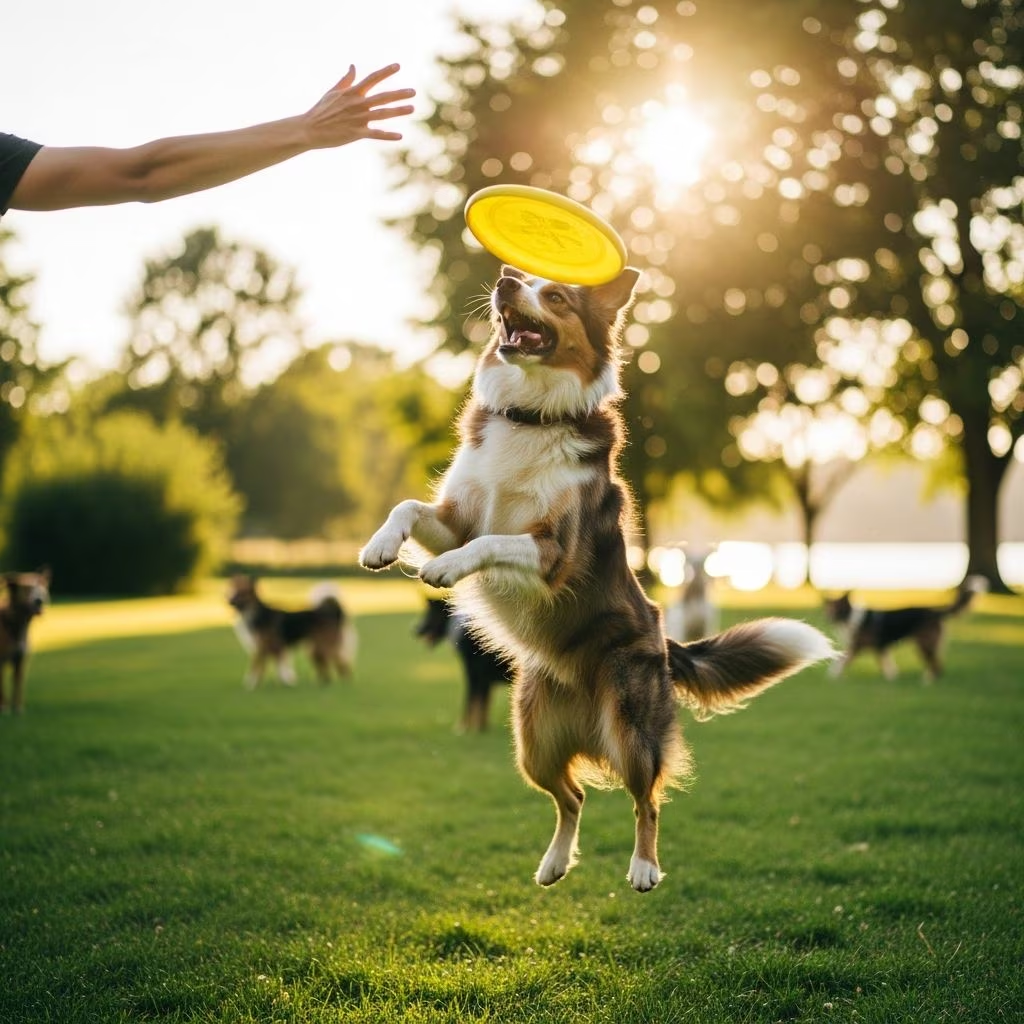
For many pet parents, playtime and training feel like two separate activities: one is for fun, the other is for teaching manners. Modern research in canine learning suggests these activities are deeply connected. When used strategically, play can help your dog learn faster, remember skills longer, and enjoy training more.
Dog trainers have long recommended using play to help dogs “take the edge off” before a class or practice session. Today, new evidence about how play impacts the brain, nervous system, and memory is reshaping how we think about the timing and role of play in dog training.
The Traditional “Play-Before-You-Train” Approach
For decades, many group classes and private trainers have suggested a simple routine: play with your dog before training, then arrive at class with a calmer, more focused companion. The idea is straightforward: a dog who has burned off some energy is less likely to be wild, distracted, or frustrated when it is time to learn.
Common pre-training games include:
- Tug of war with a favorite toy
- Fetch with a ball, disc, or soft toy
- Chase or recall games in a safe, enclosed area
- Short sniff-and-explore walks to release excitement
These activities help many dogs arrive at class or practice in a more relaxed emotional state. Lower arousal often means it is easier to keep a dog’s attention, respond to cues, and avoid conflict or frustration between dog and human.
Why Calmer Dogs Learn More Easily
From a learning perspective, overly excited or anxious dogs struggle to concentrate on tasks. Studies in animals and humans show that high stress or extreme arousal can reduce working memory and make it harder to form stable memories. A moderately calm dog is more able to:
- Notice and respond to cues from their person
- Recover from small mistakes without shutting down
- Stay engaged over multiple repetitions
- Benefit from food, toys, or praise as reinforcement
Using pre-training play to reach that “sweet spot” of calm focus has been part of standard advice for many years. But newer research suggests that what happens after a learning session may be just as important as how your dog arrives at class.
Studying Post-Learning Play: What the Science Shows
In 2017, researchers led by Dr. Nadja Affenzeller explored how play immediately after training affected dogs’ memory of what they had just learned. The team worked with a small group of adult Labrador Retrievers and used a simple but mentally challenging task to test learning and retention.
The Discrimination Task
Each dog was taught to distinguish between two clearly different objects:
- A blue basket filled with woodchips
- A green box filled with kitty litter
To perform the task correctly, a dog needed to choose the specific object associated with a reward, usually by moving toward it and indicating a clear choice. Researchers refined the task until each dog could reliably pick the target item according to pre-set success criteria.
Once the dogs demonstrated that they had learned the discrimination task, they were split into two groups with very different post-training routines.
The Play Group vs. The Rest Group
| Group | Post-Training Activity (30 minutes) | Goal |
|---|---|---|
| Play Group | 10 minutes on-leash walking 10 minutes of off-leash play (fetch, disc, or tug) 10 minutes on-leash walking | Maintain moderate physical and mental arousal through play |
| Rest Group | Quiet rest with their person and a researcher in the room, minimal interaction or stimulation | Encourage relaxation and low arousal |
To verify that the two groups were truly experiencing different physiological states, researchers measured:
- Salivary cortisol levels, a hormone associated with stress and arousal
- Heart rate, a marker of autonomic nervous system activity
These measurements confirmed that the play group showed higher arousal during the post-training period, while the rest group remained relaxed.
Results After 24 Hours
When the dogs were tested again on the discrimination task 24 hours later, the dogs who had played after learning did better at remembering what they had been taught. Specifically, the post-training play group:
- Reached the success criteria again with fewer trials
- Made fewer errors while relearning the task
- Showed signs of stronger retention of the original training
The rest group could relearn the task, but it took more attempts and included more mistakes. This finding suggested that an active, playful cool-down period after learning might stabilize or consolidate the memory of the lesson in the brain.
Expanding Training Success: One-Year Follow-Up
Dr. Affenzeller and colleagues later conducted a follow-up study examining how long the effects of post-training play might last. The same dogs that took part in the first experiment, including Labrador Retrievers like Max and Poppy, were tested again about one year later to see how well they remembered the discrimination task.
What Happened After a Year?
Each dog was again presented with the familiar blue basket and green box. The question: how quickly could they regain the same level of performance they had achieved at the end of the original training?
The researchers found striking differences between the two groups:
- Dogs that had played after training reached their previous success level in about 23 trials on average.
- Dogs that had rested after training needed about 50 trials on average to reach the same criterion.
- The play group also made notably fewer errors across those relearning trials than the rest group.
In other words, the dogs who had enjoyed a structured play session right after learning seemed to have a more durable, long-term memory of the task—lasting up to a year.
Why Post-Training Play May Help Memory
The research points toward the role of the sympathetic nervous system and certain brain structures in strengthening memories. Exciting, enjoyable activity increases the release of hormones and neurotransmitters such as adrenaline and norepinephrine, which are known to influence how memories are consolidated.
In both humans and animals, emotional arousal can enhance the storage of new information in brain regions like the amygdala and hippocampus, which are involved in emotion and memory formation. The heightened but positive arousal triggered by play may signal the brain to “tag” the just-learned information as important, making it easier to recall later.
Why Behavioral Training Matters So Much
Improving how well dogs remember training is not just an academic concern. Good everyday behavior—such as coming when called, walking politely on leash, or settling calmly around visitors—is a major factor in how people feel about life with their dogs.
Research on companion dogs shows that:
- Owner satisfaction with their dog is strongly linked to the dog’s behavior and responsiveness.
- Dogs with better-managed behavior are more likely to stay in their homes and less likely to be relinquished to shelters.
- Using positive, reward-based methods (food, toys, play, praise) is associated with better welfare and fewer signs of fear or aggression.
One study of shelter and companion dogs found that dogs who received consistent training and behavioral support were more likely to be retained in their homes, and owners reported fewer problematic behaviors. This underscores how crucial effective training is for a dog’s quality of life.
Training, Bonding, and Quality of Life
Training is more than a set of cues; it is also an important part of building the human–dog bond. When guardians feel competent and successful in guiding their dog’s behavior, they tend to report:
- Stronger emotional attachment to their dog
- Lower frustration and stress in daily interactions
- More enjoyment during shared activities such as walking or play
Integrating play into this process turns training from a chore into a collaborative game. That shift has positive effects on both ends of the leash.
How Play and Food Enhance Training Outcomes
Formal enrollment in obedience or manners classes alone does not guarantee that an owner will end up satisfied with their dog’s behavior. However, when guardians learn how to use appropriate rewards—especially play and food—as part of humane, positive training methods, outcomes tend to improve.
Why Rewards Matter
From a learning theory perspective, behaviors that are followed by enjoyable consequences are more likely to be repeated. In practical dog training, those enjoyable consequences usually include:
- Food rewards (treats, kibble, or special snacks)
- Play (tug, fetch, chase, or other games the dog loves)
- Social interaction (praise, petting for dogs that enjoy touch)
Combining these rewards allows trainers and pet parents to match reinforcement to the dog’s preferences and the difficulty of the task. Numerous studies support the welfare and training benefits of reward-based methods over punishment-focused approaches.
Play as a Powerful Reinforcer
Play does more than entertain. For many dogs, interactive games with their person are as—or more—motivating than food. Play can be used to:
- Reinforce recalls, sits, and other cues with a quick game of tug or fetch
- Help dogs generalize skills to distracting environments by making training itself feel like a game
- Provide mental and physical exercise while practicing self-control
This aligns with broader guidance from canine behavior experts, who recommend turning training into play whenever possible to keep sessions short, fun, and rewarding.
Practical Tips: Using Play to Boost Your Dog’s Training
Pet parents can apply the insights from these studies without recreating the lab environment. With a bit of structure, everyday play can support both new learning and long-term memory.
Before Training: Calming the Energy
Use a short burst of play to help your dog settle into a more focused state:
- Play 5–10 minutes of fetch or tug, then transition to a calm walk
- Avoid winding your dog up to the point of frantic excitement
- End pre-training play with a simple cue like “all done” and a brief rest
During Training: Make Learning a Game
Incorporate playful elements into your lesson:
- Use quick tug games as a reward for coming when called
- Turn heeling practice into a “follow me” chase game
- Intermix fun tricks with basic manners to keep sessions light
After Training: Protect the Play Window
Right after a dedicated learning session, try adding a short period of structured activity, similar to the research design:
- 5–10 minutes of relaxed walking
- 10–15 minutes of your dog’s favorite interactive play
- Another few minutes of walking or gentle movement
Within your dog’s physical limits, this pattern may help consolidate what they have just learned and make those lessons easier to recall later.
Frequently Asked Questions (FAQs)
Q: Does play always need to come after training for better memory?
A: Research suggests that a period of enjoyable, physically active play immediately after learning can support memory consolidation, but play before and during training also has benefits for focus and motivation. The key is using play in a way that keeps arousal positive, not overwhelming.
Q: How long should post-training play sessions be?
A: The study used a total of about 30 minutes (alternating walking and play). In everyday life, most dogs can benefit from 10–20 minutes of light to moderate activity after training, adjusted for age, health, and fitness.
Q: Can older dogs still benefit from play-based training?
A: Yes. Research and practical experience indicate that older dogs can continue to learn new skills, and playful, reward-based training helps keep their minds active and strengthen the bond with their guardians.
Q: What if my dog gets too excited during play to focus on training?
A: Choose lower-intensity games (short sniffy walks, gentle tug, or slower fetch), keep play intervals brief, and insert calm breaks. The goal is moderate, positive arousal, not frantic overexcitement.
Q: Are food rewards still necessary if I use play?
A: For most dogs, a combination of food and play works best. Food is often easier to deliver frequently and precisely, while play provides powerful social and emotional reinforcement. Using both gives you more flexibility and can improve overall training success.
References
- Playing With Dogs Improves Their Training Success — Kinship. 2021-08-11. https://www.kinship.com/dog-behavior/play-improves-dog-training-success
- McGaugh JL. Memory—a century of consolidation — Science. 2000-01-14. https://www.science.org/doi/10.1126/science.287.5451.248
- Blackwell EJ et al. The relationship between training methods and the occurrence of behavior problems, as reported by owners, in a population of domestic dogs — Journal of Veterinary Behavior. 2008-07-01. https://doi.org/10.1016/j.jveb.2007.10.008
- Nagasawa M et al. The role of dogs is associated with owner management practices — Scientific Reports. 2024-05-31. https://www.ncbi.nlm.nih.gov/pmc/articles/PMC11557872/
- Can You Actually Teach an Old Dog New Tricks? — Adopt a Pet. 2022-04-20. https://www.adoptapet.com/blog/behavior-training/can-old-dogs-learn-tricks



