
How Old Is My Cat In Human Years: Complete Guide
Discover how to accurately calculate your cat's age in human years using proven formulas.
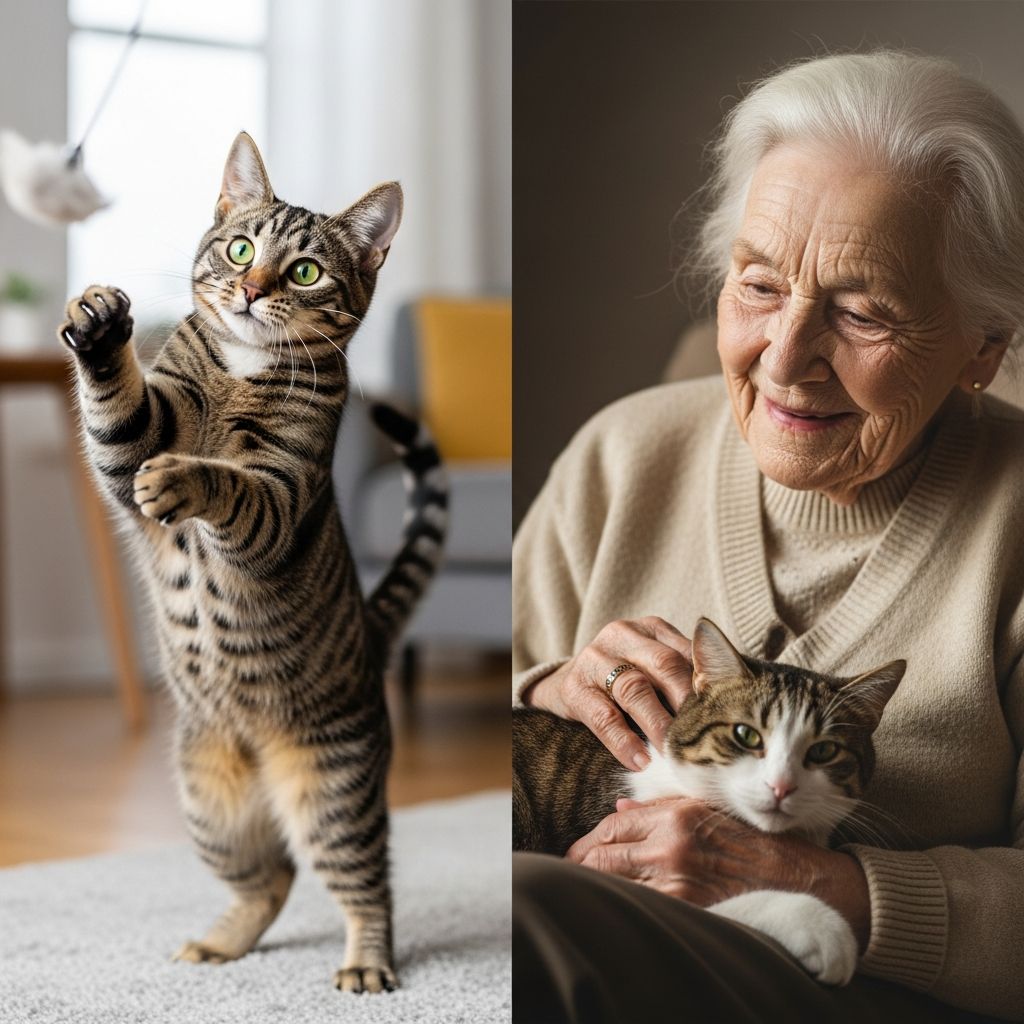
How Old Is My Cat in Human Years
One of the most common questions cat owners ask is how old their feline companion is in human years. While many people grew up hearing that one cat year equals seven human years, this calculation is actually inaccurate and oversimplifies how cats age. Understanding your cat’s true age in human years can help you provide better care, anticipate health needs, and appreciate the different life stages your pet goes through.
The Myth of the Seven-Year Rule
The popular belief that one cat year equals seven human years is a misconception that has persisted for decades. This simplistic formula fails to account for the reality of how cats mature and age throughout their lives. The truth is that cats age much more rapidly during their early years and then slow down as they get older, making the conversion far more complex than a simple multiplication.
If the seven-year rule were accurate, a one-year-old kitten would be equivalent to a seven-year-old human child. However, by that age, kittens have already reached physical and sexual maturity, making them much closer to a teenager or young adult in human development stages. This fundamental difference highlights why a more sophisticated calculation method is necessary to accurately determine your cat’s age in human years.
Understanding How Cats Age
Cats develop at a dramatically different rate than humans, particularly in their first two years of life. The aging process accelerates during kittenhood and early adulthood, then gradually slows as cats reach their senior years. This non-linear aging pattern means that each cat year does not consistently equal the same number of human years.
During the first year of life, kittens experience rapid physical and behavioral development. They grow from completely dependent newborns to independent hunters and social animals. This intense developmental period corresponds to approximately 15 human years of growth and maturation. By their second year, cats continue to mature but at a somewhat slower pace, adding about 9 more human years to their age equivalent.
After the second year, the aging process stabilizes considerably. Each subsequent cat year is roughly equivalent to 4 human years. This more moderate rate of aging continues throughout a cat’s adulthood and into their senior years, making it much easier to calculate for older cats compared to young kittens.
The Accurate Cat Age Conversion Formula
To calculate your cat’s age in human years accurately, follow this proven formula that accounts for the different aging rates across your cat’s lifespan:
For Cats Less Than Two Years Old
If your cat is less than two years old, use the following calculation method:
- First year: Multiply your cat’s age by 15 to get the human year equivalent
- Second year: Add 9 additional human years to the first year total
For example, if your kitten is 6 months old, multiply 6 months by 1.25 (since 15 human years divided by 12 months equals 1.25 human years per month). This gives you approximately 9 human years for a 6-month-old kitten.
For Cats Two Years Old and Older
Once your cat reaches two years of age, the calculation becomes simpler. Add 4 human years for each additional calendar year after the first two years. For a 5-year-old cat, for example, you would calculate: 24 human years (for the first two cat years) plus 12 human years (3 additional cat years multiplied by 4), equaling 36 human years.
Cat Age to Human Year Conversion Chart
For quick reference, use this comprehensive conversion chart to find your cat’s age in human years:
| Cat’s Age | Human Years Equivalent |
|---|---|
| 1 month | 1.5 years |
| 3 months | 4.5 years |
| 6 months | 9 years |
| 9 months | 12 years |
| 1 year | 15 years |
| 18 months | 21 years |
| 2 years | 24 years |
| 3 years | 28 years |
| 4 years | 32 years |
| 5 years | 36 years |
| 6 years | 40 years |
| 7 years | 44 years |
| 8 years | 48 years |
| 9 years | 52 years |
| 10 years | 56 years |
| 11 years | 60 years |
| 12 years | 64 years |
| 13 years | 68 years |
| 14 years | 72 years |
| 15 years | 76 years |
| 16 years | 80 years |
| 17 years | 84 years |
| 18 years | 88 years |
| 19 years | 92 years |
| 20 years | 96 years |
Factors That Affect How Cats Age
While the conversion formula provides a good general estimate, individual cats may age at slightly different rates depending on various factors. Understanding these variables can help you better assess your specific cat’s aging process.
Genetics and Breed
Some cat breeds are predisposed to live longer than others. Certain breeds may age more slowly or quickly than the average cat. Genetic factors inherited from parents can influence how rapidly a cat ages and their overall lifespan potential.
Lifestyle and Environment
Indoor cats typically live longer than outdoor cats because they face fewer environmental hazards and health risks. Cats living in safe, controlled environments with minimal stress tend to age more slowly than those exposed to harsh conditions or constant danger.
Diet and Nutrition
Proper nutrition plays a crucial role in how cats age. Cats fed high-quality diets with appropriate nutrients age more gracefully and maintain better health throughout their lives. Poor nutrition can accelerate aging and lead to premature health problems.
Healthcare and Preventive Medicine
Regular veterinary checkups, vaccinations, and preventive care help cats live longer, healthier lives. Cats receiving consistent medical attention may age more slowly and experience fewer age-related health issues compared to cats with irregular veterinary care.
Weight Management
Obesity can accelerate aging in cats by increasing stress on organs and joints, promoting inflammation, and contributing to various health conditions. Maintaining a healthy weight helps cats age more slowly and live longer, more comfortable lives.
Understanding Cat Life Stages
Knowing your cat’s age in human years helps you understand which life stage they’re in and what care they need at each phase. The conversion also helps identify when your cat transitions into senior years, when health monitoring becomes even more important.
Kittens (Birth to 1 Year)
During this stage equivalent to 0-15 human years, kittens experience rapid growth and development. They’re learning essential life skills, becoming independent, and reaching sexual maturity. Kittens require specialized nutrition, vaccinations, and socialization during this critical period.
Young Adults (1-3 Years)
Cats aged 1-3 years old (equivalent to 15-28 human years) are in their prime physical condition. They’re fully developed, energetic, and independent. This is an excellent time for training and establishing healthy habits that will benefit them throughout their lives.
Mature Adults (3-6 Years)
In this stage, equivalent to 28-40 human years, cats are fully adult and established in their personalities. They remain active and healthy but should begin having more regular health screenings to catch potential issues early.
Senior Cats (7-10 Years)
Cats in their senior years (equivalent to 44-56 human years) may begin showing signs of aging. They might become less active, develop arthritis, or experience changes in appetite or litter box habits. Regular veterinary visits become increasingly important during this stage.
Geriatric Cats (10+ Years)
Geriatric cats, aged 10 years and older (equivalent to 56+ human years), require specialized senior care. Health conditions become more common, and cats may need dietary adjustments, more frequent veterinary visits, and environmental modifications to maintain comfort and quality of life.
Why Accurate Age Calculation Matters
Understanding your cat’s true age in human years is more than just an interesting calculation. It has practical implications for pet care decisions. Knowing your cat’s human age equivalent helps you anticipate health issues that commonly develop at certain life stages, choose appropriate toys and activities for their energy level, and adjust their nutrition to meet changing needs.
For veterinary purposes, communicating your cat’s age in both cat years and human year equivalents helps veterinarians provide age-appropriate medical recommendations. Senior cats require different preventive care protocols and screening tests than younger adults, making accurate age assessment crucial for optimal health management.
Frequently Asked Questions
Q: Is one cat year really equal to seven human years?
A: No, this is a common misconception. Cats age much more rapidly in their first two years (equivalent to 24 human years combined), then age approximately 4 human years per calendar year afterward. The seven-year rule significantly underestimates young cats’ ages while overestimating older cats’ ages.
Q: How can I calculate my kitten’s age in human years if I only know the month?
A: For kittens under one year old, multiply their age in months by 1.25 to get a rough human year equivalent. For example, a 4-month-old kitten would be approximately 5 human years old. This provides a more precise calculation than rounding to full years.
Q: Do all cats age at the same rate?
A: While the conversion formula provides an accurate general estimate for most cats, individual cats may age slightly differently based on genetics, breed, health status, diet, and lifestyle. Indoor cats typically age more slowly than outdoor cats due to fewer health hazards.
Q: At what age is my cat considered senior?
A: Cats are generally considered senior around age 7 (equivalent to 44 human years), though some sources suggest age 8-10 depending on individual health and vitality. Senior cats benefit from more frequent veterinary checkups and age-appropriate care adjustments.
Q: Can I calculate human age in cat years?
A: Yes, the conversion works in reverse. Subtract 1 from a human’s age, multiply by 3, and divide by 19 for ages under 40. For ages 40 and above, subtract 40, divide by 4, and add 6 to get the approximate cat year equivalent.
Q: Why do cats age faster in their first two years?
A: Cats undergo rapid physical and behavioral development during their first two years. They grow from helpless kittens to independent adults capable of hunting and reproducing. This accelerated development is why the first two years account for 24 human years of equivalent aging.
Q: How does neutering or spaying affect cat aging?
A: Spaying and neutering don’t change how we calculate cat age, but these procedures may contribute to longer lifespans by reducing stress-related hormones and preventing reproductive cancers, potentially slowing some aspects of biological aging.
References
- Cat Age Calculator — Omni Calculator. 2025. https://www.omnicalculator.com/biology/cat-age
- Cat Years to Human Years Calculator & Lifespan Charts — Holistapet. 2025. https://www.holistapet.com/pages/cat-years-to-human-years
- Cat Age Chart: Calculating Cat Years to Human Years — Chewy Education. 2025. https://www.chewy.com/education/cat/general/cat-age-chart-in-human-years
- Cat Age Calculator: How Old Is My Cat in Human Years — Litter-Robot Blog. 2025. https://www.litter-robot.com/blog/how-to-convert-your-cats-age-to-human-years/
- How to Tell Your Cat’s Age in Human Years — International Cat Care. 2025. https://icatcare.org/articles/how-to-tell-your-cats-age-in-human-years
- Cat Years Calculator: How Old is my Cat in Human Years — Purina UK. 2025. https://www.purina.co.uk/articles/cats/senior/care/cats-age-in-human-years
Similar Articles








Read full bio of Sneha Tete




