

How Often to Take Your Puppy Out: A Complete Guide
Bringing home a new puppy is an exciting milestone, but it comes with significant responsibilities. One of the most important aspects of puppy care is establishing a consistent outdoor schedule. Understanding how often to take your puppy outside is crucial for successful housebreaking, proper physical development, and mental well-being. This comprehensive guide covers everything you need to know about puppy outdoor schedules, from potty breaks to exercise and socialization.
Understanding Your Puppy’s Potty Needs
Puppies have very different bathroom needs compared to adult dogs. Young puppies cannot hold their bladders for extended periods, and establishing a predictable potty schedule is essential for housebreaking success. The frequency of outdoor potty breaks depends primarily on your puppy’s age, with younger puppies requiring significantly more frequent breaks than older puppies.
Age-Based Potty Schedule Guidelines
The general rule for puppy potty breaks is straightforward: a puppy can typically hold their bladder for one hour per month of age, plus one additional hour. This means an eight-week-old puppy can hold their bladder for approximately three hours, while a twelve-week-old puppy can manage about four hours. However, this is the maximum holding capacity, not the recommended interval between breaks.
For optimal housebreaking results, puppies should be taken outside much more frequently than their maximum holding capacity suggests. Here is a practical breakdown:
- 8 to 12 weeks old: Take your puppy outside every 2 hours during the day, plus immediately after waking up, after meals, after playtime, and before bedtime. Nighttime can be more challenging; expect to take your puppy out 1 to 2 times during the night.
- 3 to 4 months old: Increase the interval to every 3 hours during the day, with consistent breaks after meals and activity. Nighttime accidents should decrease as bladder control improves.
- 4 to 6 months old: Most puppies can manage 4 to 5 hours between breaks. Continue the routine of breaks after meals, play sessions, and before bedtime.
- 6 months and older: Puppies approaching adult age can typically go 6 to 8 hours between potty breaks, though consistency remains important for reinforcing good habits.
Critical Times for Potty Breaks
Regardless of age, certain times are universally important for taking your puppy outside:
- Immediately after waking up from sleep or naps
- Within 15 to 30 minutes after eating or drinking water
- After play sessions or exercise
- Before bedtime
- Whenever your puppy shows signs of needing to go, such as sniffing, circling, whining, or scratching at the door
Exercise Requirements for Puppies
Beyond potty breaks, puppies need regular outdoor time for physical exercise and mental stimulation. However, over-exercising young puppies can cause serious, lifelong injuries to developing bones and joints. The key is finding the right balance between adequate activity and protecting your puppy’s growing body.
Safe Exercise Guidelines by Age
Veterinary research on canine growth and puppy development recommends no more than 5 minutes of hard, strenuous exercise per month of age, twice a day. This means an eight-week-old puppy should have no more than 10 minutes of vigorous activity twice daily. As your puppy grows, you can gradually increase exercise duration while maintaining this conservative approach.
Exercise needs go beyond just running around. A well-rounded exercise routine for puppies should include:
- Exposure sessions: Short outings to introduce your puppy to new sights, sounds, and smells in a controlled manner
- Decompression walks: Low-impact exploring on a long leash with a back-clip harness, allowing your puppy to move at their own pace
- Mental exercise: Training sessions, brain games, puzzle toys, chewing, licking, and sniffing activities
- Supervised playdates: Short play sessions with appropriate matches, though puppies can become overstimulated quickly
- Cool-down routines: Time to settle and relax after stimulating activities to prevent hyperactivity and biting
Activities to Avoid Until Maturity
Certain activities should wait until your puppy is fully grown. Extended hiking and dog agility are best postponed until your puppy’s growth plates have fully closed, typically between 12 and 18 months depending on breed. Additionally, teach puppies to navigate stairs slowly, touching each step carefully, rather than allowing them to bounce down quickly.
Socialization and Exposure Outings
Frequent outdoor time provides essential socialization opportunities during your puppy’s critical developmental period. Young puppies exposed to a variety of environments, people, and other animals early in life typically develop into more confident and well-adjusted adult dogs. However, the quality and controlled nature of these exposures matter more than the quantity.
Neighborhood Walks and Controlled Exposure
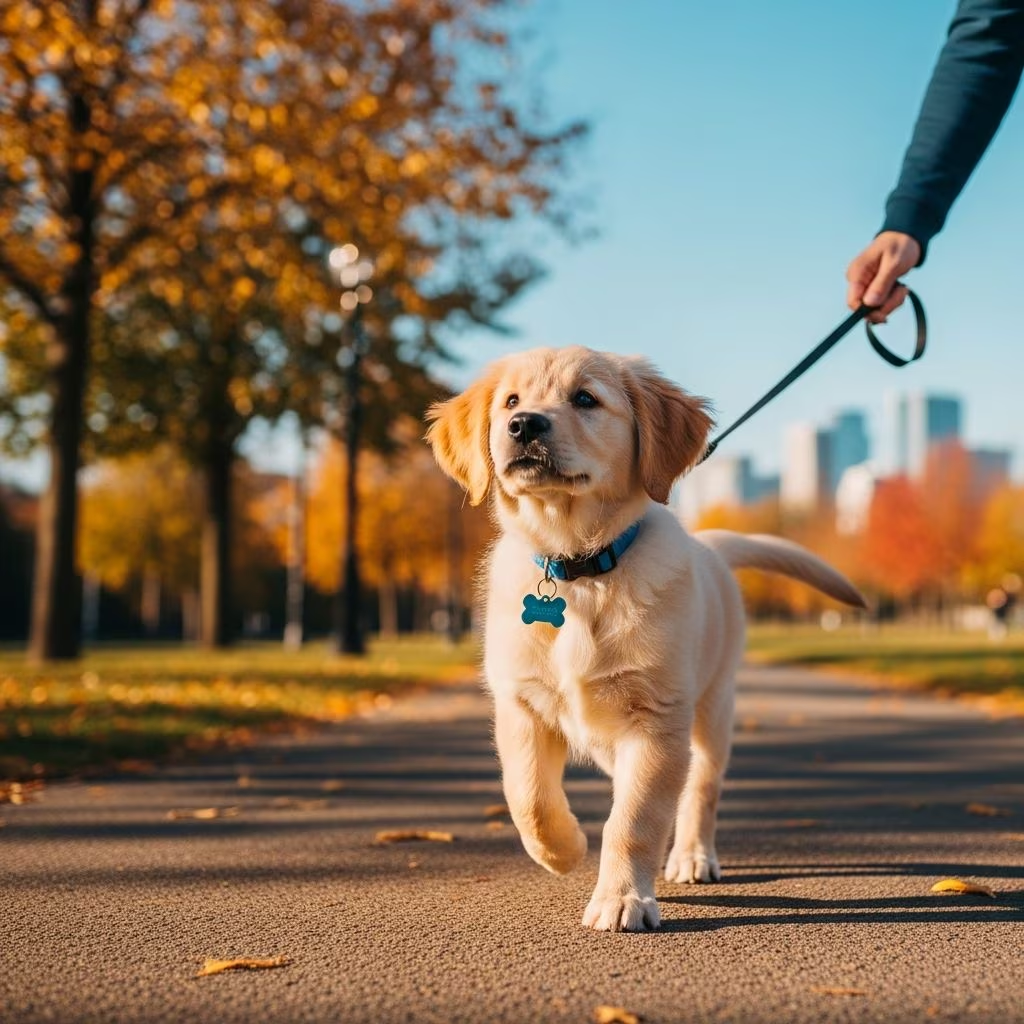
Neighborhood walks are more complex than they initially appear. Your puppy needs leash training skills to prevent pulling, confidence about the world, and the ability to process the many stimuli typically found in neighborhoods. Some puppies can become overstimulated very quickly, lasting only 3 to 4 minutes before showing signs of stress or excessive excitement.
Watch for signs of overstimulation, including pouncy, bouncy behavior, excessive barking, jumping, or difficulty settling. If your puppy shows these signs during outings, reduce the duration and frequency of stimulating activities and focus instead on quieter decompression walks and mental enrichment indoors.
Establishing a Consistent Daily Schedule
Consistency is one of the most powerful tools in puppy training. A predictable schedule helps puppies learn when and where they should eliminate, reduces anxiety, and supports faster housebreaking success. Here is a sample daily schedule for a young puppy:
- First thing in the morning: Immediate potty break outside
- After breakfast: Potty break within 15 to 30 minutes
- Mid-morning: Short decompression walk or gentle play
- Scheduled potty break: Every 2 to 3 hours depending on age
- After lunch: Potty break within 15 to 30 minutes
- Afternoon: Mental exercise and training, followed by potty break
- Late afternoon: Short exposure session or controlled outdoor time
- After dinner: Potty break within 15 to 30 minutes
- Evening: Calm indoor time and training
- Before bedtime: Final potty break and cool-down
- During the night: 1 to 2 additional breaks as needed based on age and bladder control
Training and Mental Enrichment Outdoors
Outdoor time provides excellent opportunities for training and mental stimulation. Research on dog training frequency shows that dogs trained one to two times a week learn new behaviors faster than dogs trained daily, suggesting that quality and consistency matter more than frequency. Training sessions should be short, lasting two to five minutes, and conducted twice daily for optimal results.
Mental exercise is just as important as physical exercise for puppies. During outdoor time, incorporate training games, expose your puppy to new environments, and allow them to engage in natural behaviors like sniffing and exploring. Post-training play may extend a dog’s memory of previously learned behaviors by up to a year, making playtime an integral part of the learning process.
Weather Considerations and Seasonal Adjustments
Weather can significantly impact your puppy’s outdoor schedule. During extremely hot or cold weather, puppies are more susceptible to temperature extremes than adult dogs. In frigid conditions, limit outdoor exposure time and consider providing protective gear. During hot weather, take breaks during the coolest parts of the day and ensure constant access to fresh water. Wet or muddy conditions may require additional baths and careful monitoring for paw health.
Signs Your Puppy Needs More or Less Outdoor Time
Every puppy is unique, and individual needs may vary. Watch for these signs that your puppy’s outdoor schedule may need adjustment:
- Excessive indoor accidents: May indicate insufficient potty break opportunities or that you need to take your puppy out more frequently
- Hyperactivity and destructive behavior: Often indicates insufficient physical or mental exercise
- Anxiety or fearfulness: May suggest over-exposure to overstimulating environments or insufficient time to decompress
- Excessive sleepiness or lethargy: Could indicate over-exercise or health issues requiring veterinary attention
- Difficulty settling: Suggests inadequate cool-down time after stimulating activities
Common Mistakes to Avoid
Many well-meaning puppy parents make common mistakes that delay housebreaking or create behavioral problems. Avoid these pitfalls:
- Inconsistent schedules: Varying outdoor times makes housebreaking significantly more difficult
- Over-exercising: Too much vigorous exercise can cause lifelong injuries to growing bones and joints
- Insufficient outdoor time: Lack of early outdoor activity can lead to timid, unconfident adult dogs
- Punishing accidents: Punishment after the fact confuses puppies and may increase anxiety
- Ignoring overstimulation signs: Pushing puppies beyond their limits can create fearful or reactive behaviors
Frequently Asked Questions
Q: How many times a day should I take my puppy outside?
A: The frequency depends on your puppy’s age. Young puppies (8-12 weeks) need outdoor breaks every 2 hours during the day, plus additional breaks after meals, play, and before bedtime. As puppies grow, you gradually increase the interval between breaks. By 6 months, most puppies can manage 4-5 hours between breaks.
Q: Can puppies hold their bladder overnight?
A: Young puppies cannot hold their bladder for extended periods at night. Most puppies need 1-2 nighttime breaks until approximately 4-5 months of age. Bladder control gradually improves with maturity. Expect some nighttime accidents as a normal part of development.
Q: What if my puppy won’t eliminate outside?
A: If your puppy doesn’t eliminate during a scheduled outdoor break, bring them back inside and try again in 15-30 minutes. Avoid playing or giving attention until they’ve eliminated. Use a consistent verbal cue and reward immediately when they go outside.
Q: Is it safe to take my puppy on long walks?
A: Extended walks and hiking should wait until your puppy is fully grown. Stick to the 5-minutes-per-month-of-age rule for vigorous exercise. Shorter decompression walks on a loose leash are preferable to long, strenuous walks for young puppies.
Q: How can I tell if my puppy is getting enough exercise?
A: A well-exercised puppy should be calm and settled indoors, not destructive or hyperactive. They should also sleep well. If your puppy is constantly hyper and destructive, they may need more mental or physical exercise, but always balance this with age-appropriate guidelines to avoid injury.
Q: What should I do if my puppy shows signs of overstimulation?
A: Signs of overstimulation include pouncy, bouncy behavior, excessive excitement, or difficulty settling. If you notice these signs, shorten outdoor sessions, incorporate quiet decompression walks, and focus on calming activities. Allow your puppy time to decompress and settle after stimulating activities.
References
- Puppy Training 101: How to Train a Puppy — Kinship. 2025. https://www.kinship.com/dog-behavior/puppy-training
- How to use Positive-Reinforcement to Train Your Dog — Kinship. 2025. https://www.kinship.com/dog-behavior/positive-reinforcement-dog-training
- How Much Exercise Does a Puppy Need Daily — Kinship/How to Train a Dream Dog. 2025. https://www.youtube.com/watch?v=QlrnvFHuVRQ
- Stop Puppy Zoomies! 6 Tricks to Calm Your Pup — Kinship. 2025. https://www.kinship.com/video/stop-puppy-zoomies-6-tricks-to-calm-your-pup



