

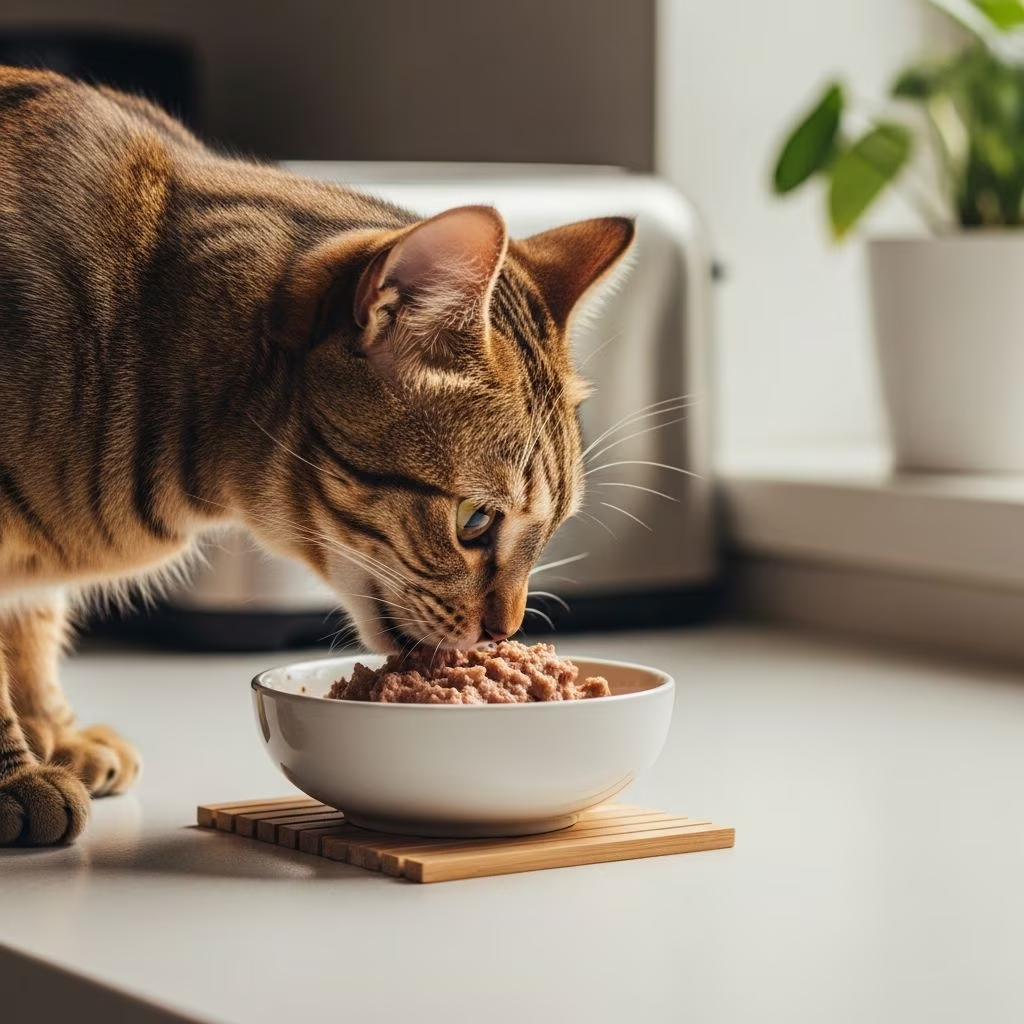
Determining the right amount of wet food for your cat involves considering factors like age, weight, activity level, and health status. General guidelines suggest adult cats need about 1-2 servings per 5 pounds of body weight daily when fed exclusively wet food, but always consult your veterinarian for personalized advice.
Why Wet Food? The Benefits for Cats
Wet cat food offers significant advantages over dry kibble, primarily due to its high moisture content, which is around 70-80% water. Cats evolved as desert dwellers with low thirst drives, so they often don’t drink enough water from bowls. Wet food helps prevent dehydration, supports urinary tract health by diluting urine, aids digestion, and reduces risks of crystals or stones.
For cats prone to obesity, kidney disease, or constipation, wet food’s lower calorie density per volume makes portion control easier while providing essential hydration. Studies from veterinary sources emphasize that increased moisture intake correlates with better overall health outcomes in felines.
- Hydration boost: Mimics natural prey moisture, crucial since cats drink 50-100ml daily on average but need more for health.
- Urinary health: Reduces concentrated urine, lowering FLUTD (Feline Lower Urinary Tract Disease) risks.
- Digestion: Higher water content softens stool, preventing constipation.
- Palatability: Strong aroma appeals to picky eaters or those with dental issues.
- Weight management: Cats feel fuller on less calories compared to dry food.
How Much Wet Food Does Your Cat Need?
The exact amount varies by the cat’s size, life stage, and food’s calorie content. Most cans are 3-5.5 oz (85-156g), with feeding guides on labels. A standard 10-pound adult cat might need 2-4 servings (about 12-20 oz) daily if solely on wet food, equating to 200-300 calories.
Calculate based on resting energy requirements (RER): For adults, RER = 30 x body weight (kg) + 70, then multiply by activity factor (1.2-1.4 for neutered indoor cats). Consult labels, as brands like Farmina recommend 3.25 cans (2.46 oz each) for a 10-lb cat.
| Cat Weight (lbs) | Daily Wet Food (cans of 3 oz) | Approx. Calories | Notes |
|---|---|---|---|
| 5 (kitten/active) | 3-3.5 | 300-400 | Higher needs for growth. |
| 10 (adult average) | 3-4 | 250-350 | Adjust for activity. |
| 15 (large/overweight) | 4-5 | 350-450 | Monitor for weight loss. |
| 20 (obese) | 4-5 (low-cal) | 300-400 | Vet-supervised diet. |
This table uses average 80kcal/3oz can; always check specific product.
Wet Food for Kittens: Age-Appropriate Guidelines
Kittens have higher energy needs (2-3x adult RER). Introduce wet food at 3-4 weeks by mushing with formula or water in shallow dishes. By 6-8 weeks, transition to solids fully, feeding 3-4 meals daily.
For an 8-week-old 2-lb kitten: 4-6 small meals totaling 8-12 oz wet food. Monitor weight gain (4-8 oz weekly). Use kitten-specific formulas for DHA and higher protein.
Transitioning Kittens to Wet Food
Start gradually: Mix 1 tbsp wet food with formula. Offer multiple daily sessions. Watch for acceptance—some lap, others dip faces initially. Separate multiples to ensure equal intake; track weights daily.
Wet Food for Adult Cats: Daily Portions and Schedules
Adults thrive on 2-3 meals daily, spaced 8-12 hours apart, mimicking hunting. For a 10-lb cat: Divide 12-16 oz into 2 meals (morning/evening). Avoid free-feeding to prevent grazing and obesity.
Active cats may need 10-20% more; indoor spays/neuters less. Weigh monthly and adjust.
Wet Food for Senior Cats: Adjustments for Age
Seniors (11+ years) often need senior formulas with joint support, lower phosphorus for kidneys. Reduce to 80-90% of adult calories if sedentary. A 10-lb senior: 2.5-3 cans daily, split into 3 meals for easier digestion.
Increase moisture for chronic kidney disease (CKD); wet food supports renal function.
Mixing Wet and Dry Food: Best Ratios
A mix provides variety, dental benefits from kibble, and hydration from wet. Common ratios:
- 3:1 wet:dry – Primary wet for moisture.
- 2:1 wet:dry – Balanced hydration.
- 1:1 – Equal nutrition.
- 1:2 wet:dry – Dry dominant with hydration boost.
Example: 8-lb cat needs 3/4 cup dry daily. At 3:1, feed 1/4 cup dry + equivalent wet calories (about 2/3 can). Mix thoroughly to coat kibble, enticing eaters.
How to Transition Your Cat to Wet Food
Abrupt changes cause digestive upset. Over 7-10 days:
- Days 1-3: 25% new wet + 75% old food.
- Days 4-6: 50/50 mix.
- Days 7-9: 75% wet + 25% old.
- Day 10: 100% wet.
Monitor for vomiting/diarrhea, common with moisture increase. Coat dry with wet initially.
Feeding Schedule: Optimal Timing and Tips
Best: 2-3 meals/day. Indoor cats: 7 AM, 3 PM, 10 PM. Use puzzle feeders for mental stimulation; exercise post-meals.
- Provide fresh water always—fountains encourage drinking.
- Store opened cans in fridge (3 days max); warm slightly for aroma.
- Avoid overfeeding: Measure precisely.
- Annual vet checks for weight/health tweaks.
Frequently Asked Questions (FAQs)
Can I feed my cat only wet food?
Yes, if complete and balanced. It excels in hydration but costs more; monitor dental health.
How often should I feed wet food?
2-3 times daily for all-wet diets; once/twice if mixed.
What’s the best ratio of wet to dry food?
2:3 wet:dry generally, but vet-customized.
When can kittens eat wet food?
From 3-4 weeks, gradually.
Does wet food help with cat weight loss?
Yes, high volume/low calories promotes satiety.
Key Takeaways for Cat Owners
Prioritize quality (AAFCO-approved), measure portions, observe body condition (ribs palpable, waist visible). Wet food’s hydration edge makes it ideal for most cats, especially health-compromised ones. Partner with your vet for tailored plans.
References
- Feeding Your Cat — Cornell University College of Veterinary Medicine. 2017-10-16. https://www.vet.cornell.edu/departments-centers-and-institutes/cornell-feline-health-center/health-information/feline-health-topics/feeding-your-cat
- How Much Wet Food Should You Feed Your Cat? — PetMD. 2023. https://www.petmd.com/cat/nutrition/how-calculate-how-much-wet-food-feed-cat
- How to Transition a Cat to New Food — Adopt a Pet / Cornell Feline Health Center. 2023. https://www.adoptapet.com/blog/health/how-to-transition-cat-food
- When Can a Kitten Eat Wet Food? — Kinship. 2024. https://www.kinship.com/cat-nutrition/when-can-a-kitten-eat-wet-food
- What Is the Best Feeding Schedule for Cats? — Kinship. 2024. https://www.kinship.com/cat-nutrition/best-feeding-schedule-cats



