

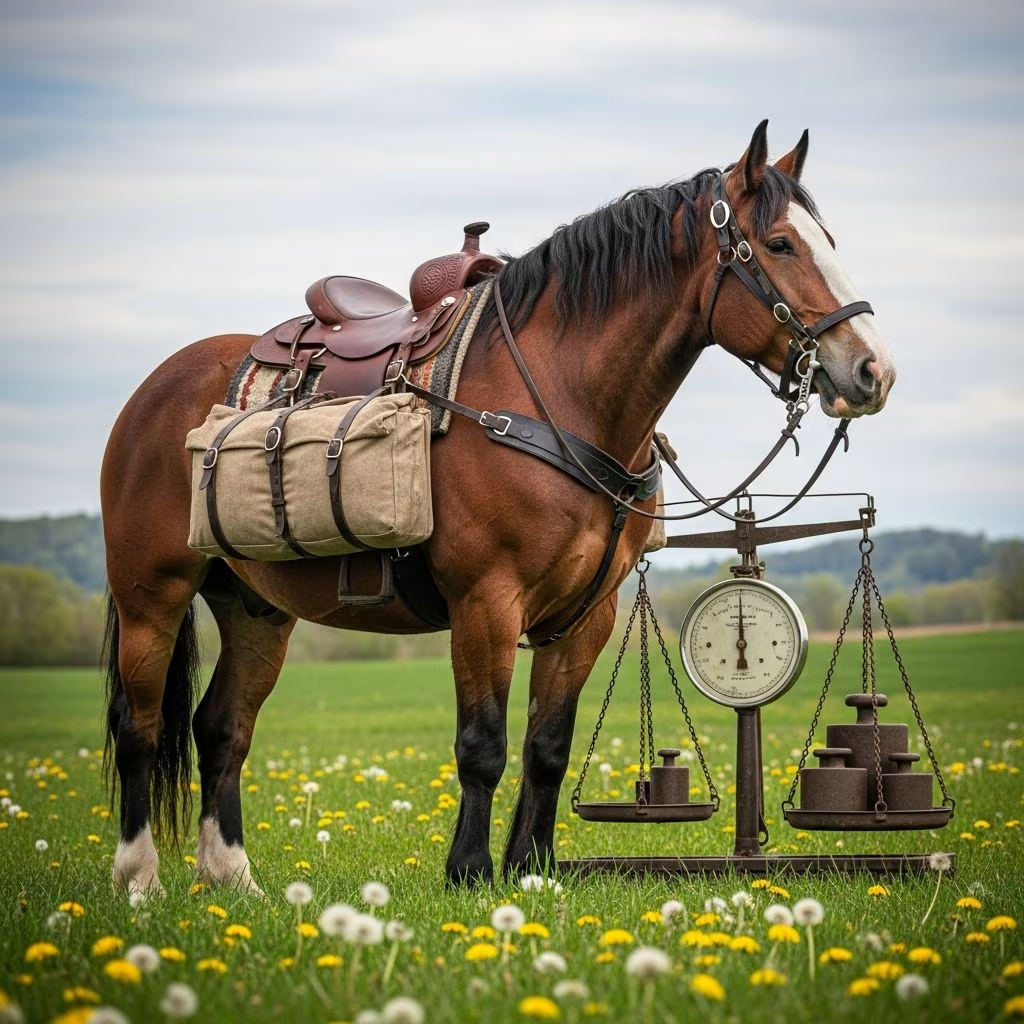
How Much Weight Can a Horse Carry?
One of the most important questions horse owners and riders must consider is how much weight their horse can safely carry. Whether you’re a new rider looking for an appropriate mount or an experienced equestrian managing multiple horses, understanding your horse’s weight-carrying capacity is essential for maintaining their health, longevity, and performance. Overloading a horse can lead to physical strain, lameness, injury, and long-term musculoskeletal damage. This comprehensive guide explores the guidelines, factors, and best practices for determining how much weight your horse can comfortably carry.
Understanding the 20% Rule
The most widely accepted guideline for determining a horse’s weight-carrying capacity is the 20% rule. This rule suggests that a horse can comfortably carry up to 20 percent of its own body weight, though some sources recommend a more conservative 15–20% range. This total weight includes not only the rider but also the saddle, bridle, pads, and any other equipment.
For practical application, consider these examples:
- A 500kg (1,100 lb) horse can comfortably carry 75–100kg (165–220 lbs) total
- A 600kg (1,323 lbs) horse can carry up to 120kg (265 lbs)
- A 1,000 lb horse can safely carry up to 200 pounds
- A 1,200 lb horse can carry up to 240 pounds
- A 1,400 lb horse can carry up to 280 pounds
The 20% guideline has historical roots, dating back to the U.S. Cavalry’s 1920 Manual of Horse Management, which recommended horses not carry more than 20% of their body weight. This standard has been validated by modern research, including studies conducted at Ohio State University’s Agricultural Technical Institute, which found that an average adult light riding horse could comfortably carry about 20 percent of their ideal bodyweight.
Important Factors Affecting Weight Capacity
While the 20% rule provides a useful starting point, it is not a one-size-fits-all solution. Multiple factors significantly influence how much weight an individual horse can safely carry. Understanding these variables is crucial for making informed decisions about rider-horse matching and workload management.
Horse Conformation
A horse’s physical structure plays a critical role in its weight-carrying ability. Research has identified specific structural characteristics that correlate with better weight-bearing capacity. Horses with wider loins experience less muscle soreness when carrying heavier loads compared to horses with narrower loins. Similarly, horses with greater cannon bone circumference demonstrate superior weight-carrying capability and lower incidence of biomechanical failure.
The ideal structural profile for weight-carrying includes a short, well-muscled back, thick cannon bones, and a lower center of gravity. Conversely, horses with longer legs, longer backs, or weakness in the loin region should carry lighter loads to minimize strain and injury risk.
Horse Breed and Type
Different horse breeds exhibit varying weight-carrying capacities due to their genetic predisposition and physical characteristics. Draft horse breeds, such as Clydesdales and Percherons, are naturally built to carry and pull significantly more weight than lighter riding breeds. In contrast, lighter breeds like Arabians and Thoroughbreds have less carrying capacity proportionate to their body weight.
Interestingly, some smaller breeds demonstrate exceptional weight-carrying ability. Icelandic horses, for example, are compact with thicker cannon bones and regularly carry adult riders despite their small stature. Research shows these horses can work aerobically until reaching approximately 23% of their bodyweight, exceeding the standard 20% guideline. Similarly, the Arabian breed possesses efficient metabolic features and good running economy, enabling it to carry higher loads over longer distances more easily than other breeds.
Horse Age and Maturity
Age significantly impacts a horse’s ability to carry weight safely. Young horses with immature musculoskeletal systems are at greater risk of strain injury if asked to carry loads appropriate for mature horses. Their bones, tendons, ligaments, and muscles are still developing and cannot withstand the same stress as those of fully grown animals. Similarly, senior or veteran horses may have age-related conditions affecting their soundness and should carry lighter loads to maintain their comfort and health.
Horse Fitness and Conditioning
A horse’s fitness level directly impacts its weight-carrying capacity. A well-conditioned, muscular horse in excellent health can carry more weight more comfortably than an unfit or overweight horse. Regular exercise and appropriate conditioning build the muscle strength and cardiovascular fitness necessary to support heavier loads. Conversely, an out-of-shape horse or one with poor body condition should be limited to lighter riders or work, and their fitness should be gradually improved through appropriate exercise programs.
Horse Soundness and Health
Any pathological condition or unsoundness in a horse should influence how much weight it carries. Horses with lameness, arthritis, back pain, or other musculoskeletal issues should carry lighter loads than their body weight might otherwise suggest. A veterinary evaluation can help identify any conditions that warrant reduced carrying capacity or modified work schedules.
Rider Factors
The rider’s characteristics significantly impact the horse’s experience of carrying weight. Rider weight is only one component; the rider’s height, limb length, and overall size relative to the horse matter considerably. A taller rider may distribute forces differently than a shorter rider of the same weight. Additionally, rider skill and balance are critical—a balanced rider positioned at the horse’s center of mass and moving in synchrony with the horse’s movement distributes weight more efficiently than an unbalanced rider whose movements create additional stress on the horse’s musculoskeletal system.
Type of Work and Riding Conditions
The intended use of the horse influences appropriate weight limits. Different activities stress the horse’s body differently. Trail riding at a walk may allow for slightly higher weight ratios than jumping or dressage, where the horse must perform collection and athletic movements. The terrain and duration of work also matter—rough or mountainous terrain requires more physical exertion, and longer rides demand better conditioning. Environmental factors such as heat, humidity, and footing quality also affect how much weight a horse can comfortably carry during specific activities.
Tack Fit and Quality
The weight of equipment and how it fits the horse influence overall carrying capacity. A poorly fitting saddle can create pressure points and distribute weight unevenly, causing discomfort and potential injury even if the total weight is within safe limits. Saddle weight varies considerably by type—Western saddles typically weigh more than English saddles—so calculating total weight carrying capacity must include accurate equipment measurements.
Calculating Your Horse’s Weight-Carrying Capacity
To determine whether a rider is appropriately sized for a specific horse, follow these steps:
- Weigh your horse using an equine scale, or estimate using a weight tape
- Calculate 20% of the horse’s body weight: (Body weight × 0.20)
- Weigh yourself and your saddle separately
- Add rider weight and saddle weight together
- Compare the total to your calculated safe limit
For example, if your horse weighs 620kg, the calculation would be: (620kg × 0.20) = 124kg maximum carrying capacity. If you weigh 80kg and your saddle weighs 20kg, your combined weight is 100kg, which falls within the safe range for this horse.
Special Considerations for Different Disciplines
Endurance Riding
Endurance horses often carry loads at the higher end of or slightly exceeding the 20% guideline. Research on Arabian endurance horses competing in 100-mile races showed they regularly carried between 20–30% of their body weight. Studies indicate that horses with good conformation, particularly wider loins and thicker cannon bones, tolerate these higher loads better, though lameness becomes more common with loads exceeding 20%.
Draft and Pulling Work
Horses pulling in harness can safely carry significantly more weight than ridden horses because gravity doesn’t directly affect the load. Mature, fit draft horses regularly hauled 6 tons historically, with world records exceeding 48 tons. This distinction is important when considering different uses for horses.
Frequently Asked Questions
Q: Can my horse carry more than 20% of its body weight?
A: Some horses with excellent conformation, good fitness, and appropriate breed characteristics may carry slightly more than 20%, but this should only be considered after consulting with an equine veterinarian. The 20% guideline exists to protect horses from injury and ensure their long-term soundness and health.
Q: How do I know if my horse is carrying too much weight?
A: Signs of excess weight-carrying stress include muscle soreness, reluctance to move, changes in gait, poor performance, and behavioral changes. Your horse may show fatigue more quickly or develop lameness. A veterinary evaluation can identify strain-related injuries early.
Q: Does the 20% rule apply to all horse breeds?
A: The 20% rule is a general guideline that applies to most light riding horses. Draft breeds can carry proportionally more, while some specialized breeds like Icelandic horses may exceed 20% safely. Individual evaluation is always recommended.
Q: What if I’m heavier than my horse’s weight capacity allows?
A: You should select a larger, stronger horse. Forcing an undersized horse to carry excess weight causes injury and suffering. Larger breeds, draft horses, or exceptionally well-built individuals are better matches for heavier riders.
Q: How do saddle weight and equipment factor into the calculation?
A: All equipment weight counts toward the total carrying capacity. Saddles typically weigh 20–40 pounds depending on type, bridles add 1–2 pounds, and pads add additional weight. These must all be included in your total weight calculation.
Q: Can I gradually increase how much weight my horse carries?
A: Yes, proper conditioning improves a horse’s fitness and can enhance its weight-carrying ability within safe limits. However, increases should be gradual and monitored carefully. Never push beyond 20% without veterinary guidance, and always prioritize your horse’s health over performance demands.
Conclusion
Understanding how much weight your horse can safely carry is fundamental to responsible horse ownership and riding. The 20% rule provides an excellent starting point, but individual assessment considering conformation, breed, age, fitness, soundness, and intended use is essential. By carefully evaluating these factors and maintaining honest conversations with veterinarians and experienced equestrians, you can ensure your horse remains healthy, sound, and capable of performing well for years to come. Remember that your horse cannot communicate when they are experiencing pain or strain from excessive weight, making it your responsibility to make informed, conservative decisions that prioritize their welfare above all else.
References
- What Size Horse Do I Need? A New Rider’s Guide — Horse and Country. https://horseandcountry.tv/what-size-horse-do-i-need-a-new-riders-guide
- How Much Weight Can a Horse Carry? — Your Horse Magazine. https://www.yourhorse.co.uk/horse-care/how-much-weight-can-a-horse-carry/
- How Much Weight Can a Horse Carry? — Carriage of Occasion. https://www.carriageofoccasion.com.au/how-much-weight-can-a-horse-carry/
- How Much Weight Can a Horse Carry? — Parelli Natural Horsemanship. https://shopus.parelli.com/blogs/savvystation/how-much-weight-can-a-horse-carry
- Guidelines for Weight-Carrying Capacity of Horses — University of Minnesota Extension. https://extension.umn.edu/horse-care-and-management/guidelines-weight-carrying-capacity-horses
- Horses’ Weight-Carrying Ability Studied — Kentucky Equine Research. https://ker.com/equinews/horses-weight-carrying-ability-studied/



