

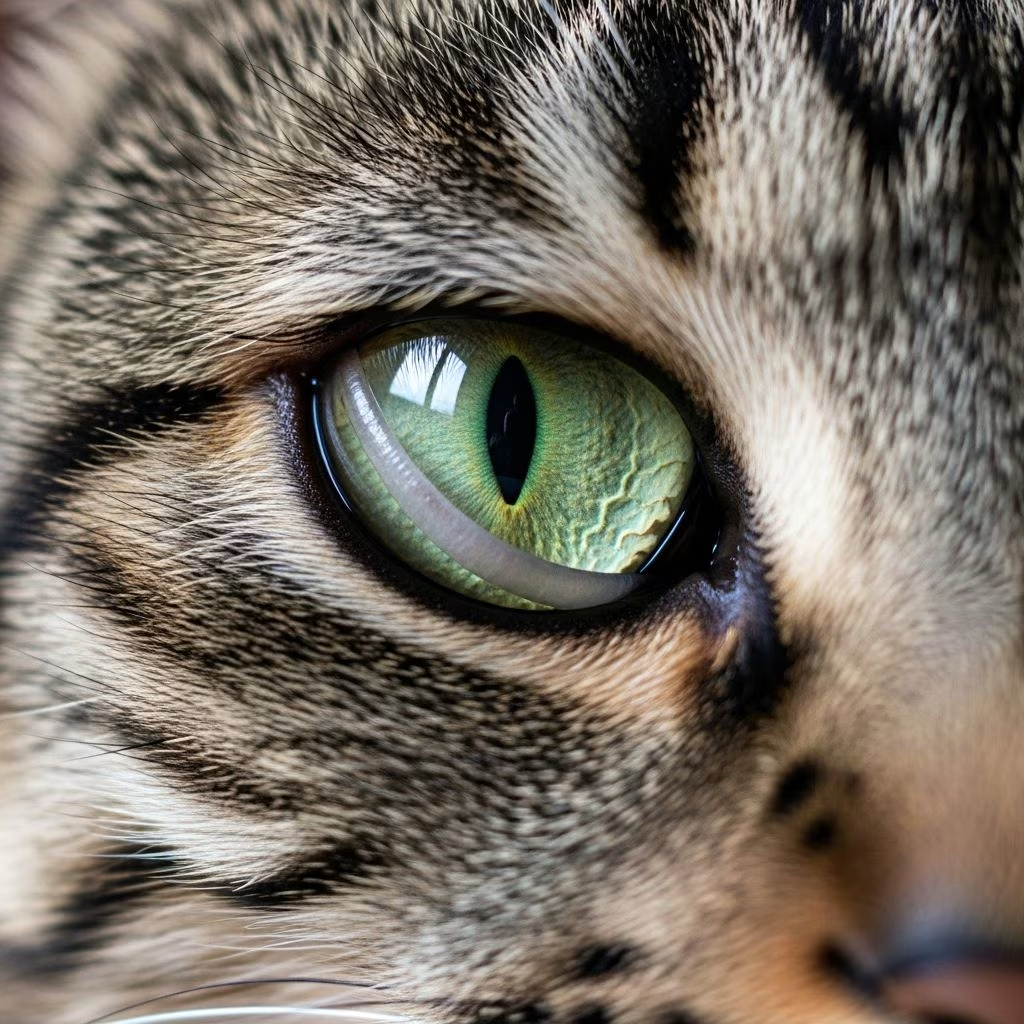
Cats possess **three eyelids per eye**: an upper eyelid, a lower eyelid, and a specialized third eyelid known as the nictitating membrane. This unique anatomy provides superior protection, moisture retention, and clear vision compared to humans’ two eyelids.
Cat Eye Anatomy: A Closer Look
The feline eye is a marvel of evolutionary design, optimized for hunting, navigation, and survival. Unlike human eyes, cat eyes feature larger corneas and pupils to capture more light in low-light conditions. The **sclera** forms the white outer layer, covered by the **conjunctiva**, a thin mucous membrane that lines the eyelids and extends to the third eyelid.
The **cornea**, a clear dome at the front, allows light entry, while the **lens** behind the iris adjusts focus—though less flexibly in cats than in humans. The **retina**’s **area centralis** provides sharp central vision, with photoreceptors converting light into signals via the optic nerve. Eyelids play a critical role in this system.
The Three Eyelids of Cats Explained
Cats’ eyelids are thin, pliable skin folds tightly apposed to the eyeball, minimizing exposure of deeper structures. Here’s a breakdown:
- Upper Eyelid: Controlled by the orbicularis oculi muscle for closure and levator muscles (including Müller’s muscle) for elevation. It features Meibomian glands producing oily tear components.
- Lower Eyelid: Similar structure, with Meibomian glands along the margin. No eyelashes (cilia) in cats, though distichiasis can occur rarely.
- Third Eyelid (Nictitating Membrane): A whitish-pink, thin membrane in the inner eye corner (near the nose). It passively or actively extends across the eye for protection and lubrication. Innervated by cranial nerve VI (abducens) for active protrusion in cats.
Meibomian glands appear as grey dots along lid margins, secreting lipids. Conjunctival goblet cells add mucin, while lacrimal glands (including in the third eyelid) provide watery tears.
What Is the Cat’s Third Eyelid?
The **third eyelid**, or nictitating membrane, is a translucent inner eyelid unique to many animals, including cats, birds, and reptiles. In healthy cats, it’s typically hidden, becoming visible only during blinking or sleep. Located ventromedially, it sweeps horizontally across the eye, distributing tears and removing debris without obstructing vision.
Anatomy includes skeletal muscle for active movement, unlike passive versions in other species. It contributes to tear production via embedded lacrimal glands and protects the cornea during hunts or scratches.
Functions of the Third Eyelid in Cats
The third eyelid serves multiple vital roles:
- Protection: Shields the cornea from trauma, dust, and scratches during high-speed chases or bush navigation.
- Lubrication: Spreads tears evenly, preventing dryness. Goblet cells and glands ensure a balanced tear film (watery, mucin, lipid layers).
- Immune Defense: Houses lymphoid tissue to combat infections.
- Vision Maintenance: Translucent design allows sight while cleaning the eye surface.
Innervation from facial (motor/sympathetic), trigeminal (sensory) nerves, and vascular supply from temporal and ethmoidal arteries support these functions.
Why Is My Cat’s Third Eyelid Showing?
A visible third eyelid often signals an issue, though occasional glimpses during sleep or stress are normal. Persistent protrusion warrants veterinary attention. Common causes include:
- Haw’s Syndrome: Bilateral protrusion linked to gastrointestinal upset (e.g., diarrhea). Self-resolving in weeks, but check for worms/parasites.
- Conjunctivitis: Bacterial, viral, or allergic inflammation causes redness, discharge, and swelling.
- Upper Respiratory Infections (URI): Feline herpesvirus or calicivirus leads to eye involvement.
- Trauma/Injury: Scratches or blunt force swells tissues, exposing the membrane.
- Glaucoma: Increased intraocular pressure protrudes the third eyelid.
- Cherry Eye: Rare in cats; prolapsed lacrimal gland mimics a cherry-red mass.
- Systemic Illness: Dehydration, fever, or pain (e.g., dental issues) from orbital anatomy proximity.
| Condition | Symptoms | Common in Cats? |
|---|---|---|
| Haw’s Syndrome | Bilateral protrusion, GI signs | Very common |
| Conjunctivitis | Redness, discharge | Common |
| Glaucoma | Pain, cloudiness | Less common |
| Cherry Eye | Red mass in corner | Rare |
When to See a Vet for Cat Eyelid Issues
Consult a vet if the third eyelid persists >24-48 hours, accompanies discharge, squinting, cloudiness, or behavioral changes. Signalment (age, breed) matters—Persians/flat-faced breeds prone to entropion.
Diagnosis involves fluorescein staining, tonometry, and Schirmer tear tests. Treatments: antibiotics for infections, anti-inflammatories, or surgery for prolapse. The deep feline orbit (formed by sphenoid, maxillary bones, etc.) protects but complicates periorbital issues.
Caring for Your Cat’s Eyes and Eyelids
Prevent issues with:
- Regular vet checkups, especially for indoor/outdoor cats.
- Gentle cleaning with vet-approved saline; avoid human products.
- Balanced diet for tear production.
- Parasite control to prevent GI-linked Haw’s.
- Monitor for trauma during play.
The orbit’s fascial lining and adipose cushion the globe, but hygiene is key.
Frequently Asked Questions (FAQs)
What is the third eyelid in cats?
The nictitating membrane, a protective inner eyelid that lubricates and shields the eye.
Do all cats have three eyelids?
Yes, all domestic cats have upper, lower, and third eyelids.
Is a visible third eyelid always bad?
No, normal during sleep/stress; persistent visibility indicates health issues.
How to treat Haw’s syndrome in cats?
Often self-resolves; treat underlying GI problems like diarrhea.
Can cats see with third eyelid up?
Yes, it’s translucent, preserving vision.
Why no eyelashes on cat eyelids?
Cats lack cilia; rare distichiasis from Meibomian glands.
References
- Eyelids and Orbit — Veterian Key. 2016. https://veteriankey.com/eyelids-and-orbit/
- The Anatomy and Function of a Cat’s Third Eyelid — All About Vision. 2023-10-12. https://www.allaboutvision.com/eye-care/pets-animals/cat-third-eyelid/
- Eye Structure and Function in Cats — Merck Veterinary Manual. 2024-05-01. https://www.merckvetmanual.com/cat-owners/eye-disorders-of-cats/eye-structure-and-function-in-cats
- Feline Ophthalmology Part 1: Examination of the Eye — EyeVet.ie. 2009-02. https://www.eyevet.ie/wp-content/uploads/2009/02/feline-ophthalmology-part-12.pdf
- Understanding the Anatomy of the Eye (Cats and Dogs) — Dechra UK. 2023. https://www.dechra.co.uk/companion-animal/ophthalmology/anatomy-of-the-eye



