

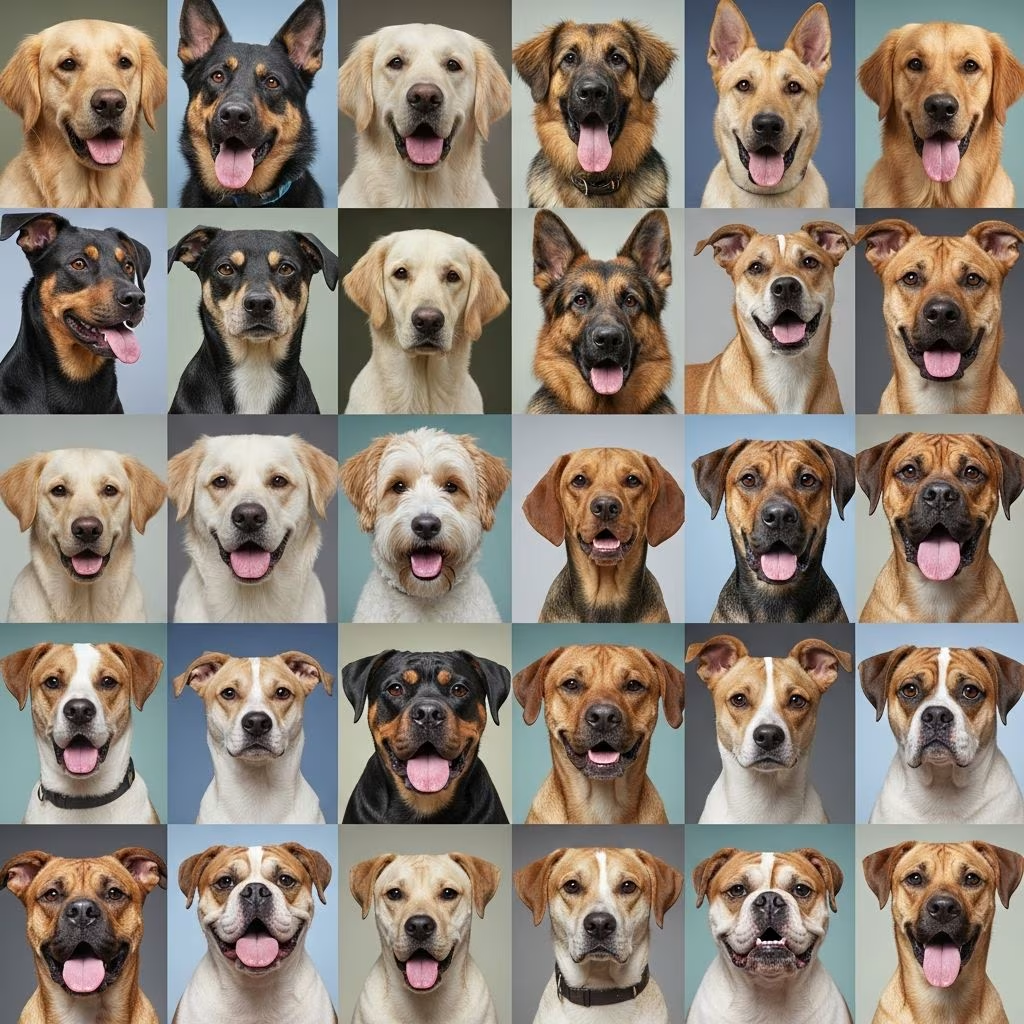
How Many Dog Breeds Are There?
When it comes to determining the total number of dog breeds in the world, the answer is more complex than you might expect. The American Kennel Club (AKC) currently recognizes 202 purebred dog breeds, with more being recognized every year. However, this official count represents only a fraction of all the dog breeds that exist globally.
According to experts, the most common estimate suggests there are between 400 and 500 dog breeds worldwide. This discrepancy exists because new breeds are constantly being developed, while others, like the St. John’s Waterdog, go extinct. Additionally, different kennel clubs and international organizations recognize varying numbers of breeds based on their own standards and criteria.
Understanding Dog Breed Recognition
Dog breeds are defined by shared physical and behavioral traits that distinguish one group from another. These characteristics have been developed through selective breeding over generations, creating dogs suited for specific purposes and environments. However, the way breeds are recognized varies significantly depending on which organization is doing the recognizing.
The AKC, which maintains the largest registry of pedigree dogs in the world, holds considerable influence in breed recognition within the United States. However, other international organizations like the Fédération Cynologique Internationale (FCI) recognize 359 breeds, while the United Kingdom’s Kennel Club recognizes 224 breeds. Germany’s Kennel Club has the highest recognition rate among major organizations, recognizing 343 breeds.
Official Dog Breed Recognition by Organization
The number of officially recognized breeds varies considerably by country and organization. This variation stems from regional breed popularity and differing national breed standards. Understanding these differences helps explain why there isn’t a universal consensus on the total number of dog breeds.
| Organization | Number of Recognized Breeds | Purebred Only |
|---|---|---|
| American Kennel Club (USA) | 202 | Yes |
| Fédération Cynologique Internationale (International) | 359 | Yes |
| The Kennel Club (UK) | 224 | Yes |
| Australian National Kennel Council (Australia) | 219 | Yes |
| German Kennel Club (Germany) | 343 | Yes |
The Path to AKC Recognition
Landing a spot on an official breed registry, particularly the AKC’s, involves a rigorous and lengthy process. A breed must meet specific criteria and demonstrate sufficient interest among dog owners to qualify for recognition.
To begin the recognition process in the United States, a breed must first establish a National Breed Club with at least 100 active members. Additionally, the breed must have proof of at least 300 three-generation pedigree dogs distributed across at least 20 states. This requirement ensures genetic diversity and widespread establishment of the breed throughout the country.
Breeds not yet recognized by the AKC can join the AKC Foundation Stock Service (FSS), a temporary registry for breeds in development. This program serves as a stepping stone toward full AKC recognition. The FSS process requires a written request, photographs, and a comprehensive summary of the breed and its history. Once a breed meets all requirements and demonstrates consistent breed standards over many generations, it can be moved to the miscellaneous class before achieving full breed group recognition.
Recent Breed Recognitions
The AKC continues to add new breeds to its registry each year. A notable recent addition is the Danish-Swedish Farmdog, which entered the Foundation Stock Service in 2011 and was eligible for the miscellaneous class in 2021. After more than a decade of development and refinement, the Danish-Swedish Farmdog achieved full AKC recognition on January 2, 2025, and joined the working group. This case demonstrates the lengthy timeline required for new breed recognition.
AKC Breed Groups and Classifications
The AKC categorizes the 202 recognized dog breeds into seven different groups, each based on the breed’s original function and purpose. It’s important to note that genetics don’t always align with AKC grouping; dogs are often grouped by function rather than genetic relation.
Sporting Dogs
Sporting dogs were originally bred for hunting and retrieving game. These energetic and athletic breeds include Pointers, Retrievers, Setters, and Spaniels. They are known for their intelligence, obedience, and love of outdoor activities.
Hound Dogs
Hound breeds were developed for hunting purposes and are known for their keen sense of smell and tracking abilities. This group includes both scent hounds like Beagles and Bloodhounds, as well as sight hounds like Greyhounds and Afghan Hounds.
Working Dogs
Working dogs were bred to perform specific tasks such as guarding property, pulling sleds, or rescuing people. These intelligent and capable breeds include German Shepherds, Rottweilers, Saint Bernards, and Huskies. The Danish-Swedish Farmdog recently joined this group.
Terrier Dogs
Terriers were originally bred to hunt small animals and vermin. These furry companions are known for their feisty temperaments and include breeds such as the Irish Terrier, Miniature Schnauzer, Parson Russell Terrier, and Scottish Terrier.
Toy Dogs
Toy breeds are small companion dogs bred for their affectionate nature and companionship. These charming little dogs are often favored as lap dogs and indoor companions.
Non-Sporting Dogs
The non-sporting group is comprised of many different breeds with varied purposes, commonly used as housedogs or watchdogs. The Chow Chow, Bulldog, and Dalmatian are considered non-sporting dogs. This diverse group doesn’t fit neatly into other categories.
Herding Dogs
Though herding dogs were also bred for farm life, their instincts and personality help them excel in herding livestock. Border Collies and Australian Cattle Dogs are prominent examples of herding dog breeds, known for their intelligence and trainability.
Mixed Breeds and Crossbreeds
Beyond purebred dogs recognized by kennel clubs, there are other dog types that don’t fit into official breed registries. Mixed-breed dogs, commonly called “mutts,” are a blend of three or more breeds, usually with ancestry unknown. These dogs typically aren’t recognized by official breed registries, and there’s no exact count of mixed-breed types.
Crossbreed dogs, by contrast, are the offspring of two different purebred dogs. While crossbreeds like Goldendoodles and Maltipoos are wildly popular, they’re not yet recognized by most kennel clubs. This is because most organizations require consistent “true breeding” to a standard over many generations—something impossible with first or second-generation designer dogs. There’s still a lot of variation in these designer pups, making them unsuitable for official breed classification.
Ancient and Modern Dog Breeds
Through genetic testing and archaeological studies, researchers have discovered some of the oldest dog breeds in existence. The Greenland Sled Dog, the Pug, and the Canaan Dog are among the oldest, with modern-day counterparts closely resembling their centuries-old ancestors. Other ancient breeds include the Basenji and the Saluki, descending from Africa, as well as the Chow Chow, originating from Asia.
Modern breeds, by contrast, are those developed more recently. The Danish-Swedish Farmdog represents one of the newest breeds to receive AKC recognition, though its lineage is similar to farm dogs found amongst Vikings, showing that even “modern” breeds often have historical roots.
Breed Extinction and Conservation
While new dog breeds are constantly being developed, some breeds face extinction. The St. John’s Waterdog is one example of a breed that has disappeared. Additionally, there are hundreds of identifiable breeds that haven’t been formally recognized by any of the world’s international canine organizations, from the almost extinct Rampur Hound of India to the bamboo-tailed Chongqing Dog of China.
Conservation efforts are important for maintaining genetic diversity within dog populations and preventing the loss of unique breed characteristics. Many rare and endangered breeds struggle to maintain genetically sustainable populations while breeding within very small numbers.
The Most Popular Dog Breeds
Based on registration figures with the AKC and kennel clubs worldwide, certain breeds consistently rank as the most popular. According to global registration data collected from 25 countries, the most popular dog breeds in the world are:
- Labrador Retriever
- German Shepherd
- Poodle (all sizes included)
- French Bulldog
- Golden Retriever
In the United States specifically, the most popular dog breeds based on AKC registrations are French Bulldogs, Labrador Retrievers, Golden Retrievers, German Shepherds, and Poodles. These breeds consistently dominate registration figures, with registrations measured in tens of thousands annually.
Geographic Distribution of Dog Breeds
Interestingly, dog breed development and recognition isn’t evenly distributed globally. According to international data, over 40% of the world’s dog breeds come from just three countries: the United Kingdom, France, and Germany. Great Britain and France each have 57 registered breeds with the Fédération Cynologique Internationale, while Germany boasts 47 breeds. This concentration reflects the historical importance of these nations in modern dog breed development and the formalization of breed standards.
Frequently Asked Questions About Dog Breeds
How many total dog breeds are there in the world?
The AKC currently recognizes 202 dog breeds. However, the most common estimate for total dog breeds worldwide is between 400 and 500 breeds. The exact number is difficult to pin down because new breeds are constantly being developed and recognized by various organizations, while others go extinct.
What’s the difference between a breed recognized by the AKC and other organizations?
Different kennel clubs and international organizations have varying recognition criteria and standards. While the AKC recognizes 202 breeds, the Fédération Cynologique Internationale recognizes 359 breeds, and the German Kennel Club recognizes 343 breeds. These differences reflect regional breed popularity and national breed standards.
How long does it take for a breed to get AKC recognition?
The timeline varies significantly. The Danish-Swedish Farmdog entered the Foundation Stock Service in 2011 and didn’t achieve full AKC recognition until January 2, 2025—over 13 years. The process requires establishing a breed club with 100 members, having 300 three-generation pedigrees in 20 states, and demonstrating consistent breed standards.
Are mixed breeds and crossbreeds recognized by kennel clubs?
Most kennel clubs don’t recognize mixed breeds (dogs with three or more unknown ancestors) or crossbreeds (first or second-generation designer dogs). These dogs typically don’t meet the strict breeding standards required by official organizations. However, the AKC does have programs like Canine Partners that allow mixed breeds to participate in certain events.
What’s the rarest dog breed?
According to AKC records, the English Foxhound is the least-registered dog, making it the rarest dog breed in the United States. Many other breeds struggle to maintain genetically sustainable populations due to small breeding numbers.
Why does the number of recognized breeds vary by country?
Different countries have different breed standards and preferences based on regional popularity and historical development. What’s recognized as a distinct breed in one country might be classified differently in another. International organizations like the FCI work to create standardized breed recognition across countries.
References
- How Many Recognized Dog Breeds and Types Are There? — Rover.com. 2024. https://www.rover.com/blog/how-many-dog-breeds/
- How Does a Dog Breed Become AKC-Recognized? — American Kennel Club (AKC). 2024. https://www.akc.org/expert-advice/dog-breeds/how-dog-breed-become-akc-recognized/
- Registration figures worldwide – from top thirty to endangered breeds — Dog Wellnet. 2024. https://dogwellnet.com/content/population-statistics/general-breeds-specific-disease-inform/information-on-breeding-animals/registries-health-information/registration-figures-worldwide/
- From Wolves to Pugs and Great Danes – The History of Dog Breeds — Morris Animal Foundation. 2024. https://www.morrisanimalfoundation.org/article/evolution-of-dogs
- List of dog breeds — Wikipedia. 2024. https://en.wikipedia.org/wiki/List_of_dog_breeds



