

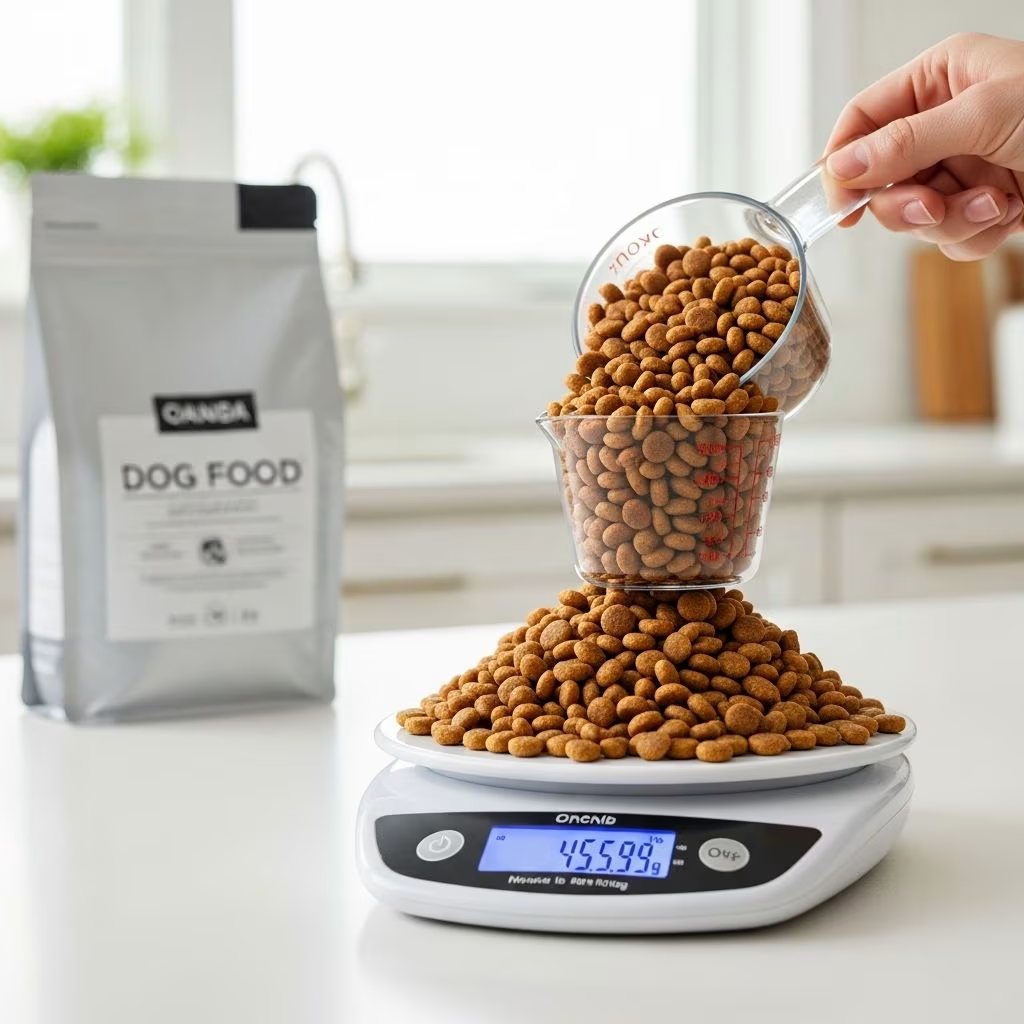
Determining **how many cups are in a pound of dog food** is a common question for pet owners, but the answer isn’t straightforward. One pound of dry dog kibble typically equals **2.5 to 3.5 cups**, depending on factors like kibble size, shape, density, and brand formula. This variation can lead to overfeeding or underfeeding if you rely solely on volume measurements, potentially affecting your dog’s weight, energy levels, and long-term health.
Understanding this conversion is crucial because dog food bags provide feeding guidelines in cups, but manufacturing differences mean the same “cup” volume holds different weights across products. For instance, dense mini pellets might pack more into a cup than airy large chunks. To ensure precision, vets recommend weighing food in grams or ounces rather than scooping. This article breaks down the science, provides real-world examples, and offers practical tips to measure accurately.
Why Isn’t There a Standard Conversion?
Dog food isn’t uniform like water or flour. **Kibble density**—the mass per unit volume—varies due to ingredients, processing, and moisture content. Unlike liquids with fixed densities (e.g., water at 1 g/mL), dry kibble ranges from lightweight, fiber-rich formulas to dense protein-packed ones.
A standard U.S. cup measures 236.6 mL, but kibble doesn’t fill it consistently. The formula for conversion is: pounds = (cups × density in g/mL) / 1.9172. For dog food, densities hover around 0.4-0.6 g/mL, yielding 2.5-3.5 cups per pound. Fresh kibble is fluffier; stale kibble compacts, changing the ratio over time.
How Kibble Characteristics Affect the Cups-to-Pound Ratio
**Kibble size and shape** play major roles. Small, dense pellets for toy breeds fit more per cup, while large chunks for big dogs take up more space.
- Mini pellets (toy/small breeds): ~3.0-3.5 cups per pound due to tight packing.
- Medium kibble: ~2.8-3.2 cups, common for average adults.
- Large chunks: ~2.5-2.8 cups, lighter and airier.
Shape matters too: Rings or triangles trap air, reducing density; spheres pack efficiently. Ingredient profiles amplify this—high-fiber foods expand, while meat-heavy blends sink.
Brand-Specific Cups per Pound: A Comparison Table
Different brands calibrate scoops differently. Here’s a table of approximate measurements based on tested data:
| Brand & Formula | Kibble Type | Cups per Pound | Key Factor |
|---|---|---|---|
| Royal Canin Small Adult | Mini pellets | ~2.8 cups | Dense protein blend |
| Purina Pro Plan Sensitive Skin | Medium rings | ~3.2 cups | Airy fiber texture |
| Blue Buffalo Wilderness | Large chunks | ~3.7 cups | Lightweight ingredients |
| Purina Toy Breed | Tiny kibble | ~3.4 cups | Compact for small mouths |
| Generic Large Breed | Big nuggets | ~2.6 cups | High volume per piece |
This **0.9-cup spread** (2.8-3.7) means a 15-20% calorie difference if mismeasured. Always check your bag’s scoop or weigh a sample.
The Risks of Inaccurate Measuring
Guestimating cups can cause **obesity, malnutrition, or pancreatitis**. A 10% overfeed daily adds up: a 50-lb dog on 2 extra cups weekly gains pounds fast. Underfeeding leads to lethargy and nutrient gaps. Standard cups vary 20% in volume, and brand switches without recalibration amplify errors.
Stale kibble densifies by 10-15%, so old bags yield heavier cups. Solution: Rotate stock and use scales.
Best Way to Measure: Use a Kitchen Scale
The gold standard is **weighing in grams**. Most bags list grams per cup (e.g., 120g/cup). A $10 digital scale ensures consistency.
- Zero the scale with an empty bowl.
- Set to grams; pour until target weight.
- For daily needs (e.g., 240g), split into meals.
Vets endorse this for precision, especially for weight management or medical diets. It’s faster than scooping and brand-agnostic.
Calculating Your Dog’s Daily Food Needs
Feeding charts use **metabolizable energy (ME)** in kcal/cup or kcal/kg. Estimate via Dog Food Calculator: base on weight, activity, age.
- Puppies/growth: 2-3x adult calories, split 3 meals.
- Adults: 20-30 kcal/lb body weight daily.
- Seniors/low-activity: 15-20 kcal/lb.
Example: 40-lb active adult needs ~1,000 kcal/day. If food is 400 kcal/cup, feed 2.5 cups (weighed as 300g). Adjust for treats (10% max calories).
Mixing Dry and Wet Food: Conversion Tips
Don’t swap volume 1:1. A 3-oz wet can (~100-200 kcal) replaces ~0.5-1 cup dry, based on calories. Weigh wet food too: kcal/can ÷ grams/can = kcal/gram, then scale to needs.
Example: 189 kcal/156g can = 1.21 kcal/g. For 200 kcal day: 165g wet. Blend by reducing dry proportionally.
Factors Influencing Accurate Feeding
- Dog’s metabolism: Not linear—60-lb dog ≠ 2x 30-lb needs.
- Brand changes: Remeasure immediately.
- Storage: Airtight bins prevent staleness.
- Activity: Exercise boosts needs 20-50%.
Frequently Asked Questions (FAQs)
Q: Does kibble size affect cups per pound?
A: Yes, tiny kibble yields 3.4+ cups/pound; large is 2.6 or less. Measure by weight for accuracy.
Q: Should I use a scale for every meal?
A: Ideally yes, especially for health issues. It prevents 90% of errors and takes seconds.
Q: How do I convert wet food to dry equivalents?
A: Match calories, not volume. Check labels: 1 small can often = 0.5-1 cup dry.
Q: What’s the average for most dog foods?
A: 3 cups/pound, but test your bag: weigh 1 cup, divide 16 oz by weight.
Q: Can I double portions for bigger dogs?
A: No—use calorie calculators accounting for density and metabolism.
Pro Tips for Long-Term Success
Track weight weekly, adjust quarterly. Consult vets for breed-specific needs. Invest in a scale—it’s cheaper than obesity treatments.
References
- How Many Cups in a Pound of Dog Food? Exact Measurements — Alibaba Spice Basics. 2023-10-15. https://spice.alibaba.com/spice-basics/how-many-cups-in-a-pound-of-dog-food–exact-measurements
- Cups to Pounds & Ounces Converter — Inch Calculator. 2024-05-20. https://www.inchcalculator.com/convert/cup-to-pound/
- Cups to Pounds Converter — Omni Calculator. 2024-08-12. https://www.omnicalculator.com/food/cups-to-pounds
- Dog Food Calculator — Dog Food Advisor. 2025-01-10. https://www.dogfoodadvisor.com/dog-feeding-tips/dog-food-calculator/
- How to Accurately Measure Your Pet’s Food — Feeding Raven Doodles. 2024-03-05. https://www.feedingravendoodles.com/articles/how-to-accurately-measure-your-pets-food



