

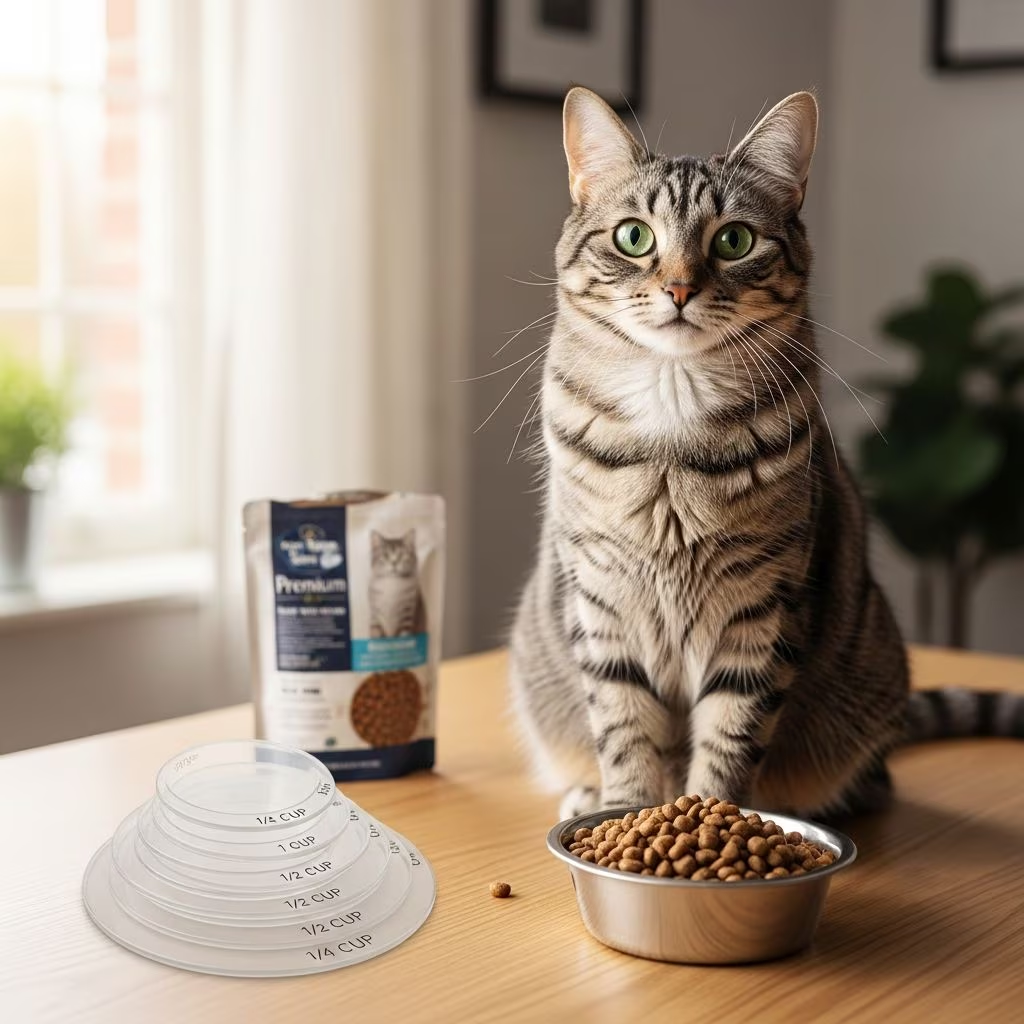
Cats are obligate carnivores with specific nutritional needs, and determining the right calorie intake is crucial for maintaining their health, ideal body weight, and vitality. Unlike dogs or humans, cats have unique metabolic requirements influenced by factors such as age, activity level, neuter status, and health conditions. Feeding too much can lead to obesity, while too little may cause malnutrition or weight loss. This comprehensive guide breaks down how to calculate your cat’s daily calorie needs, provides practical feeding examples, and offers tips for balanced nutrition.
Why Calorie Counting Matters for Cats
Proper calorie management prevents obesity, a common issue in domestic cats, with studies showing up to 60% of cats in the U.S. are overweight. Calculating calories ensures your cat receives energy for daily activities without excess fat accumulation. Vets use formulas like Resting Energy Requirement (RER) to estimate needs accurately. RER is the baseline calories needed for basic bodily functions at rest, calculated as 70 × (body weight in kg)^0.75. Daily needs are then a multiple of RER based on lifestyle.
Indoor cats often need fewer calories (around 20 kcal per pound of body weight) compared to active outdoor cats (up to 33 kcal per pound), highlighting the importance of personalization.
Factors Affecting Your Cat’s Calorie Needs
Several variables influence how many calories your cat requires. Understanding these helps tailor their diet precisely.
- Age: Kittens need 2-3 times adult RER for growth, seniors may require less due to reduced metabolism.
- Activity Level: Sedentary indoor cats need 1.2 × RER (neutered) or 1.4 × RER (intact), while active cats need up to 1.6 × RER.
- Body Condition: Overweight cats use ideal weight for calculations; obese-prone get 1 × RER.
- Neuter Status: Neutered cats have lower needs (1.2 × RER) than intact (1.4 × RER).
- Health Issues: Diabetes, hyperthyroidism, or pregnancy adjust requirements; consult a vet.
How to Calculate Your Cat’s Daily Calorie Intake
Start with RER, then apply a multiplier. Here’s a step-by-step guide:
- Convert weight to kg: pounds ÷ 2.2.
- Calculate RER: 70 × (kg)^0.75 or use a table.
- Multiply by lifestyle factor (e.g., 1.2 for neutered adult).
Rule of Thumb: 25-35 kcal per pound for average adults. A 10-lb cat needs 250-350 kcal/day.
Calorie Needs Table by Weight and Lifestyle
| Weight (lbs) | Weight (kg) | Maintenance (kcal/day) | Weight Loss (kcal/day) | Active (kcal/day) |
|---|---|---|---|---|
| 5 | 2.3 | 130 | 100 | 175 |
| 8 | 3.6 | 200 | 160 | 280 |
| 10 | 4.5 | 250 | 200 | 350 |
| 12 | 5.4 | 300 | 240 | 420 |
| 15 | 6.8 | 375 | 300 | 525 |
| 18 | 8.2 | 450 | 360 | 630 |
| 20 | 9.1 | 500 | 400 | 700 |
Data adapted from veterinary guidelines; maintenance for neutered adults.
RER Multipliers Table
| Life Stage/Lifestyle | Multiplier × RER |
|---|---|
| Neutered Adult | 1.2 |
| Intact Adult | 1.4 |
| Inactive/Obese-Prone | 1.0 |
| Weight Loss (use ideal wt) | 0.8 |
| Kitten (4-12 mo) | 2.0 |
| Weight Gain | 1.8 |
| Active/Outdoor | 1.4-1.6 |
Example: 10-lb (4.5 kg) neutered cat. RER ≈ 208 kcal. Daily: 208 × 1.2 = 250 kcal.
Calorie Content in Cat Food
Check labels for kcal per cup/can. Dry food: 300-500 kcal/cup; wet: 20-100 kcal/oz or 100-200 kcal/can. For a 250 kcal cat: ½ cup dry (500 kcal/cup) or 1.5 cans wet (181 kcal/5.5 oz).
Feeding Guidelines and Portion Control
Divide daily calories into 2-4 meals. Example: 250 kcal cat gets 125 kcal/meal twice daily. Mix wet/dry: ⅔ can wet (120 kcal) + ¼ cup dry (120 kcal) totals ~240 kcal, leaving 10% for treats. Treats <10% total calories. Use measuring cups; free-feeding leads to overeating.
Special Calorie Needs by Life Stage
Kittens
Kittens (up to 4 months): 3 × RER; 4-12 months: 2 × RER. A 4-lb kitten: RER 110 × 2 = 220 kcal.
Adult Cats
8-12 lbs ideal. 10-lb cat: 200-250 kcal maintenance.
Senior Cats
Often less active; adjust to 1.1 × RER. Monitor for arthritis or kidney issues.
Obese or Underweight Cats
Weight loss: 0.8 × RER of ideal weight (e.g., 19-lb cat ideal 12 lbs: 300 × 0.8 = 240 kcal). Gain: 1.8 × RER. Aim 0.5-1% body weight loss/week.
Signs Your Cat’s Calories Are Off
- Too Many: Ribs hard to feel, no waist, lethargy.
- Too Few: Visible ribs/hips, poor coat, weakness.
Use body condition score (BCS) 4-5/9 ideal.
Tips for Managing Your Cat’s Weight
- Consult vet for personalized plan.
- Weigh food; avoid eyeballing.
- Increase activity: toys, laser pointers.
- High-protein, low-carb foods promote satiety.
- Hydration: 3.5-4.5 oz water/5 lbs body weight. Wet food helps.
Frequently Asked Questions (FAQs)
How many calories does a 10-pound cat need?
Around 200-350 kcal/day depending on activity; neutered indoor: ~250 kcal.
Should I free-feed my cat?
No, portion control prevents obesity. Feed 2-3 meals/day.
Can treats be part of calories?
Yes, but ≤10% daily intake.
How do I know my cat’s ideal weight?
Vet assessment via BCS; typical 8-12 lbs.
Wet vs. dry food calories?
Wet lower density; check labels. Mix for balance.
References
- How Much To Feed a Cat — PetMD. 2023. https://www.petmd.com/cat/nutrition/how-much-to-feed-a-cat
- Cat Calorie Calculator | How Many Calories Should Your Cat Eat Daily — PetPlace. 2023. https://www.petplace.com/article/cats/pet-health/how-to-calculate-your-cats-daily-calorie-intake
- Can’t-Miss Tips For Optimal Cat Nutrition — Rau Animal Hospital. 2024. https://www.rauanimalhospital.com/services/cats/blog/cant-miss-tips-optimal-cat-nutrition
- Calorie Needs for an Average Healthy Adult Cat — WSAVA. 2020-07-01. https://wsava.org/wp-content/uploads/2020/07/Calorie-Needs-for-Healthy-Adult-Cats-updated-July-2020.pdf
- Calorie Calculator — Pet Nutrition Alliance. 2024. https://petnutritionalliance.org/resources/calorie-calculator/



