

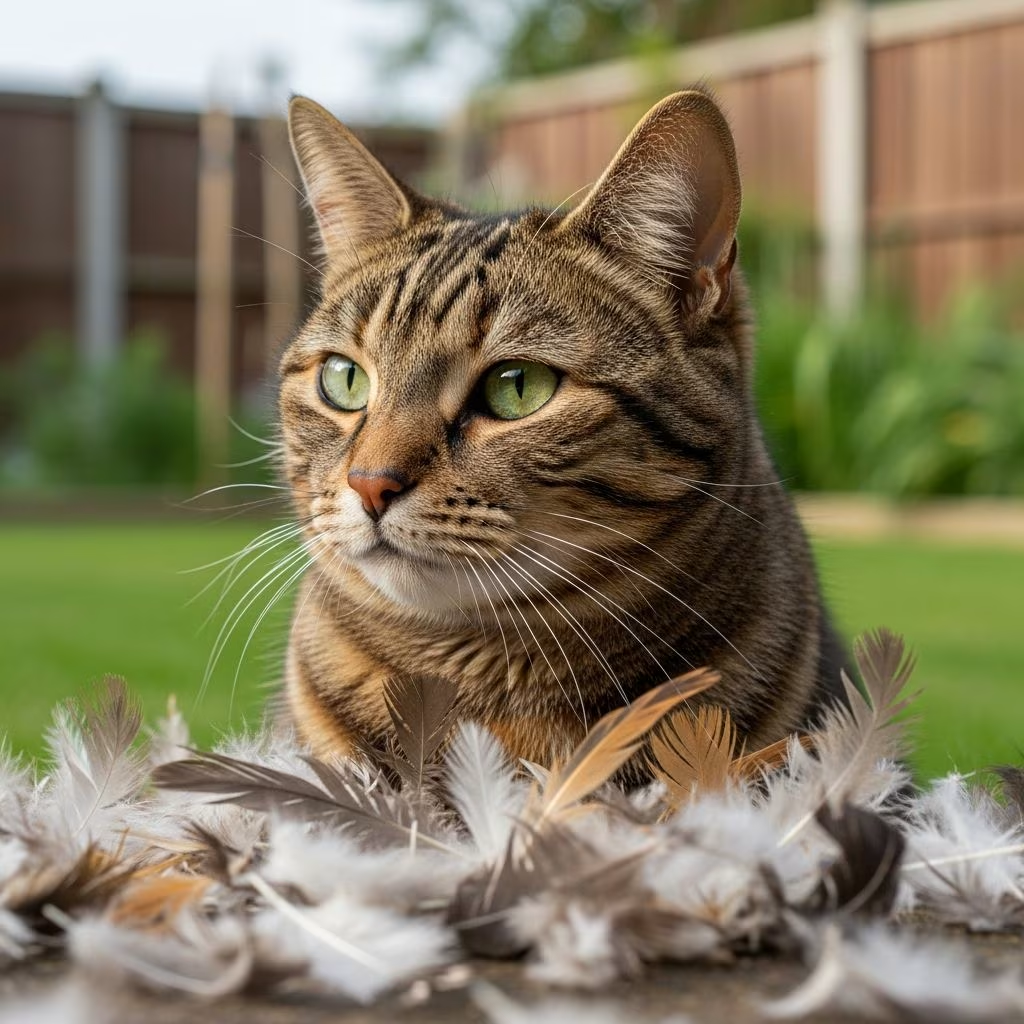
How Many Birds Do Cats Kill? Statistics and Research Findings
Outdoor cats represent one of the most significant threats to wild bird populations across North America. The question of exactly how many birds fall victim to feline predation has long puzzled ornithologists and wildlife researchers. However, recent studies using advanced research methodologies have provided increasingly accurate estimates of the impact domestic and feral cats have on bird mortality rates.
Annual Bird Mortality from Cats in the United States
Research indicates that cats kill between 1.3 and 4 billion birds annually in the United States alone. This staggering range reflects the variation in study methodologies and data collection approaches over the years. The American Bird Conservancy estimates a more specific figure of 2.4 billion birds per year, making cats the top source of direct, human-caused bird mortality in the country.
To contextualize this figure, these losses far exceed bird deaths from other human-related causes. Windows claim approximately 599 million bird lives annually, while automobiles are responsible for around 200 million deaths. This means cat predation accounts for more bird deaths than these two major threats combined.
Bird Mortality Statistics in Canada
Canadian research provides a more refined estimate for North American bird losses. A comprehensive 2024 study from the University of Guelph revised previous estimates downward, calculating that cats kill approximately 60 million birds annually in Canada, with a 95% confidence interval ranging from 19 to 197 million birds. This represents a 71% decrease from earlier 2013 estimates that suggested 105 to 348 million birds were killed annually in Canada.
The revision doesn’t indicate that cats are killing fewer birds; rather, researchers now have more precise measurement methodologies. The decrease reflects improved data collection techniques, including the use of animal-borne cameras on cats, which revealed that felines kill significantly more birds than they return home to their owners.
Breakdown by Cat Population in Canada
- Urban owned cats: Kill approximately 27 million birds annually (95% CI: 1–166 million)
- Rural owned cats: Kill approximately 8.1 million birds annually (95% CI: 2.4–21 million)
- Unowned cats: Kill approximately 18 million birds annually (95% CI: 4.4–53 million)
Understanding the Gap Between Observed and Actual Kills
One critical insight from recent research involves the disparity between birds cats bring home and birds they actually kill. Studies using animal-borne cameras have revealed that cats kill significantly more birds than their owners ever see. In Georgia, researchers found that cats killed 4.3 times more birds than they returned home, while South African studies documented cats killing 5.6 times more birds than brought home.
This discovery has fundamentally changed how scientists estimate predation rates. Traditional “prey return studies” where owners report dead birds brought home significantly underestimate actual predation. A cat that brings one bird home may have actually killed four or five birds during outdoor activities. Modern research using camera-equipped cats provides much more accurate data about true predation rates.
Contribution of Owned vs. Unowned Cats
Not all cats impact bird populations equally. Research indicates that 69% of bird kills in the United States come from feral or unowned cats. However, owned outdoor cats also contribute substantially to bird mortality. In the U.S., approximately 50 million owned cats are allowed outside, plus up to 100 million unowned feral cats.
The difference in predation rates between owned and unowned cats reflects behavioral patterns. Unowned cats must hunt regularly to survive, while owned cats hunt primarily for sport. Despite this distinction, both populations represent significant threats to bird conservation efforts.
Factors Influencing Cat Predation Rates
Several variables affect how many birds individual cats kill annually:
- Geographic location: Urban environments, rural areas, and coastal regions show different predation rates based on bird availability and habitat structure
- Prey availability: Areas with abundant bird populations experience higher predation rates than regions with limited bird species
- Cat hunting experience: Older, experienced hunters typically kill more birds than younger cats
- Cat breed and individual temperament: Some cats show stronger hunting drives than others
- Season and weather: Bird activity patterns vary seasonally, affecting predation opportunities
- Human feeding habits: Cats living near areas where people feed birds encounter more prey
Research Methodology Evolution
The evolution of research techniques has dramatically improved understanding of cat predation. Early studies relied on owner reports of dead birds, which underestimated actual mortality by substantial margins. Contemporary research employs multiple approaches:
- Animal-borne cameras: Cameras attached to cat collars provide direct observation of predation events
- Scat analysis: Examination of cat feces for bird remains reveals consumed prey
- Genetic analysis: DNA testing of prey remains improves species identification
- Radio-frequency identification (RFID): Electronic tracking of cat movements and hunting patterns
- Citizen science programs: Coordination of widespread data collection from pet owners and wildlife observers
Bird Deaths from Cats vs. Other Threats
While cats pose an enormous threat, habitat loss remains the leading cause of bird mortality in North America. However, among direct, measurable human-caused mortality, cats rank as the primary threat. The following comparison illustrates the relative impact:
| Threat Type | Annual U.S. Bird Deaths | Primary Cause |
|---|---|---|
| Outdoor Cats | 1.3–4 billion | Predation |
| Window Collisions | 599 million | Architectural hazards |
| Vehicular Collisions | 200 million | Transportation |
| Power Lines | Millions (exact estimate unclear) | Infrastructure |
Species Most Vulnerable to Cat Predation
Not all bird species face equal risk from cat predation. Ground-nesting and low-flying birds prove particularly vulnerable, including:
- Songbirds and sparrows
- Waterfowl, including ducklings and goslings
- Ground-dwelling species such as quail and partridges
- Nesting colonies of seabirds in accessible locations
- Cavity-nesting birds using low-entrance boxes
Endangered or threatened bird species face particularly severe impacts from cat predation, with some rare populations experiencing population declines directly attributable to feline predation.
Criticisms and Debates About Bird Mortality Statistics
While most ornithological organizations accept cat predation estimates, some researchers have questioned specific studies’ methodologies. Critics argue that certain studies inflate cat impact by using circumstantial evidence rather than direct observation. However, the scientific consensus, supported by multiple independent research teams across different regions, confirms that cat predation represents a major conservation concern warranting serious intervention strategies.
Seasonal Variations in Bird Predation
Cat predation rates fluctuate seasonally. During spring and summer breeding seasons, birds become more vulnerable as parents make frequent trips to feed young. Fledgling birds, inexperienced in avoiding predators, face particularly high mortality rates. Winter presents different challenges, with reduced bird populations but also reduced natural prey options, potentially increasing bird predation as an alternative food source.
Reducing Cat Impact on Bird Populations
Wildlife conservationists recommend several evidence-based strategies to minimize bird mortality from cats:
- Keep cats indoors: Indoor cats pose zero risk to wild bird populations while living longer, healthier lives
- Install cat enclosures: Screened outdoor spaces allow cats supervised outdoor access without hunting opportunities
- Use deterrent collars: Bells and audio warning devices reduce predation success rates by alerting birds to cat presence
- Implement community cat management programs: Trap-neuter-return (TNR) initiatives help control unowned cat populations humanely
- Remove attractants: Eliminating bird feeders near cat habitats reduces predation opportunities
- Support legislation: Advocate for local ordinances restricting free-roaming cats in residential areas
Frequently Asked Questions
Q: How accurate are bird mortality estimates from cats?
A: Modern estimates using animal-borne cameras and updated statistical models are significantly more accurate than earlier studies. However, the wide confidence intervals in research reflect genuine uncertainty about exact predation rates. Multiple independent studies across different regions provide confidence in the overall magnitude of the problem, even if exact figures remain imprecise.
Q: Do outdoor cats kill more birds than indoor-outdoor cats?
A: Research indicates that unowned feral cats, which hunt continuously for survival, kill more birds per individual cat than owned pets. However, the total impact of owned cats is substantial due to their large numbers. Both populations require management attention.
Q: Why do cats kill birds they don’t eat?
A: Cats are natural hunters, and predation represents instinctive behavior regardless of hunger level. This hunting drive persists even in well-fed pets, as predatory behavior is independent of nutritional need in domesticated cats.
Q: Can cat bells effectively prevent bird deaths?
A: Studies show that bells reduce predation success, with some trials demonstrating 19 times fewer bird kills during certain seasons. However, bells don’t eliminate predation entirely, making indoor housing the most effective protection for wild birds.
Q: Which bird species are most endangered by cat predation?
A: Ground-nesting birds, ground-dwelling species, and recently fledged young birds face the highest predation rates. Endangered species with small populations suffer disproportionate impacts from cat predation.
Q: How does habitat loss compare to cat predation as a bird threat?
A: Habitat loss remains the leading overall cause of bird mortality, but among direct, measurable human-caused deaths, cats rank first. Both threats require simultaneous conservation efforts.
References
- New Study Pinpoints Number of Birds Killed by Cats Each Year — University of Guelph News. 2025-10-01. https://news.uoguelph.ca/2025/10/new-study-pinpoints-number-of-birds-killed-by-cats-each-year/
- An updated estimate of the number of birds killed by outdoor cats in Canada — Avian Conservation and Ecology. 2024. https://ace-eco.org/vol20/iss2/art12/
- The impact of free-ranging domestic cats on wildlife of the United States — National Center for Biotechnology Information (PubMed). 2013. https://pubmed.ncbi.nlm.nih.gov/23360987/
- FAQ: Outdoor Cats and Their Effects on Birds — All About Birds, Cornell Lab of Ornithology. https://www.allaboutbirds.org/news/faq-outdoor-cats-and-their-effects-on-birds/
- Keep Cats Indoors — American Bird Conservancy. https://abcbirds.org/solutions/keep-cats-indoors/
- House Cats are a Major Threat to Our Birds — Audubon Pennsylvania. https://pa.audubon.org/news/house-cats-are-major-threat-our-birds



